MODERN KITCHENS · 015 / 100
Roman · Roman Mediterranean · Roman imperial tradition; surviving compilation approximately 4th–5th centuries CE
Evidence: historically informed adaptation. The historical evidence and modern cooking choices are distinguished below.
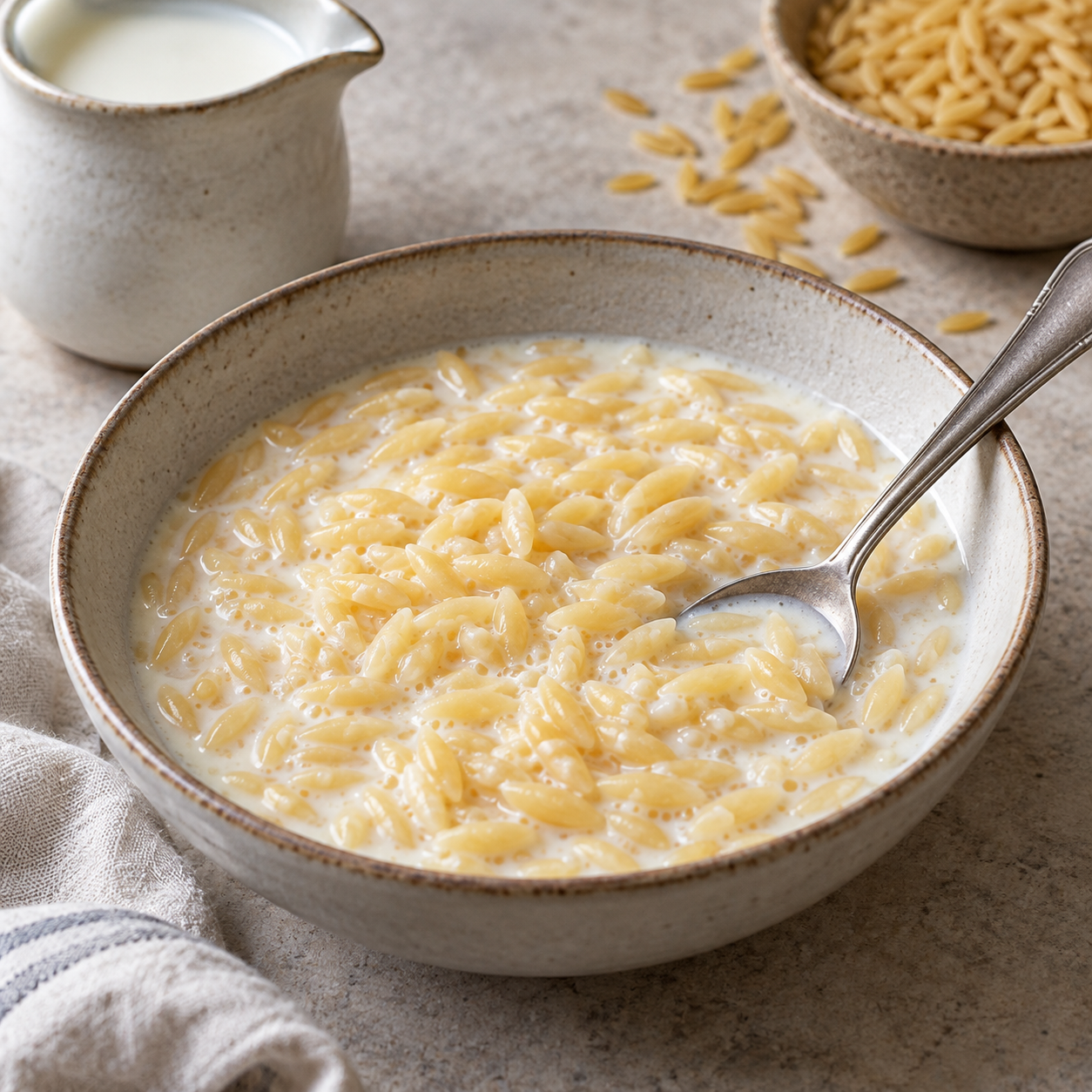
Broken grain sheets cooked in milk are an intriguing starting point for a gentle breakfast. Apicius 181 describes tractae in milk and water, but the precise ancient product should not be equated confidently with today’s pasta. This adaptation uses ordinary small dried pasta as an explicit substitute, giving the reader a practical pan method rather than an archaeological identification.
Choose a small shape that cooks evenly and fits a spoon, such as broken vermicelli or orzo. Check the packet time and simmer slowly because milk catches readily on the base of a pan. A combination of milk and water makes the initial cooking easier to control. Stir frequently, reaching right into the corners where small pieces can lodge.
A pinch of salt supplies balance. Honey is an optional modern addition at the table rather than an ingredient silently borrowed into this selected passage. Read the edition notes for the translation’s explanation of tractae and its uncertainties. Our pasta choice, dairy quantity and breakfast role are conveniences, not proof of an uninterrupted culinary tradition.
The finished bowl should be soft and spoonable with some milky liquid remaining. It tightens quickly after leaving the heat, so loosen with warm milk rather than cooking it dry. Serve immediately and start with a small portion. Pasteurized milk and commercially dried pasta make this manageable with ordinary equipment; no homemade fermentation, historical dough sheets or special drying process is required.
Milk Pasta Breakfast Bowl
Serves 4 · Preparation 5 min · Cooking 18 min
A modern adaptation for home cooking. Times are approximate.
Ingredients
- 150 g small dried wheat pasta or vermicelli broken into 2 cm lengths
- 650 ml pasteurized milk
- 250 ml water
- 1.25 ml (¼ tsp) salt
- 15 g (2 tsp) honey, optional modern serving addition
Method
- Bring milk, water and salt almost to a boil in a heavy saucepan over medium heat.
- Add pasta, reduce heat and simmer gently 10–15 minutes or according to packet directions, stirring often until tender.
- Leave enough milk for a loose porridge; add more if needed. Spoon into bowls and offer optional honey separately.
Substitutions and adjustments
- Unsweetened oat milk is a modern dairy-free substitute.
- Use broken plain lasagne sheets, allowing their packet cooking time.
Historical choices: Apicius 181 describes milk-cooked tractae. Small dried pasta and this breakfast presentation are openly modern substitutes.
Troubleshooting: Milk catching on the pan: lower heat and stir more often; move to a clean pan if scorching begins.
Storage and reheating: Refrigerate within 2 hours for up to 2 days; reheat with added milk to 74°C/165°F.
Kitchen note: Refrigerate perishable food within 2 hours; keep at 4°C/40°F or below.
Sources and further reading
- Apicius, Book 5, recipe 181 (Vehling numbering). Inspected surviving recipe and editorial notes. Apicius 181 describes milk-cooked tractae. Small dried pasta and this breakfast presentation are openly modern substitutes. Quantities and modern timetable are our own; translation contains editorial additions.
- LacusCurtius: edition and translation notes. Explains limitations and bracketed additions of the 1936 Vehling translation; not proof of an exact ancient appearance.
- NYAM collections announcement via CHSTM. Institutional account places the recipe collection in the fourth and fifth centuries; individual material may be earlier.
Browse Ancient Recipes for Modern Kitchens · More creative work at Incoprea