MODERN KITCHENS · 014 / 100
Roman · Roman Mediterranean · Roman imperial tradition; surviving compilation approximately 4th–5th centuries CE
Evidence: historically informed adaptation. The historical evidence and modern cooking choices are distinguished below.
Cooking grain in a meat-flavoured liquid can make a small amount of chicken feel generous. Apicius 180 connects cooked grain with the liquid from pork or poultry. This version makes that relationship practical with pearled farro, boneless chicken and a measured saucepan method. Pearled farro is an accessible wheat choice; it is not an identification of the passage’s disputed grain term.
Brown the chicken briefly to give the pot flavour, then let the grain finish in the same liquid. Cut the meat into large pieces so it stays distinguishable from the softened farro. A broad saucepan makes the mixture easier to stir without crushing it. Keep a kettle nearby because absorption varies, and the finished bowl should remain moist.
Celery, onion and thyme are modern supporting choices rather than a recovered ancient list. Wine can be replaced with water without changing the fundamental cooking sequence. Consult the edition notes alongside the source; our interpretation does not convert the text’s uncertainty into a confident claim about an ancient risotto or a particular Roman household.
The chicken must be cooked through and the farro tender before serving. A thermometer supplies the modern safety endpoint while a bitten grain tells you about texture. If one is ready before the other, adjust the pieces or add liquid rather than serving either underdone. Spoon into shallow bowls with a little pepper; a green vegetable is a useful modern accompaniment.
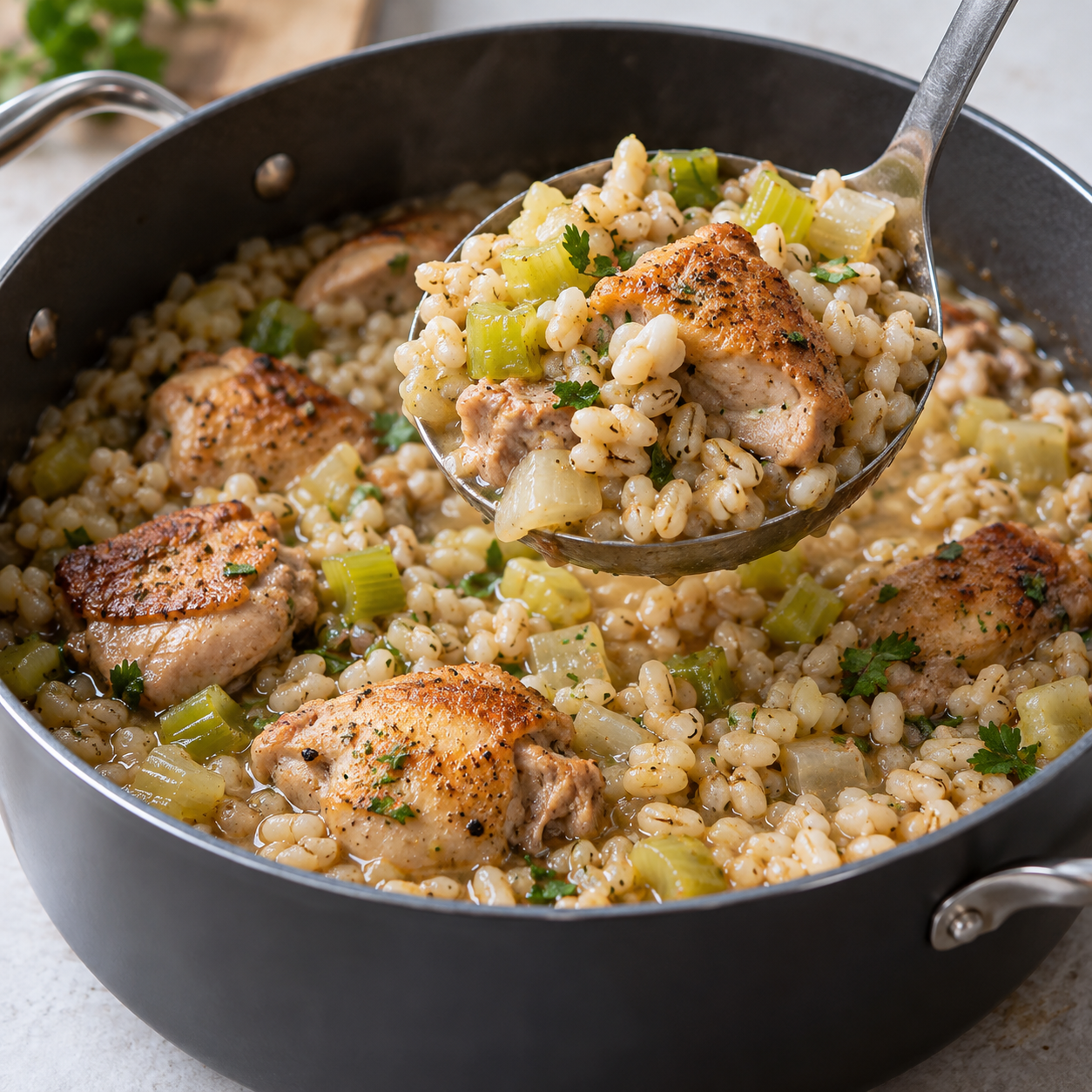
Chicken and Wheat One-Pot Bowl
Serves 4 · Preparation 15 min · Cooking 48 min · 5 minutes resting
A modern adaptation for home cooking. Times are approximate.
Ingredients
- 500 g boneless skinless chicken thighs, cut into 3 cm pieces
- 180 g pearled farro or spelt (wheat)
- 120 g onion, chopped
- 100 g celery, chopped
- 20 ml (4 tsp) olive oil
- 100 ml white wine
- 750 ml water or low-salt chicken stock
- 2.5 ml (½ tsp) dried thyme
- 2.5 ml (½ tsp) salt
- 1.25 ml (¼ tsp) black pepper
Method
- Heat oil in a wide saucepan. Brown chicken pieces for 4 minutes, turning once; they need not be cooked through yet.
- Add onion and celery; cook 4 minutes. Add farro, wine, stock, thyme and salt.
- Bring to a boil, cover loosely and simmer 25–40 minutes or according to the grain packet, stirring occasionally, until farro is tender and chicken reaches 74°C/165°F. Add hot water if dry.
- Rest covered 5 minutes, season with pepper and serve moist in bowls.
Substitutions and adjustments
- Pearl barley replaces farro; cook 30–40 minutes until tender.
- Water replaces wine.
Historical choices: Apicius 180 links grain to pork or poultry cooking liquor. Pearled farro, vegetables, chicken cut and the one-pot sequence are modern adaptations.
Troubleshooting: Tender chicken but firm grain: lift chicken out with a clean spoon, finish grain with extra liquid, then return chicken and reheat thoroughly.
Storage and reheating: Cool in shallow containers and refrigerate within 2 hours. Keep up to 3 days; reheat leftovers to 74°C/165°F until steaming throughout.
Kitchen note: Cook chicken to 74°C/165°F; avoid contaminating serving utensils with raw chicken.
Sources and further reading
- Apicius, Book 5, recipe 180 (Vehling numbering). Inspected surviving recipe and editorial notes. Apicius 180 links grain to pork or poultry cooking liquor. Pearled farro, vegetables, chicken cut and the one-pot sequence are modern adaptations. Quantities and modern timetable are our own; translation contains editorial additions.
- LacusCurtius: edition and translation notes. Explains limitations and bracketed additions of the 1936 Vehling translation; not proof of an exact ancient appearance.
- NYAM collections announcement via CHSTM. Institutional account places the recipe collection in the fourth and fifth centuries; individual material may be earlier.
Browse Ancient Recipes for Modern Kitchens · More creative work at Incoprea