MODERN KITCHENS · 012 / 100
Roman · Roman Mediterranean · Roman imperial tradition; surviving compilation approximately 4th–5th centuries CE
Evidence: historically informed adaptation. The historical evidence and modern cooking choices are distinguished below.
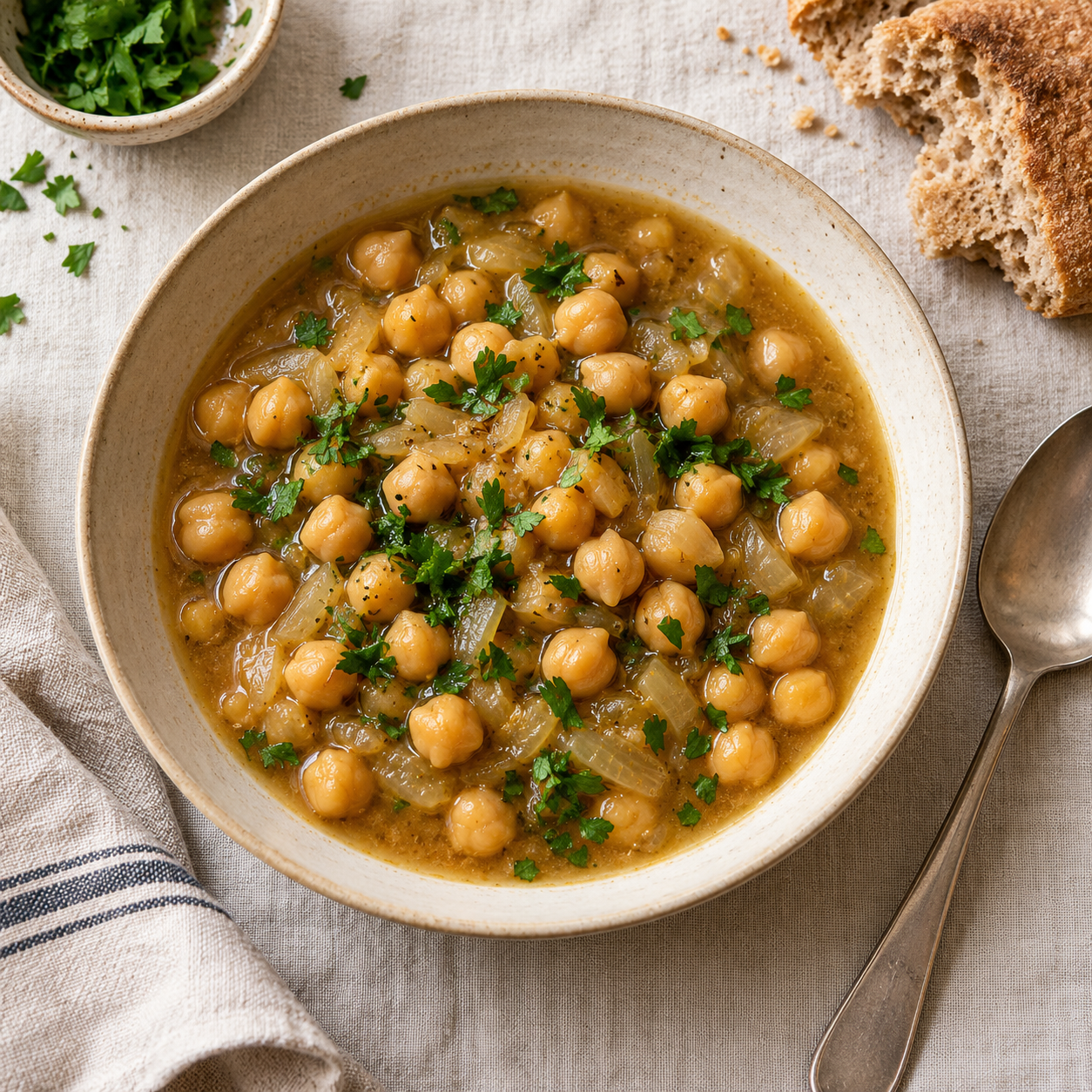
A cupboard tin becomes a warm bowl with very little preparation. Apicius 207 gives chickpeas a simple cumin, oil and wine seasoning. Our soup expands that brief instruction with measured water and softened onion. It is a historically informed adaptation: the source supports the principal flavour connection, while the brothy meal form is a modern choice.
Commercial canned chickpeas make this a weeknight dish rather than a long soaking project. Drain and rinse them to give control over the salt. Mash a small portion in the pan so the soup develops body without becoming a purée. Leave most chickpeas whole; their contrast with the liquid is the reason to serve the preparation in a bowl.
Bloom cumin briefly in warm oil before adding water, taking care that it does not burn. Wine contributes an acidic note; an extra splash of water and a little wine vinegar offer a straightforward alcohol-free alternative. The source does not supply these quantities. Read the edition notes for the translation’s limits rather than assuming a terse list is a fully measured original recipe.
The finished broth should lightly cling to the spoon while remaining easy to sip. Add water if the mashed chickpeas make it too dense. Parsley at the table is a modern garnish that keeps the bowl fresh. Serve with bread and a vegetable side for a complete light meal. No home fermentation or special historical pot is necessary to explore the documented seasoning.
Quick Chickpea and Cumin Soup
Serves 4 · Preparation 15 min · Cooking 22 min
A modern adaptation for home cooking. Times are approximate.
Ingredients
- 480 g drained canned chickpeas (two 400 g cans)
- 120 g onion, chopped
- 20 ml (4 tsp) olive oil
- 5 ml (1 tsp) ground cumin
- 100 ml white wine
- 650 ml water or low-salt vegetable stock
- 10 g parsley, chopped
- 1.25 ml (¼ tsp) salt
- 1.25 ml (¼ tsp) black pepper
Method
- Cook onion in oil over medium heat for 6 minutes until soft. Stir in cumin for 30 seconds.
- Add wine, chickpeas and water. Bring to a boil, then simmer 12 minutes.
- Mash about one quarter of the chickpeas against the side of the pan with a spoon; simmer 3 minutes.
- Season with salt and pepper, stir in parsley and serve.
Substitutions and adjustments
- Replace wine with 100 ml water and 5 ml wine vinegar.
- Canned butter beans offer a modern change of pulse.
Historical choices: Apicius 207 documents chickpeas with cumin, oil and wine. Onion, stock and soup consistency are modern additions.
Troubleshooting: Thin broth: mash another spoonful of chickpeas. Flat flavour: add a small pinch of salt before extra cumin.
Storage and reheating: Cool in shallow containers and refrigerate within 2 hours. Keep up to 3 days; reheat leftovers to 74°C/165°F until steaming throughout.
Kitchen note: Refrigerate perishable food within 2 hours; keep at 4°C/40°F or below.
Sources and further reading
- Apicius, Book 5, recipe 207 (Vehling numbering). Inspected surviving recipe and editorial notes. Apicius 207 documents chickpeas with cumin, oil and wine. Onion, stock and soup consistency are modern additions. Quantities and modern timetable are our own; translation contains editorial additions.
- LacusCurtius: edition and translation notes. Explains limitations and bracketed additions of the 1936 Vehling translation; not proof of an exact ancient appearance.
- NYAM collections announcement via CHSTM. Institutional account places the recipe collection in the fourth and fifth centuries; individual material may be earlier.
Browse Ancient Recipes for Modern Kitchens · More creative work at Incoprea