MODERN KITCHENS · 011 / 100
Roman · Roman Mediterranean · Roman imperial tradition; surviving compilation approximately 4th–5th centuries CE
Evidence: adapted surviving recipe. The historical evidence and modern cooking choices are distinguished below.
Lettuce can soften into a warm bowl while keeping its gentle flavour. Apicius’s lettuce preparation 130 describes a cooked lettuce mixture thickened with eggs. This adaptation chooses a soup consistency, modern romaine and a modest amount of grape juice. The surviving passage supplies the combination; our quantities and texture are practical interpretations.
Use firm lettuce hearts rather than a bag of delicate mixed leaves. The pale centres and ribs contribute enough body to make the soup feel substantial. Wash and dry them, then slice thinly so they cook quickly. A short simmer keeps the flavour mild; prolonged boiling can leave a dull colour and little identifiable lettuce texture.
Beat the eggs in a separate bowl, then introduce hot broth a little at a time before returning them to the pan. This modern tempering step makes curdling less likely. The soup still needs to reach a safe egg temperature, so use gentle heat and a thermometer rather than leaving the eggs barely warmed for the sake of smoothness.
Consult the edition notes when reading the terse source, especially its added culinary wording. This is neither a recovered exact broth nor a medical dish. Serve with plain bread and eat promptly. Fine cooked egg flecks are acceptable; large rubbery lumps usually indicate excessively high heat. If the soup seems too thick, loosen it with hot water after the eggs have cooked.
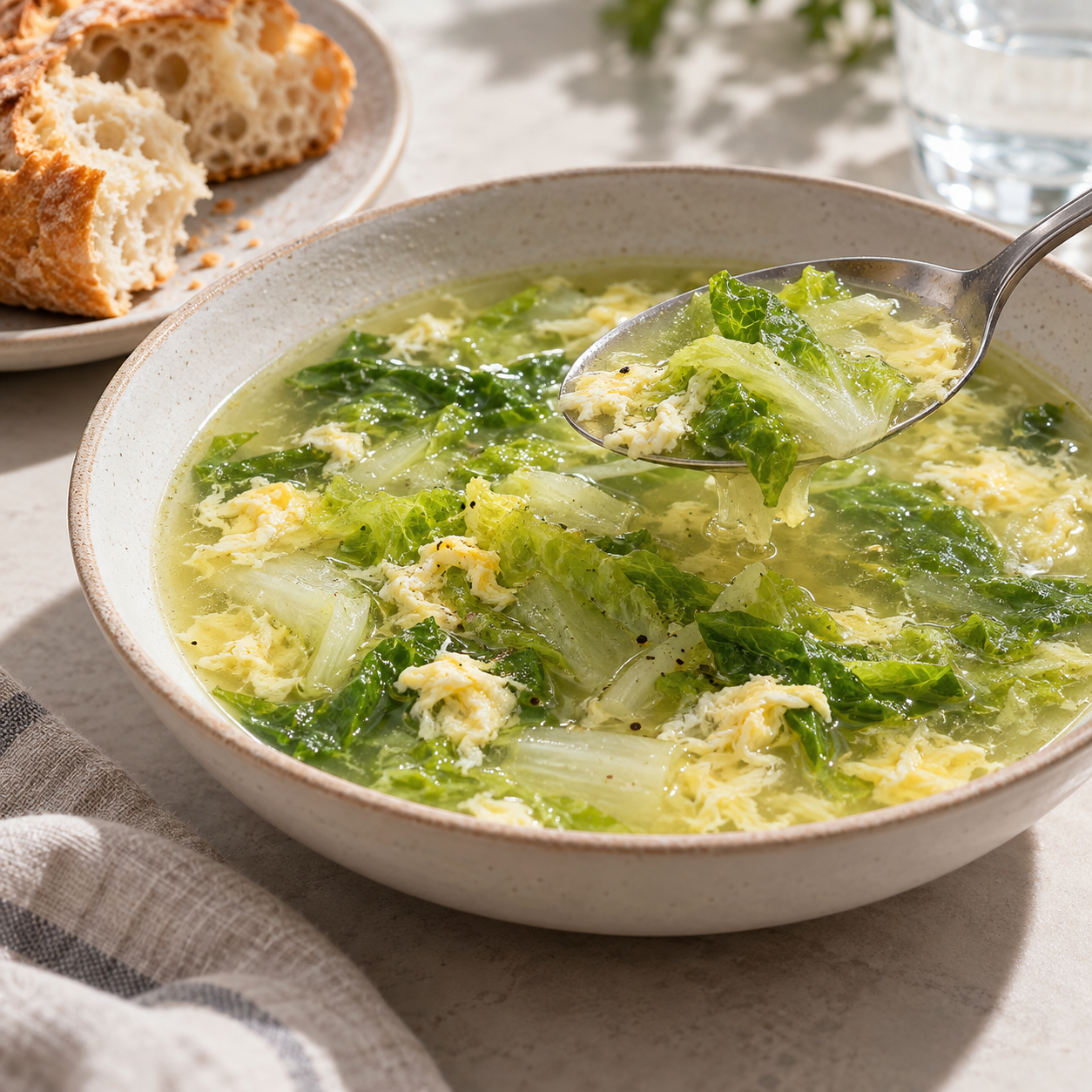
Warm Lettuce and Egg Soup
Serves 4 · Preparation 15 min · Cooking 20 min
A modern adaptation for home cooking. Times are approximate.
Ingredients
- 350 g romaine lettuce hearts, washed and thinly sliced
- 100 g onion, finely chopped
- 20 ml (4 tsp) olive oil
- 800 ml low-salt vegetable stock
- 40 ml white grape juice
- 3 large eggs
- 1.25 ml (¼ tsp) black pepper
- 1.25 ml (¼ tsp) salt, to taste
Method
- Soften onion in oil over medium-low heat for 5 minutes. Add lettuce and stir 2 minutes.
- Add stock and juice. Simmer gently 8 minutes until lettuce ribs soften.
- Beat eggs in a bowl. Slowly whisk in 200 ml hot soup, then stir this mixture back into the pan over low heat.
- Stir continuously for 3–5 minutes until the soup thickens slightly and reaches 71°C/160°F. Avoid a rolling boil. Add pepper, taste for salt and serve.
Substitutions and adjustments
- Little gem lettuce replaces romaine.
- Water with 5 g honey replaces grape juice as a deliberate modern substitute.
Historical choices: Apicius 130 gives lettuce cooked with liquid and thickened with eggs. Soup consistency and tempering are modern decisions.
Troubleshooting: Egg lumps: whisk gently or briefly blend after the soup reaches 71°C/160°F. Avoid boiling hard.
Storage and reheating: Refrigerate within 2 hours for up to 2 days. Reheat gently, stirring, to 74°C/165°F.
Kitchen note: Cook the egg-thickened soup to 71°C/160°F. Contains egg.
Sources and further reading
- Apicius, Book 4, recipe 130 (Vehling numbering). Inspected surviving recipe and editorial notes. Apicius 130 gives lettuce cooked with liquid and thickened with eggs. Soup consistency and tempering are modern decisions. Quantities and modern timetable are our own; translation contains editorial additions.
- LacusCurtius: edition and translation notes. Explains limitations and bracketed additions of the 1936 Vehling translation; not proof of an exact ancient appearance.
- NYAM collections announcement via CHSTM. Institutional account places the recipe collection in the fourth and fifth centuries; individual material may be earlier.
- USDA FSIS safe minimum temperature chart. Current modern endpoints used for poultry, ground meat, eggs, fish and reheating; historical instructions are not safety guidance.
Browse Ancient Recipes for Modern Kitchens · More creative work at Incoprea