MODERN KITCHENS · 010 / 100
Roman · Roman Mediterranean · Roman imperial tradition; surviving compilation approximately 4th–5th centuries CE
Evidence: historically informed adaptation. The historical evidence and modern cooking choices are distinguished below.
A cooked vegetable and a chopped egg can make a useful small lunch. Apicius’s cardoon instruction 112 provides that simple pairing with oil and a savoury dressing. Our version uses jarred artichoke hearts, a supermarket convenience related in culinary character but explicitly different from the cardoon stems named in the source.
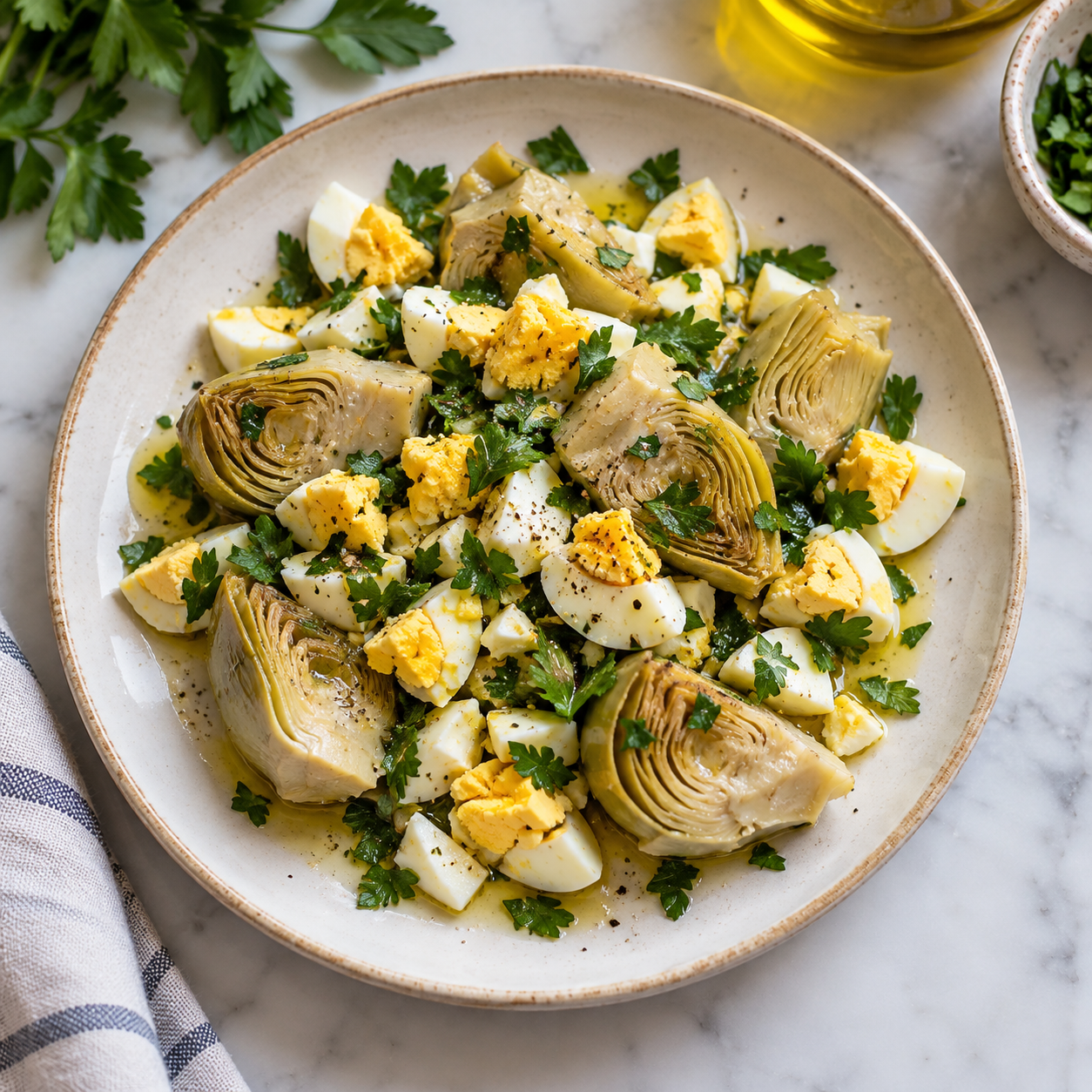
Drain the hearts thoroughly and choose ones packed in water or brine rather than strongly seasoned oil. If they taste very salty, rinse them briefly. Their soft layered texture needs only a little dressing. Hard-boiled egg adds substance and gentle richness; it should be chopped into recognizable pieces rather than blended into a sauce.
The ancient passage does not establish our vinegar quantity or cold serving temperature. We make those choices to give a bright, practical plate and consult the edition notes for the translation’s limits. A small amount of fresh parsley supplies colour and freshness, and is an additional modern garnish. Nothing here requires cleaning or cooking whole cardoons.
Serve with bread for a light meal or divide into smaller portions as a starter. Add the egg after tossing the artichokes so it keeps its shape. If the dish seems bland, adjust salt and vinegar a little at a time; the brine already supplies seasoning. Keep it chilled until serving, especially when preparing the eggs ahead, and do not treat the dressing as a preservative.
Artichoke Hearts with Chopped Egg
Serves 4 · Preparation 15 min · Cooking 12 min · 5 minutes cooling eggs
A modern adaptation for home cooking. Times are approximate.
Ingredients
- 400 g drained jarred artichoke hearts in water or brine
- 3 large eggs
- 20 ml (4 tsp) olive oil
- 10 ml (2 tsp) white-wine vinegar
- 10 g parsley, chopped
- 1.25 ml (¼ tsp) black pepper
- 1.25 ml (¼ tsp) salt, only if needed
Method
- Cover eggs with cold water in a saucepan. Bring to a boil, reduce to a gentle simmer and cook 10–12 minutes until yolks and whites are firm. Cool promptly under cold running water.
- Drain artichokes, rinse if salty and pat dry. Cut larger hearts in half.
- Whisk oil, vinegar and pepper. Toss artichokes with dressing. Peel and chop eggs, fold in with parsley, taste and add salt only if needed.
Substitutions and adjustments
- Water-packed canned asparagus is a practical modern alternative to artichokes.
Historical choices: Apicius 112 specifies cardoons with oil, savoury liquid and hard eggs. Jarred artichoke hearts, vinegar and parsley are modern substitutions/additions.
Troubleshooting: Watery plate: drain the hearts in a sieve for 10 minutes and pat dry before dressing.
Storage and reheating: Refrigerate covered for up to 2 days. Serve chilled; do not leave out longer than 2 hours.
Kitchen note: Cook eggs until whites and yolks are firm. Contains egg.
Sources and further reading
- Apicius, Book 3, recipe 112 (Vehling numbering). Inspected surviving recipe and editorial notes. Apicius 112 specifies cardoons with oil, savoury liquid and hard eggs. Jarred artichoke hearts, vinegar and parsley are modern substitutions/additions. Quantities and modern timetable are our own; translation contains editorial additions.
- LacusCurtius: edition and translation notes. Explains limitations and bracketed additions of the 1936 Vehling translation; not proof of an exact ancient appearance.
- NYAM collections announcement via CHSTM. Institutional account places the recipe collection in the fourth and fifth centuries; individual material may be earlier.
Browse Ancient Recipes for Modern Kitchens · More creative work at Incoprea