MODERN KITCHENS · 009 / 100
Roman · Roman Mediterranean · Roman imperial tradition; surviving compilation approximately 4th–5th centuries CE
Evidence: adapted surviving recipe. The historical evidence and modern cooking choices are distinguished below.
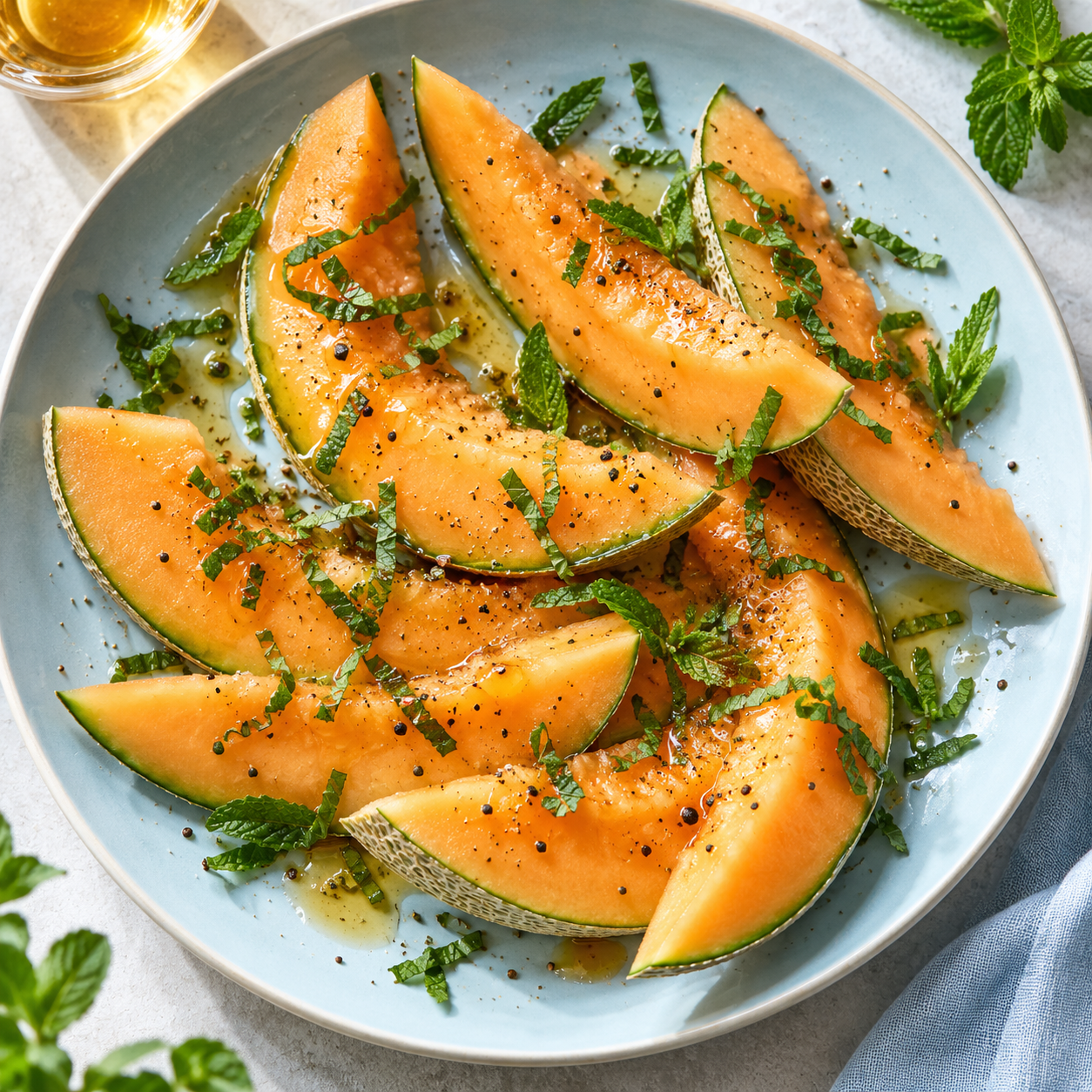
Sweet melon welcomes a savoury dressing when the seasoning stays light. Apicius’s melon passage 85 combines sweetness, sharpness and pepper around an ambiguously grouped melon-and-gourd preparation. This modern cold plate uses ripe supermarket cantaloupe. The variety, chill and serving form are our choices, not a claim that an ancient plate looked the same.
The principal trick is to keep the dressing small. Too much liquid makes juicy fruit seem watery, and too much honey hides a good melon’s own flavour. Mix the dressing before cutting the fruit so a measured spoonful can coat the pieces quickly. Fresh culinary mint replaces pennyroyal; there is no need to seek an unusual herb to make the basic contrast work.
The edition notes offer a useful warning about the English translation’s culinary interpretations. Here the raw-fruit presentation remains an informed reading rather than an exact recovered procedure. Commercial fish sauce is optional for savouriness. Omit it and use a pinch of salt for a vegetarian plate, keeping that modern substitution visible.
Cut the melon into broad pieces that are easy to eat and arrange them without fuss. Dress just before serving and grind the pepper finely enough that it does not feel gritty. This makes a refreshing starter or a small accompaniment to bread and cheese. It is a fresh dish, so refrigerate cut fruit promptly and avoid leaving a dressed platter on a warm table for hours.
Peppered Melon with Mint Dressing
Serves 4 · Preparation 12 min · Cooking 0 min
A modern adaptation for home cooking. Times are approximate.
Ingredients
- 700 g ripe cantaloupe or honeydew flesh, seeds removed
- 10 ml (2 tsp) white-wine vinegar
- 10 g (1½ tsp) honey
- 10 ml (2 tsp) olive oil
- 5 g fresh mint, finely sliced
- 1.25 ml (¼ tsp) finely ground black pepper
- 1.25 ml (¼ tsp) salt, or 5 ml commercial fish sauce
Method
- Wash the whole melon before cutting; remove rind and seeds and cut flesh into bite-size wedges.
- Whisk vinegar, honey, oil and salt or fish sauce.
- Arrange melon on a plate, drizzle with dressing and scatter mint and pepper over it. Serve immediately.
Substitutions and adjustments
- Use salt instead of fish sauce for vegetarian servings.
- Ordinary mint deliberately replaces pennyroyal.
Historical choices: Apicius 85 provides a sweet-sharp peppered flavour pattern. Cantaloupe, raw serving and culinary mint are modern specifications.
Troubleshooting: Very sweet melon: omit honey at first and taste the dressed fruit before adding any.
Storage and reheating: Store cut melon covered at 4°C/40°F or below for up to 2 days. Keep dressing separate; serve cold.
Kitchen note: Wash melon rind before cutting to avoid transferring surface contamination. Refrigerate cut melon within 2 hours.
Sources and further reading
- Apicius, Book 3, recipe 85 (Vehling numbering). Inspected surviving recipe and editorial notes. Apicius 85 provides a sweet-sharp peppered flavour pattern. Cantaloupe, raw serving and culinary mint are modern specifications. Quantities and modern timetable are our own; translation contains editorial additions.
- LacusCurtius: edition and translation notes. Explains limitations and bracketed additions of the 1936 Vehling translation; not proof of an exact ancient appearance.
- NYAM collections announcement via CHSTM. Institutional account places the recipe collection in the fourth and fifth centuries; individual material may be earlier.
Browse Ancient Recipes for Modern Kitchens · More creative work at Incoprea