MODERN KITCHENS · 007 / 100
Roman · Roman Mediterranean · Roman imperial tradition; surviving compilation approximately 4th–5th centuries CE
Evidence: adapted surviving recipe. The historical evidence and modern cooking choices are distinguished below.
Cucumber need not stay cold and crisp. Apicius’s brief cucumber instruction 82 describes peeled cucumber cooked in a wine or savoury liquid. This adaptation turns that idea into a quick warm side dish. The precise measurements and short simmer are modern decisions, chosen to keep supermarket cucumber tender while retaining recognizable pieces.
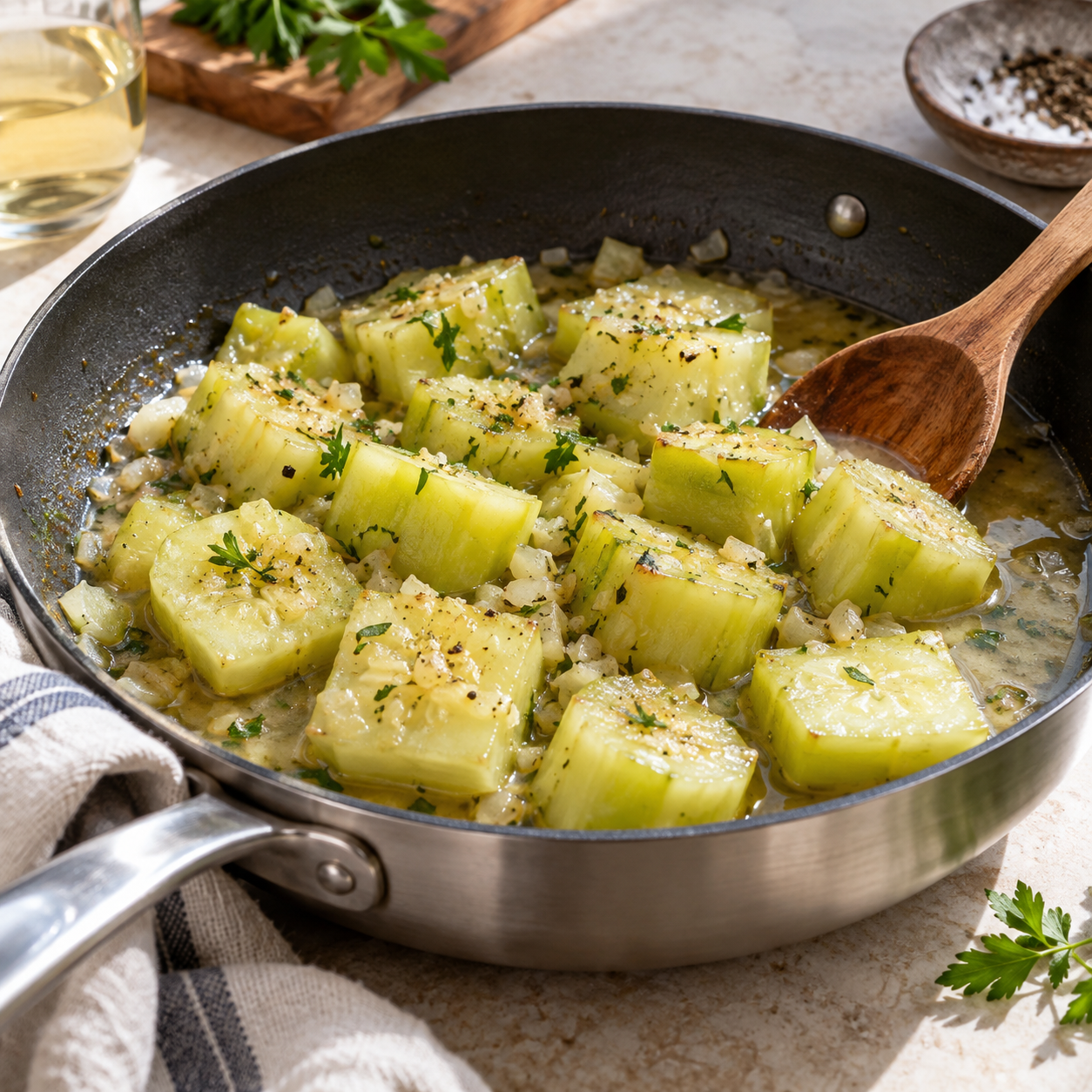
Peeling removes the tougher skin, and scooping out a watery seed core prevents the pan from becoming a puddle. Seedless cucumbers usually need less trimming. Cut the pieces thickly enough that they do not collapse before the sauce reduces. A wide frying pan helps moisture evaporate and gives every piece contact with the warm oil.
We use white wine and a little vegetable stock, with black pepper at the end. Wine-free cooks can use additional stock; the flavour will change, but the method remains useful. The edition notes explain why the available English translation should be read critically, including its modern culinary additions. We do not import the surrounding text’s digestion claims into the recipe.
The finished cucumber should feel tender but offer a little resistance to the fork. Serve it immediately, while the small amount of liquid still glistens around the pieces. It works beside baked fish, cooked beans or bread. If the cucumber releases more water than expected, take it out briefly and reduce the sauce alone instead of cooking the vegetable until it dissolves.
Warm Wine-Braised Cucumber
Serves 4 · Preparation 10 min · Cooking 15 min
A modern adaptation for home cooking. Times are approximate.
Ingredients
- 700 g cucumbers
- 20 ml (4 tsp) olive oil
- 100 ml white wine
- 100 ml low-salt vegetable stock
- 1.25 ml (¼ tsp) salt
- 1.25 ml (¼ tsp) black pepper
Method
- Peel cucumbers, halve lengthwise, scoop out watery seeds and cut into 3 cm pieces.
- Heat oil in a wide pan. Add cucumber and cook 2 minutes, turning gently.
- Add wine, stock and salt. Simmer uncovered 8–12 minutes until cucumber is tender and about 45 ml (3 tbsp) liquid remains.
- Sprinkle with pepper, taste and serve warm.
Substitutions and adjustments
- Use 200 ml vegetable stock in place of wine and stock combined.
Historical choices: Apicius 82 attests cooked peeled cucumber in wine or savoury liquid. Supermarket variety, stock and quantities are modern specifications.
Troubleshooting: Pieces falling apart: stop cooking and drain off excess liquid; next time cut larger pieces.
Storage and reheating: Refrigerate up to 2 days; reheat gently to 74°C/165°F. Texture softens after storage.
Kitchen note: Refrigerate perishable food within 2 hours; keep at 4°C/40°F or below.
Sources and further reading
- Apicius, Book 3, recipe 82 (Vehling numbering). Inspected surviving recipe and editorial notes. Apicius 82 attests cooked peeled cucumber in wine or savoury liquid. Supermarket variety, stock and quantities are modern specifications. Quantities and modern timetable are our own; translation contains editorial additions.
- LacusCurtius: edition and translation notes. Explains limitations and bracketed additions of the 1936 Vehling translation; not proof of an exact ancient appearance.
- NYAM collections announcement via CHSTM. Institutional account places the recipe collection in the fourth and fifth centuries; individual material may be earlier.
Browse Ancient Recipes for Modern Kitchens · More creative work at Incoprea