MODERN KITCHENS · 006 / 100
Roman · Roman Mediterranean · Roman imperial tradition; surviving compilation approximately 4th–5th centuries CE
Evidence: adapted surviving recipe. The historical evidence and modern cooking choices are distinguished below.
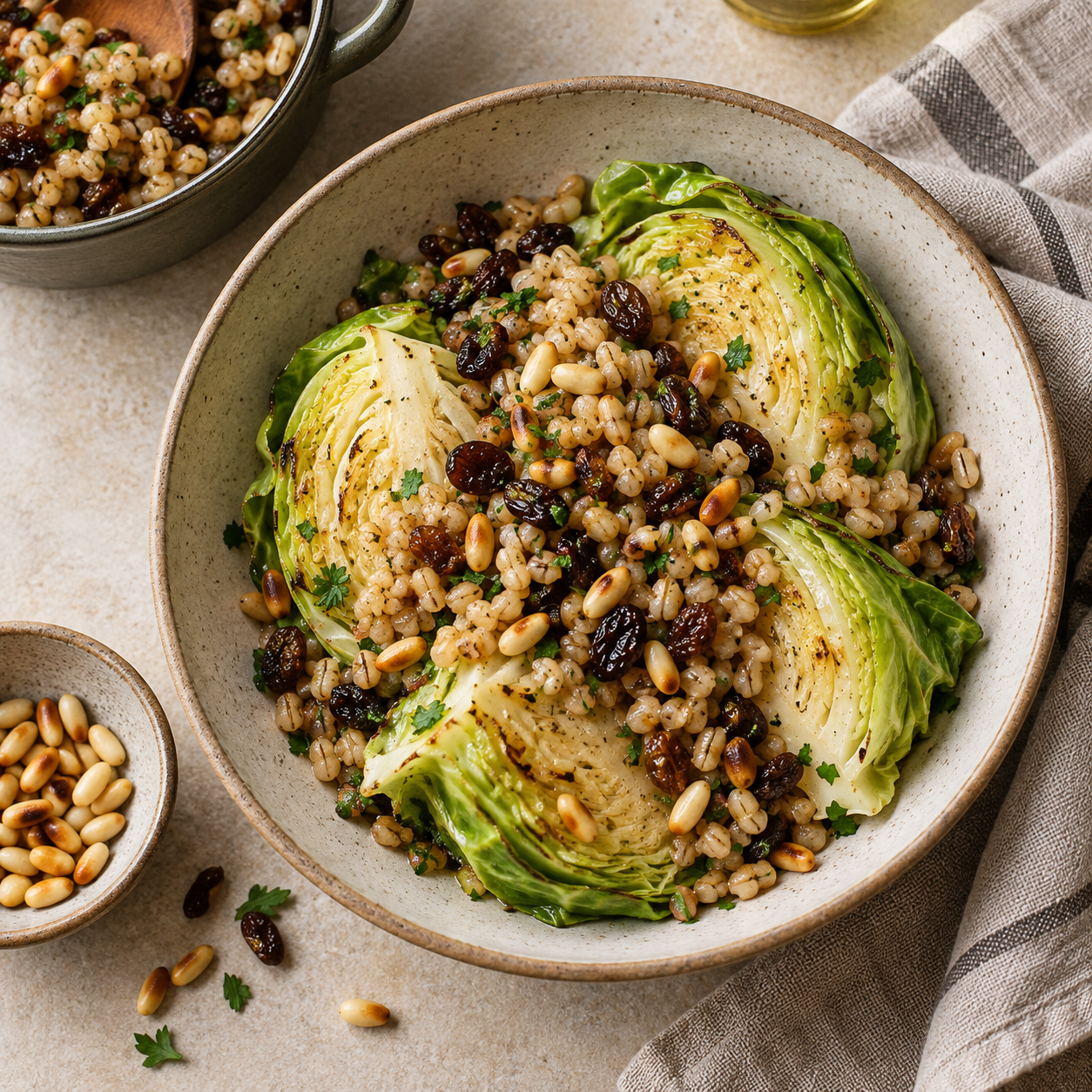
This bowl gives cabbage a substantial grain topping. Apicius’s recipe 92 brings cooked cabbage parts together with grain, pine nuts and raisins. It offers a different meal shape from a simple dressed vegetable: the soft leaves sit beneath something chewy, sweet and crunchy. Our version specifies supermarket pearl barley as an easy grain alternative.
The source’s grain terminology and the translation should not be made more certain than they are. If pearled spelt or farro is available, use it according to the packet; pearl barley is a plainly modern substitution, not an assertion about Roman crop identity. Cook the grain separately so the cabbage can keep a little structure.
Thin wedges allow the cabbage core to hold the leaves together. A gentle simmer cooks the thick centre without scattering the whole head through the pan. Toast the nuts briefly and watch them closely because their colour changes quickly. Soaking the raisins in hot water gives them a softer bite and prevents dry sweetness from dominating a mouthful.
For context and caution, consult the edition notes alongside the recipe passage. Our oil quantity and serving size are modern judgements. Spoon the grain over the cabbage rather than mashing everything together, and add a little cooking water if the bowl seems dry. It can serve as a vegetarian light meal or a generous accompaniment; its contrasting textures matter more than an elaborate presentation.
Cabbage, Grain and Raisin Bowl
Serves 4 · Preparation 15 min · Cooking 35 min
A modern adaptation for home cooking. Times are approximate.
Ingredients
- 650 g green cabbage, in small wedges
- 180 g pearl barley or pearled farro
- 35 g raisins
- 25 g pine nuts
- 25 ml (5 tsp) olive oil
- 2.5 ml (½ tsp) ground cumin
- 2.5 ml (½ tsp) salt
- 1.25 ml (¼ tsp) black pepper
- 750 ml water for grain, plus water for cabbage
Method
- Cook barley in 750 ml water for 25–35 minutes or according to the packet until tender. Drain.
- While the grain simmers, soak raisins in hot water for 10 minutes; drain. Toast nuts in a dry pan for 2–3 minutes until lightly golden.
- At the same time, simmer cabbage wedges in a wide pan with 2 cm water and salt, covered, for 10–15 minutes until the core is tender. Drain.
- Toss grain with oil, cumin, pepper, raisins and nuts. Spoon over cabbage and serve warm.
Substitutions and adjustments
- Pearled farro or spelt replaces barley; follow its cooking instructions.
- Toasted sunflower seeds replace pine nuts as a modern budget option.
Historical choices: Apicius 92 associates cabbage with grain, nuts and raisins. Pearl barley and this bowl arrangement are modern choices; no exact ancient grain is claimed.
Troubleshooting: Dry grain: stir in 30–60 ml hot water before serving. Overcooked cabbage: serve as a spoonable bowl rather than trying to keep wedges intact.
Storage and reheating: Cool in shallow containers and refrigerate within 2 hours. Keep up to 3 days; reheat leftovers to 74°C/165°F until steaming throughout.
Kitchen note: Refrigerate perishable food within 2 hours; keep at 4°C/40°F or below.
Sources and further reading
- Apicius, Book 3, recipe 92 (Vehling numbering). Inspected surviving recipe and editorial notes. Apicius 92 associates cabbage with grain, nuts and raisins. Pearl barley and this bowl arrangement are modern choices; no exact ancient grain is claimed. Quantities and modern timetable are our own; translation contains editorial additions.
- LacusCurtius: edition and translation notes. Explains limitations and bracketed additions of the 1936 Vehling translation; not proof of an exact ancient appearance.
- NYAM collections announcement via CHSTM. Institutional account places the recipe collection in the fourth and fifth centuries; individual material may be earlier.
Browse Ancient Recipes for Modern Kitchens · More creative work at Incoprea