MODERN KITCHENS · 004 / 100
Roman · Roman Mediterranean · Approximately 1st century CE
Evidence: adapted surviving recipe. The historical evidence and modern cooking choices are distinguished below.
A spoonful of mustard can be sharp and creamy at once. Columella’s Book XII, section 57, written in the first century CE, preserves a table-mustard preparation with vinegar, pine kernels and starch. This small refrigerated batch takes that combination as its starting point while choosing a simple modern method.
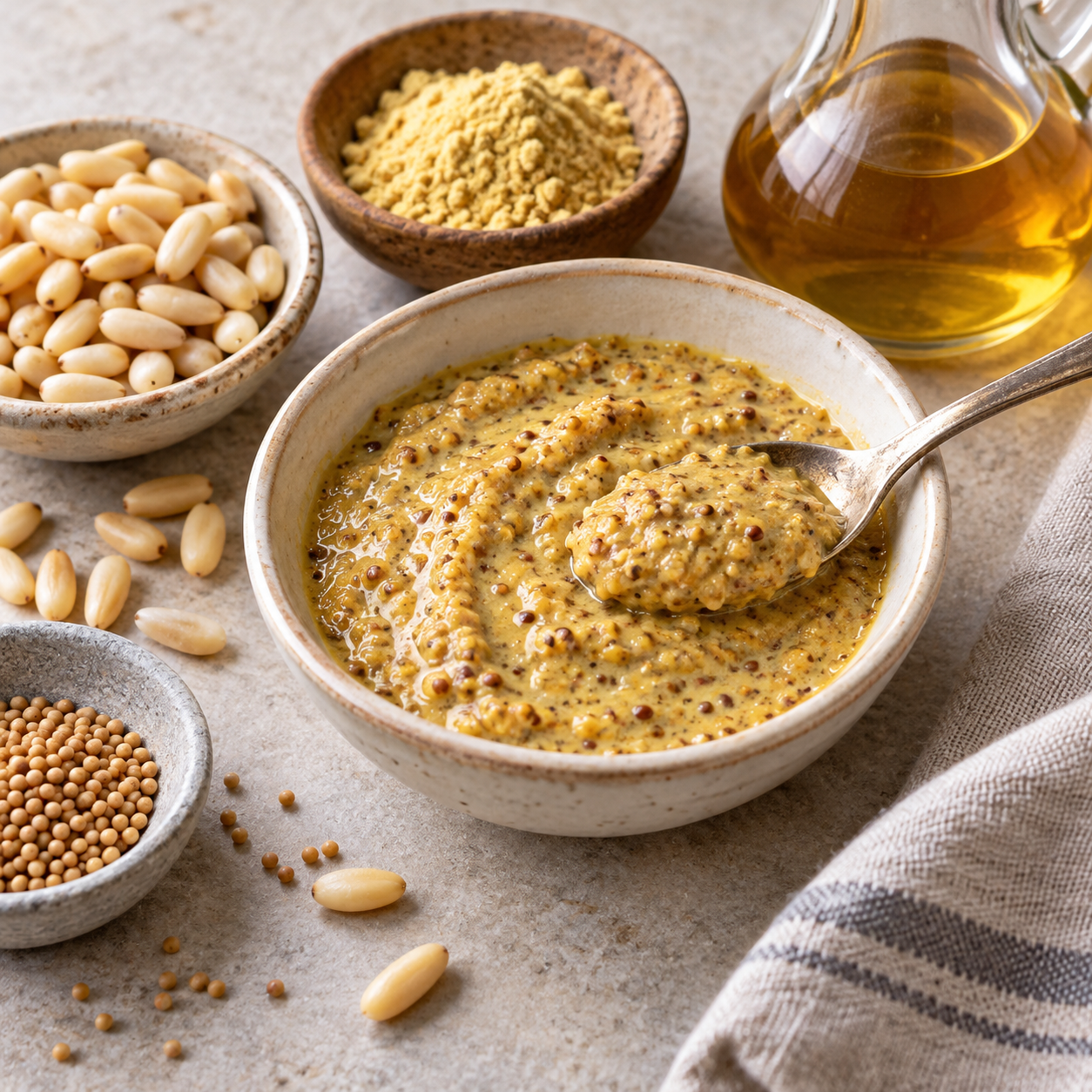
The ancient instructions also include treatment with hot coals and a nitre solution. We do not reproduce that process. Ground commercial mustard gives a controllable supermarket ingredient, and a brief simmer cooks the starch. Nothing about the sauce’s usefulness depends on recreating unfamiliar historical processing or keeping it on a shelf for an unspecified period.
Washington State University’s account of mustard identifies Columella in the plant’s culinary history. That context supports reading the condiment as part of a Roman agricultural tradition; it does not validate our proportions. We grind the pine nuts into a fine paste, using a little water to help an ordinary blender or mortar.
The finished sauce should coat a spoon, with a gentle graininess from the nuts. Taste it only after it has cooled slightly, when the balance of acid and pungency is easier to judge. Serve a teaspoon with cooked meat, grain bowls or roasted vegetables. A tiny amount of honey is optional for a milder modern version and is clearly separate from the selected ancient passage.
Pine-Nut Table Mustard
Serves 10 · Preparation 10 min · Cooking 3 min · 20 minutes cooling
A modern adaptation for home cooking. Times are approximate.
Ingredients
- 30 g pine nuts
- 15 g (about 2 tbsp) ground mustard powder
- 60 ml white-wine vinegar
- 90 ml water
- 4 g (1 tsp) cornflour/cornstarch
- 1.25 ml (¼ tsp) salt
Method
- Grind pine nuts with 30 ml of the water to a smooth paste using a small blender or mortar.
- Mix mustard with remaining water, vinegar, salt and starch in a small saucepan. Whisk in nut paste.
- Bring to a gentle simmer, stirring continuously, and cook 2 minutes until it lightly coats a spoon.
- Cool, transfer to a clean covered container and refrigerate. Serve in teaspoon portions.
Substitutions and adjustments
- Blanched almonds replace pine nuts with a firmer texture; grind very finely.
- For a milder modern version, stir in 5 g honey after cooking.
Historical choices: Columella XII.57 records vinegar, mustard, pine kernels and starch. Ground mustard, cornflour and a brief simmer replace the ancient processing method.
Troubleshooting: Too thick after chilling: stir in 5–10 ml water. Too sharp: serve a smaller amount, or add the optional honey.
Storage and reheating: Refrigerate up to 4 days in a covered container. This fresh condiment is not shelf-stable.
Kitchen note: Contains mustard and pine nuts. Omit the source’s coal-and-nitre processing.
Sources and further reading
- Columella, De Re Rustica XII.57, Latin text. Primary passage includes pine kernels, starch and vinegar; unsafe/unfamiliar coal-nitre processing not followed.
- Washington State University: Mustard. University context identifies Columella as first-century writer and discusses ancient mustard.
Browse Ancient Recipes for Modern Kitchens · More creative work at Incoprea