MODERN KITCHENS · 002 / 100
Roman · Roman Mediterranean · Approximately 2nd century BCE
Evidence: adapted surviving recipe. The historical evidence and modern cooking choices are distinguished below.
The appeal of this breakfast is its modesty: grain, water and milk become a warm spoonful without honey, cheese or eggs. Cato’s section 86, from Republican Italy around the second century BCE, describes cooking cleaned wheat in water, then introducing milk until the dish becomes creamy. Our recipe follows that sequence rather than the richer Punic porridge beside it.
Coarse bulgur is the easy supermarket choice here. It has already been processed, so it softens much sooner than whole wheat kernels. That convenience changes the timetable and texture; it is not proof that ancient cooks bought the same product. Use the water stage to swell the grain, then stir in milk gradually while watching the bottom of the pan.
The other food passages in Cato provide context for his terse practical writing. They also remind us to separate a surviving instruction from a complete modern recipe. A pinch of salt, our pan size, measured milk and a suggested breakfast portion are decisions made for present-day cooking.
Keep the final porridge loose enough to fall slowly from the spoon. It thickens as it stands, and different bags of bulgur absorb different amounts of liquid. Add an extra splash of milk if necessary. Serve plain first so its gentle grain flavour remains noticeable; optional fruit at the table is a modern accompaniment, not part of Cato’s recorded formula.
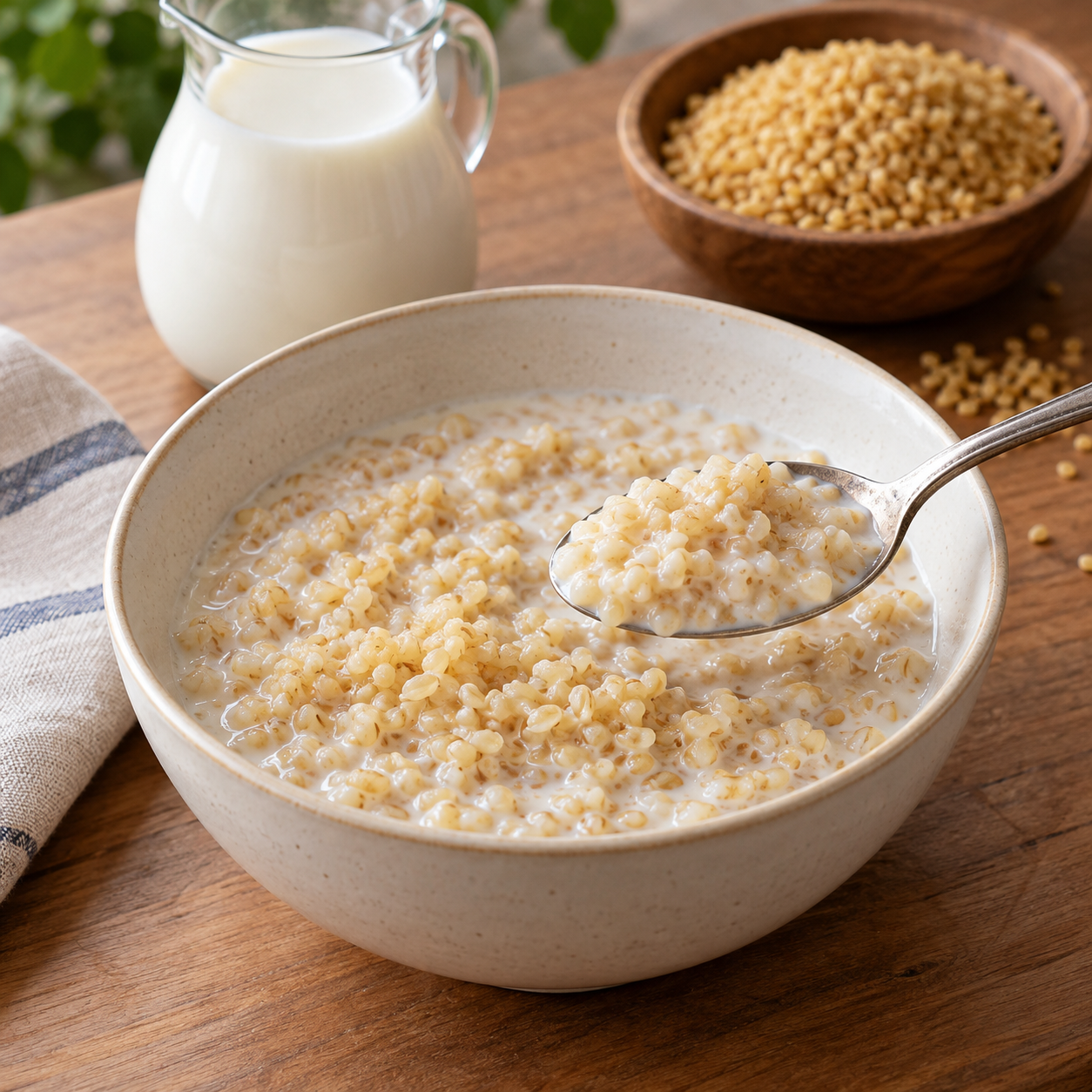
Creamy Wheat and Milk Porridge
Serves 4 · Preparation 5 min · Cooking 22 min · 2 minutes resting
A modern adaptation for home cooking. Times are approximate.
Ingredients
- 180 g (about 1 cup) coarse bulgur wheat
- 450 ml water
- 400 ml pasteurized milk, plus 50–100 ml if needed
- 1.25 ml (¼ tsp) salt
Method
- Place bulgur and water in a saucepan. Bring to a boil, reduce heat and simmer covered for 10–12 minutes until the grain is tender; follow the packet if longer.
- Add milk and salt. Simmer uncovered over low heat for 8–10 minutes, stirring frequently, until creamy.
- Rest 2 minutes. Add extra warm milk if stiff and spoon into bowls.
Substitutions and adjustments
- Unsweetened oat milk is a modern dairy-free substitute.
- Cracked wheat may need 30–40 minutes in water; add more water as needed.
Historical choices: Cato 86 supplies the water-then-milk sequence. Bulgur is a modern convenience, not an identified ancient product.
Troubleshooting: Scorched milk: transfer the unburned top portion to a clean pan without scraping the bottom.
Storage and reheating: Refrigerate within 2 hours for up to 3 days. Reheat with 50 ml milk per portion to 74°C/165°F, stirring well.
Kitchen note: Refrigerate perishable food within 2 hours; keep at 4°C/40°F or below.
Sources and further reading
- Cato, On Agriculture 86. Primary water-cooked wheat finished with milk; adjacent section 85 is a different rich porridge.
- Cato, On Agriculture 104–125. Inspected food instructions within the broader agricultural work; provides textual context, not our bulgur timing.
Browse Ancient Recipes for Modern Kitchens · More creative work at Incoprea