MODERN KITCHENS · 001 / 100
Roman · Roman Mediterranean · Approximately 2nd century BCE
Evidence: adapted surviving recipe. The historical evidence and modern cooking choices are distinguished below.
A little bowl can carry a great deal of flavour. Cato’s olive preparation in section 119, written in Republican Italy around the second century BCE, combines chopped olives, vinegar, oil and herbs. Its short instruction gives this modern relish a clear textual starting point, although our balance of ingredients is newly chosen.
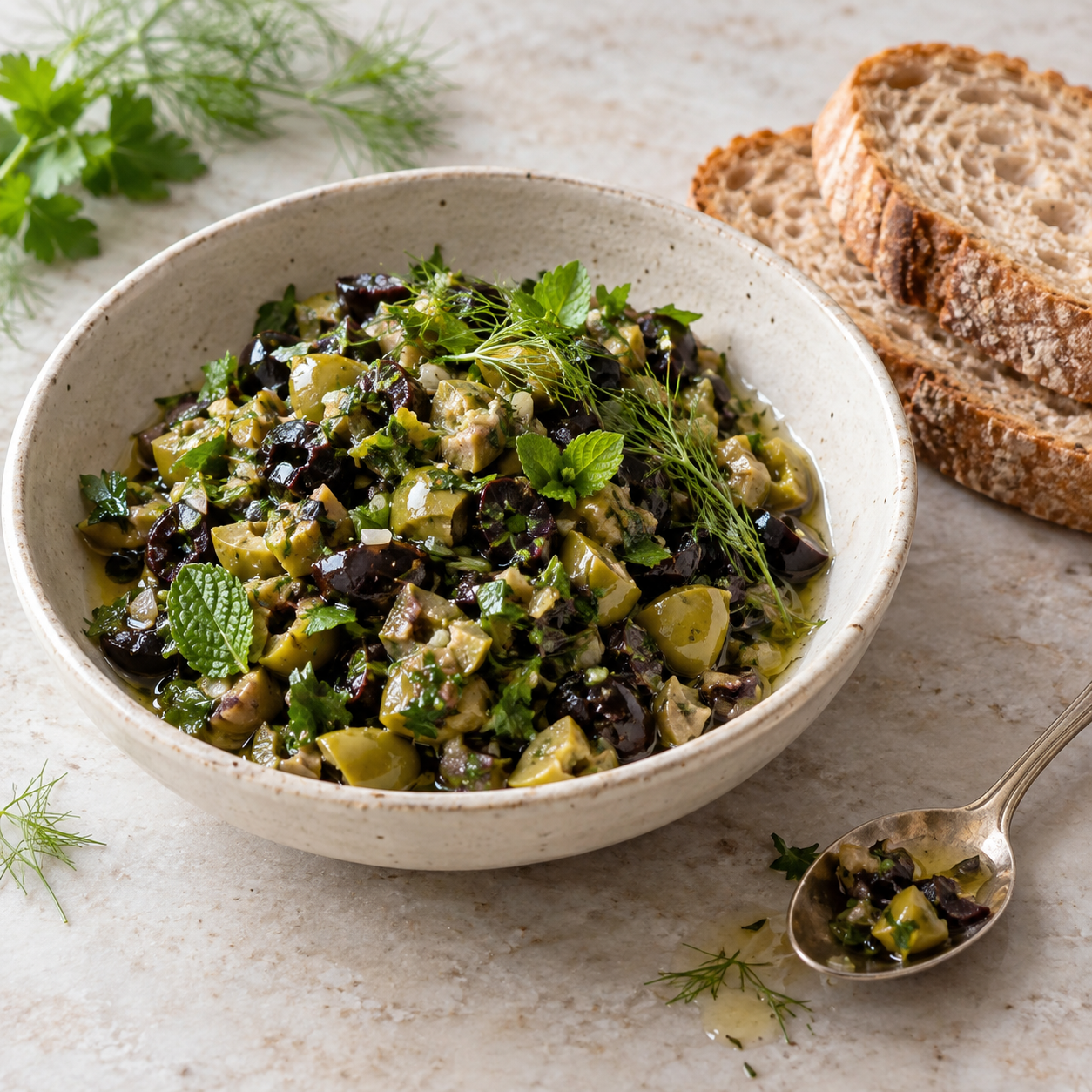
The practical shortcut is to start with commercially cured, pitted olives. Curing raw olives at home would turn a ten-minute accompaniment into a preservation project. Drain the olives well, then chop by hand so that green and dark pieces remain visible. A food processor is convenient, but a few extra seconds can reduce the mixture to paste.
Our version uses parsley in place of rue, while mint, fennel and cumin supply contrasting fresh and warm notes. That replacement is a modern choice rather than a claim about Cato’s own bowl. The adjacent culinary sections show how practical food instructions sit within his larger agricultural work; they do not establish our serving suggestion.
Spread a small spoonful over bread, or serve beside plain beans and roast vegetables. Taste before adding salt because commercial olives vary greatly. Letting the mixture stand briefly mellows the chopped herbs, but this is a fresh refrigerated accompaniment, not an ancient storage method. The oil should lightly bind the pieces rather than cover them in a deep pool.
Olive and Herb Relish
Serves 6 · Preparation 10 min · Cooking 0 min · 10 minutes standing
A modern adaptation for home cooking. Times are approximate.
Ingredients
- 180 g pitted mixed green and black olives, drained
- 20 ml (4 tsp) olive oil
- 10 ml (2 tsp) red-wine vinegar
- 10 g flat-leaf parsley, finely chopped
- 5 g fresh mint, finely chopped
- 5 g fennel fronds, finely chopped
- 1.25 ml (¼ tsp) ground cumin
- 1.25 ml (¼ tsp) ground coriander
Method
- Check olives for missed pits and chop them coarsely.
- Mix olives, oil, vinegar, herbs and spices in a bowl.
- Leave 10 minutes, stir and taste; add a little more vinegar if too oily. Serve a tablespoon per person with bread.
Substitutions and adjustments
- Parsley deliberately replaces rue.
- Use ¼ tsp fennel seed if fennel fronds are unavailable.
Historical choices: Cato 119 preserves an olive-and-herb formula; commercial curing, parsley and measured proportions are modern choices.
Troubleshooting: Too salty: mix in another 10 g parsley and serve sparingly; rinsing olives before chopping also helps.
Storage and reheating: Refrigerate covered for up to 3 days. Let stand 10 minutes before serving; this is not shelf-stable.
Kitchen note: Refrigerate perishable food within 2 hours; keep at 4°C/40°F or below.
Sources and further reading
- Cato, On Agriculture 119. Primary formula explicitly lists chopped olives, oil, vinegar and herbs; rue is omitted.
- Cato, On Agriculture 74–90. Inspected adjacent culinary instructions establish the agricultural-text context, without supplying our modern serving quantities.
Browse Ancient Recipes for Modern Kitchens · More creative work at Incoprea