069 / 75 · Dessert Molds and Party Finishers
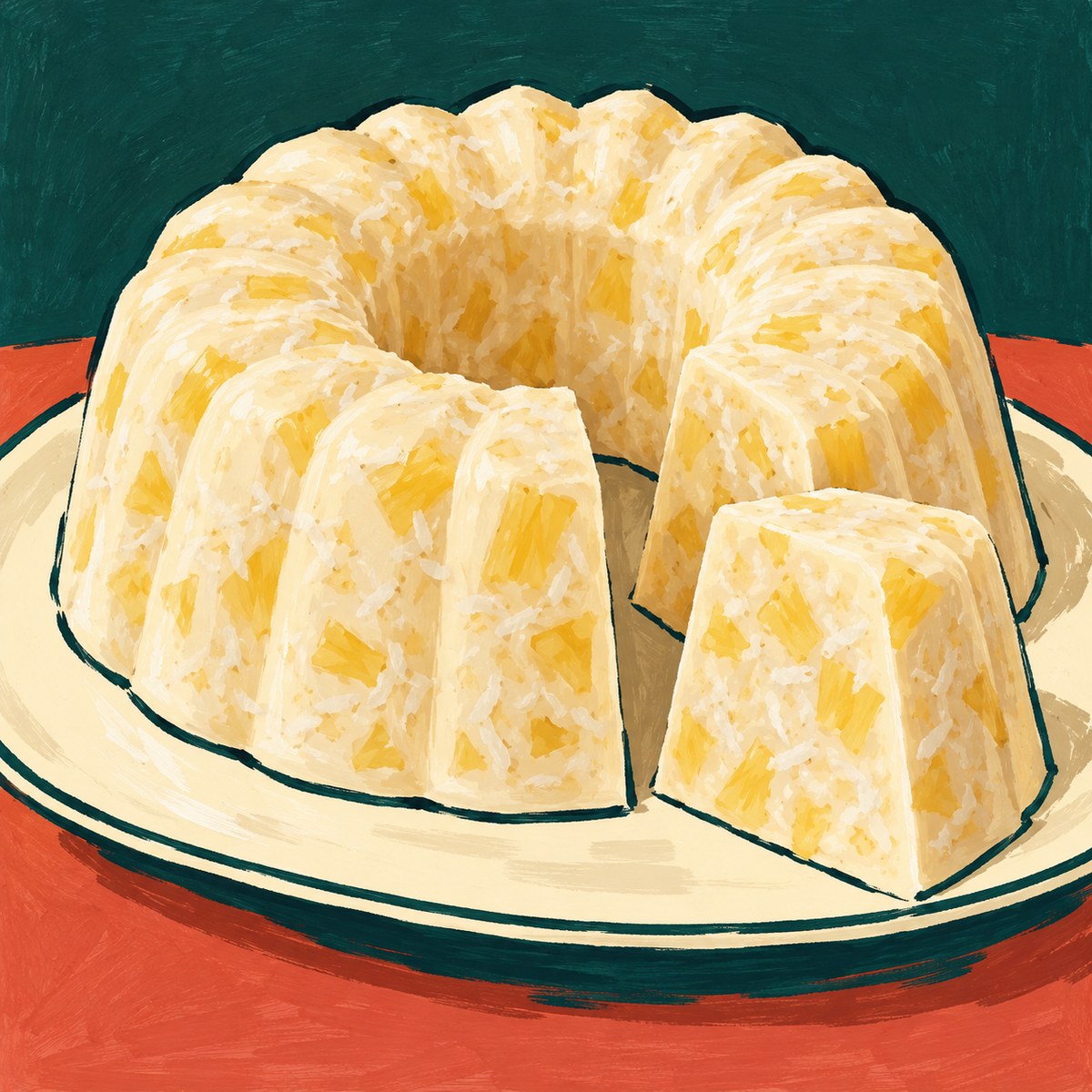
Pineapple Coconut Cream Ring
One coconut-pineapple cream ring, about 4 cups (950 ml); 8 modest dessert portions · Active 35 min · Total 10 hr 30 min
Print recipe · PDFFull-fat canned coconut milk makes an ivory ring with small canned pineapple pieces and fine coconut texture. It contains no dairy ingredient as written, but it still uses animal gelatin. Canned pineapple is essential to the set.
Coconut milk is not a thin beverage
Use full-fat canned coconut milk, stir the cream and liquid together thoroughly, then measure 400 milliliters. A carton coconut drink or sweetened cream of coconut has a different water, fat and sugar balance. Warm the measured portion gently to dissolve gelatin, then add the cold portion and canned juice. Hard boiling can split the coconut emulsion and is not part of the method.
Fine coconut belongs inside the slice
Use commercially ready-to-eat unsweetened desiccated coconut, not long hard ribbons or an unmeasured toasted topping. It adds a little fine texture throughout the base. Pineapple is canned and heat processed, then drained, blotted and cut small before weighing. Fresh or raw frozen pineapple can prevent gelatin setting. The ring is gently sweetened and has no alcohol, hidden whipped cream or extra fruit sauce. A dairy-free ingredient list is not a guarantee about cross-contact or suitability for every allergy, so check actual labels.
Ingredients
- 2 standard ¼-ounce envelopes unflavored powdered gelatin (14 g total), of specified setting strength
- 6 tablespoons cold drinking water (90 ml)
- 1 can full-fat unsweetened coconut milk (about 13½ fl oz/400 ml), stirred completely smooth and divided
- 1 cup canned heat-processed pineapple juice (240 ml)
- 2 tablespoons plus 1 teaspoon granulated sugar (30 g)
- 1 cup canned heat-processed pineapple pieces AFTER draining (180 g), packed in juice, patted dry and cut small
- ¼ cup commercially ready-to-eat unsweetened desiccated coconut (20 g)
- ¼ teaspoon neutral oil (1.25 ml), for wiping mold
Set out
Sieve and clean towel, Knife and board, Small saucepan, Mixing bowl and whisk, Scale and measuring jug, Metal ring mold of at least 1¼-liter capacity, Paper towel, Food thermometer, Cold platter, Refrigerator
Allergens
Coconut. Check labels and substitutions.
Make it
- Check pineapple and juice are canned heat-processed products. Drain/dry fruit, dice small and weigh 180 g. Stir coconut milk completely smooth and measure 400 ml. Check mold capacity, dry and oil lightly. Bloom gelatin over 90 ml cold water in saucepan 5–10 minutes.
- Add 200 ml coconut milk and sugar. Warm gently while stirring until dissolved, about 120–140°F (50–60°C); remove before boiling. Whisk in remaining 200 ml cold coconut milk, then gradually whisk in measured canned pineapple juice.
- Refrigerate 15–30 minutes until lightly thickened, stirring gently. Fold in cold dry pineapple and fine desiccated coconut. Spoon into ring with at least ½ inch (1.25 cm) headroom; refrigerate excess separately.
- Cover and refrigerate at 40°F (4°C) or below at least 8 hours until firm. Allow 10½ hours total. For unmolding, set a cold plate beside the refrigerator. Dip only the outside of the metal mold in warm, not hot, water, about 100°F (38°C), for 5–8 seconds without letting water touch food. Dry the outside, loosen just the upper edge with a clean fingertip and invert onto the plate. If stuck, repeat a brief dip rather than shaking violently. Refrigerate again immediately if not serving now. Cut 8 modest dessert portions.
Gelatin starting strength
Use food-grade unflavored powdered gelatin with a manufacturer benchmark of 7 g for about 2 cups (500 ml) plain liquid. Weigh the stated grams: envelope sizes and powder density vary. A flavored dessert packet, collagen peptides, sheet gelatin or agar is not an equal substitute.
Cold service
This is an original retro-inspired recipe, not a recovered 1960s formula. Gelatin is animal-derived; the vegetable ingredients do not make the dish vegetarian. A reliable refrigerator and the stated earlier ingredient deadlines are essential.
Ingredient labels
Coconut can cause allergy. Check all actual labels and shared-equipment statements; no dairy ingredient does not certify freedom from cross-contact. Gelatin is animal-derived.
A useful detail
Water, coconut milk and canned juice total 730 ml, plus 30 g sugar, 180 g drained fruit and 20 g coconut. Fourteen grams gelatin supports roughly 950 ml. Coconut milk fat and fine coconut give an opaque ivory base; no dairy or raw pineapple is included.
Another way
- Use 180 g drained canned pear dice instead of pineapple while keeping 240 ml measured canned pineapple juice.
- Use 20 g commercially ready-to-eat very finely chopped coconut chips instead of desiccated coconut, checking for hard large fragments.
Keep it well
Keep covered at 40°F (4°C) or below. Use within 2 days of assembly or the earliest ingredient deadline, whichever comes first. Include the overnight setting period in that limit. Keep total unrefrigerated preparation and serving below 2 hours, or 1 hour above 90°F (32°C). Chill slices promptly after service; discard food exceeding those limits. Do not freeze; freezing damages the gel and releases water.