045 / 75 · Lunch Plates and Buffet Slices
Cheddar Broccoli Cottage Cheese Mold
6 small broccoli-cheddar cottage-cheese molds, about 145–150 ml each; cold side portions · Active 40 min · Total 11 hr
Print recipe · PDFFinely chopped cooked broccoli and grated cheddar give these cottage-cheese molds green and gold flecks. The broccoli is fully cooked, drained and cold before folding. Individual servings keep the side portions neat without a large dairy loaf to carve.
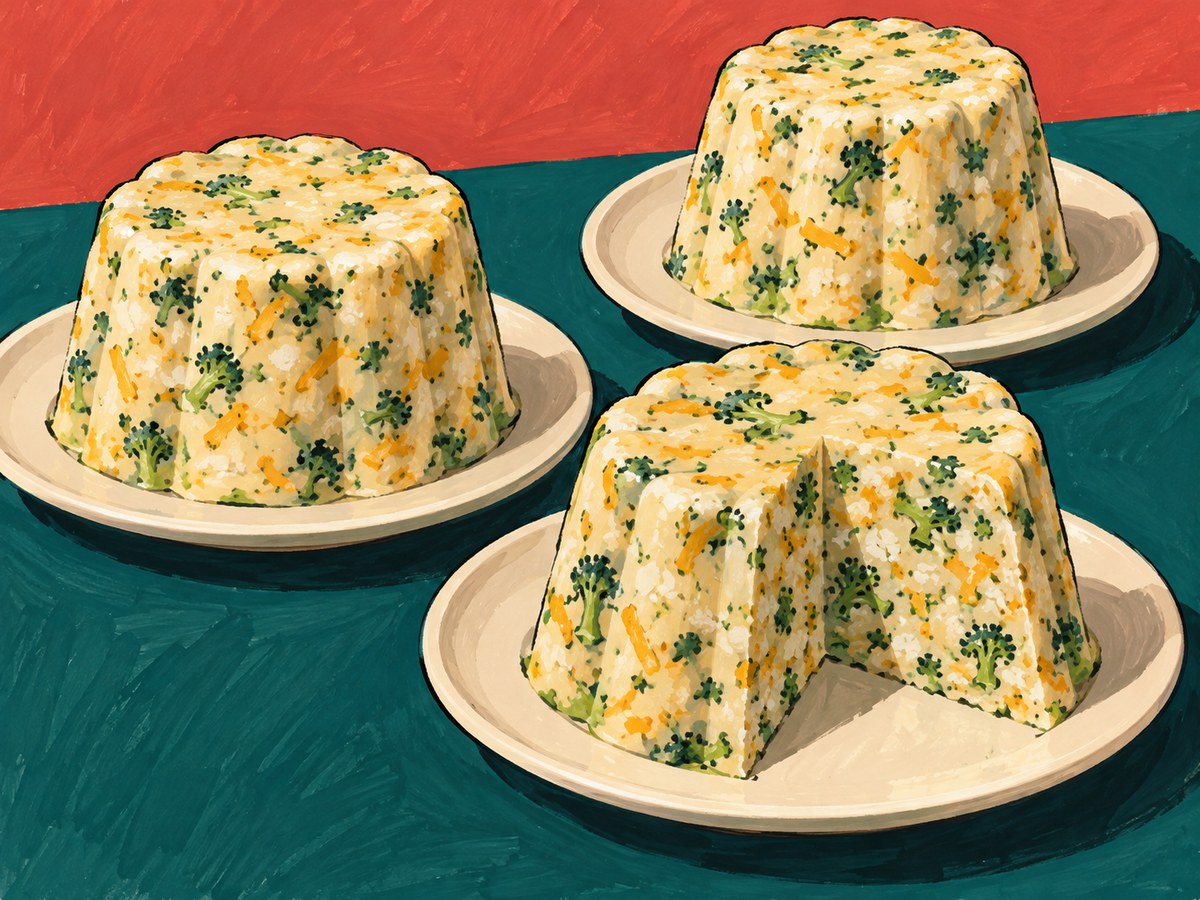
Broccoli is cooked before it is chopped
Follow the package’s full cooking instructions if starting frozen broccoli. Fresh broccoli should be steamed or simmered until stems and florets are tender, not merely dipped in hot water for color. Drain well and cool promptly in a shallow refrigerator dish. Chop the cold cooked pieces finely and weigh 200 grams after draining, leaving out any tough stalk fragments. That keeps both texture and water under control.
Grated cheese stays inside the base
Blend cottage cheese with part of the measured milk for a smoother base. Finely grate the cheddar so it disperses easily through the thickened dairy rather than sitting as thick cold shreds. The cheese does not need to melt into a cooked sauce; the gelatin is dissolved separately, then tempered. The finished molds have small green broccoli pieces and fine gold cheddar flecks throughout, not a raw broccoli crown or a cheese topping. Six side portions are useful at a cold table, but the word vegetable is not a claim that this animal-gelatin dish is vegetarian.
Ingredients
- 1½ cups finely chopped fully cooked broccoli AFTER draining (200 g), safely chilled; prepare extra before cooking/draining
- Drinking water for cooking broccoli, drained rather than added to gel
- 2 standard ¼-ounce envelopes unflavored powdered gelatin (14 g total), of specified setting strength
- 6 tablespoons cold drinking water (90 ml)
- 1 cup pasteurized whole milk (240 ml), divided
- 1¼ cups pasteurized full-fat cottage cheese (300 g), kept cold
- 2¾ oz pasteurized ready-to-eat cheddar (80 g), about ¾ cup finely grated and kept cold
- 2 teaspoons lemon juice (10 ml)
- ⅛ teaspoon black pepper
- ½ teaspoon neutral oil (2.5 ml), divided for wiping molds
Set out
Broccoli steaming/simmering pan or permitted microwave vessel, Sieve and shallow cooling dish, Knife and board, Fine grater, Blender suitable for cold dairy, Small saucepan, Mixing bowl and whisk, Scale and measuring jug, 6 metal individual molds of at least 200 ml capacity each, Paper towel, Food thermometer, Cold plates, Refrigerator
Allergens
Milk. Check labels and substitutions.
Make it
- Cook broccoli fully by package directions if frozen; if fresh, steam or simmer until florets and stems are tender, usually 6–10 minutes. Drain well, spread in shallow dish and refrigerate promptly until cold, allowing 30–45 minutes. Chop finely, remove tough pieces and weigh 200 g drained cooked broccoli.
- Check mold capacities, dry and oil lightly. Blend cottage cheese with 180 ml milk until smoother; transfer to bowl and refrigerate. Bloom gelatin over 90 ml cold water in saucepan 5–10 minutes. Add remaining 60 ml milk and warm gently while stirring until dissolved, about 120–140°F (50–60°C); take off heat before boiling.
- Whisk 3 tablespoons cold cottage-cheese base gradually into warm gelatin. Once smooth and lukewarm, whisk back into remaining cold base with lemon and pepper. Refrigerate 15–25 minutes, stirring gently, until lightly thickened. Fold in cold finely chopped broccoli and cold finely grated cheddar.
- Divide among six molds, about 145–150 ml each, leaving at least ½ inch (1.25 cm) headroom; keep excess in separate refrigerator cup. Cover and refrigerate at 40°F (4°C) or below at least 8 hours until firm. Allow 11 hours total including broccoli cooking/cooling and setting.
- For unmolding, set a cold plate beside the refrigerator. Dip only the outside of the metal mold in warm, not hot, water, about 100°F (38°C), for 5–8 seconds without letting water touch food. Dry the outside, loosen just the upper edge with a clean fingertip and invert onto the plate. If stuck, repeat a brief dip rather than shaking violently. Refrigerate again immediately if not serving now. Serve one small cold side mold per person.
Gelatin starting strength
Use food-grade unflavored powdered gelatin with a manufacturer benchmark of 7 g for about 2 cups (500 ml) plain liquid. Weigh the stated grams: envelope sizes and powder density vary. A flavored dessert packet, collagen peptides, sheet gelatin or agar is not an equal substitute.
Cold service
This is an original retro-inspired recipe, not a recovered 1960s formula. Gelatin is animal-derived; the vegetable ingredients do not make the dish vegetarian. A reliable refrigerator and the stated earlier ingredient deadlines are essential.
Ingredient labels
Read cheese, cottage cheese and gelatin labels. Animal gelatin makes this nonvegetarian even if a cheese uses vegetarian rennet.
A useful detail
Water, milk and lemon total 340 ml; cottage cheese 300 g, cheddar 80 g and cooked drained broccoli 200 g make roughly 900 ml thick mixture. Fourteen grams gelatin supports the moist dairy/vegetable base. Six 200 ml molds provide space above 150 ml fills.
Another way
- Use 200 g fully cooked cold drained finely chopped cauliflower instead of broccoli for a paler side.
- Use 80 g pasteurized ready-to-eat red Leicester instead of cheddar, naming the cheese change and keeping the same fine grating.
Keep it well
Keep covered at 40°F (4°C) or below. Use within 2 days of assembly or the earliest ingredient deadline, whichever comes first. Include the overnight setting period in that limit. Keep total unrefrigerated preparation and serving below 2 hours, or 1 hour above 90°F (32°C). Chill slices promptly after service; discard food exceeding those limits. Do not freeze; freezing damages the gel and releases water. Start with freshly cooked broccoli as directed and retain its original clock.