038 / 75 · Lunch Plates and Buffet Slices
Roast Beef Beet Sour Cream Mold
4 small beet-beef molds, about 210–220 ml each; modest cold beef-course portions · Active 35 min · Total 10 hr 30 min
Print recipe · PDFBlended beet and sour cream make a rosy base around small pieces of cooked roast beef. Individual molds highlight the opaque color instead of aiming for a clear red aspic. Plain cooked unpickled beet is used, with vinegar measured separately.
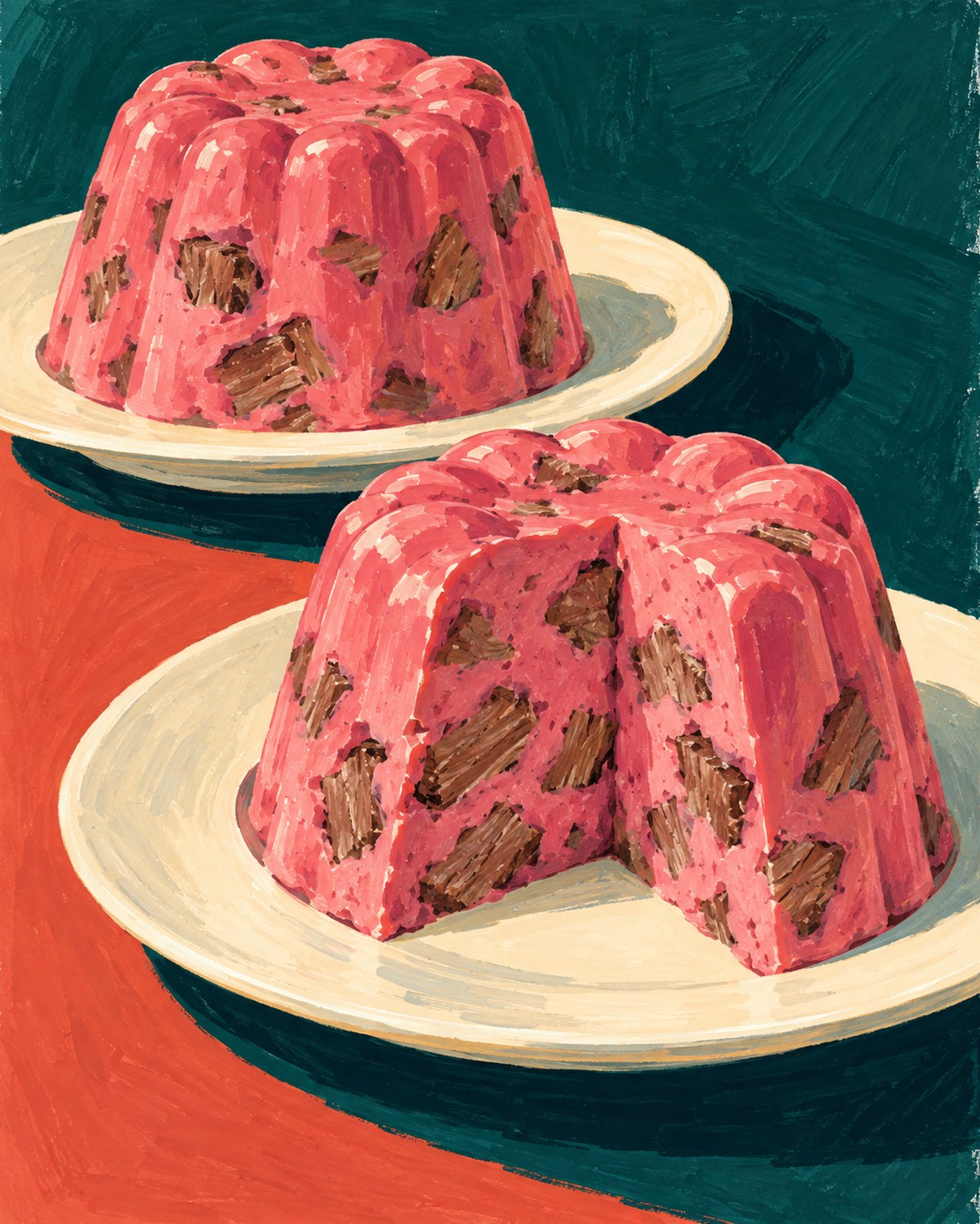
Beet color without an extra jar of liquid
Use ready-to-eat plain cooked beet, canned or vacuum packed, and drain it before weighing. Pickled beet includes a different acidic liquid and often added sugar, so it is not the default ingredient. Blend the beet with measured milk until smooth. The gel will be opaque rose pink, not a transparent ruby block, because beet purée and sour cream remain in the base.
Beef remains in short cooked pieces
Choose fully cooked ready-to-eat roast beef with its original date known. Cut across the grain into short small pieces before the base is ready; long strips are awkward to separate in a soft cold slice. Keep the beef refrigerated while the dairy is tempered and thickened. Prepared horseradish is noncreamy here and only a teaspoon, so it should not create a white sauce on top. Each of four portions contains about 62 grams of cooked meat, leaving the rest of the meal to be chosen separately.
Ingredients
- 7 oz plain ready-to-eat cooked unpickled beet AFTER draining (200 g)
- ¾ cup pasteurized whole milk (180 ml), divided
- ⅔ cup pasteurized sour cream (150 g), kept cold
- 2 standard ¼-ounce envelopes unflavored powdered gelatin (14 g total), of specified setting strength
- 6 tablespoons cold drinking water (90 ml)
- 1 tablespoon cider vinegar (15 ml)
- 1 teaspoon prepared noncreamy horseradish (5 g), label-checked
- 9 oz fully cooked ready-to-eat plain roast beef (250 g), safely chilled, cut across grain into ½-inch (1 cm) pieces
- ⅛ teaspoon black pepper
- ½ teaspoon neutral oil (2.5 ml), divided for wiping molds
Set out
Blender suitable for cold beet/dairy, Small saucepan, Mixing bowl and whisk, Knife and board, Scale and measuring jug, 4 metal individual molds of at least 300 ml capacity each, Paper towel, Food thermometer, Cold plates, Refrigerator
Allergens
Milk. Check labels and substitutions.
Make it
- Check beef’s cooked ready-to-eat state and original deadline through service; keep cold. Blend drained beet with 120 ml milk until smooth, then whisk with sour cream in bowl and refrigerate. Check mold capacities, dry and oil lightly.
- Bloom gelatin over 90 ml cold water in saucepan 5–10 minutes. Add remaining 60 ml milk and warm gently while stirring until dissolved, about 120–140°F (50–60°C); remove before boiling. Whisk 3 tablespoons cold beet-dairy base gradually into warm gelatin. Once smooth and lukewarm, whisk back into remaining cold base with vinegar, horseradish and pepper.
- Refrigerate 15–30 minutes until lightly thickened, stirring gently. Fold in cold short beef pieces. Divide among molds, about 210–220 ml each, leaving at least ½ inch (1.25 cm) headroom; refrigerate any excess separately.
- Cover and refrigerate at 40°F (4°C) or below at least 8 hours until firm. Allow 10½ hours total from cooked chilled meat and ready-to-eat beet.
- For unmolding, set a cold plate beside the refrigerator. Dip only the outside of the metal mold in warm, not hot, water, about 100°F (38°C), for 5–8 seconds without letting water touch food. Dry the outside, loosen just the upper edge with a clean fingertip and invert onto the plate. If stuck, repeat a brief dip rather than shaking violently. Refrigerate again immediately if not serving now. Serve one modest cold beef-course mold per person.
Gelatin starting strength
Use food-grade unflavored powdered gelatin with a manufacturer benchmark of 7 g for about 2 cups (500 ml) plain liquid. Weigh the stated grams: envelope sizes and powder density vary. A flavored dessert packet, collagen peptides, sheet gelatin or agar is not an equal substitute.
Cold service
This is an original retro-inspired recipe, not a recovered 1960s formula. Gelatin is animal-derived; the vegetable ingredients do not make the dish vegetarian. A reliable refrigerator and the stated earlier ingredient deadlines are essential.
Ingredient labels
Prepared beef and horseradish may add soy, wheat, sulfites or other allergens; check actual labels.
A useful detail
Water, milk and vinegar total 285 ml, with 200 g cooked beet, 150 g sour cream and 250 g cooked beef. Fourteen grams gelatin supports roughly 860 ml mixture. Four 300 ml molds leave room above about 215 ml each.
Another way
- Use 250 g fully cooked chilled ready-to-eat roast pork instead of beef, naming the changed meat and respecting its original deadline.
- Omit the 5 g horseradish for a gentler beet flavor without replacing it with extra liquid.
Keep it well
Keep covered at 40°F (4°C) or below and use within 2 days of assembly AND within 3 days of the meat’s original cooking, or an earlier commercial opening/use-by deadline, whichever comes first. The overnight set counts. Keep cumulative unrefrigerated preparation and service below 2 hours, or 1 hour above 90°F (32°C); discard beyond those limits. Do not freeze the finished gel.