033 / 75 · Lunch Plates and Buffet Slices
White Bean Roasted Garlic Aspic
6 small white-bean garlic aspics, about 145–150 ml each; cold side portions · Active 35 min · Total 11 hr
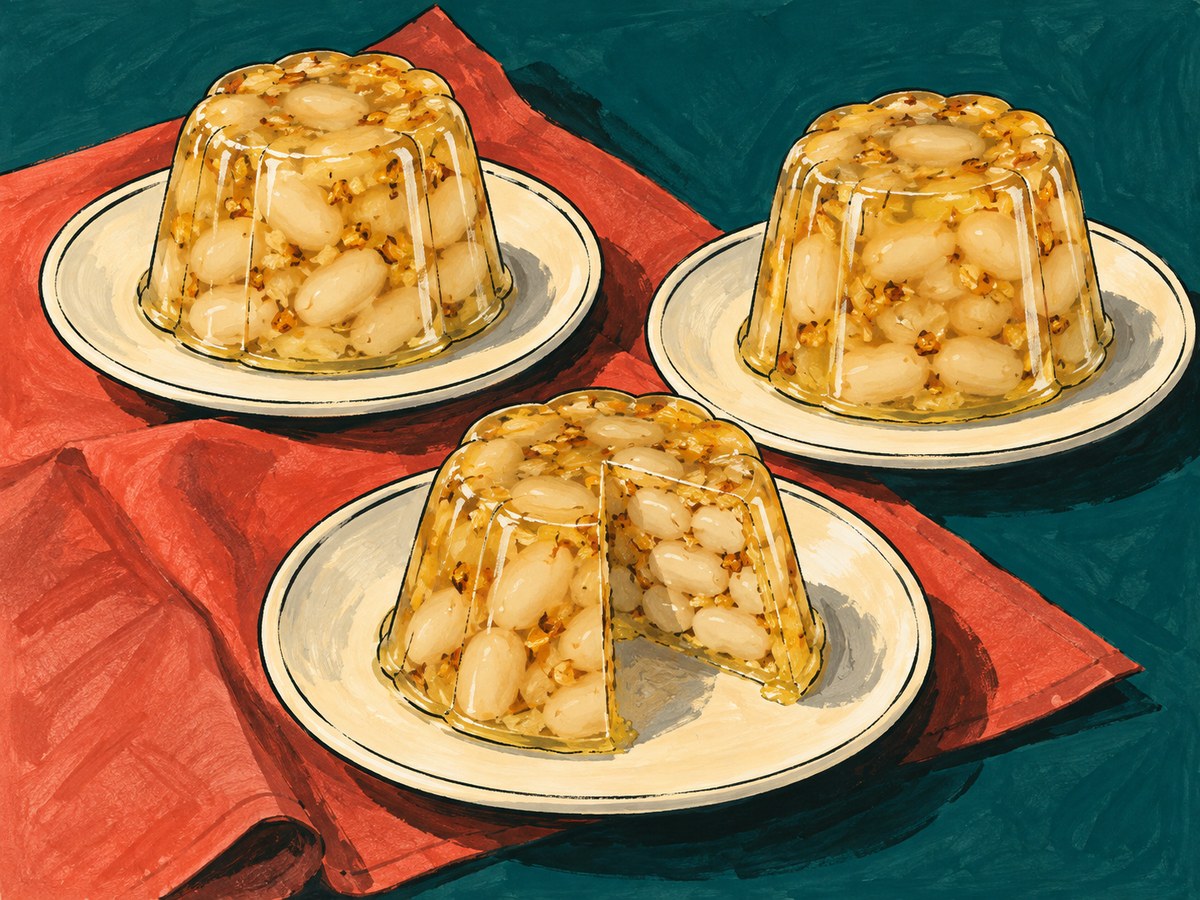
Print recipe · PDFRoasting a few garlic cloves gives a mellow flavor to pale white-bean aspic. The cloves are cooked as part of this method, then mashed into the broth. Six individual molds keep the white beans visible without the weight of a large packed loaf.
A small foil parcel, not a jar of garlic oil
Four peeled cloves roast with a measured teaspoon of oil inside a closed foil parcel on a baking tray. Use the soft cloves and the oil immediately in the recipe, then chill the assembled food. This is not a recipe for storing homemade garlic-in-oil at room temperature. If the cloves need longer to become completely soft, let that endpoint take priority over a fixed minute count.
Some cloudiness belongs in the broth
Mash roasted garlic with a little of the measured warm broth before returning it to the rest. Tiny garlic flecks and a faint cloudy cast are expected; do not strain the flavor away in pursuit of a glass-clear mold. Ready-to-eat canned white beans are drained well and folded in only after light thickening. Keep the beans whole with a gentle spatula movement. A side portion contains about 50 grams of beans, so arrange the rest of a meal separately. Despite the plant ingredients, the setting agent is animal gelatin.
Ingredients
- 4 medium peeled garlic cloves (about 12 g)
- 1 teaspoon olive oil (5 ml), for roasting garlic
- 2 standard ¼-ounce envelopes unflavored powdered gelatin (14 g total), of specified setting strength
- 6 tablespoons cold drinking water (90 ml)
- 2 cups clear ready-to-use low-sodium vegetable broth (480 ml), divided
- 1 tablespoon lemon juice (15 ml)
- 1½ cups ready-to-eat canned small white beans AFTER draining (300 g), safely chilled
- ⅛ teaspoon black pepper
- ½ teaspoon neutral oil (2.5 ml), divided for wiping molds
Set out
Oven and small baking tray, Foil, Fork and small bowl, Sieve, Small saucepan, Mixing bowl and spoon, Scale and measuring jug, 6 metal individual molds of at least 200 ml capacity each, Paper towel, Food thermometer, Cold plates, Refrigerator
Allergens
No major US allergen identified in the base ingredients. Check labels and substitutions.
Make it
- Heat oven to 350°F (180°C). Put peeled garlic and olive oil in small foil parcel, seal and place on tray. Roast 25–35 minutes until completely soft and lightly golden, not scorched. Open carefully for steam. Use the cooked cloves/oil now; do not keep a room-temperature garlic-oil mixture.
- Drain beans well and keep 300 g cold. Check mold capacities, dry and oil lightly. Bloom gelatin over 90 ml cold water in mixing bowl 5–10 minutes. Heat 240 ml broth with pepper to 140–150°F (60–65°C), take off heat and stir into gelatin until dissolved.
- Mash soft garlic with 2 tablespoons of the remaining measured broth until smoother; stir garlic and roasting oil into gelatin mixture. Add rest of broth and lemon. Refrigerate 25–40 minutes, stirring gently every 10 minutes, until lightly syrupy. Fold in cold drained beans.
- Divide among six molds, about 145–150 ml each, keeping at least ½ inch (1.25 cm) headroom. Put excess in a separate refrigerator cup. Cover and refrigerate at 40°F (4°C) or below at least 8 hours until firm. Allow 11 hours total, including garlic roasting and suspension.
- For unmolding, set a cold plate beside the refrigerator. Dip only the outside of the metal mold in warm, not hot, water, about 100°F (38°C), for 5–8 seconds without letting water touch food. Dry the outside, loosen just the upper edge with a clean fingertip and invert onto the plate. If stuck, repeat a brief dip rather than shaking violently. Refrigerate again immediately if not serving now. Serve one small cold bean side per person.
Gelatin starting strength
Use food-grade unflavored powdered gelatin with a manufacturer benchmark of 7 g for about 2 cups (500 ml) plain liquid. Weigh the stated grams: envelope sizes and powder density vary. A flavored dessert packet, collagen peptides, sheet gelatin or agar is not an equal substitute.
Cold service
This is an original retro-inspired recipe, not a recovered 1960s formula. Gelatin is animal-derived; the vegetable ingredients do not make the dish vegetarian. A reliable refrigerator and the stated earlier ingredient deadlines are essential.
Ingredient labels
Check broth, beans and gelatin labels; broth may add celery, wheat, soy or other allergens. Animal gelatin means this is not vegetarian.
A useful detail
Free liquid totals 585 ml, with about 12 g roasted garlic, 5 ml roasting oil and 300 g drained beans. Estimated finished volume is about 900 ml. Fourteen grams gelatin supports the beans; the six 200 ml molds provide comfortable space above roughly 150 ml fills.
Another way
- Use 300 g drained ready-to-eat canned cannellini beans in place of smaller white beans, accepting larger visible pieces.
- Use 15 ml cider vinegar instead of lemon for a differently sharp broth.
Keep it well
Keep covered at 40°F (4°C) or below. Use within 2 days of assembly or the earliest ingredient deadline, whichever comes first. Include the overnight setting period in that limit. Keep total unrefrigerated preparation and serving below 2 hours, or 1 hour above 90°F (32°C). Chill slices promptly after service; discard food exceeding those limits. Do not freeze; freezing damages the gel and releases water. Garlic and roasting oil are used immediately in the chilled dish, never stored warm or at room temperature.