020 / 75 · Cold Supper Centerpieces
Shrimp Cucumber Lemon Crown
One shrimp-cucumber crown, about 4¼ cups (1.03 liters); 6 small cold seafood starter portions · Active 35 min · Total 10 hr 30 min
Print recipe · PDFCooked pink shrimp and pale peeled cucumber are suspended in a lemony yogurt crown. Small starter portions keep the seafood quantity honest. The recipe begins with fully cooked ready-to-eat shrimp and needs a refrigerator throughout; warm gelatin is not a shellfish cooking method.
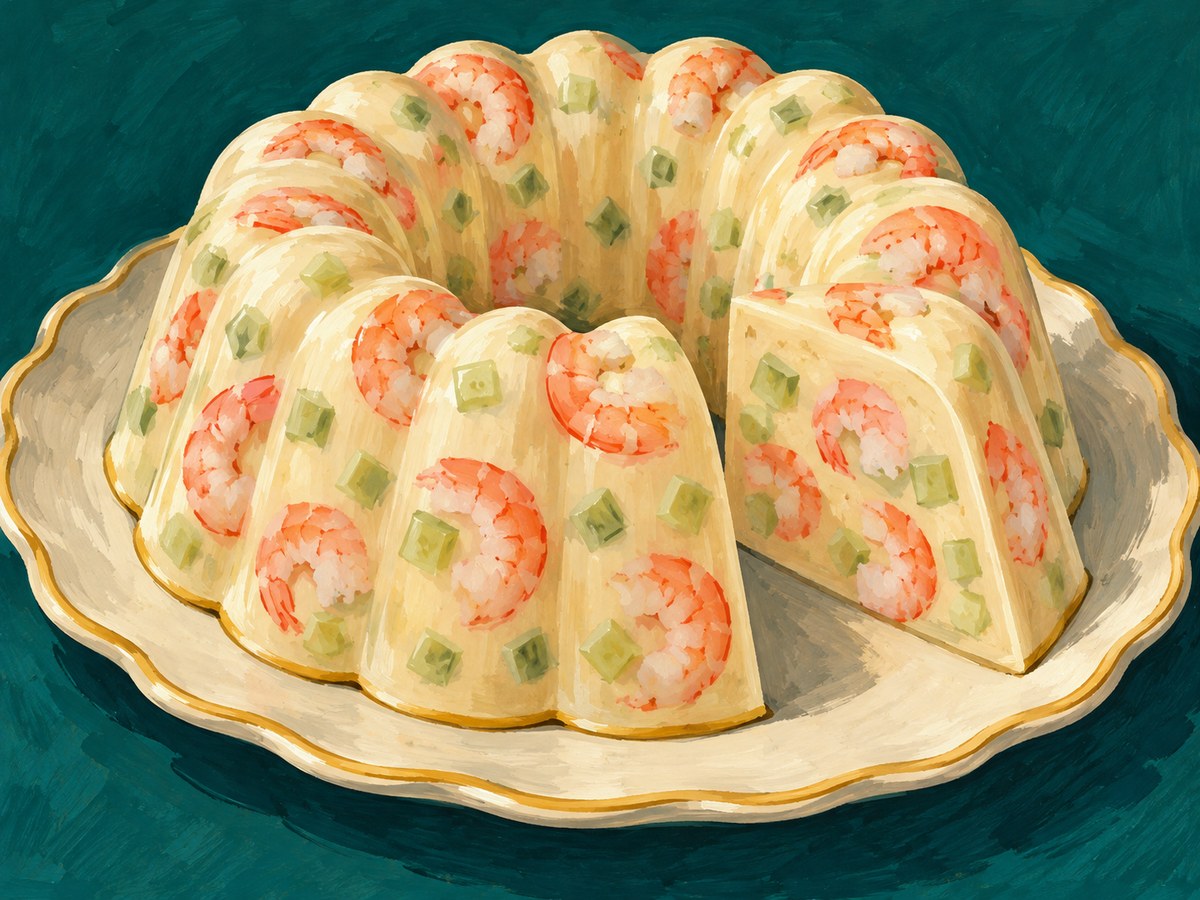
Start with a cold ready-to-eat product
Buy fully cooked peeled shrimp whose label permits cold ready-to-eat service, and follow its refrigerator thawing directions if frozen. Remove tails and check for shell fragments before taking the prepared weight. A bag labeled raw, or a cooked product requiring a further full heating step, is not interchangeable. The original thaw/opening date still governs the finished crown, including its overnight setting period.
Cucumber is a small measured inclusion
Peel and remove the wet seed cavity, dice finely and salt briefly in a refrigerator sieve. Press gently and weigh 100 grams after draining. That discarded liquid is not added to the broth. Cut larger shrimp into short pieces so each starter portion gets several bites without a full large shrimp pulling a slice apart. The yogurt base is tempered gradually with dissolved gelatin, then receives cold ingredients only once smooth and lightly thickened. Serve small wedges and return the reserve to refrigeration; the assembled seafood is used within one day of final assembly.
Ingredients
- ⅔ cup finely diced peeled deseeded cucumber AFTER draining (100 g); prepare extra before draining
- ¼ teaspoon fine salt (1.5 g), divided
- 2 standard ¼-ounce envelopes unflavored powdered gelatin (14 g total), of specified setting strength
- 6 tablespoons cold drinking water (90 ml)
- 1½ cups clear ready-to-use mild vegetable broth (360 ml)
- ¾ cup plus 1 tablespoon thick plain pasteurized Greek-style yogurt (200 g), kept cold
- 2 tablespoons lemon juice (30 ml)
- 9 oz fully cooked peeled ready-to-eat shrimp (250 g prepared), safely chilled, tails removed and large pieces cut into ½-inch (1 cm) pieces
- ⅛ teaspoon white pepper
- ¼ teaspoon neutral oil (1.25 ml), for wiping mold
Set out
Sieve over bowl and clean cloth, Knife and board, Scale and measuring jug, Small saucepan, Two mixing bowls and whisk, Metal ring mold of at least 1½-liter capacity, Paper towel, Food thermometer, Cold platter, Refrigerator
Allergens
Crustacean shellfish (shrimp), Milk. Check labels and substitutions.
Make it
- Toss prepared cucumber with half the salt in the sieve; drain in the refrigerator 20 minutes, press gently and weigh 100 g drained dice. Keep cold. Check ready-to-eat cooked shrimp label and earlier deadline; remove tails and hard fragments and cut larger pieces. Check mold capacity, dry and oil lightly.
- Bloom gelatin over 90 ml cold water in the mixing bowl 5–10 minutes. Warm broth with remaining salt and pepper to 140–150°F (60–65°C), remove from heat and stir into gelatin until fully dissolved. Cool to lukewarm.
- Put the cold yogurt in a second mixing bowl. Whisk 3 tablespoons of the cold yogurt gradually INTO the lukewarm dissolved-gelatin base until smooth. Then gradually whisk that smooth tempered mixture into the remaining cold yogurt with lemon juice. Refrigerate 15–30 minutes until lightly thickened, stirring gently. Fold in cold dry cucumber and cooked shrimp.
- Transfer to ring, leaving at least ½ inch (1.25 cm) headroom. Cover and refrigerate at 40°F (4°C) or below at least 8 hours until fully firm. Allow 10½ hours total including draining and suspension; raw shrimp cooking or frozen shrimp thawing is not hidden inside that timetable.
- For unmolding, set a cold plate beside the refrigerator. Dip only the outside of the metal mold in warm, not hot, water, about 100°F (38°C), for 5–8 seconds without letting water touch food. Dry the outside, loosen just the upper edge with a clean fingertip and invert onto the plate. If stuck, repeat a brief dip rather than shaking violently. Refrigerate again immediately if not serving now. Cut 6 small cold seafood starter wedges and serve promptly.
Gelatin starting strength
Use food-grade unflavored powdered gelatin with a manufacturer benchmark of 7 g for about 2 cups (500 ml) plain liquid. Weigh the stated grams: envelope sizes and powder density vary. A flavored dessert packet, collagen peptides, sheet gelatin or agar is not an equal substitute.
Cold service
This is an original retro-inspired recipe, not a recovered 1960s formula. Gelatin is animal-derived; the vegetable ingredients do not make the dish vegetarian. A reliable refrigerator and the stated earlier ingredient deadlines are essential.
Ingredient labels
Check broth, cooked seafood and yogurt for other ingredients and cross-contact.
A useful detail
Free broth/water/lemon is 480 ml: 90 +360 +30. Yogurt adds 200 g, cooked shrimp 250 g and drained cucumber 100 g. Fourteen grams gelatin supports roughly 1.03 liters of moist mixture; use a 1½-liter mold and do not add seafood package liquid.
Another way
- Use 250 g fully cooked ready-to-eat chopped crab meat in place of shrimp as a different seafood crown, checking for shell fragments and its original deadline.
- Use 100 g finely diced, thoroughly dried washed celery instead of drained cucumber for a crisper different inclusion; omit the cucumber draining stage.
Keep it well
Keep covered at 40°F (4°C) or below and use within 24 hours of final assembly or any earlier seafood/dairy/opening deadline, whichever comes first. The eight-hour set is included in that day. Keep cumulative unrefrigerated preparation/service below 2 hours, or 1 hour above 90°F (32°C); discard beyond it. Do not freeze or reset a seafood clock by making gelatin.