004 / 75 · Savory Garden Molds
Beet Horseradish Gelatin Loaf
One deep beet-red savory loaf, about 3¼ cups (780 ml); 8 small side slices · Active 25 min · Total 9 hr 30 min
Print recipe · PDFCooked beets bring a ruby color to a cool savory loaf with a measured horseradish edge. A little sour cream softens the flavor and makes the gel partly opaque. Start with ready-cooked plain beets and their own measured juice, keeping pickled-beet liquid out of this formula.
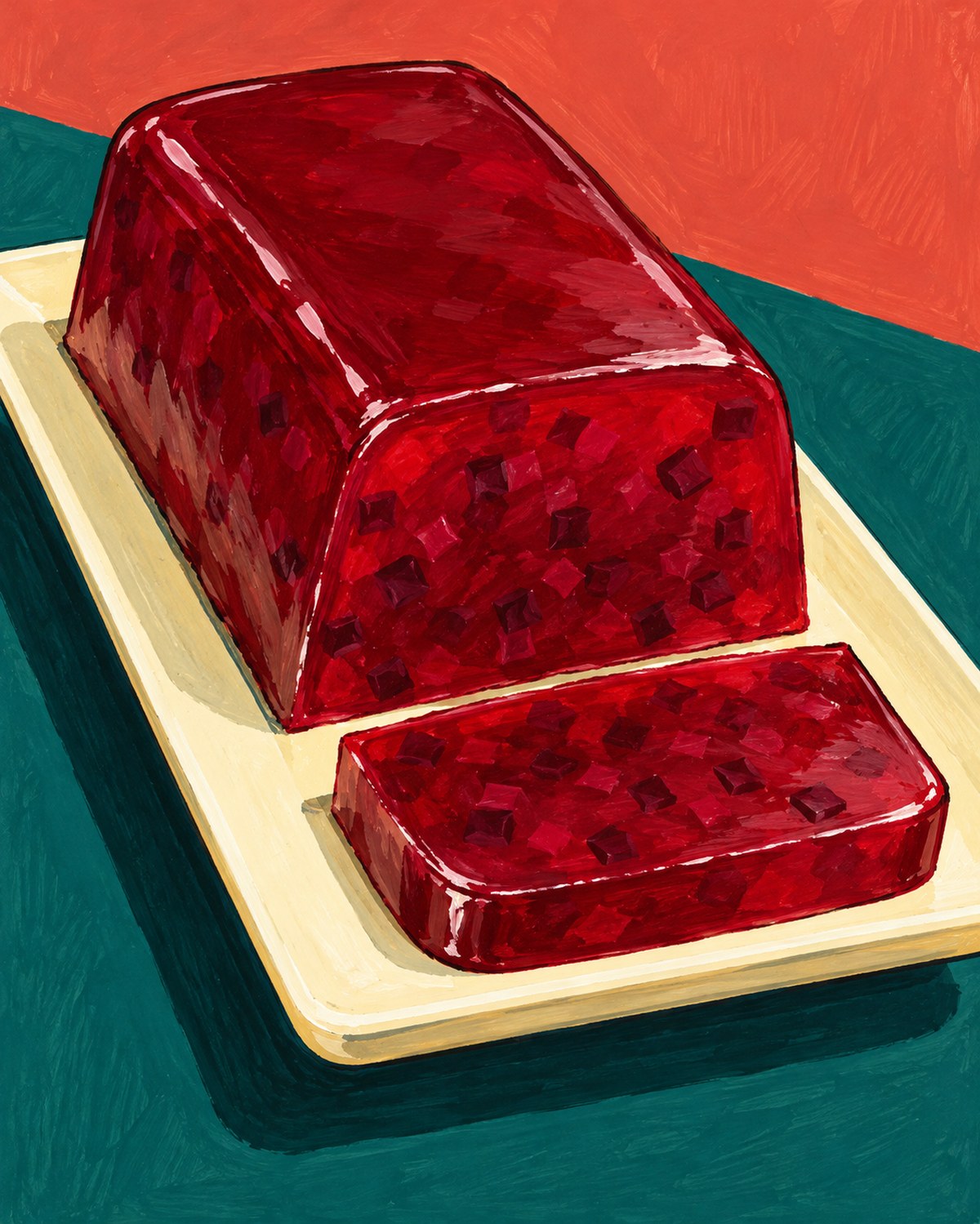
Plain beets and pickled beets are different ingredients
Use commercially canned or refrigerated fully cooked plain beets, checking their label and opening deadline. Pickled beets carry vinegar and often sugar in amounts this formula has not allowed for. Drain into a jug only if the packing liquid is suitable to eat and not discarded by the label. Use plain bottled beet juice to complete the measured amount if necessary. Do not top up a short juice measure with an entire extra can of liquid.
A clean horseradish note
Prepared horseradish means grated horseradish preserved in vinegar, not a creamy sandwich sauce. Stir the small measure into the cooled mixture, taste only a clean spoonful and keep the quantity controlled. The sour cream balances heat but does not make a strong product mild for every diner. The beet dice are deliberately tiny so the loaf cuts without large slippery chunks separating from the gel.
Bring the dairy in gradually
Dissolve the gelatin before adding cold sour cream. First whisk a few spoonfuls of cold sour cream gradually into the lukewarm dissolved beet-gelatin base until smooth, then whisk that tempered mixture into the remaining cold sour cream. Once the base is cool and beginning to thicken, fold in the beet dice. A smooth deep rose-red slice is the intended appearance; an entirely clear ruby slab would suggest the dairy had been omitted. Serve cold in small slices beside a main dish, with no assumption that a striking mold is a complete dinner.
Ingredients
- 2 standard ¼-ounce envelopes unflavored powdered gelatin (14 g total), of the specified setting strength
- 6 tablespoons cold drinking water (90 ml)
- 1¼ cups plain beet juice (300 ml), from label-suitable canned plain beet liquid or pasteurized bottled beet juice
- ½ cup pasteurized apple juice (120 ml)
- 1 tablespoon cider vinegar (15 ml)
- ⅓ cup plus 1 tablespoon plain pasteurized sour cream (100 g), kept cold
- 1 cup very small fully cooked plain beet dice (150 g drained), blotted dry
- 2 teaspoons prepared noncreamy horseradish (10 g), label-checked
- ⅛ teaspoon fine salt (0.75 g)
- ¼ teaspoon neutral oil (1.25 ml), for wiping mold
Set out
Kitchen scale and measuring jug, Knife and clean board, Small saucepan, Mixing bowl and whisk, Small dairy bowl, External cool-water bath bowl, Metal loaf mold of at least 1-liter capacity, Paper towel, Food thermometer, Cold serving platter, Refrigerator
Allergens
Milk. Check labels and substitutions.
Make it
- Check mold capacity with water, then dry and wipe thinly with oil. Keep drained beet dice and sour cream refrigerated. Sprinkle gelatin over the 90 ml cold water in the mixing bowl and bloom 5–10 minutes.
- Warm beet juice, apple juice and salt in the saucepan to about 140–150°F (60–65°C). Take off heat and stir into gelatin until fully dissolved. Stir in vinegar. Cool briefly in an external cool-water bath, keeping bath water out, until merely lukewarm.
- Put cold sour cream in its small clean bowl. Whisk 3 tablespoons of the cold sour cream gradually INTO the lukewarm dissolved beet-gelatin base until smooth. Then gradually whisk that tempered mixture into the remaining cold sour cream. Stir in horseradish. Refrigerate 20–30 minutes, stirring every 10 minutes, until lightly thickened but still pourable.
- Fold in small dry beet dice and pour into the mold, leaving at least ½ inch (1.25 cm) below the rim. Refrigerate covered at 40°F (4°C) or below for at least 8 hours and until fully set. The 9½-hour estimate includes prep and preliminary cooling.
- For unmolding, set a cold plate beside the refrigerator. Dip only the outside of the metal mold in warm, not hot, water, about 100°F (38°C), for 5–8 seconds without letting water touch food. Dry the outside, loosen just the upper edge with a clean fingertip and invert onto the plate. If stuck, repeat a brief dip rather than shaking violently. Refrigerate again immediately if not serving now. Cut into eight small side slices and return reserves promptly to refrigeration.
Gelatin starting strength
Use food-grade unflavored powdered gelatin with a manufacturer benchmark of 7 g for about 2 cups (500 ml) plain liquid. Weigh the stated grams: envelope sizes and powder density vary. A flavored dessert packet, collagen peptides, sheet gelatin or agar is not an equal substitute.
Cold service
This is an original retro-inspired recipe, not a recovered 1960s formula. Gelatin is animal-derived; the vegetable ingredients do not make the dish vegetarian. A reliable refrigerator and the stated earlier ingredient deadlines are essential.
Ingredient labels
Prepared horseradish may contain sulfites or other ingredients. Check juice, dairy, horseradish and gelatin labels.
A useful detail
Measured pourable liquid is 525 ml: 90 ml water +300 ml beet juice +120 ml apple juice +15 ml vinegar. Sour cream adds 100 g and drained cooked beet 150 g. Fourteen grams gelatin allows for that acidic moist mixture. Use the same total juice measures even when canned beet yield varies.
Another way
- Use 100 g thick plain pasteurized Greek-style yogurt in place of sour cream as a tangier original variation, keeping all other measures.
- Reduce prepared horseradish to 1 teaspoon (5 g) if its label and a clean taste indicate a very sharp product; do not replace it with an unmeasured creamy sauce.
Keep it well
Keep covered at 40°F (4°C) or below. Use within 2 days of assembly or the earliest ingredient deadline, whichever comes first. Include the overnight setting period in that limit. Keep total unrefrigerated preparation and serving below 2 hours, or 1 hour above 90°F (32°C). Chill slices promptly after service; discard food exceeding those limits. Do not freeze; freezing damages the gel and releases water.