058 / 75 · Vegetables, fish and hearty plates
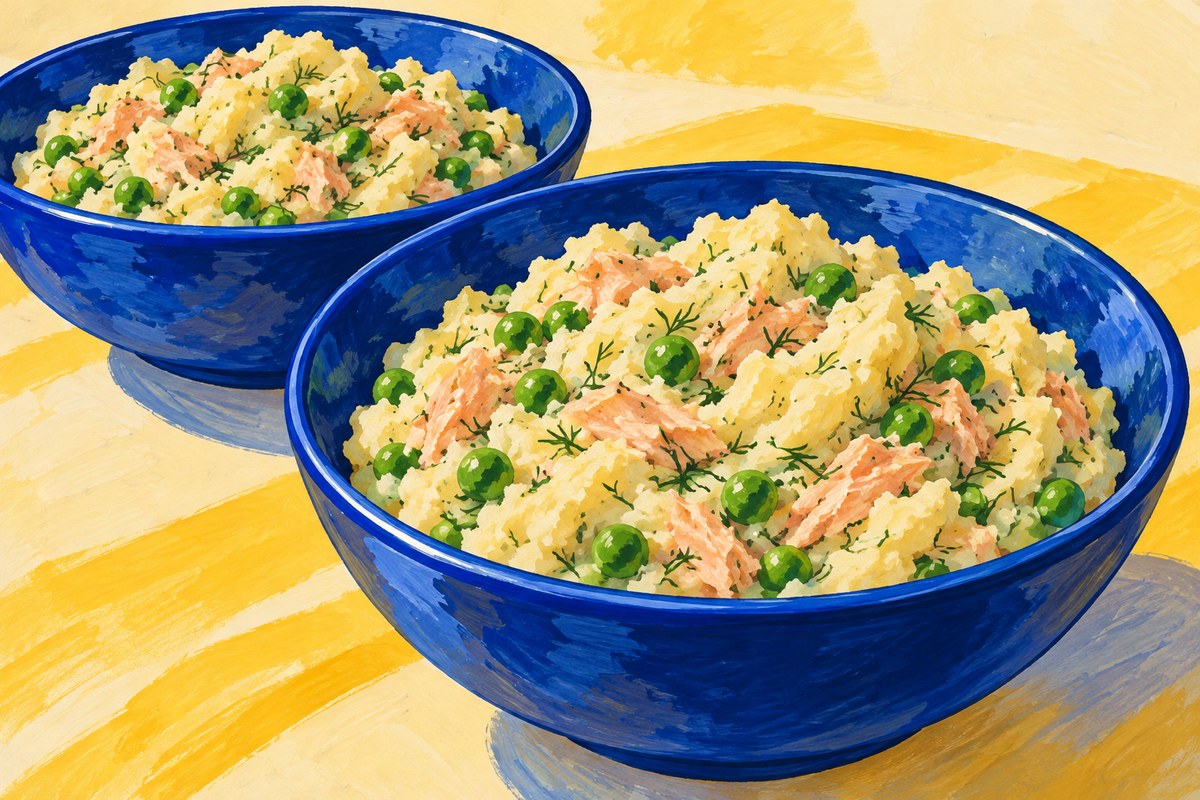
Salmon and Potato Mash with Peas
2 substantial mash bowls, each with 85 g (3 oz) drained salmon, 75 g (2.6 oz) cooked peas and half the complete potato base · Active 20 min · Cook 21 min · Total 45 min
Print recipe · PDFPotato mash can carry a complete small meal when canned salmon and properly cooked peas are folded through it. The potatoes get a full steaming stage before mashing, and the frozen peas receive their own complete package process. Milk and butter soften the base, with lemon and dill added after the final even heat.
Mash tender potatoes, not firm cubes
Cut the peeled potatoes into equal small cubes and check the thickest pieces before mashing. Keep the measured steaming liquid; it becomes part of the mash with milk and butter. A fork or masher is enough. This is a rustic soft bowl with distinct fish flakes and peas, not a perfectly smooth purée.
Cook the peas by their actual label
Frozen peas are not assumed ready to eat. Use the complete package process, with its correct water, stirring and stand, then weigh 150 g cooked peas for the bowl. If that requires a whole pack, cook it and cool the unused portion promptly. The final short warming of the mash does not replace that separate required cook.
Ingredients
- 350 g (12.3 oz) peeled floury potatoes, cut into 1 cm (⅜ in) cubes
- 60 ml (¼ US cup) water for potatoes
- 150 g (5.3 oz) peas weighed after full cooking from frozen and draining only if the packet directs
- Water needed for the actual frozen-pea packet process, kept separate from the potato's measured water
- 170 g (6 oz) ready-to-eat canned salmon, drained weight, unwanted skin and bones removed before weighing
- 80 ml (about ⅓ US cup) milk
- 15 g (0.53 oz) butter
- 15 ml (1 US tbsp) lemon juice
- 5 g fresh dill, about 2 US tbsp finely chopped
- 0.5 g fine salt, a small pinch
- 0.2 g ground black pepper, a small pinch
Set out
1000 W microwave with turntable, Microwave-safe bowl, 2 L (2.1 US qt) measured capacity, with vented cover, Vessel and cover specified by the frozen-pea packet, Fork or potato masher, Knife and board, Kitchen scale and measuring jug, Food thermometer, Oven mitts, Two serving bowls
Allergens
Fish (salmon), Milk. Check labels and substitutions.
Make it
- Cook the frozen peas by their complete microwave package instructions, including any required whole-pack quantity, water, stirring and stand. For this planning clock choose a full process no longer than 6 minutes; a longer stated process must still be completed and extends the total. Weigh 150 g cooked peas for the recipe and keep covered; cool unused cooked peas promptly.
- Once the peas leave the oven, put potato cubes and the separate 60 ml water in the 2 L bowl. Cover and microwave at 1000 W full power for 5 minutes, stir, then cook 4–6 minutes more until all tested cubes are fully knife-tender. Keep all the liquid. Mash with the fork or masher, then work in all the milk, butter, salt and pepper.
- Fold in all the drained salmon as small flakes and the cooked peas. Cover and microwave at full power for 2 minutes. Stir carefully from the bottom and heat 1–2 minutes more until 165°F/74°C in the center and several other areas. Give extra short bursts and recheck any cooler part; do not leave one cold dense lump of fish in the middle.
- Stand covered for 2 minutes. Fold in all the lemon juice and dill, then divide the entire mash, fish and peas between two bowls. Serve promptly, with no extra unmeasured butter or herb topping.
Separate package water
The potato mash contains its stated 60 ml water and 80 ml milk. Any water from the separate pea process is drained only as the packet directs and is not poured into the mash as an unknown extra.
All the fish is divided
Each bowl contains half the 170 g drained salmon, or 85 g prepared fish, as well as half the potatoes and cooked peas. No extra side dish is needed to complete the written portion.
Ingredient labels
Check canned fish, milk and butter labels for any additional ingredients. Tuna remains a fish allergen.
A useful detail
Allow 45 minutes for the full route: up to 6 minutes complete pea process including its package stand, up to 11 minutes potato heating and 4 minutes final warming, the 2-minute final stand, preparation and portioning. One oven heats these stages sequentially. Extra potato bursts or a longer frozen-pea label process extend the estimate; the peas' actual instructions always control.
Another way
- Use 150 g (5.3 oz) drained ready-to-eat canned peas instead. Omit the separate frozen-pea cooking process and its packet water; fold the canned peas in at the same final warming stage.
- Replace salmon with 170 g (6 oz) drained ready-to-eat canned tuna, broken into small flakes. Keep the same complete heating and covered stand.
Keep it well
Refrigerate shallow portions within 2 hours, or 1 hour above 90°F/32°C, at 40°F/4°C or below. Use within 2 days or sooner if a product label directs. Reheat once, covered with thorough stirring, until 165°F/74°C throughout; stand covered for 2 minutes. Mixing the peas or fish into potatoes does not restart any earlier ingredient storage clock.