038 / 75 · Rice, noodles and pasta
Broccoli and Ricotta Wholewheat Pasta
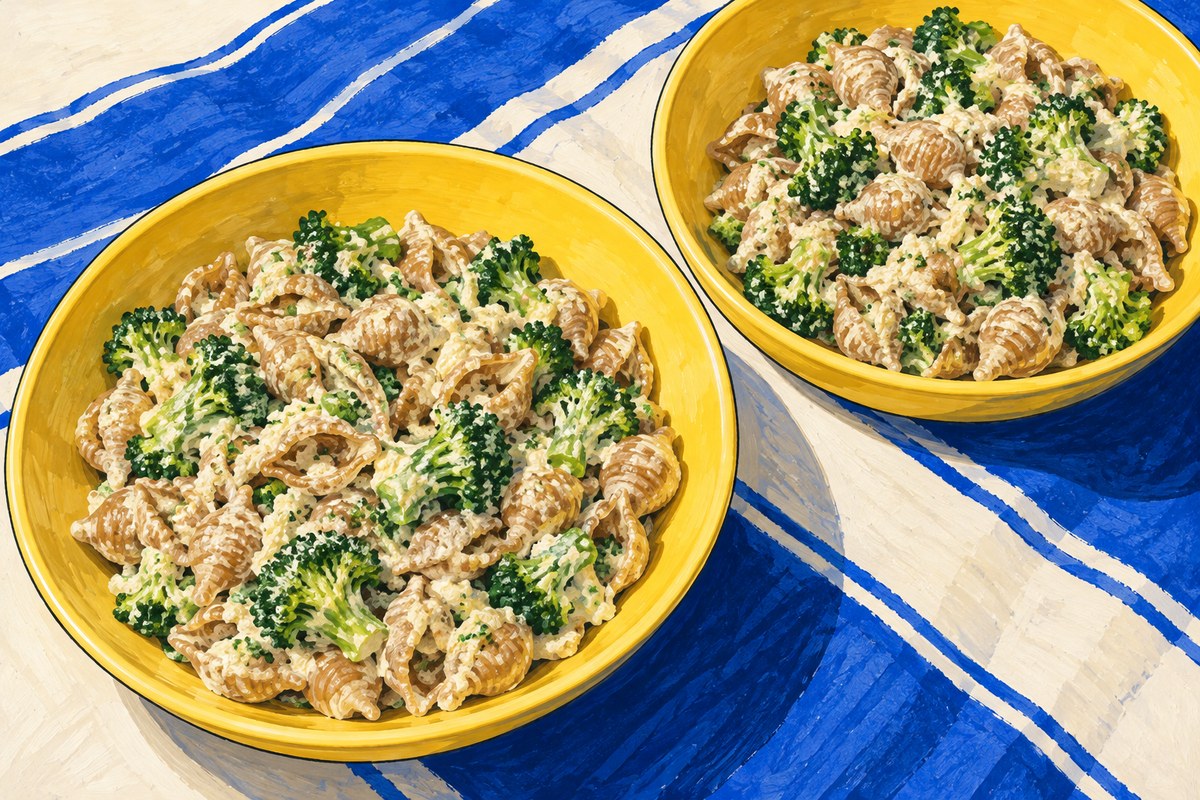
2 whole-wheat pasta bowls, each with half the broccoli and 60 g/2 oz ricotta · Active 20 min · Cook 23 min · Total 45 min
Print recipe · PDFRicotta can make a creamy coating without a separate cooked white sauce. A little reserved pasta water loosens it, and lemon keeps the bowl from feeling heavy. Broccoli joins the pasta for the last part of its cook, then both are drained together. The final microwave stage warms the ricotta through instead of leaving a cold cheese pocket in the middle.
Reserve before draining
Set the small heatproof jug next to the colander before lifting the hot bowl. Scoop out the measured 90 ml of pasta water first, then drain the rest. That starchy liquid belongs in the ricotta coating. It is not an additional 90 ml of fresh water or a reason to leave the pasta sitting in its whole cooking bath.
Cut small florets for the shared finish
Small, even broccoli florets can soften during the last five minutes of the pasta interval. Thick stalk chunks would need an earlier stage. If the pasta is done before a large floret is tender, the cut size was wrong; lift the cooked pasta aside, finish the broccoli in short bursts and allow extra time rather than serving a hard piece.
Ingredients
- 140 g (5 oz) dry whole-wheat small pasta, with package boiling interval about 10–12 minutes
- 1 L water (about 4¼ US cups), for pasta; reserve 90 ml/6 tbsp after cooking and drain the rest
- 160 g (5⅔ oz) fresh broccoli florets, cut into small pieces no more than 1.5 cm/⅝ in across, thick stalks excluded
- 120 g (4¼ oz; about ½ cup) pasteurized-milk ricotta
- 10 ml lemon juice (2 tsp), seeds removed
- 5 ml olive oil (1 tsp)
- 0.5 g fine salt, a small pinch
- 0.3 g ground black pepper (about ⅛ tsp)
Set out
1000 W microwave with turntable, Kitchen scale and measuring jug, Knife and board, Spoon, Oven mitts, Two serving bowls, Microwave-safe bowl, at least 3 L/about 3¼ US qt measured capacity, about 22 cm/8¾ in inside diameter and 11 cm/4¼ in deep, Microwave-safe vented cover, Colander, Small heatproof measuring jug, Fork or tongs, Citrus juicer, Food thermometer for leftover reheating checks
Allergens
Wheat, Milk. Check labels and substitutions.
Make it
- Put the dry pasta, all 1 L water and salt in the 3 L bowl. Cover with a vent and microwave at 1000 W full power for 6–8 minutes, stirring after 3 and 6 minutes, until the water bubbles steadily. Pause if foam rises high.
- Reduce to 70% power. Cook for the full pasta-package boiling interval, normally 10–12 minutes after bubbling starts, stirring every 2 minutes. When 5 minutes remain in that interval, fold in all the small broccoli florets, cover with a vent and continue, stirring. Both pasta and broccoli must be tender: cut a pasta piece to check there is no hard center, and press a large floret with a spoon. Extend in 1-minute bursts if necessary.
- Set the jug and colander securely in the sink. Carefully scoop 90 ml/6 tbsp cooking water into the jug, then drain the remaining water from pasta and broccoli. Return the drained food to the cooking bowl. Mix all the ricotta with the reserved 90 ml water, lemon juice, oil and pepper in the jug, then scrape the whole mixture through the pasta.
- Cover with a vent and microwave at 70% power for 2–3 minutes, stirring halfway, until the ricotta coating and the center of the pasta are hot throughout. Stand covered for 2 minutes, stir and divide every component equally between two bowls.
Water is transferred, not doubled
The 90 ml reserved water comes from the original 1 L cooking bath. Only the rest is discarded.
Serve both components fairly
Fold the broccoli through before dividing so one bowl does not receive most of the vegetables.
Ingredient labels
Whole-wheat pasta contains wheat/gluten; ricotta contains milk. Check exact pasta ingredients for egg or other allergens. The cottage-cheese variation still contains milk.
A useful detail
The 45-minute plan allows 12 minutes of preparation, up to 23 minutes of sequential heating, the 2-minute stand and 8 minutes for reserving water, draining, mixing and serving. Broccoli cooks within the final 5 minutes of the pasta interval, not in an extra simultaneous oven. The baseline is 1000 W; different pasta or oversized florets can extend the plan.
Another way
- Use 160 g/5⅔ oz small fresh cauliflower florets instead of broccoli. Add them when 6 minutes remain, and cook until tender; an extra minute or two may be needed.
- Use 120 g/4¼ oz cottage cheese in place of ricotta and mash its curds with the fork before mixing with the reserved water. The coating will remain slightly textured and still contains milk.
Keep it well
Refrigerate shallow portions within 2 hours, or within 1 hour above 90°F/32°C, at 40°F/4°C or below. Use within 2 days or an earlier ricotta deadline. Add 15 ml/1 tbsp water to a chilled portion and reheat under a vented cover in short stirred bursts; stand 2 minutes and verify 165°F/74°C throughout. Do not use the warm-ready 45-minute total as a cold-transport guarantee.