060 / 75 · Plant Meals with a Proper Center
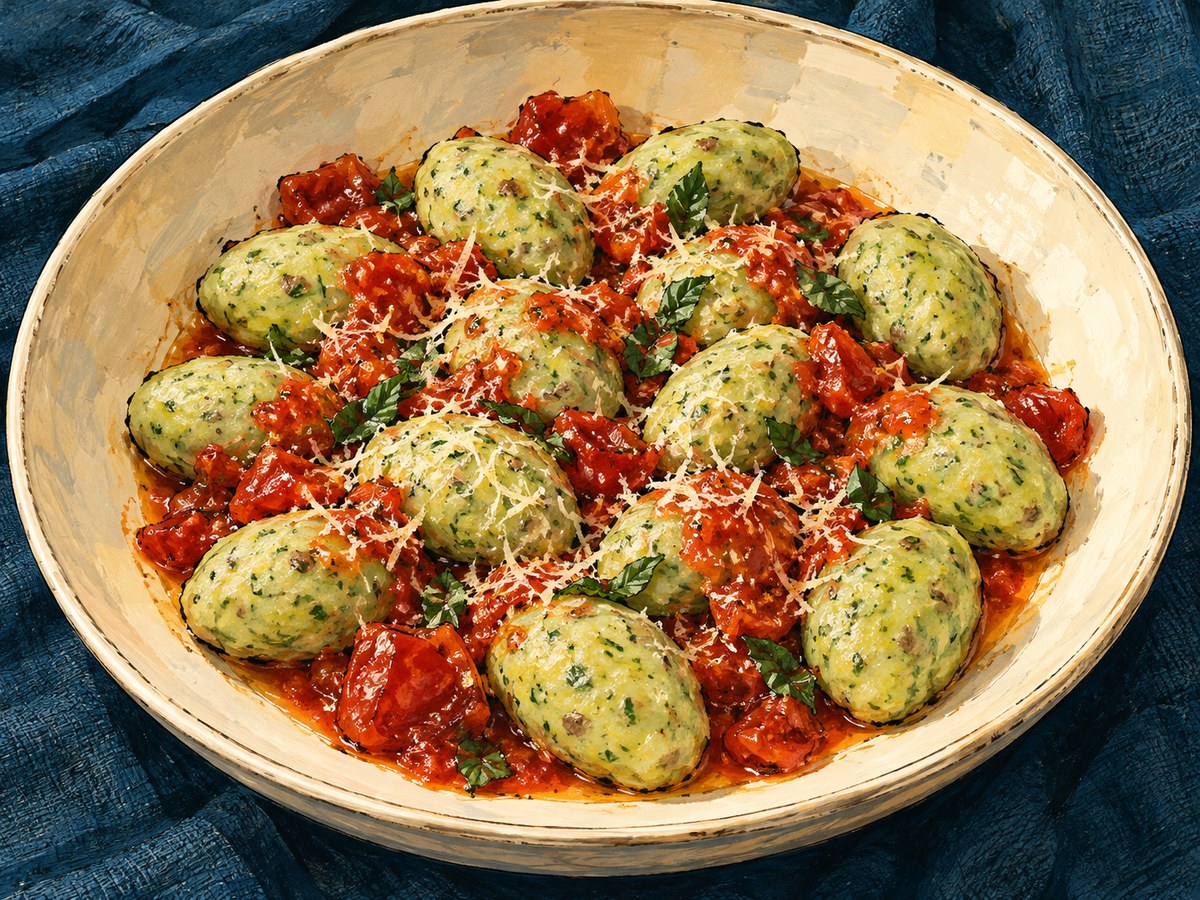
Edamame and Potato Dumplings with Roasted Tomatoes
42 small dumplings;14 per serving with one third of all roasted tomatoes, Parmesan and basil · Active 1 hr · Cook 55 min · Total 2 hr 30 min
Print recipe · PDFThese rustic green-flecked dumplings combine cooked edamame and floury potatoes with egg and flour. They are a little more textured than plain potato gnocchi because the beans and finely chopped potato skins stay in the dough. Roasted tomatoes make a simple sauce. Plan for cooling the mash and chilling the shaped dough; this is a hands-on cooking project with three defined meals at the end.
Keep water out of the bean mash
Cook the frozen shelled edamame fully according to its packet, then drain and let steam escape. Pulse in a compact processor without adding water. A little texture is welcome; a loose green smoothie is not. The potatoes cook whole in the microwave, so their flesh does not absorb a pan of boiling water. Choose floury russets and pierce them before cooking. After a short stand, chop the retained skins very finely and mash them with the flesh. Spread both potato mash and chopped beans on a broad plate to cool and lose visible steam before adding egg.
Form a dough without kneading it into bread
The flour is measured for the whole batch, with no uncounted dusting handfuls added during shaping. Mix cooled potato, beans and egg first, then fold in flour just until cohesive. The dough will be slightly tacky and have green and brown flecks. Roll it between sheets of parchment and use short ropes rather than stretching one long sticky strand. Weigh and divide into forty-two pieces so the first serving is not much larger than the last. A cold rest firms the dough and makes the small pieces easier to lift without squeezing.
A test dumpling tells you about the whole batch
Keep the water at a gentle boil, not a fierce rolling boil that knocks soft pieces together. Cook one dumpling first, then cut it open: the middle should be set, with no raw flour paste, and reach 165°F/74°C. Floating alone is not the finish signal; give the pieces more time after they rise. Work in three batches so the water returns to a simmer quickly. Divide all the dumplings and all the roasted tomato juices between three plates. Parmesan and basil are measured parts of the meal, not an unlimited extra topping.
Ingredients
- 1 lb floury russet potatoes, scrubbed with edible skins retained (450 g raw edible weight)
- 7 oz frozen shelled edamame (200 g frozen starting weight)
- 1 large egg, without shell (50 g)
- 6 1/3 oz all-purpose flour (180 g), all for the dough; no extra bench flour
- 1/2 teaspoon fine salt (3 g), divided
- 1 lb 5 oz ripe tomatoes, cut into chunks (600 g)
- 4 teaspoons olive oil (20 ml/18 g)
- 2 garlic cloves, minced (6 g)
- 1 teaspoon dried oregano (1 g)
- 1/4 teaspoon ground black pepper (0.5 g)
- 1 1/2 oz finely grated Parmesan (40 g)
- A small handful fresh basil, torn (6 g)
Set out
Kitchen scale, microwave-safe plate and fork, 900–1000 W microwave, clean cloth and potato masher, Compact processor for cooked edamame, Broad cooling plate, mixing bowl, parchment and baking tray, Refrigerator space for dough, large saucepan, slotted spoon and food thermometer
Allergens
Soy, Wheat, Egg, Milk. Check labels and substitutions.
Make it
- Pierce potatoes several times and put on a microwave-safe plate, without foil. Microwave at 900–1000 W for 8–12 minutes, turning halfway, until completely tender through the thickest center; add short intervals if needed. Stand for 5 minutes. When safe to handle, finely chop the retained skins and mash them with all the flesh. Spread on a broad plate to release steam and cool for 15–20 minutes.
- Meanwhile boil frozen edamame according to its full packet instructions, usually 5–6 minutes or longer if required. Drain well and let steam escape. Pulse all the cooked beans in a compact processor to a fine coarse mash without adding water. Cool beside the potato mash. Both should be no longer warm before adding egg.
- Heat oven to 425°F/220°C. Toss all tomato chunks and juices with oil, garlic, oregano, one third of the salt and all black pepper on the rimmed tray. Roast for 25–30 minutes, stirring once, until soft and saucy. Retain every edible piece and all tray juices; keep warm briefly near the end of dumpling cooking.
- Mix cooled potato, all edamame, egg and remaining salt. Fold in the measured flour until just cohesive, without long kneading. Do not taste raw dough. Work between parchment sheets rather than adding flour. Weigh and divide into 42 equal pieces, about 18–20 g each, shaping short oval pillows. Cover and refrigerate for 30 minutes at 40°F/4°C or below.
- Bring a large saucepan of plain water to a gentle boil. Cook one test dumpling until it floats, then about 2–3 minutes longer. Cut it open and check the center is set without raw flour paste and at least 165°F/74°C; extend time if needed. Cook the rest in three uncrowded batches, using the test timing, lifting with a slotted spoon and checking a thick piece in each batch. Allow about 15–20 minutes for the whole cooking stage.
- Share all 42 dumplings among three plates,14 each, counting the test piece as part of its serving. Divide all roasted tomatoes and tray juices over them, then all Parmesan and basil equally. If the tomatoes cooled while shaping, reheat them to 165°F/74°C before serving.
A cooking session with three actual meal portions
Set out three containers before dividing the cooked dumplings so each gets fourteen and its full share of sauce. Freeze a later portion promptly if the next two days already have meals planned. The dough-making effort is more useful when the finished portions have clear dates and destinations.
A useful detail
Russet potatoes are weighed raw with edible skins, and every skin is retained finely chopped. Edamame is weighed frozen before its full cooking, so the estimate uses the frozen-unprepared entry and retains all beans. No raw-to-cooked yield factor is invented. These are rustic bean-potato dumplings, not a promise of silky traditional gnocchi.
Another way
- Replace 6 g basil with 6 g chopped fresh parsley for a different herbal finish.
- Use 40 g finely grated mature Cheddar instead of Parmesan. The base nutrition covers Parmesan.
Keep it well
Cool saved cooked dumplings and tomato sauce promptly in shallow containers and refrigerate within 2 hours, or 1 hour above 90°F/32°C. Keep at 40°F/4°C or below for up to 2 days. Reheat the needed portion, covered with its sauce, to 165°F/74°C throughout. Freeze cooked portions promptly for up to 2 months and thaw in the refrigerator; texture will be firmer. Do not hold raw egg-and-flour dough warm while cooking earlier batches; keep remaining shaped pieces covered in the refrigerator until needed.