029 / 75 · Good Dinner after Training
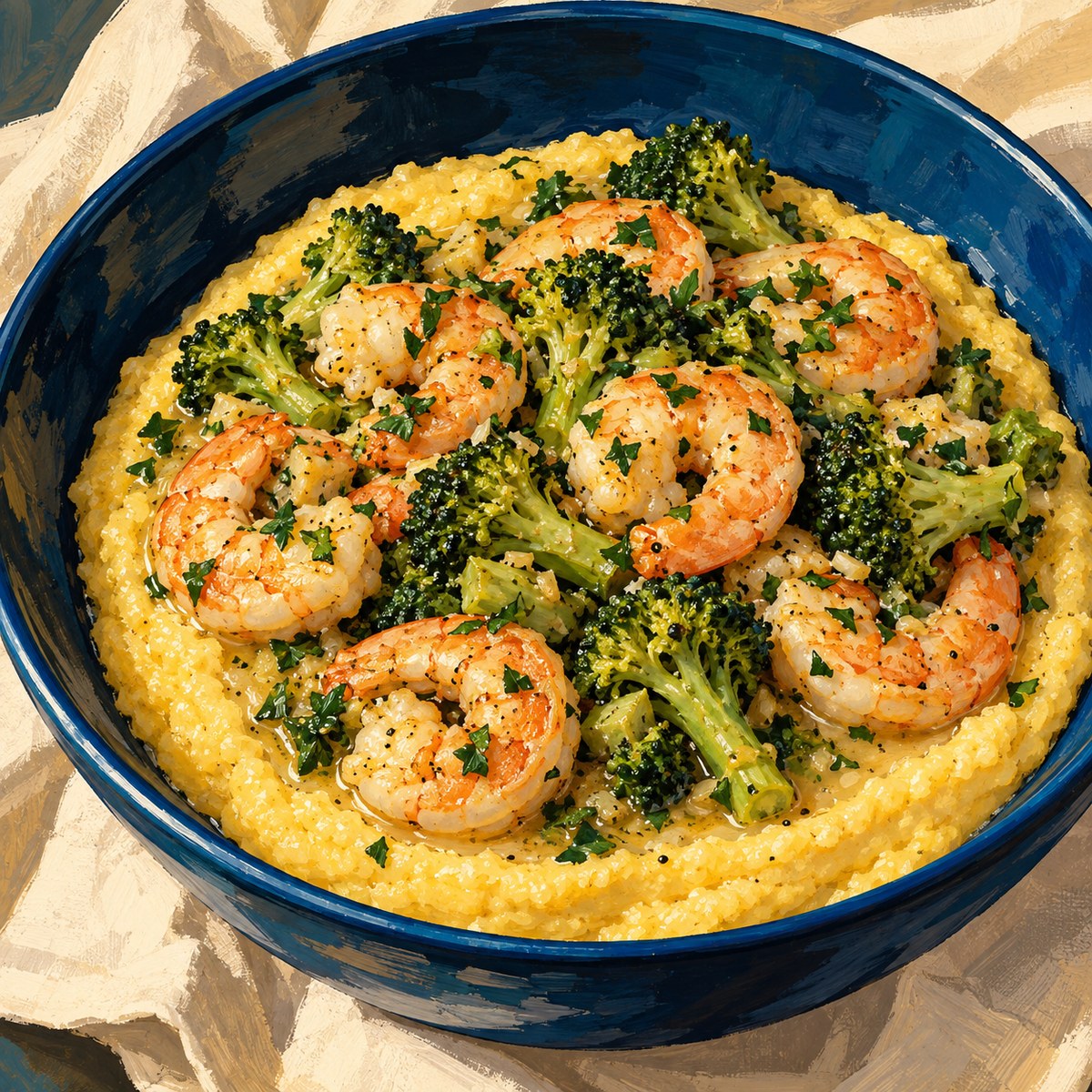
Shrimp and Broccoli over Lemon Polenta
2 bowls, each with half the soft polenta and half the shrimp-broccoli mixture · Active 25 min · Cook 35 min · Total 50 min
Print recipe · PDFSoft yellow polenta catches a little lemony liquid from shrimp and broccoli cooked in a separate skillet. The cornmeal needs steady, gentle heat; the shrimp need only a short final cook. A small measured amount of Parmesan seasons the polenta without turning it into a heavy cheese sauce. Start with raw peeled shrimp and medium-ground cornmeal rather than a ready-made polenta tube.
Choose the cornmeal before timing dinner
Instant polenta and coarse stone-ground cornmeal do not finish together. This recipe uses medium-ground whole-grain yellow cornmeal whose packet permits about 25–30 minutes of stovetop cooking. Bring water and milk to a gentle simmer, then whisk the cornmeal in slowly so dry clumps do not form. Once it thickens, switch to a spoon and scrape the base and corners regularly. Keep the heat low enough for an occasional bubble rather than hot spits. If your packet needs longer, begin earlier and cook until the grain tastes tender, not gritty.
Steam the broccoli before adding shrimp
Small broccoli florets and thin peeled stem slices can cook in a shallow covered skillet with a measured splash of water. They need a head start because raw shrimp finish quickly. Pat the shrimp dry and arrange them through the hot broccoli in an even layer, then cover briefly. Turn them once and check the largest center. A pink outer curve is not enough; the center should be pearly and opaque, with 145°F/63°C as the measured endpoint. Stop cooking as soon as they are ready rather than boiling them while trying to reduce a sauce.
Spoon a soft base, not a firm block
Stir the Parmesan and lemon zest into the polenta off the heat. It should be loose enough to settle gently around the spoon. Divide it into two broad bowls immediately, then spoon over all the shrimp, broccoli and pan liquid. The lemon juice goes into the skillet at the end, keeping a bright contrast to the warm cornmeal. Polenta firms as it cools; that change is expected rather than a reason to discard a prepared portion. A little water and slow stirring loosen it again when reheating, although the shrimp will become firmer.
Ingredients
- 3 1/4 oz medium-ground whole-grain yellow cornmeal (90 g), suitable for 25–30 minute polenta
- 1 2/3 cups water for polenta (400 ml/400 g)
- 1/2 cup 2% milk (120 ml; use 120 g for the estimate)
- 10 1/2 oz raw shrimp, peeled, deveined and tails removed (300 g edible weight)
- 10 1/2 oz broccoli florets and peeled stem, cut small (300 g)
- 1 tablespoon olive oil (15 ml/13.5 g), divided
- 1 garlic clove, finely minced (3 g)
- 1/4 cup water for broccoli (60 ml/60 g)
- 2 tablespoons lemon juice (30 ml/30 g)
- 1 teaspoon finely grated lemon zest (2 g)
- 3/4 oz finely grated Parmesan (20 g)
- A small handful fresh parsley, chopped (8 g)
- About 1/3 teaspoon fine salt (2 g), divided
- 1/4 teaspoon ground black pepper (0.5 g)
Set out
Kitchen scale, measuring jug and whisk, Heavy 2 qt/2 liter saucepan with lid, 12-inch/30 cm skillet with lid, Spatula, separate raw-seafood board and food thermometer
Allergens
Shellfish (shrimp), Milk, Check cornmeal and Parmesan labels for additional allergens or cross-contact.. Check labels and substitutions.
Make it
- Check the cornmeal packet timing and extend the total if it needs longer than 30 minutes. Put the 400 ml polenta water, milk,1 teaspoon/5 ml oil and half the salt in the saucepan. Bring to a gentle simmer. Pour in cornmeal in a thin stream while whisking. Reduce the heat to very low and cook for 25–30 minutes, or the packet time, stirring along the base and corners every few minutes until tender and softly spoonable. Partly cover between stirring to limit spitting. Add a small splash of plain boiling water if needed to prevent it becoming stiff before tender.
- Meanwhile, cut broccoli into florets about 1 inch/2.5 cm across and slice peeled stem thinly. Pat raw peeled shrimp dry on a separate board and keep chilled until cooking. Clean hands, board and tools after raw seafood.
- About 10 minutes before polenta is ready, heat the remaining 2 teaspoons/10 ml oil in the skillet over medium heat. Stir garlic for 20 seconds, add broccoli, the measured 60 ml water, remaining salt and black pepper. Cover and steam for 4–5 minutes until broccoli is almost tender.
- Arrange shrimp through the hot broccoli, cover and cook for 3–5 minutes, turning once, until every center is pearly and opaque and the largest reaches 145°F/63°C. Add a little plain boiling water only if the pan is drying before the shrimp are ready. Remove from the heat and fold in lemon juice and parsley.
- Take the tender polenta off the heat and stir in all the Parmesan and lemon zest. Divide into two bowls. Share all shrimp, broccoli and skillet liquid equally over the polenta and serve straight away.
A warm dinner that uses the same half-hour twice
Prepare the shrimp and broccoli while the cornmeal cooks, then start their skillet near the end of the polenta time. The two jobs overlap without requiring the seafood to wait in hot sauce while you finish a separate grain pot.
A useful detail
The two water lines are separate:400 ml for the polenta and 60 ml for broccoli. Additional plain water is allowed only to control cooking texture and contributes no energy. The shrimp weight is raw edible flesh without shells/tails; buy more if purchasing shell-on shrimp.
Another way
- Use 300 g small cauliflower florets instead of broccoli, steaming until almost tender before adding shrimp.
- Use 300 g raw peeled scallops instead of shrimp, adjusting their cooking time until pearly and opaque and 145°F/63°C. The base estimate applies to shrimp only.
Keep it well
Transfer saved food promptly to shallow containers and refrigerate within 2 hours, or 1 hour above 90°F/32°C. Keep at 40°F/4°C or below for up to 2 days. Reheat only the needed portion to 165°F/74°C throughout, adding water and stirring polenta slowly until soft; check shrimp and vegetables as well as the base. Keep chilled for transport with two cold sources.