054 / 75 · Plant Meals with a Proper Center
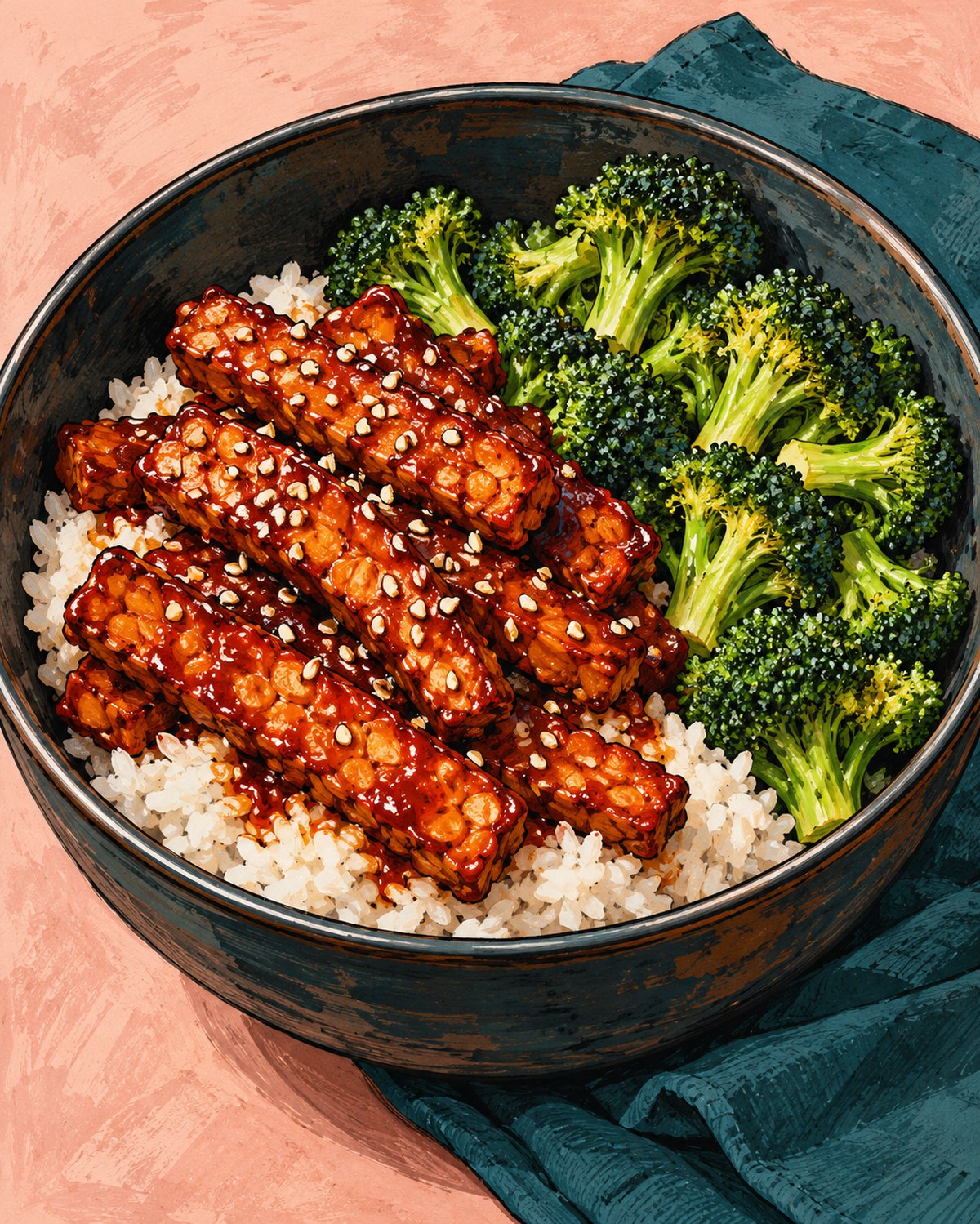
Gochujang Tempeh and Broccoli Rice Bowls
4 complete tempeh, broccoli and rice bowls · Active 25 min · Cook 25 min · Total 45 min
Print recipe · PDFGochujang gives tempeh a glossy red coating that is savory, a little sweet and distinctly warming. It needs liquid and a short gentle finish so the paste coats the tempeh rather than scorching in the pan. Broccoli stays green and separate from the sauce, while plain rice catches what runs off at serving. The four bowls are complete meals with clear portions. A measured gentler variation is included because brands of gochujang can differ considerably in heat.
Read the paste label
Gochujang is a fermented chile paste, not a dry spice. It commonly contains soy and may contain wheat or barley, so its label matters for both flavor and allergens. Stir it with water, vinegar, soy sauce and maple syrup before adding it to the skillet. That premixing gives a smooth coating quickly and prevents concentrated lumps of paste from burning while you try to loosen them around the tempeh.
Steam the tempeh, then build color
A brief steam makes the tempeh easier to bite and gentles its earthy flavor. Pat the slices dry before browning, then leave their broad faces against the hot skillet long enough to develop color. Lower the heat before the sauce goes in. The final two minutes are a glaze stage, not an attempt to fry the paste at the same heat used for browning.
Keep the broccoli recognizable
Steam broccoli only until it is tender enough to bite but still bright green. The sauce has a strong personality, so the plain vegetable and rice provide useful contrast. If you prefer the broccoli coated, fold it into the pan only after the heat is off, using the sauce already present. Do not add extra paste by eye, because that can turn a balanced bowl into an unexpectedly salty or fiery meal.
Ingredients
- 1 1/3 cups dry long-grain white rice (250 g), rinsed
- 2 cups water (480 ml/480 g), for rice
- 14 oz plain tempeh (400 g), cut into 1/2-inch/1.3 cm strips
- 1 large broccoli head, cut into small florets (600 g edible florets)
- 2 tablespoons neutral vegetable oil (30 ml/28 g)
- 2 garlic cloves (6 g), finely grated
- 1 tablespoon finely grated fresh ginger (12 g)
- 3 tablespoons gochujang (45 g)
- 2 tablespoons reduced-sodium soy sauce (30 ml/32 g)
- 2 tablespoons rice vinegar (30 ml/30 g)
- 1 tablespoon maple syrup (20 g)
- 1/4 cup water (60 ml/60 g), for sauce
- 1 tablespoon sesame seeds (9 g)
Set out
Medium saucepan with lid, Steamer basket and lidded pot, 12-inch/30 cm skillet, Tongs, Small bowl and whisk
Allergens
Soy, Wheat or barley may be present in gochujang, Sesame. Check labels and substitutions.
Make it
- Combine rice and 2 cups water in the saucepan. Bring to a boil, cover, reduce to very low heat and cook 15–18 minutes, or follow the rice package. Remove from heat and rest covered 10 minutes.
- Meanwhile, steam tempeh over simmering water, covered, for 10 minutes, or complete any longer full preparation required on the actual tempeh packet before proceeding. Transfer to a clean towel and pat dry. Use the same steamer to cook broccoli for 4–6 minutes until bright green and just tender; remove from the heat.
- Whisk gochujang, soy sauce, vinegar, maple syrup and the 1/4 cup water until smooth. Heat oil in the skillet over medium-high heat and brown tempeh for 3–4 minutes per broad side.
- Reduce heat to low. Add garlic and ginger and stir for 30 seconds, then pour in the sauce. Turn tempeh gently for 2 minutes, until coated in a glossy glaze. Add a tablespoon of water if it thickens before all pieces are coated.
- Divide rice, broccoli, tempeh and all the pan sauce equally among four bowls. Scatter sesame seeds evenly over them.
A bowl with clear components
Pack rice on one side and broccoli on the other, then place the sauced tempeh across the middle. That arrangement lets the sauce reach the rice without soaking every piece of broccoli. It also makes it easy to divide the full batch evenly before any containers are closed.
A useful detail
Choose plain soy tempeh rather than an already seasoned product. No extra salt is added because both gochujang and soy sauce season the glaze. Check the actual plain-tempeh packet and complete its full preparation if longer than these steaming/browning times; include that additional time. This is not a universal cooking validation for every tempeh brand.
Another way
- For a gentler sauce, replace 3 tablespoons/45 g gochujang with 1 tablespoon/15 g gochujang plus 2 tablespoons/30 g tomato paste; keep the other sauce ingredients unchanged.
- Replace broccoli with 600 g cauliflower florets, steaming until fully tender, approximately 8–12 minutes depending on size. This vegetable variation changes nutrition and may extend time; it is not a tender-crisp fresh-green-bean substitution.
Keep it well
Cool rice in shallow portions and refrigerate within 1 hour, keeping at 40°F/4°C or below. Use rice within 24 hours of its original cooking and reheat only once, covered with water, to 165°F/74°C throughout; eat immediately and do not store for a second reheating. Keep tempeh and broccoli separate, refrigerate within 2 hours or 1 hour above 90°F/32°C, and use within 3 days or an earlier tempeh packet limit. Those components may be frozen promptly for up to 2 months. Carry chilled with two cold sources.