046 / 75 · Plant Meals with a Proper Center
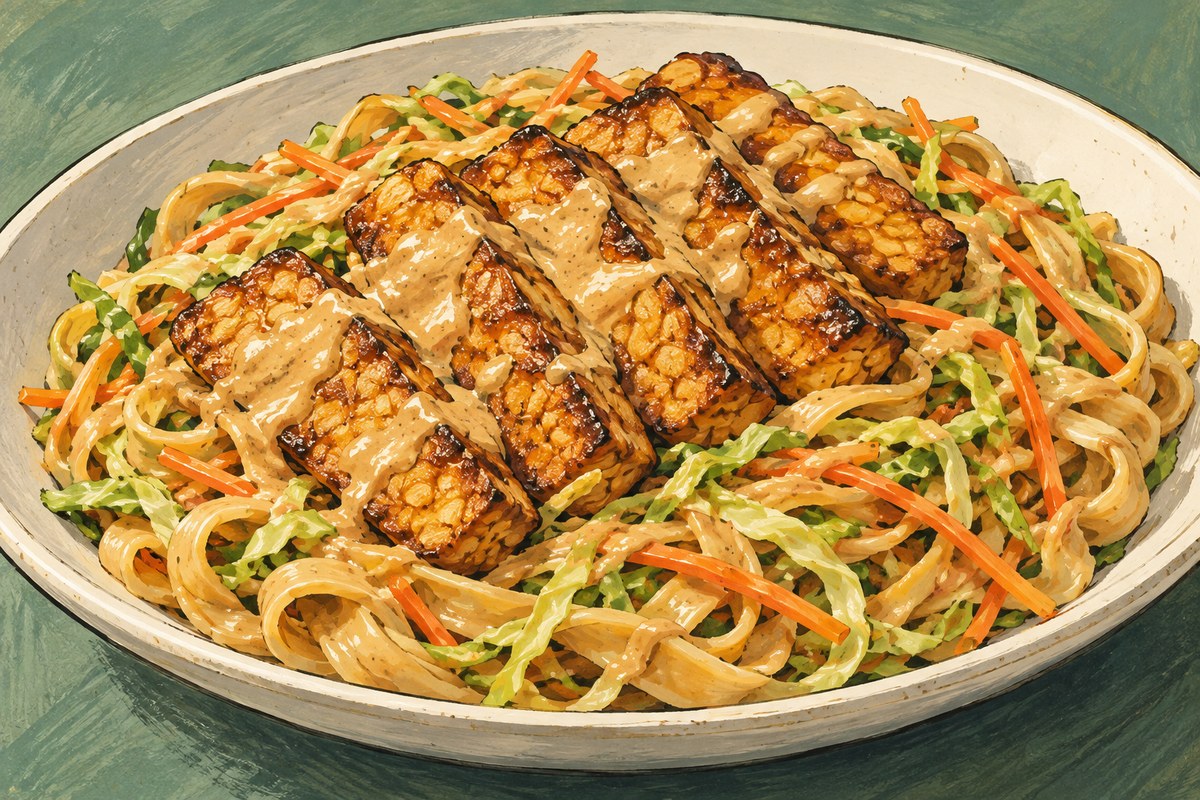
Peanut Lime Tempeh with Crunchy Cabbage Noodles
4 generous noodle plates · Active 30 min · Cook 25 min · Total 40 min
Print recipe · PDFTempeh has enough texture to remain the center of a noodle plate, especially when it is briefly steamed and then browned before the sauce goes on. Here it sits over broad noodles and just-wilted cabbage, with a peanut-lime dressing that is loosened to coat rather than cling in a heavy lump. The recipe serves four substantial plates. It is a useful plant-based dinner for a training week because the main components are measured and complete, with no protein powder or specialty supplement required.
Steam, dry, then brown
A short steam softens tempeh and gives its nutty flavor a gentler edge. It also warms the center before the slices go into a skillet. Let the steamed pieces drain and pat them dry; a wet surface will splutter and resist browning. Use tongs to turn them once or twice rather than constantly stirring. Their broad cut faces should become golden, with the bean texture still visible beneath the crust.
Cabbage belongs near the end
The cabbage is not intended to dissolve into the noodles. Slice it finely, give the dense carrot a short head start, then add the cabbage for just a couple of minutes. It should lose its raw stiffness while retaining a crisp edge. A large pan helps everything contact the heat. If the noodles are crowded into a small saucepan, the vegetables steam for too long while you try to distribute the sauce.
Make the sauce flow
Natural peanut butter varies in thickness, so stir the jar thoroughly before measuring. Whisk warm water into the peanut butter in stages, followed by lime and soy sauce. The mixture may tighten briefly before it smooths out. Reserve half to toss through the noodles and use the rest over the browned tempeh. This keeps the coating visible on the main component while still giving the cabbage and noodles enough seasoning.
Ingredients
- 14 oz plain tempeh (400 g), cut into 1/2-inch/1.3 cm slices
- 8 1/2 oz dry broad wheat noodles (240 g)
- 2 tablespoons neutral vegetable oil (30 ml/28 g), divided
- 1 large carrot (120 g), cut into thin matchsticks
- 4 packed cups finely sliced green cabbage (400 g)
- 2 garlic cloves (6 g), minced
- 1 tablespoon finely grated fresh ginger (12 g)
- 1/4 cup smooth unsalted peanut butter (64 g)
- 3 tablespoons lime juice (45 ml/45 g)
- 2 tablespoons reduced-sodium soy sauce (30 ml/32 g)
- 1 tablespoon rice vinegar (15 ml/15 g)
- 1 tablespoon maple syrup (20 g)
- 1/3 cup warm water (80 ml/80 g)
Set out
Steamer basket and lidded saucepan, Large pot, 12-inch/30 cm skillet or wok, Whisk and bowl, Tongs
Allergens
Soy, Wheat, Peanut. Check labels and substitutions.
Make it
- Steam tempeh in a basket over simmering water, covered, for 10 minutes, or complete any longer full preparation required on the actual tempeh packet before proceeding. Transfer to a clean towel and pat dry.
- Meanwhile, cook noodles according to their package instructions until just tender. Drain and keep a little cooking water for loosening only if needed. Whisk peanut butter with the measured warm water, then lime juice, soy sauce, vinegar and maple syrup until smooth.
- Heat 1 tablespoon oil in the skillet over medium-high heat. Brown tempeh for 3–4 minutes per side, turning carefully, until golden. Transfer to a plate.
- Add remaining tablespoon oil, carrot, garlic and ginger to the skillet; stir-fry for 2 minutes. Add cabbage and stir-fry 2 minutes, until just wilted but still crisp.
- Add drained noodles and half the sauce. Toss over low heat for 1 minute, adding a tablespoon of noodle water only if needed to separate the strands. Divide among four plates, add one-quarter of the tempeh to each and spoon remaining sauce evenly over it.
Pack the texture separately
For the best contrast, store the browned tempeh above the noodles rather than stirring it through the entire batch. A flat storage container makes that easier. The noodles can be loosened with water during reheating, while the tempeh retains some of its browned surface.
A useful detail
Use plain tempeh rather than pre-marinated pieces; the sauce quantity and nutrition mapping are based on unseasoned soy tempeh. Some mixed-grain tempeh contains wheat or other allergens. Check the actual plain-tempeh packet and complete its full preparation if longer than these steaming/browning times; include that additional time. This is not a universal cooking validation for every tempeh brand.
Another way
- Replace wheat noodles with the same 240 g dry weight of rice noodles, cooking and rinsing them according to their package; this changes nutrition and allergen information.
- For a nut-free sauce, use 64 g sunflower-seed butter in place of peanut butter, checking the label for cross-contact if relevant.
Keep it well
Refrigerate shallow portions at 40°F/4°C or below within 2 hours, or 1 hour above 90°F/32°C. Keep up to 3 days. Reheat covered to 165°F/74°C with a tablespoon of water per portion; the cabbage will soften further. Carry chilled portions with two cold sources in an insulated lunch bag and refrigerate on arrival.