065 / 75 · Crisp, Tangy and Warm Sides
Roasted Carrots with Maple Mustard
4 roasted-carrot side portions from 700 g prepared carrots · Active 15 min · Total 55 min
Print recipe · PDFCarrot batons roast almost to tenderness before a small maple-mustard glaze is added. That timing lets the vegetables color without burning the syrup during the full oven stay. Cider vinegar keeps the finish tangy, and the glaze is measured rather than poured into a sweet pool.
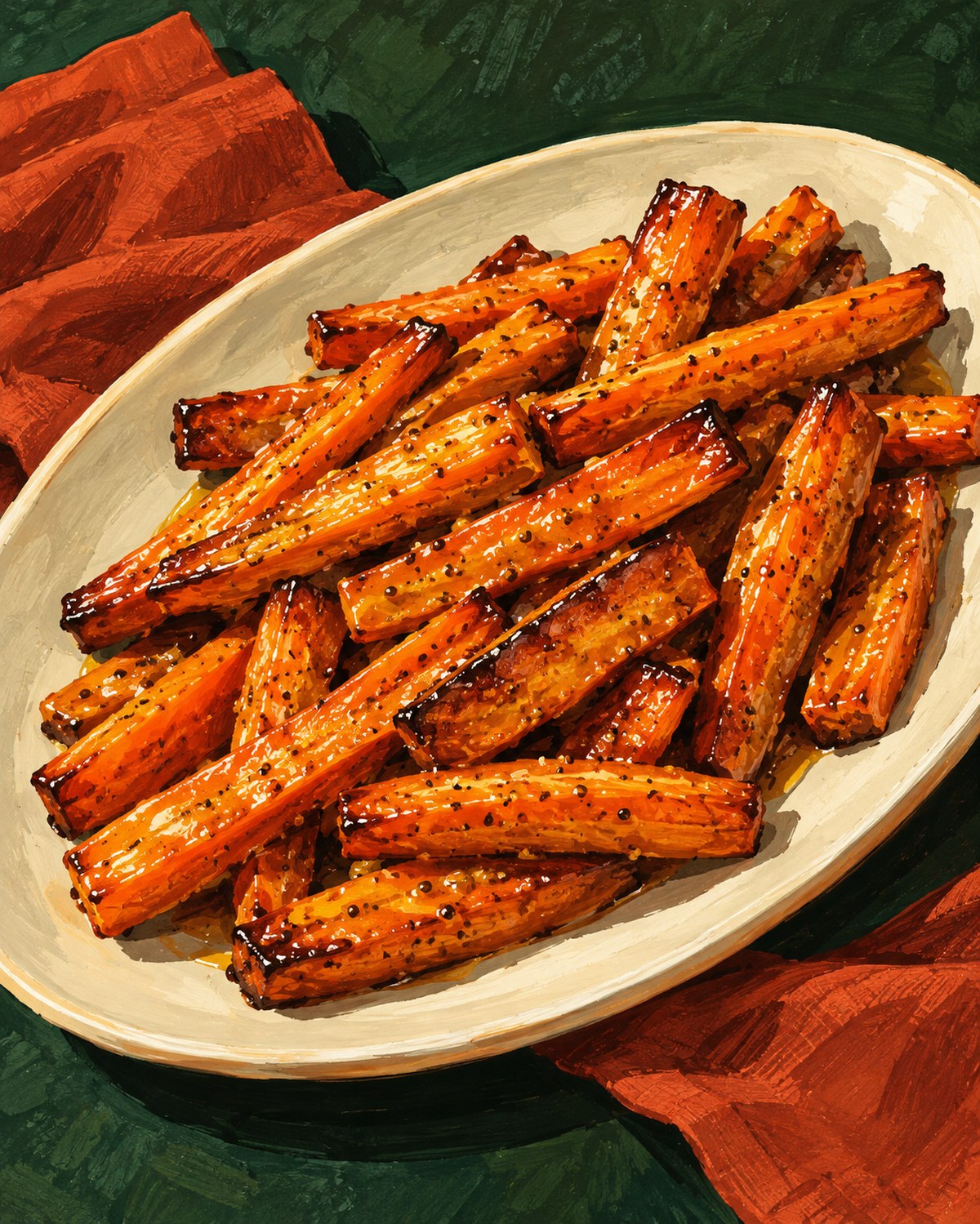
Make the thick ends match the thin ones
Peel and trim carrots before weighing, then cut batons of similar thickness. Split a broad upper section into more pieces than a narrow lower section. The length can vary a little, but thickness controls how long the centers need. Spread on a large rimmed tray with gaps and turn once during roasting. A crowded pile will steam and release water, so use a second tray if necessary rather than making a deeper mound on a small sheet.
Keep syrup out of the first roast
The initial oil-and-salt coating is enough for the carrot stage. Whisk maple syrup, Dijon and cider vinegar in a small bowl while the tray cooks. Add that glaze only when the carrots are nearly tender. A few extra minutes then thicken the coating and brown its edges. Watch closely because the same syrup that gives shine can scorch if forgotten under high heat. The recipe calls for pure maple syrup in a small amount, not a flavored pancake syrup with an unspecified formula.
Use the side as a contrast
Turn the glazed batons through the tray juices and serve them warm beside a savory bake. There is no need to add another sweet sauce or a decorative nut topping. Some mustard specks and browned carrot edges are part of the finish. If the main dish uses a lower oven temperature, schedule these carrots before it or after it rather than assuming an unchanged roasting time on a different shelf. Carrots can be reheated safely, but their best edges come from the first spacious roast.
Ingredients
- 1 lb 9 oz carrots, peeled, trimmed and cut into roughly 3-in/7.5-cm batons no more than 1/2 in/1.25 cm thick (700 g prepared)
- 1 tablespoon olive oil (15 ml)
- 1/4 teaspoon fine salt (1.5 g)
- 1 tablespoon pure maple syrup (20 g)
- 1 tablespoon Dijon mustard (15 g)
- 1 tablespoon cider vinegar (15 ml)
- 1/4 teaspoon black pepper
Set out
Oven, Large rimmed baking sheet, about 13×18 in/33×46 cm, Second sheet if needed for spacing, Small bowl, Whisk, Wide spatula, Food thermometer for reheating leftovers
Allergens
Mustard; check condiment labels. Check labels and substitutions.
Make it
- Heat oven to 425°F (220°C). Toss prepared carrot batons with oil and salt on the sheet and spread in one layer with gaps. Use a second sheet if crowded.
- Roast 25–30 minutes, turning once, until nearly tender to a knife and browned at some edges. Meanwhile whisk maple syrup, mustard, vinegar and pepper in the small bowl.
- Pour glaze over nearly tender carrots and turn to coat. Roast 5–8 minutes more, watching closely, until tender and lightly sticky without scorched syrup. Turn through the tray juices and serve four side portions.
A small bowl makes the late glaze easy
Whisk the three glaze ingredients before opening the oven for the final turn. Having them ready prevents a half-glazed tray waiting beside a hot oven while individual bottles are found.
A useful detail
The 55-minute total includes peeling and matching baton thickness, the unglazed roast, the short glaze finish and serving. Oven space and carrot thickness can extend the first stage; the syrup still belongs only at the end.
Another way
- Replace 200 g of the prepared carrots with 200 g parsnip batons of the same thickness. Check both roots for tenderness before adding glaze; parsnip edges may color sooner.
Keep it well
Refrigerate shallow portions within 2 hours, or 1 hour above 90°F (32°C), at 40°F (4°C) or below. Use within 3 days. Reheat to 165°F (74°C), covering if glaze threatens to burn. Freeze promptly cooled portions for up to 2 months for quality and thaw in the refrigerator; the roasted surface becomes softer.