045 / 75 · Chicken, Turkey and Fish Suppers
Pork and White Bean Mustard Hotdish
One 8×12 in (20×30 cm) dish, at least 3 qt/2.8 L;4 substantial pork-and-bean portions · Active 40 min · Total 3 hr 10 min
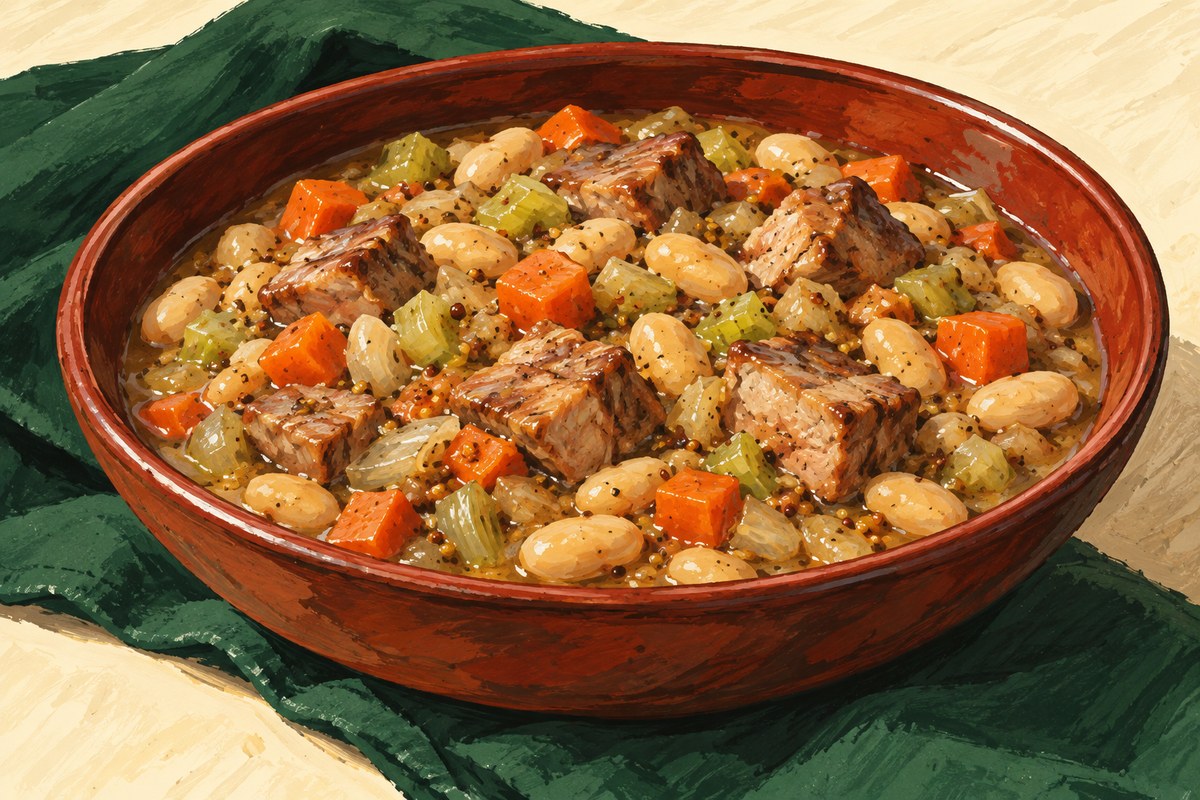
Print recipe · PDFPork shoulder needs a gentle braise before it becomes tender enough for this white-bean hotdish. Onion, carrot and celery flavor a light gravy, and whole-grain mustard is stirred in near the end. There is no starch roof here: the last uncovered bake settles the beans around the meat and colors the edges.
Shoulder sets the pace
Choose boneless pork shoulder and trim large hard fat pieces before cutting similar small chunks. Lean loin is not a simple shortcut: it can dry out during a braise that shoulder needs for tenderness. Brown the shoulder in two batches rather than crowding the whole quantity into one damp layer. Browning builds flavor, but the long covered simmer does the tenderizing. Check with a fork near the end. A piece that resists pressure needs more gentle cooking, even if the clock has reached the early end of the range.
Mustard seasons a gravy that already exists
Flour is stirred through softened vegetables before stock is added. That small roux gives the sauce body during the braise. Whole-grain mustard arrives later; its seeds and vinegar contribute flavor rather than enough starch to thicken a pan. Keep the lid on for most of the simmer and check the liquid occasionally. A little of the listed hot-water reserve can prevent drying, but do not turn the dish into soup. Beans begin canned, drained and rinsed, so they need only the finishing stage with already tender meat.
A short bake follows a long simmer
Transfer the hot mixture to a wide dish only after the pork is fork-tender and the sauce lightly coats it. Folding beans through earlier for the entire braise would break many apart. The uncovered oven finish gives browned edges and brings the mixed pan to its final temperature. Rest briefly and serve as a substantial bean-and-pork main dish. The full time is part of the recipe’s identity; it is a planned afternoon supper, not a quick pan written with the braising hour hidden outside the total.
Ingredients
- 1 lb 5 oz boneless pork shoulder, trimmed and cut in 3/4-in/2-cm pieces (600 g prepared)
- 1 tablespoon neutral oil (15 ml)
- 1 large onion, chopped (200 g)
- 2 medium carrots, cut in 1/2-in/1-cm dice (150 g prepared)
- 2 celery stalks, chopped (100 g)
- 2 garlic cloves, finely chopped (6 g)
- 2 tablespoons all-purpose flour (18 g)
- 2 1/2 cups low-sodium chicken stock (600 ml)
- Up to 1/2 cup hot water (120 ml), only if needed during braising
- 1 teaspoon dried thyme
- 1/4 teaspoon fine salt (1.5 g)
- 1/4 teaspoon black pepper
- 2 cans white beans, drained and rinsed (1 lb 1 oz/480 g drained total)
- 2 tablespoons whole-grain mustard (30 g)
Set out
Oven, Heavy covered saucepan or Dutch oven, at least 4 qt/3.8 L, 8×12 in (20×30 cm) baking dish, at least 3 qt/2.8 L, Clean plate, Whisk, Rimmed baking sheet, Food thermometer
Allergens
Wheat, Mustard, Celery; check stock labels. Check labels and substitutions.
Make it
- Heat oil in the heavy pot over medium-high heat. Brown pork in two batches,4–5 minutes each, turning. Transfer each batch to a clean plate. Lower heat and cook onion, carrot and celery 8–10 minutes until softened. Add garlic 30 seconds.
- Stir in flour 1 minute, then gradually stir in stock. Return pork and its juices and add thyme, salt and pepper. Bring to a gentle simmer, cover and cook 75–100 minutes, stirring occasionally, until pork is fork-tender. Add a little of the listed hot-water reserve only if the pan is drying. Keep the simmer gentle rather than boiling hard.
- Near the end, heat oven to 400°F (205°C) and put the baking dish on a rimmed sheet. Stir beans and mustard into tender pork. Simmer 5 minutes; the sauce should lightly coat the ingredients. If too loose, reduce uncovered briefly before transferring.
- Spread hot mixture in the dish and bake 20–25 minutes until edges color and the center and several other spots reach 165°F (74°C).
- Rest 5 minutes and serve four portions.
Plan for the fork test
The longer simmer range is an estimate rather than a deadline. Make this on a day when another twenty minutes will not derail supper, and keep checking liquid and tenderness together.
A useful detail
The 190-minute total includes trimming and chopping, two browning batches, up to 100 minutes gentle braising, sauce adjustment, the oven finish and rest. Shoulder tenderness can require longer; allow extra time rather than replacing it with a lean cut and the same method.
Another way
- Use canned butter beans at the same drained 480 g weight instead of smaller white beans. Fold gently after the pork is tender so their broad shapes survive.
Keep it well
Refrigerate shallow portions within 2 hours, or 1 hour above 90°F (32°C), at 40°F (4°C) or below. Use within 3 days or an earlier ingredient deadline. Reheat to 165°F (74°C), loosening gravy with a little water if needed. Freeze promptly cooled portions for up to 2 months for quality; thaw in the refrigerator.