011 / 75 · Crisp-Topped and Potato Comfort
Salmon and Dill Potato Hotdish
One 8×12 in (20×30 cm) dish, at least 3 qt/2.8 L; 4 main-dish portions · Active 35 min · Total 1 hr 25 min
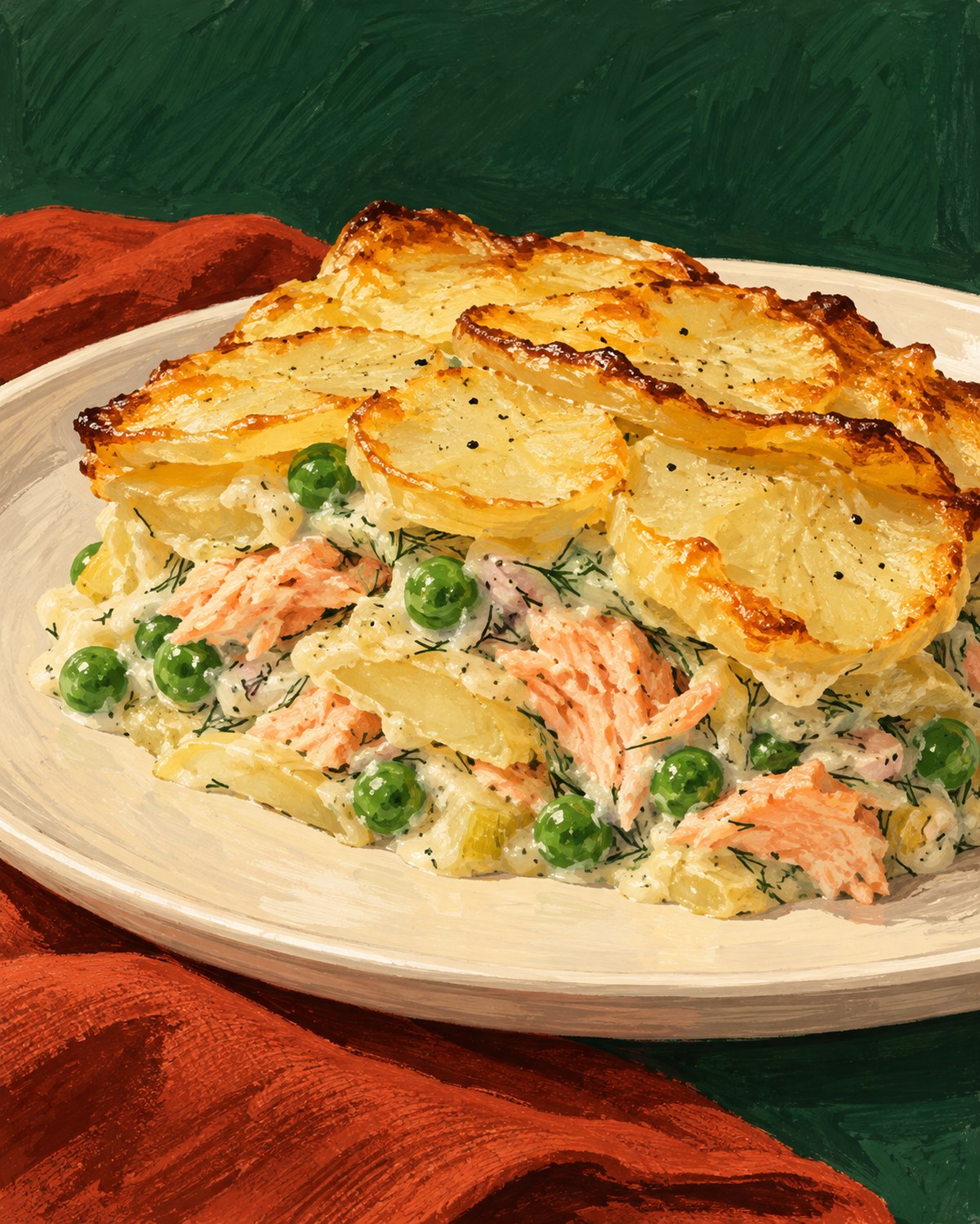
Print recipe · PDFCanned salmon makes a practical potato supper when its large flakes are folded gently into a lemon-and-dill sauce. Thin par-cooked potato rounds go below and above the fish layer. The point is a soft layered bake with a few golden edges, not an attempt to make canned fish behave like a freshly roasted fillet.
Open, drain and inspect
Choose plain canned salmon and drain it before weighing. Products vary in whether skin and bones are included. Spread the fish on a plate and inspect it with a fork, removing any hard fragments or pieces you do not want in the finished dish. Leave the flesh in broad flakes. Aggressive stirring turns it into a fine paste and makes the sauce look muddy. The drained amount is the controlling quantity; two cans with the same outside size can contain different amounts of edible fish.
Dill belongs in the sauce, not all on top
Chop fresh dill finely and stir it through the warm sauce with lemon zest after taking the pan off the heat. Lemon juice follows in the measured small quantity. A hard boil after adding the juice can make a milk sauce less smooth, so the final mixing is gentle. The flavor will reach the whole fish layer without requiring an ornamental bunch of raw herbs on the finished pan. Use a small leek for sweetness, washed between its layers, and cook it soft before adding the flour.
Make two light potato layers
Choose slices of similar thickness and simmer just until they begin to bend. Cover the bottom of the dish with about half, leaving room for sauce to pass between them, then add the fish filling and remaining slices. A thick compressed stack would need longer and could dry the salmon layer before the potatoes soften. Brush the top with the measured oil and let the oven brown the exposed edges. Serve with a broad spoon after a short rest, checking that each plate receives fish as well as potato.
Ingredients
- 1 lb 14 oz waxy potatoes, peeled and sliced 1/8 in/3 mm thick (850 g prepared)
- 8 cups water (1.9 L), for potatoes
- 12 oz plain canned salmon, drained and inspected (340 g drained)
- 1 tablespoon butter (15 g)
- 1 small leek, white and pale-green parts washed and finely sliced (120 g prepared)
- 2 tablespoons all-purpose flour (18 g)
- 1 1/2 cups milk (360 ml)
- 1/2 cup frozen peas (70 g)
- 1/4 cup chopped fresh dill (10 g)
- 1 teaspoon finely grated lemon zest (2 g)
- 1 tablespoon lemon juice (15 ml)
- 1 tablespoon olive oil (15 ml)
- 1/4 teaspoon fine salt (1.5 g)
- 1/4 teaspoon black pepper
Set out
Oven, 8×12 in (20×30 cm) baking dish, at least 3 qt/2.8 L, Large saucepan, Medium saucepan, Colander, Plate and fork, Whisk, Pastry brush, Rimmed baking sheet, Food thermometer, Suitable foil if the topping colors before the center finishes
Allergens
Fish: salmon, Milk, Wheat. Check labels and substitutions.
Make it
- Heat the oven to 400°F (205°C). Put the dish on a rimmed sheet. Bring potato slices and their water to a gentle boil in the large pan. Simmer 5–7 minutes until flexible but still holding their shape, then drain carefully.
- Meanwhile melt butter in the medium pan over medium-low heat. Cook leek 7–9 minutes until soft. Stir in flour for 1 minute, then gradually whisk in milk. Add peas and simmer gently for 4–5 minutes, or their package time if longer, stirring until cooked and sauce thickened.
- Take sauce off the heat. Stir in dill, lemon zest, juice, salt and pepper. Fold in salmon flakes gently. Arrange half the potatoes across the dish, spoon in the warm fish sauce and cover with remaining potato slices. Brush the top with olive oil.
- Bake 30–35 minutes until potato edges are golden, central slices are fully tender and the center and several other places reach 165°F (74°C). Cover loosely with foil if needed while the center finishes.
- Rest 5 minutes and divide into four main-dish portions.
Let the tin do a specific job
Canned fish supplies a ready-cooked layer, not a shortcut around checking bones, drained weight or dates. Read the label before choosing how many cans to buy.
A useful detail
The 85-minute total includes inspecting the fish, slicing potatoes, overlapping the sauce with their simmer and the oven finish. The salmon is already cooked; the final 165°F (74°C) check applies to the assembled casserole.
Another way
- Replace salmon with the same drained weight of plain canned tuna and use chopped fresh parsley at the same weight instead of dill. Keep the sauce quantity, potato layers and final temperature.
Keep it well
Refrigerate shallow portions within 2 hours, or 1 hour above 90°F (32°C), at 40°F (4°C) or below. Use within 2 days or an earlier opened-fish or milk deadline. Reheat to 165°F (74°C). This potato-and-milk bake is best refrigerated; freezing can separate the sauce and make the potato texture grainy.