006 / 75 · Crisp-Topped and Potato Comfort
Pork Sausage, Cabbage and Potato Bake
One 9×13 in (23×33 cm) baking dish, at least 3.5 qt/3.3 L; 6 main-dish portions · Active 40 min · Total 1 hr 45 min
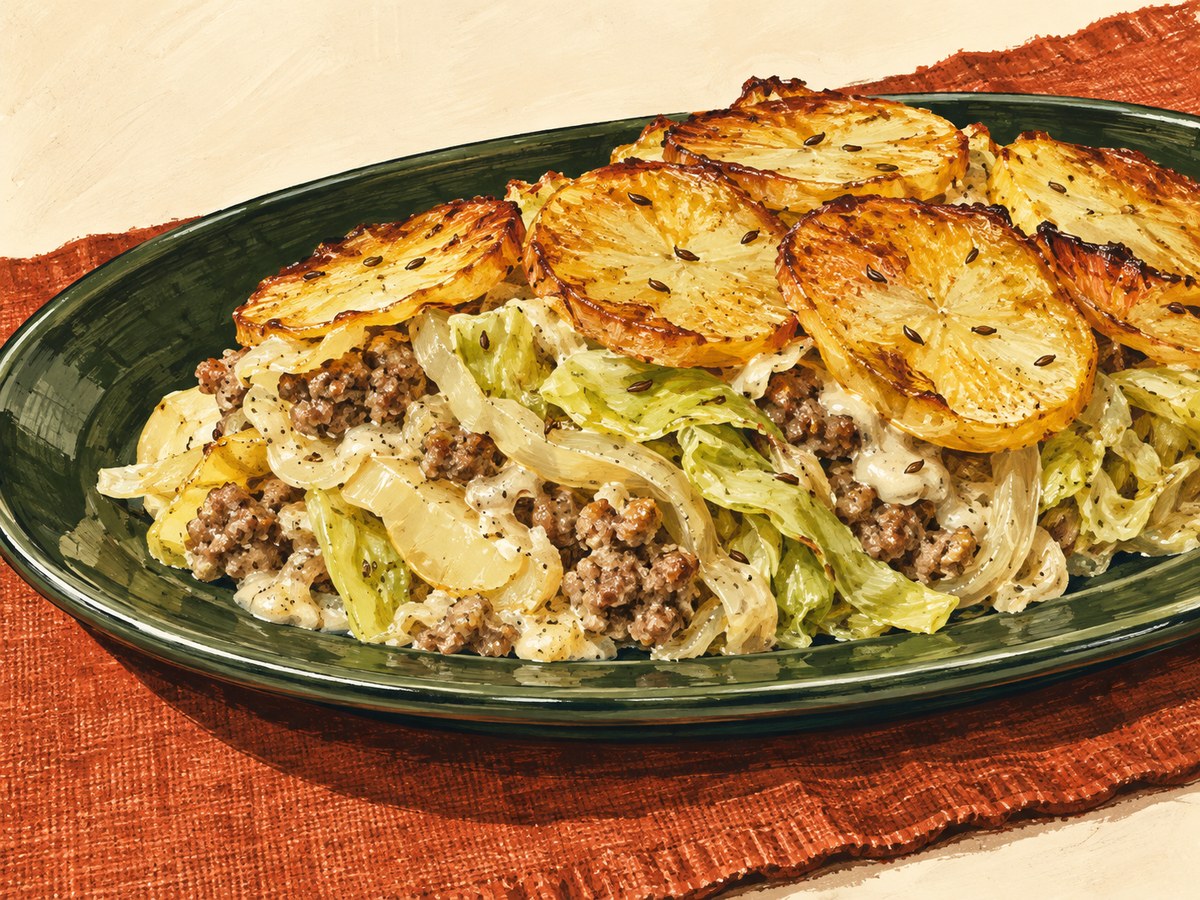
Print recipe · PDFCabbage needs time in the skillet before it goes beneath a potato layer. That first cooking shrinks a bulky heap into a sweet, tender filling with browned pork sausage, onion and caraway. Thin potato rounds are briefly simmered, then overlapped on top, so the finished pan has distinct slices rather than mash or shreds.
A large raw cabbage heap is misleading
The prepared cabbage weight matters more than the fraction of a head. Remove damaged leaves and the hard core, then cut the leaves into narrow ribbons. Add them to the skillet in two batches and turn them as they soften. Putting the whole raw heap into a baking dish leaves too much work for the oven and can release a surprising amount of water under the potatoes. Cook until the ribbons are tender and no puddle remains, then use the cider vinegar to lift the browned flavor from the bottom of the pan.
Choose fresh pork sausage, and read its label
This method uses raw bulk pork sausage or raw links removed from their skins. It is not written for smoked ready-to-eat sausage, which has a different starting state and salt level. Break the raw sausage into small uneven pieces and check that it reaches 160°F in the skillet. Drain excess fat into a suitable container rather than the sink. You still need to check the assembled bake at 165°F: cooked sausage alone does not tell you the temperature of cabbage, sauce and potatoes together.
Slices should bend before they become a roof
Cut potatoes evenly with a knife, using a stable flat side after the first slice. A mandoline is not necessary. The short simmer makes the slices flexible enough to overlap without snapping, but stop before they become so soft that they disintegrate in the colander. Let them drain well, arrange them over the hot filling and brush their exposed surfaces lightly. The top will have browned edges and tender centers rather than the rigid crispness of a fried potato chip.
Ingredients
- 1 lb 12 oz waxy potatoes, scrubbed and cut in 1/8-in/3-mm rounds (800 g prepared)
- 8 cups water (1.9 L), for potatoes
- 1 lb fresh raw pork sausage, skins removed (450 g)
- 1 large onion, thinly sliced (200 g)
- 1 1/2 lb green cabbage, cored and thinly sliced (700 g prepared)
- 1 tablespoon neutral oil (15 ml), divided: 1 teaspoon/5 ml for skillet and 2 teaspoons/10 ml for potatoes
- 1 teaspoon caraway seeds (2 g)
- 1 tablespoon cider vinegar (15 ml)
- 1 tablespoon all-purpose flour (8 g)
- 3/4 cup low-sodium chicken stock (180 ml)
- 1/2 cup sour cream (120 g)
- 1 teaspoon Dijon mustard (5 g)
- 1/4 teaspoon black pepper
Set out
Oven, 9×13 in (23×33 cm) baking dish, at least 3.5 qt/3.3 L, Large saucepan, 12-in/30-cm deep skillet, Colander, Slotted spoon, Pastry brush, Food thermometer, Rimmed baking sheet
Allergens
Milk, Wheat, Mustard; check sausage and stock labels for celery or other allergens. Check labels and substitutions.
Make it
- Heat the oven to 400°F (205°C). Set the baking dish on a rimmed sheet. Put potato slices in the saucepan with their water. Bring gently to a boil and simmer 4–6 minutes until just flexible but not falling apart. Drain carefully.
- Meanwhile cook sausage in the skillet over medium-high heat for 8–10 minutes, breaking it up, until several pieces reach 160°F (71°C). Remove with a slotted spoon. Leave about 1 tablespoon fat in the skillet and safely discard excess; add the measured 5 ml oil.
- Add onion and cook 5 minutes. Add cabbage in two batches, turning as it shrinks. Stir in caraway and cook 12–15 minutes until cabbage is tender and excess water has evaporated. Stir in vinegar, then flour for 1 minute.
- Add stock gradually and simmer 2–3 minutes until lightly thickened. Take off the heat and fold in sour cream, mustard, pepper and cooked sausage. Transfer the warm filling to the dish. Arrange potato slices over it in overlapping rows and brush with the remaining 10 ml oil.
- Bake 30–35 minutes until the potatoes are tender, their edges are golden and the filling reaches 165°F (74°C) in the center and several other places. Rest 5 minutes before dividing into six portions.
Use the wide pan for the cabbage too
A narrow saucepan can hold the raw ribbons but encourages steaming. The broad skillet gives their released water somewhere to evaporate before they become a filling.
A useful detail
Sausage and mustard usually supply enough salt for this pan; no extra salt is required in the base recipe. The 105-minute total includes preparing the large cabbage quantity, overlapping the potato simmer and a full bake.
Another way
- Replace caraway with 1 teaspoon dried thyme if its anise-like flavor is unwelcome. The cabbage still needs the same full skillet softening.
Keep it well
Refrigerate in shallow portions within 2 hours, or 1 hour above 90°F (32°C), at 40°F (4°C) or below. Use within 3 days or an earlier sausage or dairy deadline. Reheat to 165°F (74°C), adding a spoonful of water if the filling is dry. Freeze promptly cooled portions for up to 1 month for quality; thaw in the refrigerator. Sour cream may separate slightly.