071 / 75 · Breakfasts, Small Bakes and Useful Extras
Quick Tomato Soup Base
About 5–6 cups/1.2–1.4 L soup base, four starter portions · Active 25 min · Total 1 hr
Print recipe · PDFCanned tomatoes, grated carrot and onion make a useful basic soup without a blender or cream. The vegetables simmer until soft and are mashed roughly in the pan. Serve as four starter bowls or keep the base chilled for another planned dish.
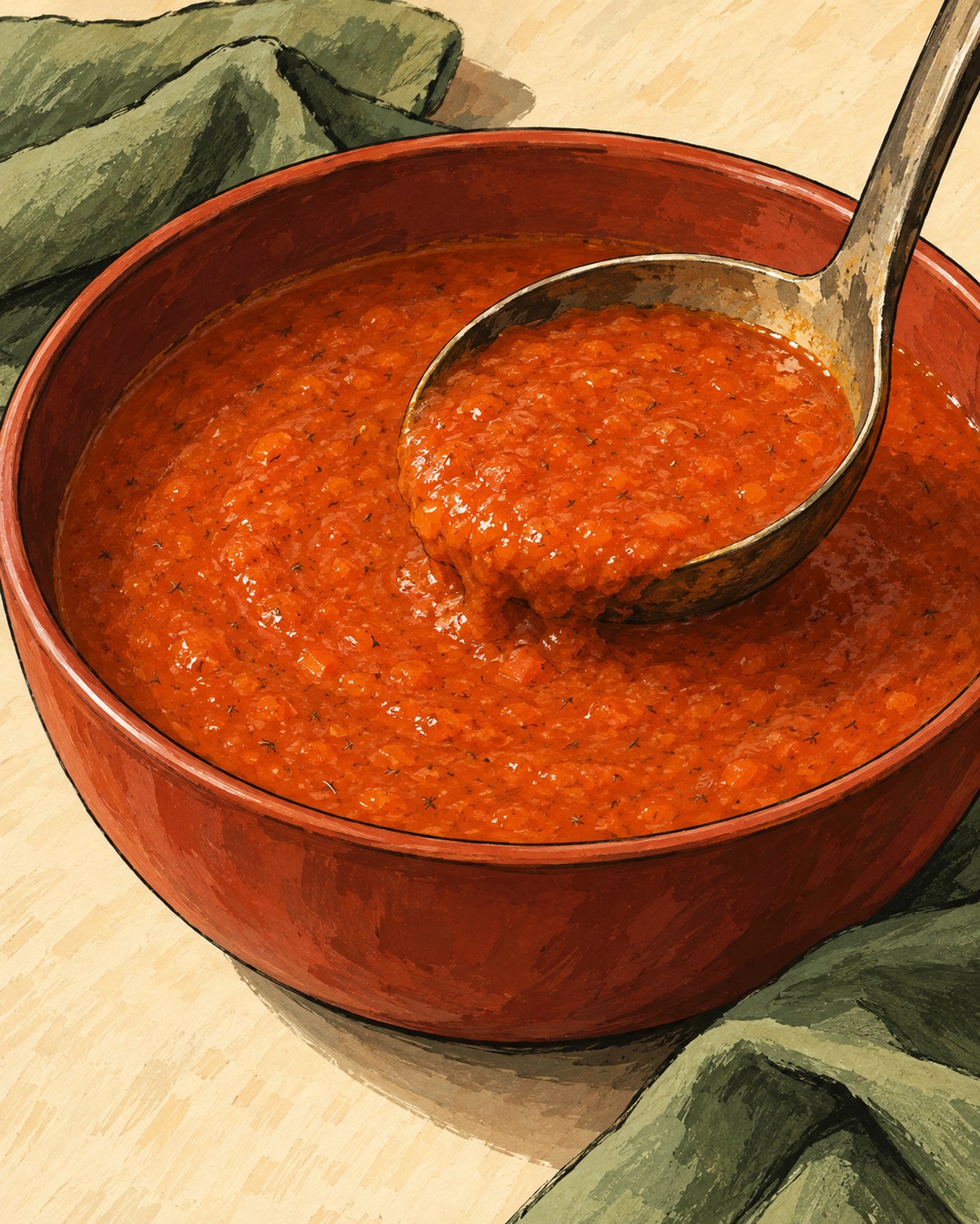
Small vegetable pieces make the method work
Finely chop onion and grate the carrot so both soften during the simmer. Large carrot coins would need a longer cook or a blender to reach the same texture. The carrot rounds the tomato flavor without requiring a separate sweetening syrup. Canned tomatoes can vary in acidity and salt, so use the stated amount and read labels rather than assuming every flavored product is plain.
Rustic texture is intentional
Press softened vegetables and tomatoes with a potato masher or the back of a broad spoon. A few small pieces should remain. Do not pour hot soup into an unsuitable sealed blender simply because a smoother commercial soup comes to mind. This written version is deliberately useful with ordinary pan tools and a little patient simmering.
A base does not erase an earlier date
Divide the whole pot into four starter portions or cool it promptly in shallow containers. If adding beans or pasta to a saved portion later, keep the soup’s original cooking date. New ingredients do not restart its storage clock. This is a soup foundation, so the yield does not quietly imply four complete dinners or unlisted bread and meat. Labeling the container with its cooking date makes the next use more practical than saving an unmarked pot at the back of the refrigerator.
Ingredients
- 1 tablespoon olive or neutral oil (15 ml)
- 1 medium onion, finely chopped (150 g)
- 1 medium carrot, finely grated (100 g trimmed weight)
- 2 cans plain chopped tomatoes, 14–14 1/2 oz/400–411 g each, with juice (about 800 g total)
- 2 cups water (480 ml), plus up to 1/2 cup/120 ml if needed
- 1/2 teaspoon dried thyme (0.5 g)
- 1/2 teaspoon fine salt (3 g)
- 1/4 teaspoon black pepper (0.5 g)
Set out
Heavy saucepan, at least 4 qt/4 L, Knife, board and grater, Potato masher or broad spoon, Shallow covered containers
Allergens
No major US allergen identified in the base ingredients. Check labels and substitutions.
Make it
- Heat oil in the saucepan over medium heat. Cook onion and grated carrot for 8–10 minutes, stirring, until softening.
- Add tomatoes with juice, the initial 480 ml water, thyme, salt and pepper. Bring to a boil, partly cover and simmer gently for 20–25 minutes until all vegetables are tender. Stir occasionally from the bottom.
- Mash roughly in the pan with the masher or broad spoon. If too thick for soup, add extra water 1/4 cup/60 ml at a time, up to 120 ml, and bring back to a simmer.
- Divide into four starter portions, or cool the base promptly in shallow containers and label with its original cooking date before refrigerating.
Starter or foundation
Four servings means four starter bowls of soup base. Beans, pasta, bread or meat are not hidden in the base yield.
Ingredient labels
No major allergen ingredient is deliberately included. Check canned tomatoes and dried-herb labels for added sauces, milk, celery or other ingredients; no allergen-free guarantee is made.
A useful detail
The 60-minute total includes chopping, grating and a full vegetable simmer. Final volume varies with evaporation, so the yield is an honest approximate range.
Another way
- Use 800 g plain canned crushed tomatoes instead of chopped tomatoes for a smoother base before hand-mashing.
- Add 240 g drained canned white beans to the complete hot batch and simmer for 5 minutes for a heartier variation; this changes the yield and does not restart any stored soup’s clock.
Keep it well
Refrigerate shallow portions within 2 hours, or 1 hour above 90°F/32°C, at 40°F/4°C or below and use within 3 days. Reheat a portion to 165°F/74°C throughout. Freeze promptly cooled labeled portions for up to 2 months and thaw in the refrigerator. Keep the original cooking date when using as a base for a later dish.