057 / 75 · Produce That Needs a Plan
Onion Potato Lentil Hash
Four potato, onion and lentil hash portions · Active 45 min · Total 1 hr 30 min
Print recipe · PDFFresh potato cubes are briefly boiled, dried and browned in two batches before joining onion and canned lentils. A little vinegar lifts the pan at the end. This is a crisp-edged hash with whole lentils, not another tomato-based bean skillet.
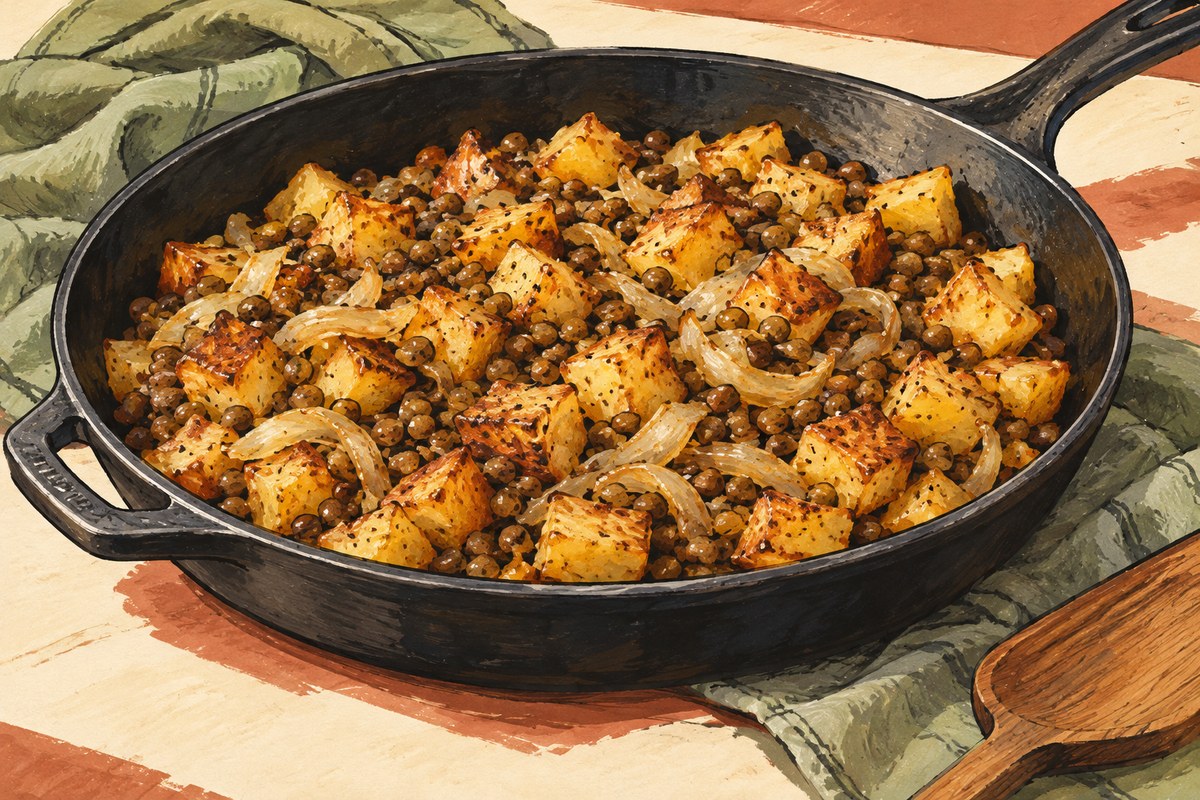
Dry the potato before browning
Parboil evenly cut cubes until almost tender, then drain and let steam leave them. Surface water makes the first oil spit and encourages steaming instead of browning. Do not add milk or mash the potato. The cubes should keep their corners so they can turn in the skillet without becoming one soft cake.
Two batches are part of the recipe
A full potato load piled deeply into a small skillet cannot brown on all sides at once. Use the stated broad pan, brown half the potatoes, then lift them to a clean plate while the second half cooks. The reserved potatoes wait only during this continuous cooking sequence. They are not held for hours at room temperature.
Finish the onion, then combine
Onion cooks in the remaining measured oil before the drained lentils join it. Return all potatoes once that base is ready and turn gently so a few crisp edges survive. Add vinegar at the end, letting the sharp steam clear before serving. Divide the whole pan into four portions. There is no fried egg or meat topping required by the ingredient list, and the visible texture should remain potato cubes and whole lentils. A saved portion softens in the refrigerator but can still be reheated thoroughly with gentle turning.
Ingredients
- 1 3/4 lb potatoes (800 g peeled weight), cut into 1/2-inch/1 cm cubes
- Water to cover potatoes
- 2 tablespoons neutral oil (30 ml), divided into three 2-teaspoon/10 ml portions
- 1 medium onion, thinly sliced (150 g)
- 2 cans cooked lentils, 15 oz/425 g net each, drained and rinsed (480 g total drained)
- 1/2 teaspoon fine salt (3 g)
- 1/4 teaspoon black pepper (0.5 g)
- 1 tablespoon cider vinegar (15 ml)
Set out
Saucepan and strainer, Large heavy skillet, at least 12 inches/30 cm, Clean plate for first potato batch, Broad turner, Food thermometer
Allergens
No major US allergen identified in the base ingredients. Check labels and substitutions.
Make it
- Cover potato cubes with water, bring to a boil and simmer for 8–10 minutes until almost tender but holding shape. Drain thoroughly and let steam escape for 5 minutes.
- Heat 2 teaspoons/10 ml oil in the skillet over medium-high heat. Add half the potatoes in one layer and cook for 10–12 minutes, turning a few times, until golden and tender. Lift to a clean plate. Repeat with another 2 teaspoons/10 ml oil and remaining potatoes.
- Put second potato batch on the same holding plate. Heat final 2 teaspoons/10 ml oil in the skillet and cook onion for 8–10 minutes until softened and golden. Add drained lentils, salt and pepper and stir gently for 3 minutes.
- Return all potatoes and fold through. Cook for 3–4 minutes until the complete dish reaches 165°F/74°C. Drizzle in vinegar, turn once and serve all the pan in four portions.
Whole cooked lentils matter
Use drained canned whole lentils. Raw dry lentils or split red lentils would need a different water amount, cooking stage and texture.
Ingredient labels
No major allergen ingredient is deliberately included. Check lentil, oil and vinegar labels for added ingredients or cross-contact information; no allergen-free guarantee is made.
A useful detail
The 90-minute total includes two separate potato-browning batches. Do not cut this to one crowded batch and expect the same crisp edges.
Another way
- Use 480 g drained canned chickpeas instead of lentils, with a firmer final texture.
- Use 15 ml plain wine vinegar instead of cider vinegar; this is a sharp finishing splash, not a pickling method.
Keep it well
Refrigerate shallow portions within 2 hours, or 1 hour above 90°F/32°C, at 40°F/4°C or below and use within 3 days. Reheat a portion to 165°F/74°C throughout. Freeze promptly cooled portions for up to 1 month and thaw in the refrigerator. Potato edges lose crispness in storage; reheat in a roomy skillet while checking the center temperature.