054 / 75 · Produce That Needs a Plan
Carrot Raisin Oat Pancakes
Twelve small pancakes, three per breakfast portion · Active 40 min · Total 1 hr 10 min
Print recipe · PDFGrated carrot, raisins and plain rolled oats turn a simple pancake batter into a more textured breakfast. A short rest lets the oats hydrate before cooking. The pancakes are made small and fairly thin so the grated vegetable and egg batter cook through together.
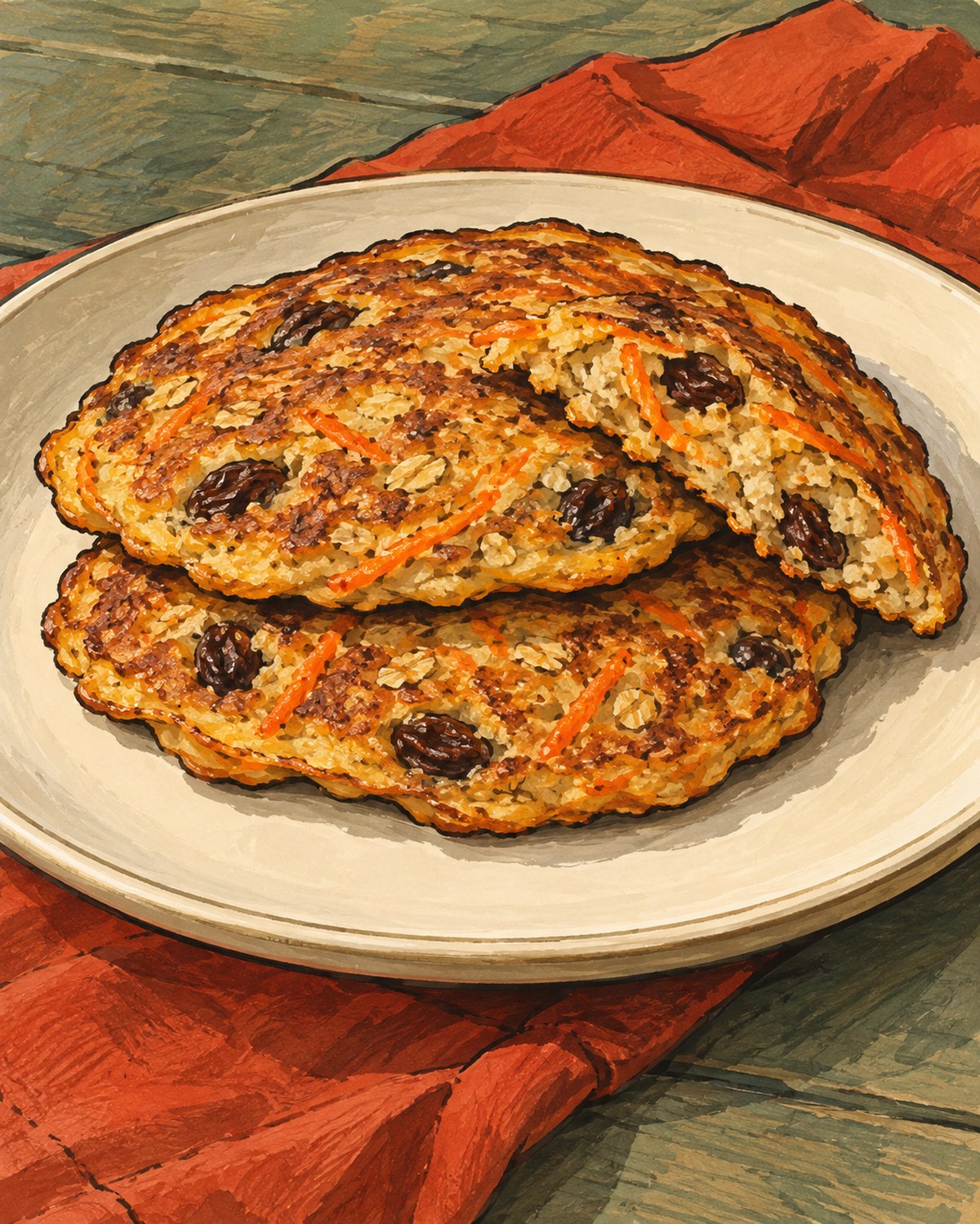
Fine carrot fits the pancake
Grate the carrot finely rather than using thick matchsticks. Small pieces soften inside a shallow pancake, while a coarse large shred can stay crunchy after the surface has browned. The raisins are mixed through the whole batter, not reserved as a topping on the first plate. Check a handful for hard stems before adding them.
Let the batter rest, then divide it
Plain rolled oats need a brief chance to absorb some milk. After the ten-minute rest, the batter should be thick but spreadable. Divide the complete mixture into twelve approximately equal portions, using a scale if helpful, instead of assuming a rigid scoop size will suit every carrot’s moisture. A little spreading with the spoon makes even circles and keeps their centers from becoming heavy lumps.
Moderate heat protects the center
Cook in three uncrowded batches with the measured oil divided between them. Sugar in the raisins and carrot can darken the outside before a thick pancake is done, so lower the heat if needed. The center must be set with no wet flour batter or raw egg. Serve three pancakes per person as written; syrup, butter and yogurt are separate choices, not ingredients required to complete the base breakfast.
Ingredients
- 1 1/4 cups all-purpose flour (150 g)
- 1 cup plain old-fashioned rolled oats (80 g)
- 1 1/2 teaspoons baking powder (6 g)
- 1/2 teaspoon ground cinnamon (1 g)
- 1/4 teaspoon fine salt (1.5 g)
- 1 large egg
- 1 1/4 cups milk (300 ml)
- 2 medium carrots, finely grated (150 g trimmed weight)
- 1/3 cup raisins (60 g)
- 2 tablespoons neutral oil (30 ml), divided: 1 tablespoon/15 ml in batter and remainder for three frying batches
Set out
Grater, Two mixing bowls and whisk, Large nonstick skillet and broad turner, Low oven and heatproof plate, Food thermometer, Kitchen scale helpful for dividing batter
Allergens
wheat, egg, milk. Check labels and substitutions.
Make it
- Whisk flour, oats, baking powder, cinnamon and salt in one bowl. Beat egg, milk and 1 tablespoon/15 ml oil in the other. Fold wet ingredients into dry, then add grated carrot and raisins. Rest for 10 minutes.
- Heat a holding oven to 200°F/95°C. Divide the complete batter into twelve approximately equal portions, about 65–70 g each depending on egg/carrot moisture.
- Warm one-third of the remaining frying oil in the skillet over medium-low heat. Add four portions and spread each to about 4 inches/10 cm across. Cook for 3–4 minutes on the first side, then 2–3 minutes on the second, until golden, the batter is fully set and the center reaches at least 160°F/71°C. Lower heat if browning too fast.
- Hold finished pancakes on the oven plate and repeat for two more batches with the remaining oil. Serve three pancakes per person.
No syrup needed in the base
Raisins supply little sweet pockets. The recipe does not depend on a separate bottle of syrup.
Ingredient labels
Flour supplies wheat, egg supplies egg and milk supplies milk. Oats may have wheat/barley cross-contact; dried fruit labels may include sulfites or other added ingredients.
A useful detail
The 70-minute total includes fine grating, ten minutes batter rest and three cooking batches. A smaller skillet that holds only two pancakes takes longer.
Another way
- Use 150 g peeled finely grated apple, lightly squeezed before weighing, instead of carrot; add no extra juice.
- Use 60 g finely chopped dried apricots instead of raisins, checking for hard pits or stems.
Keep it well
Refrigerate shallow portions within 2 hours, or 1 hour above 90°F/32°C, at 40°F/4°C or below and use within 3 days. Reheat a portion to 165°F/74°C throughout. Freeze promptly cooled pancakes in separated layers for up to 2 months and thaw in the refrigerator before reheating. Do not leave raw egg batter warm between widely separated meals.