049 / 75 · Produce That Needs a Plan
Potato Pea Frittata
One 10-inch/25 cm frittata, four light-meal wedges · Active 30 min · Total 1 hr 10 min
Print recipe · PDFFreshly boiled potato and fully cooked peas fill a simple oven-finished egg dish. Onion is softened in the skillet first, then the vegetables are spread evenly before the eggs go in. A thermometer checks the center rather than relying on a browned top alone.
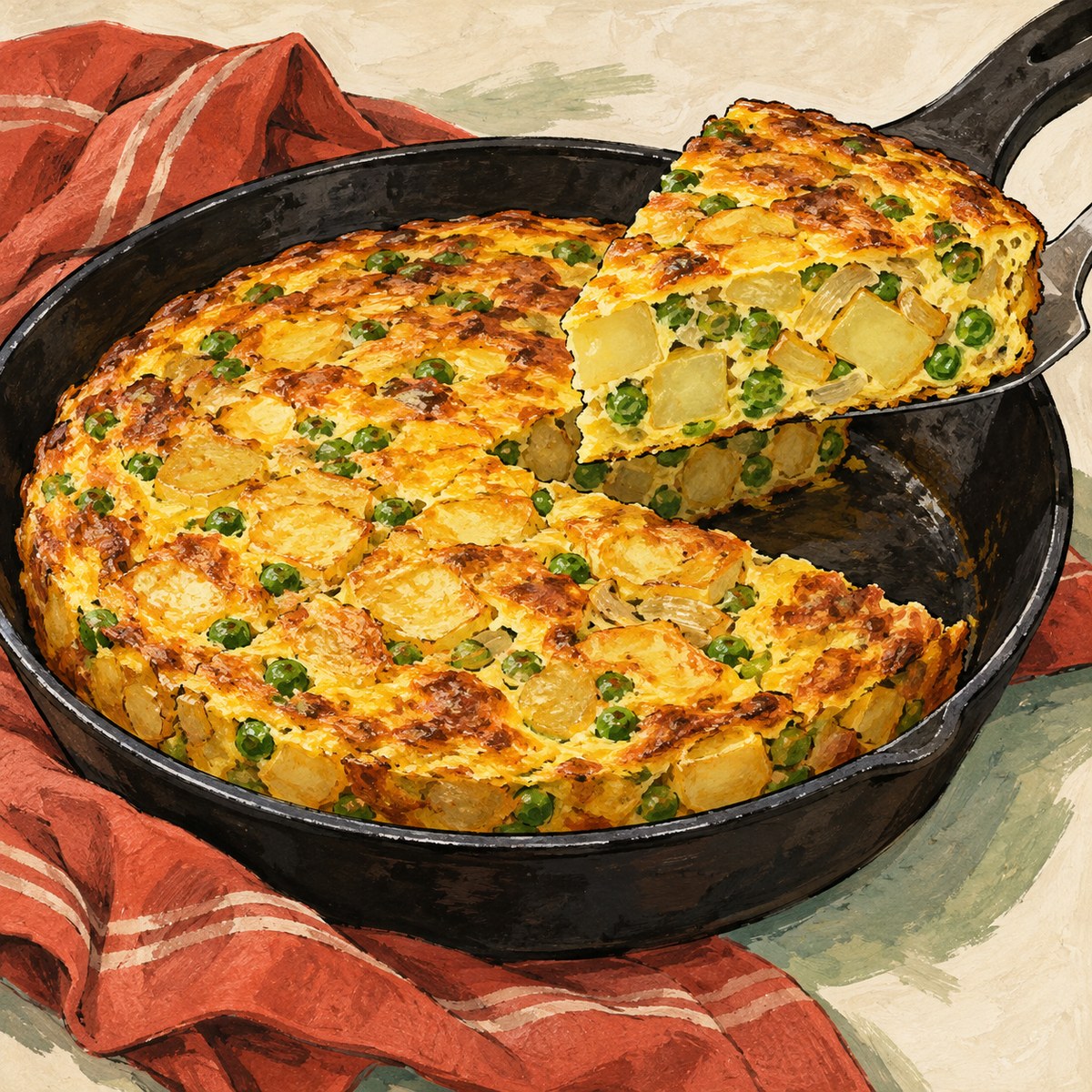
Cook the potato before the egg stage
Cut potato into small cubes and simmer just until tender, then drain well. The oven finish is too short to soften raw potato hidden inside egg. Let steam escape so excess water does not thin the custard. Peas also need their full package cooking time, whether they share the potato pan for the final minutes or are prepared separately.
Check the skillet before starting
The handle and the pan itself must be oven-safe at the stated temperature. A nonstick skillet with a plastic handle may not be suitable. Spread drained vegetables through the softened onion before adding beaten egg, so one wedge is not all potato and another only egg. Tilt gently to let the mixture reach the edges instead of stirring until everything becomes scrambled.
Let the center set, then rest
The surface can look ready while the middle is still fluid. Insert the thermometer into the thick central egg layer and allow more oven time if needed. A five-minute rest makes the wedges easier to lift without turning the skillet into a long warm holding dish. Four wedges are described as light meals; this is not a large banquet frittata. Cool saved wedges promptly rather than keeping the pan on the stove for repeat visits.
Ingredients
- 1 lb potatoes (450 g peeled weight), cut into 1/2-inch/1 cm cubes
- Water to cover potatoes
- 1 1/2 cups frozen peas (210 g)
- 1 1/2 tablespoons neutral oil (22 ml)
- 1 small onion, thinly sliced (100 g)
- 6 large eggs
- 1/4 cup milk (60 ml)
- 1/4 teaspoon fine salt (1.5 g)
- 1/4 teaspoon black pepper (0.5 g)
Set out
Oven-safe 10-inch/25 cm deep skillet, Saucepan and strainer, Mixing bowl and fork, Heatproof turner, Food thermometer and oven gloves
Allergens
egg, milk. Check labels and substitutions.
Make it
- Heat oven to 375°F/190°C. Cover potato cubes with water, bring to a boil and simmer for 10–12 minutes until just tender. Cook peas for their full package time, using the potato pan for the final minutes only if the times match. Drain both well and let steam escape for 3 minutes.
- Meanwhile heat oil in the oven-safe skillet over medium heat. Cook onion for 7–8 minutes until soft. Add drained potato and peas and distribute evenly.
- Beat eggs, milk, salt and pepper in the bowl. Pour over the vegetables, tilt to reach edges and cook without stirring for 2–3 minutes until the edge begins setting.
- Transfer skillet to oven using gloves. Bake for 15–20 minutes until egg is fully set and the center reaches at least 160°F/71°C. Rest for 5 minutes, then cut four wedges. Remember the handle remains hot after leaving the oven.
Hot handle stays hot
Keep an oven glove beside the skillet and tell anyone serving it that its handle is still hot. A resting frittata does not mean a cooled pan.
Ingredient labels
Eggs supply egg and milk supplies milk. Read frozen-vegetable and any reconstituted-milk labels for additional ingredients.
A useful detail
Potatoes and onion cook in parallel. The oven finish is for the eggs; the potato and frozen peas are fully cooked before they are added.
Another way
- Use 210 g plain frozen sweetcorn instead of peas, cooking fully according to its package before assembly.
- Use 450 g peeled sweet potato in small cubes instead of ordinary potato; simmer just until tender and drain well.
Keep it well
Refrigerate shallow portions within 2 hours, or 1 hour above 90°F/32°C, at 40°F/4°C or below and use within 3 days. Reheat a portion to 165°F/74°C throughout. Freeze promptly cooled wedges for up to 1 month and thaw in the refrigerator; the egg becomes firmer on reheating.