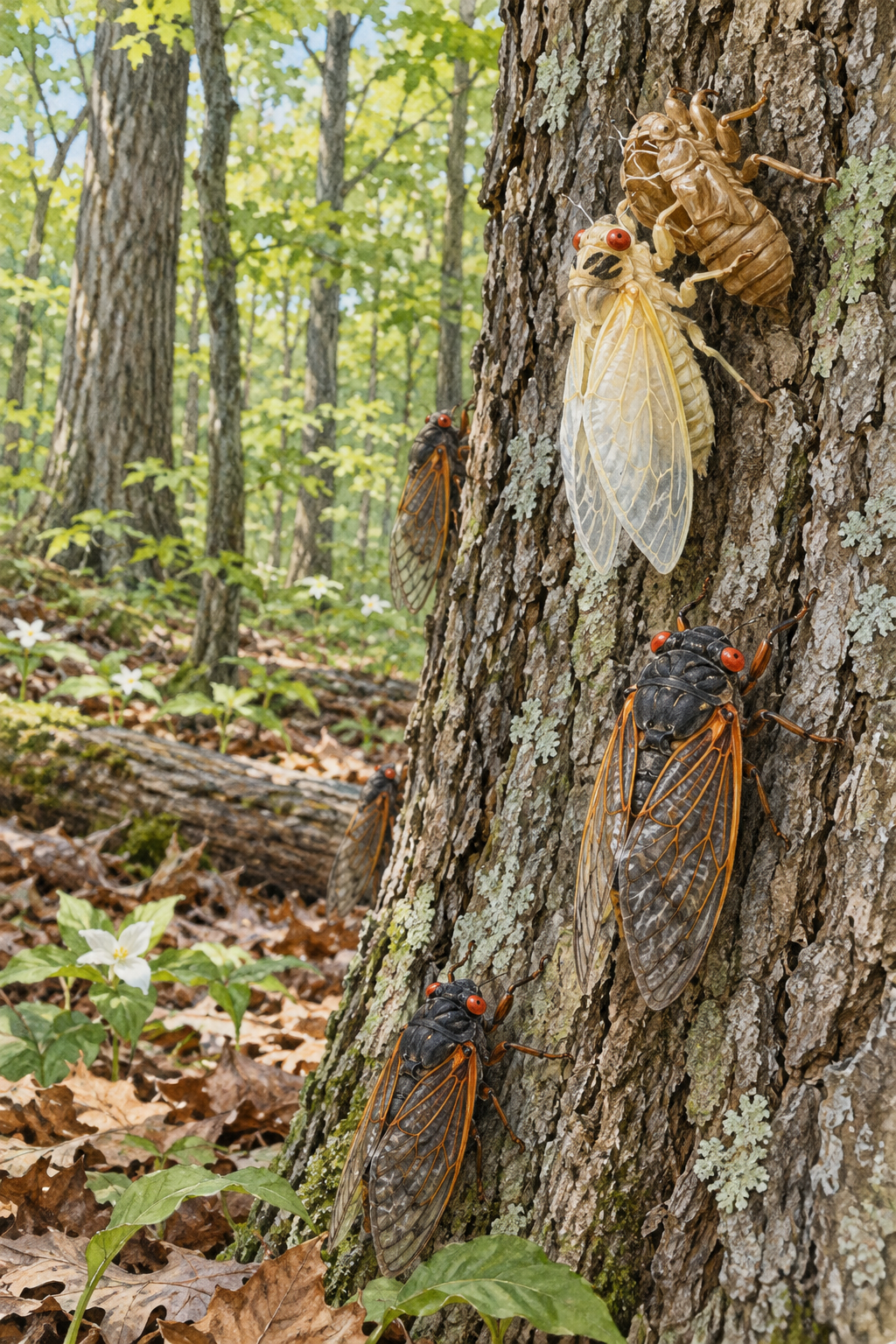
Natural-history illustration of a periodical cicada emergence; an interpretive scene, not a field photograph. Why synchronized emergence matters more than the famous prime numbers, with a careful guide to watching a local brood.
Read the article →
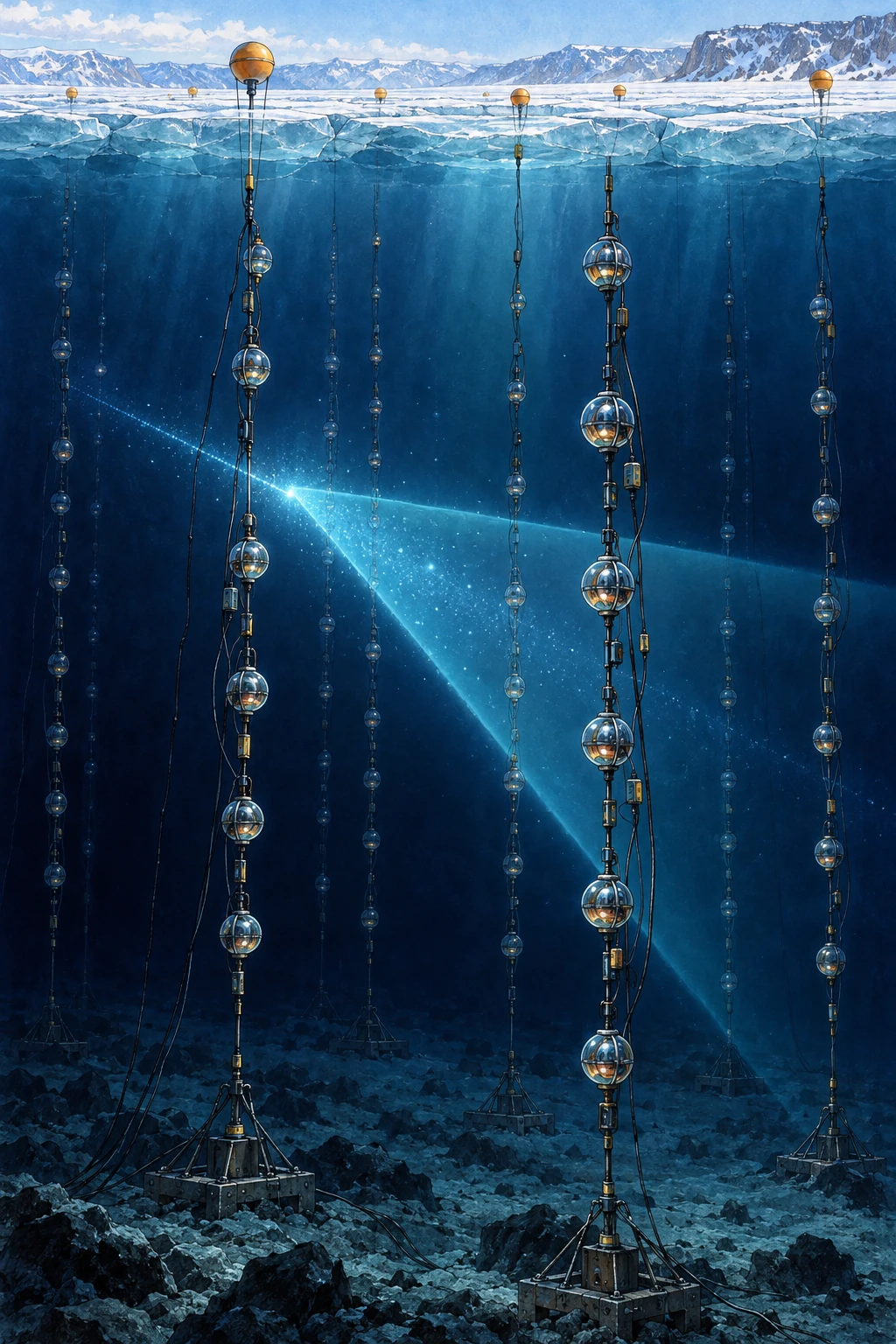
Conceptual cutaway, not a photograph or engineering drawing. Depth is compressed and sensors enlarged; real Baikal-GVD modules lie far below the surface. A deep lake becomes a cosmic instrument when rare particle interactions leave light that carefully surveyed sensors can reconstruct.
Read the article →
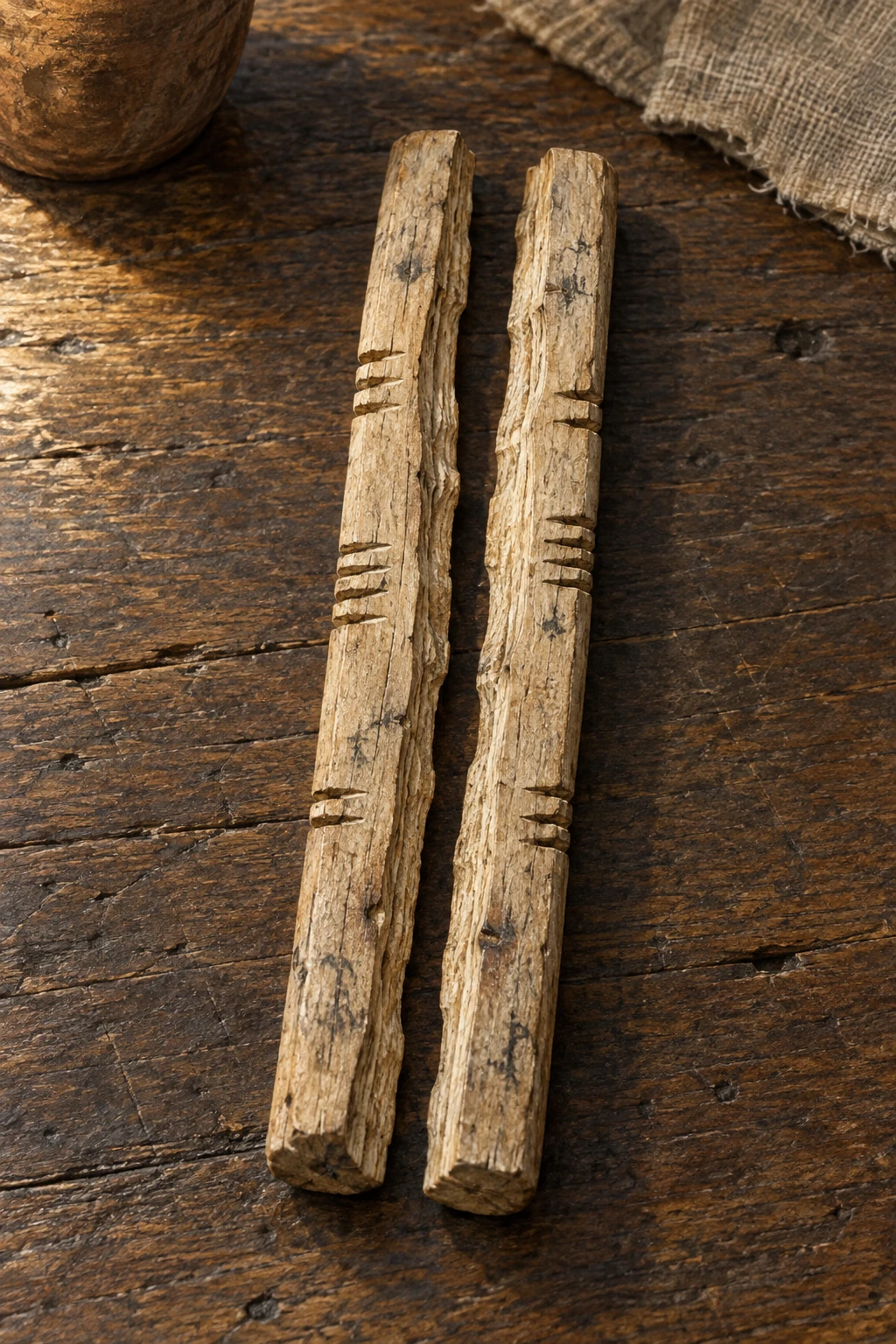
Conceptual illustration of split tallies. It is not a photograph or an exact replica of a surviving record. How notched wood, matching halves, written accounts, and a careful audit worked together to make a medieval payment record.
Read the article →
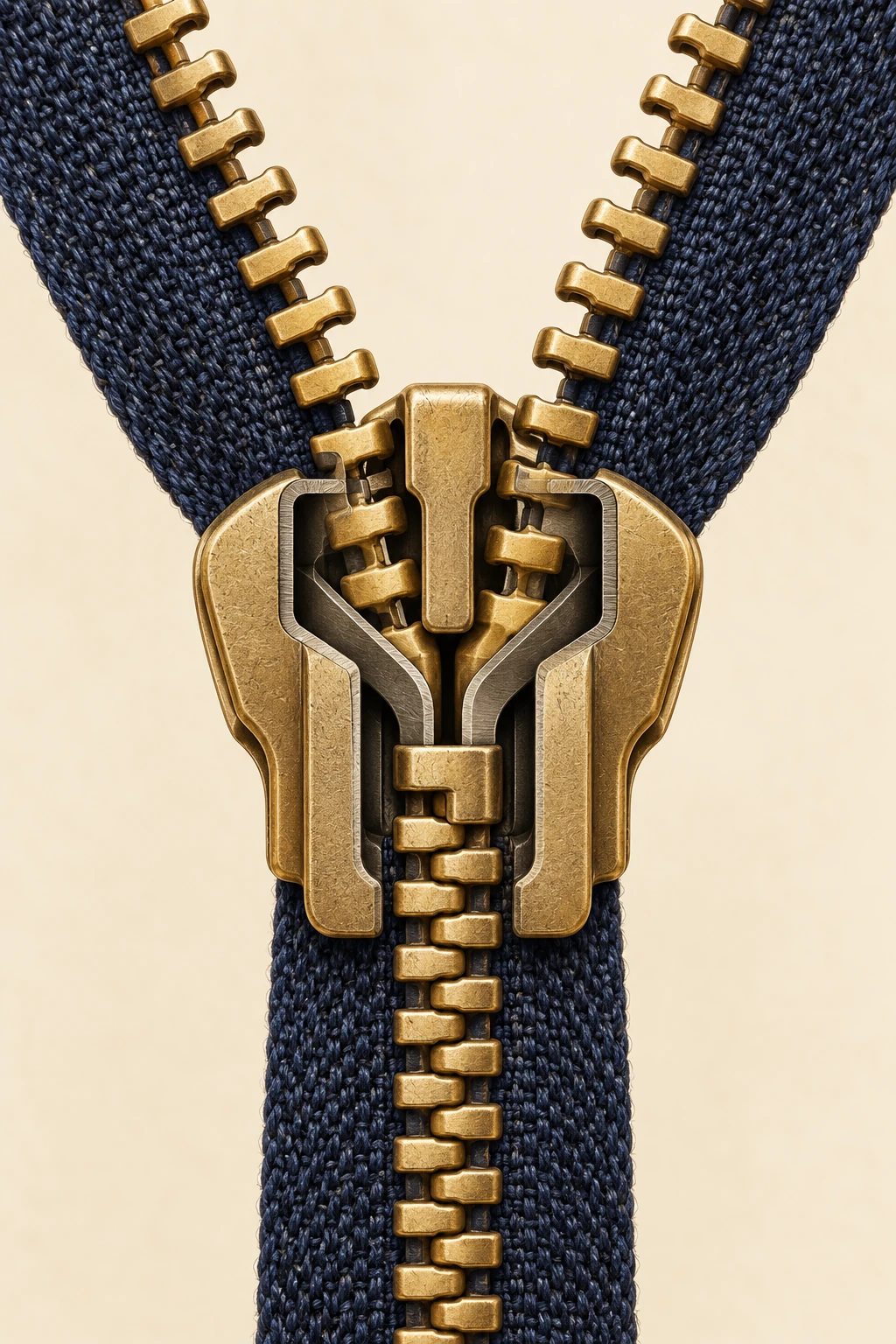
Conceptual cutaway. The internal arrangement is simplified; it is not a manufacturer drawing or a repair diagram. A guided look inside the zipper slider, its hidden lock, and the woven structure that makes a flexible seam possible.
Read the article →
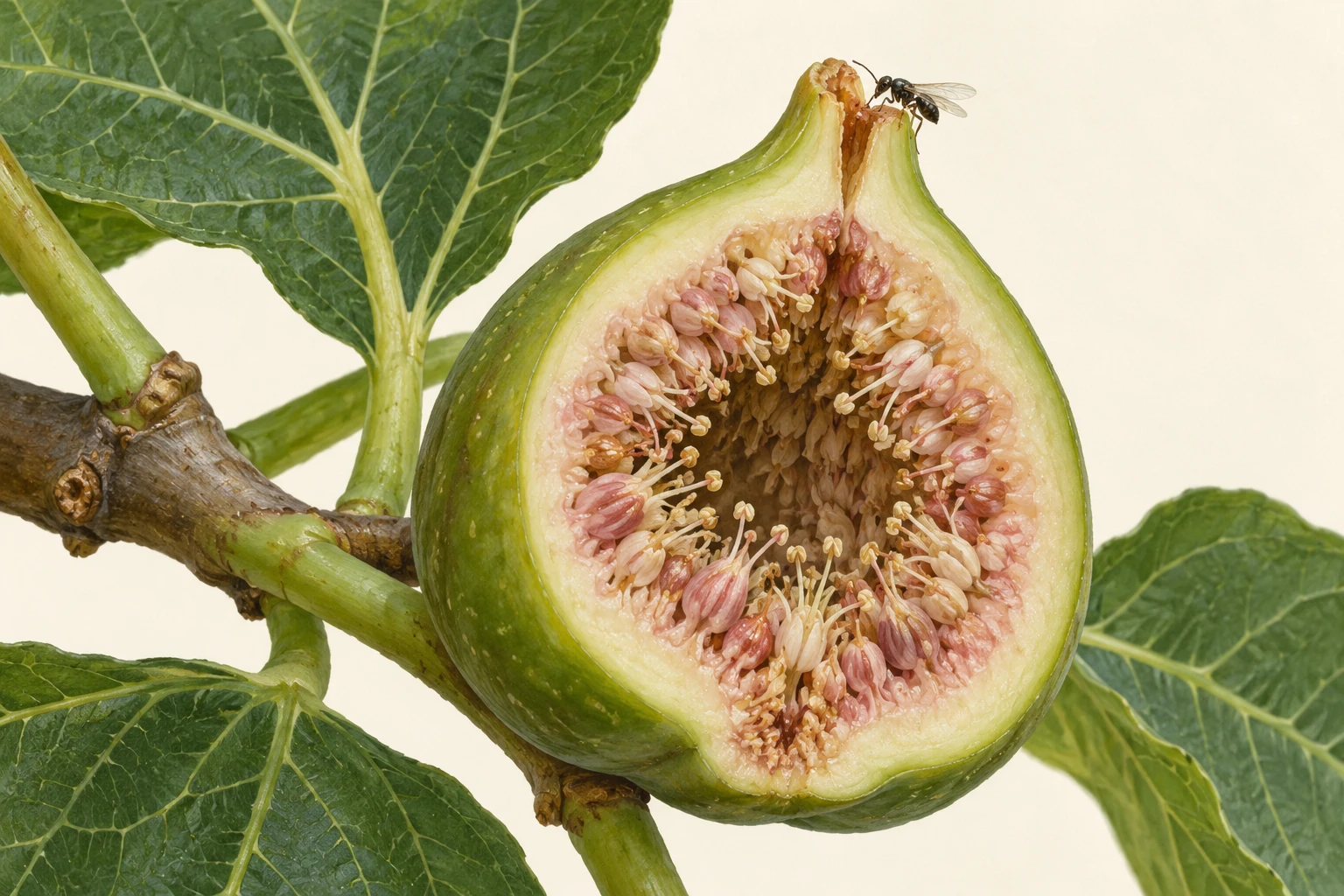
Conceptual botanical cutaway; the wasp and internal structures are illustrative, not a species-identification diagram. Inside a fig, pollination, reproduction and competing interests turn a hidden flower garden into an evolutionary experiment.
Read the article →
Illustration of GNSS reflection geometry. Paths, sizes, and orbital distances are schematic; this is not a satellite image or measurement. Navigation-satellite echoes become environmental measurements when researchers read how water and land change the signal.
Read the article →
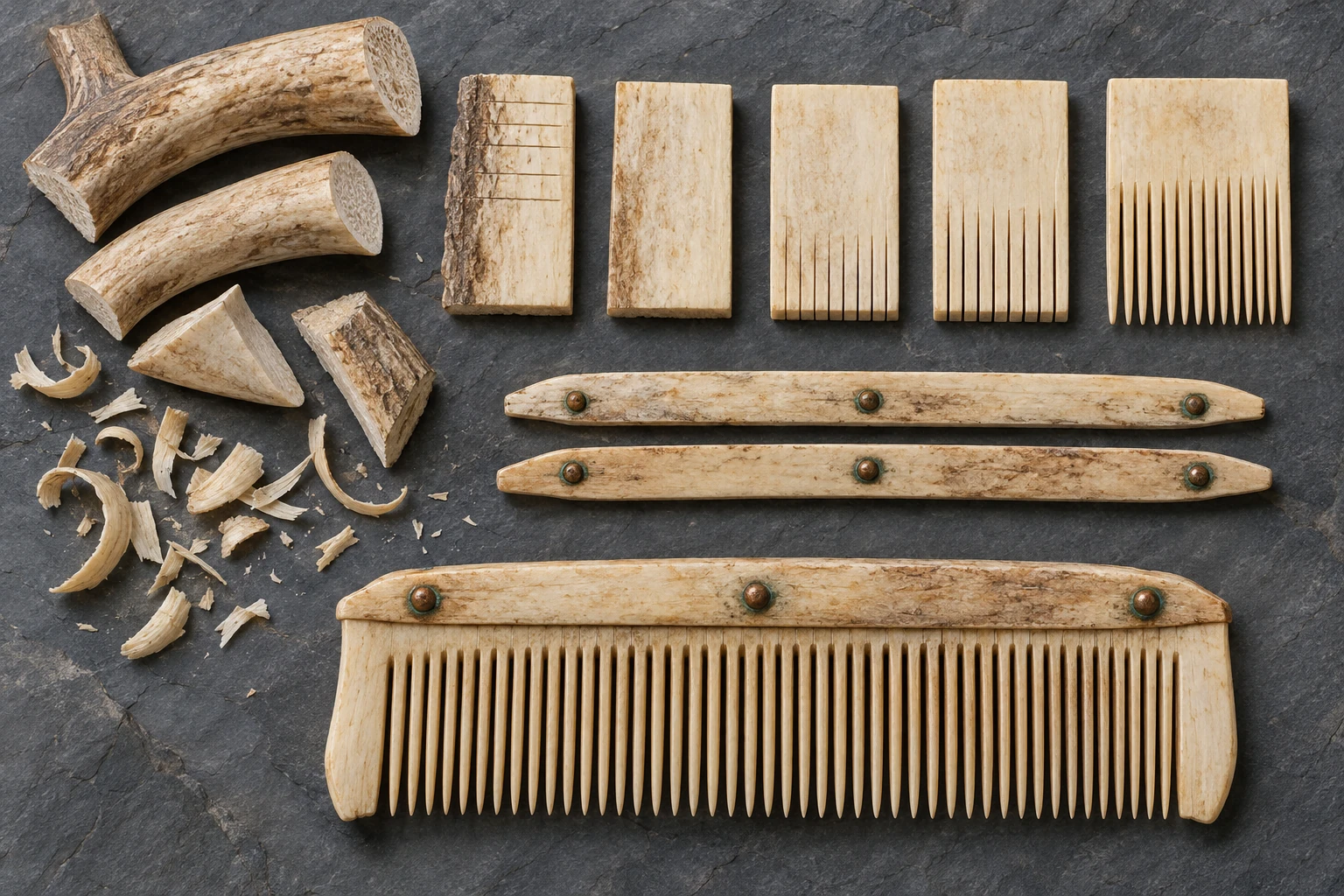
Conceptual craft illustration. The arranged stages are not excavated Ribe finds or a measured production diagram. Antler offcuts and biomolecular clues reveal why a workshop’s waste can tell a richer trade story than its finished combs.
Read the article →
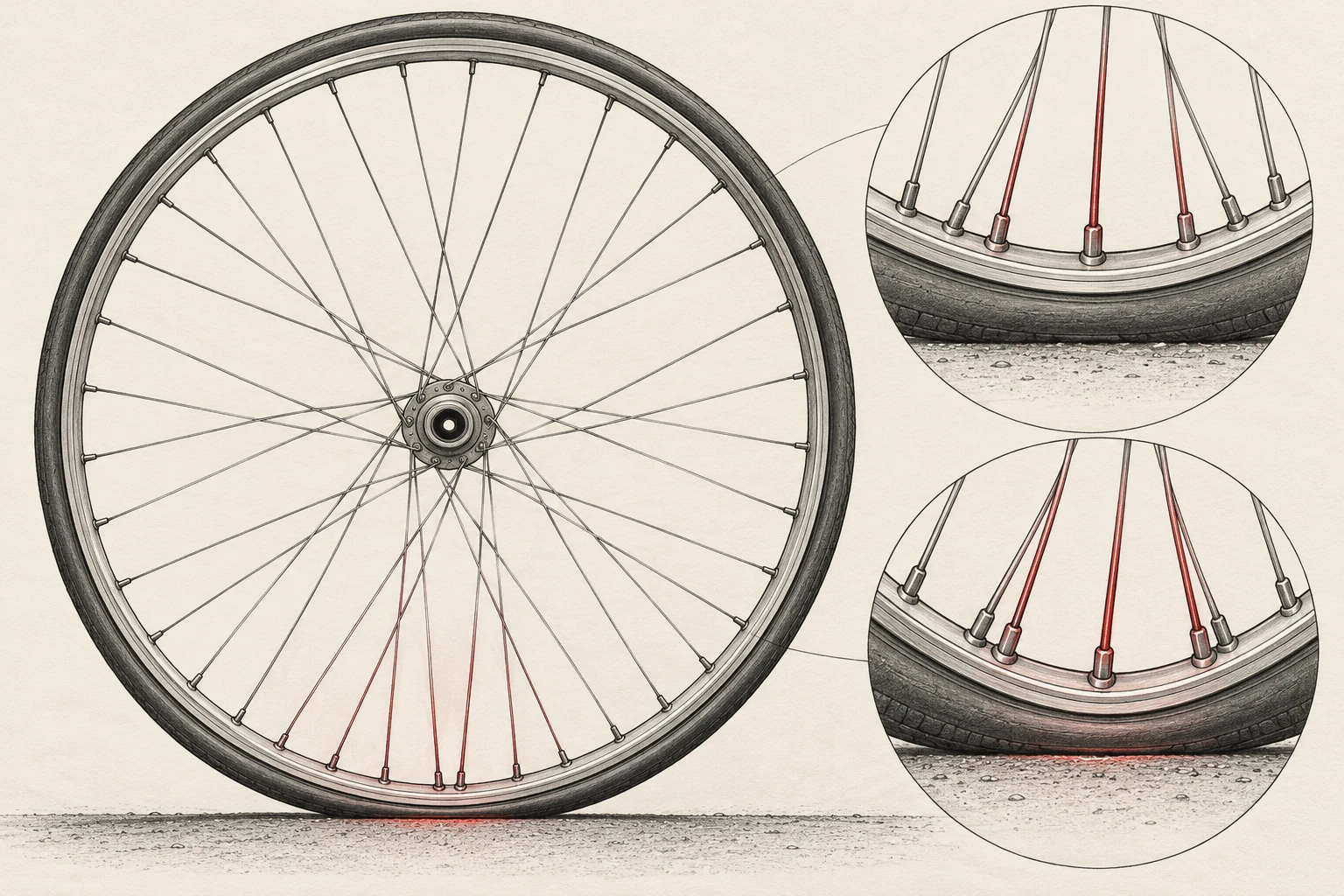
Conceptual wheel study. Color highlights identify a region of interest; they are not measured forces or a wheelbuilding specification. A wheel supports a rider through changing tension, a cooperating rim, and forces prepared before the bicycle moves.
Read the article →
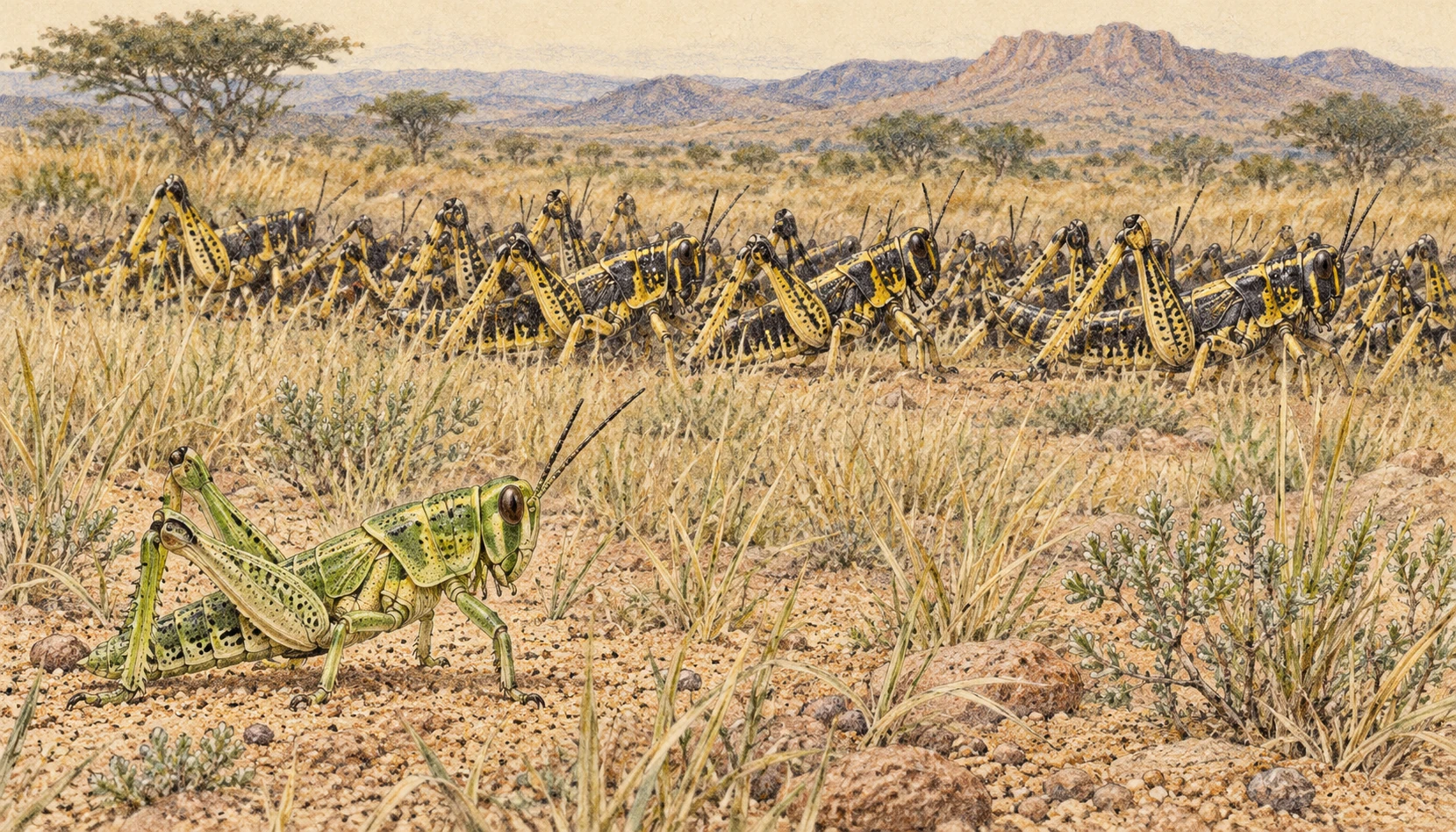
Conceptual field-guide comparison of locust social phases; illustrative coloration and setting, not a diagnostic field photograph. Phase change links sensory experience, nervous-system chemistry and collective behavior—and its experiments reveal useful complications.
Read the article →
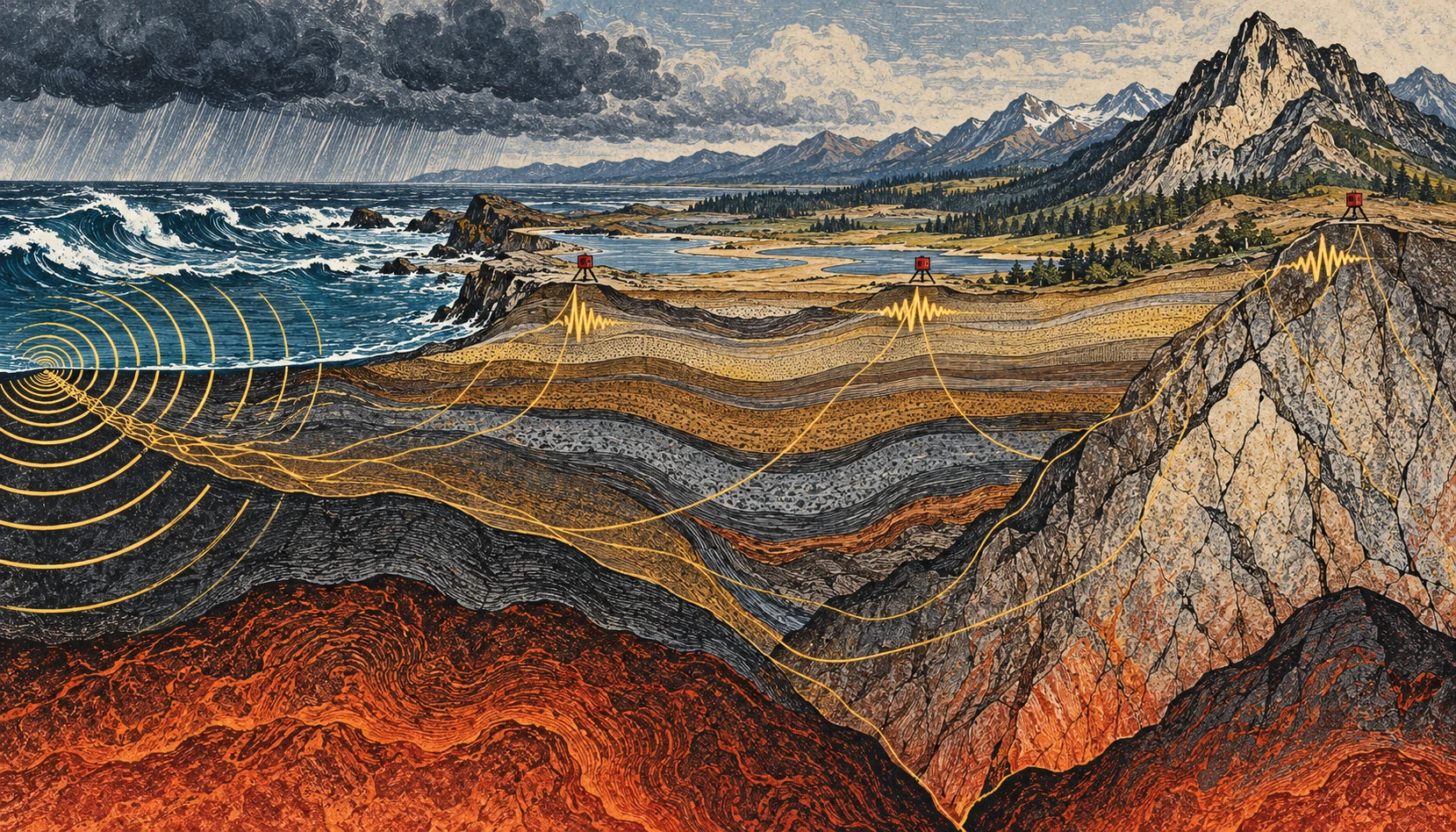
Conceptual illustration of ambient seismic noise and a sensor network; colors and paths are explanatory artwork, not tomography data. Continuous ground vibrations can reveal buried structure when scientists compare long recordings from a network of seismometers.
Read the article →
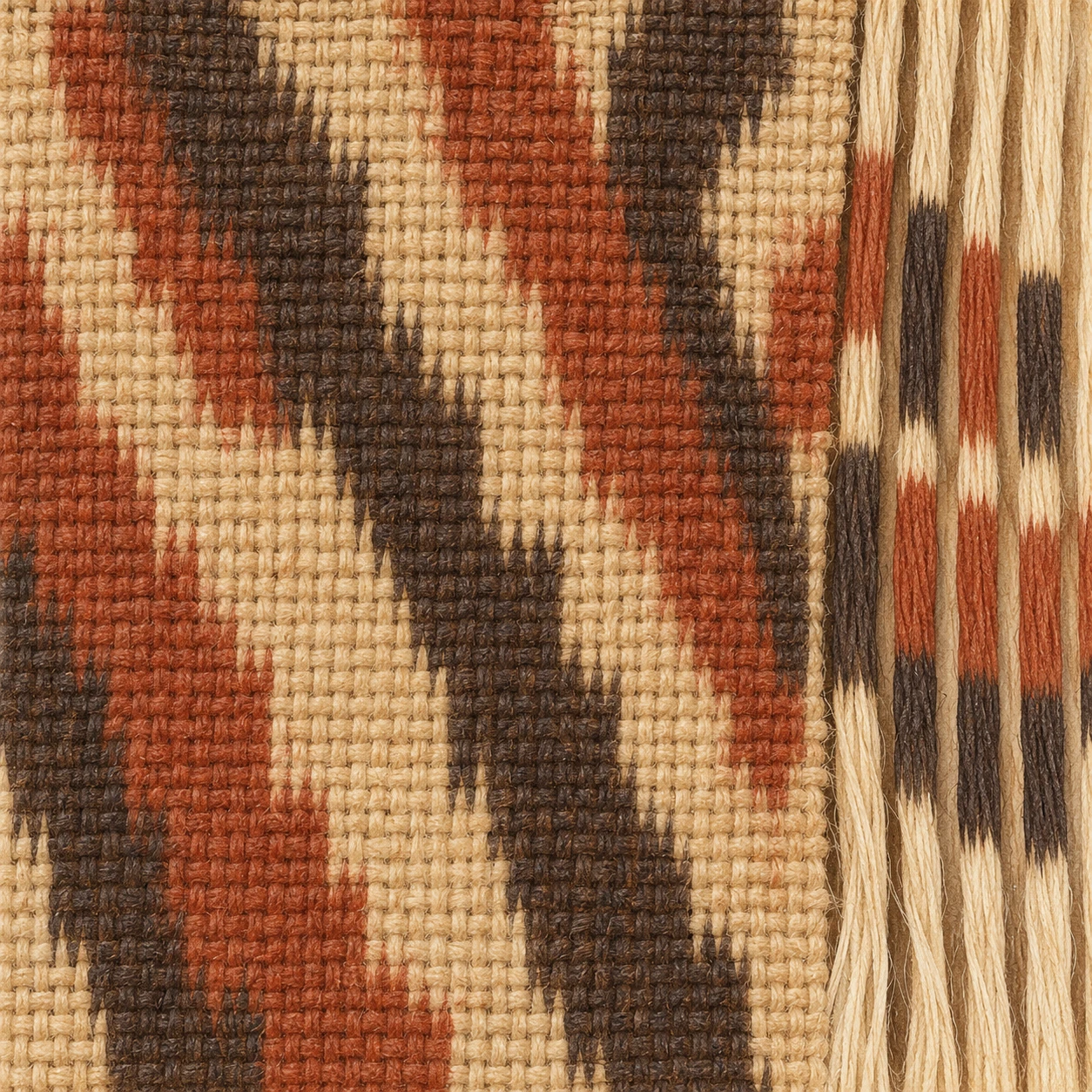
Generic warp-ikat study, not a reproduction of the Banton cloth or a named community’s design. A rare abaca textile reveals the planning inside warp ikat—and the care needed when reading an ancient cloth’s uncertain history.
Read the article →
Conceptual artwork, not a scannable QR code or a demonstration of a particular correction threshold. What QR error correction can recover, why damage location matters, and a controlled paper experiment anyone can understand.
Read the article →
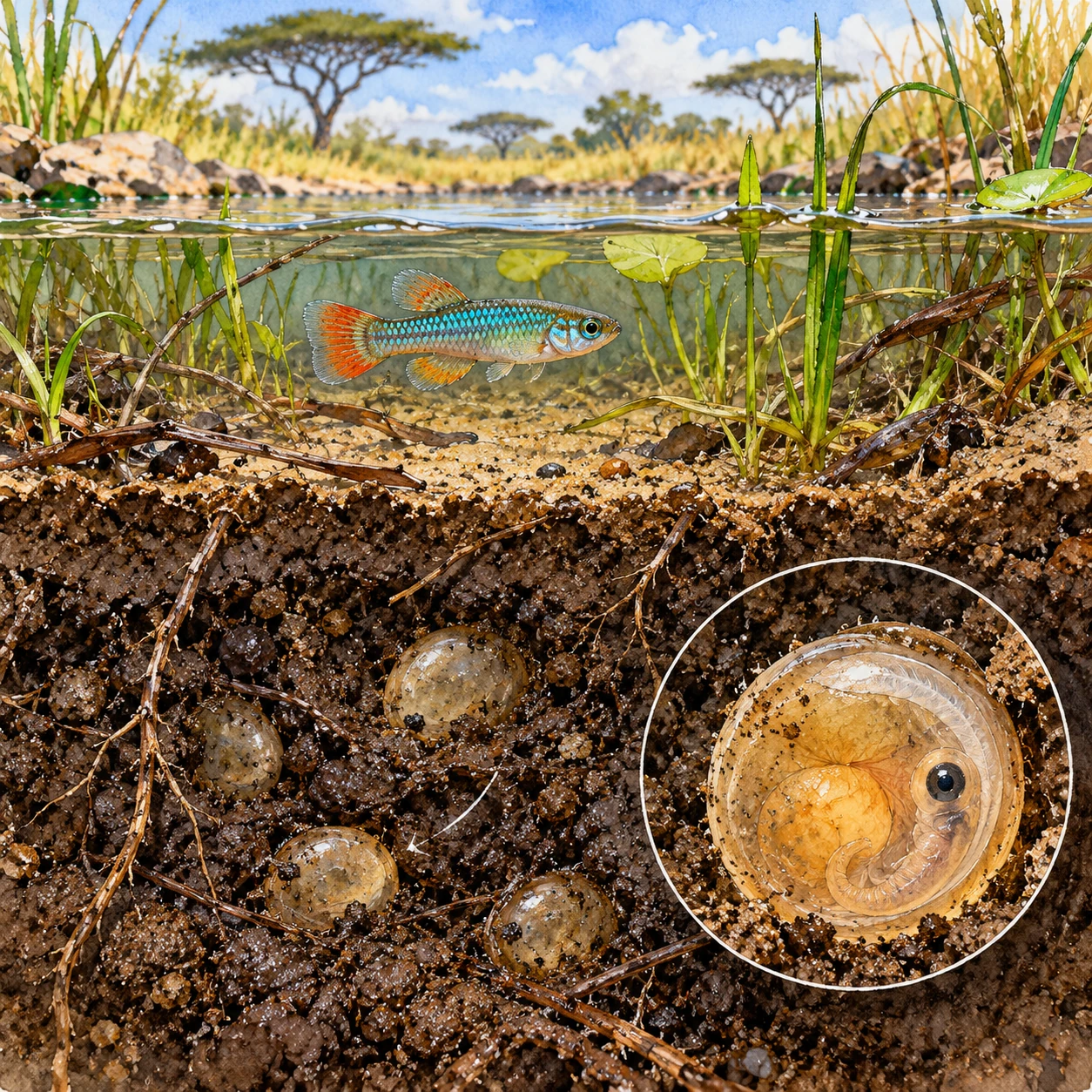
Conceptual cutaway combining rainy-season habitat and an enlarged embryo; life stages and scales are combined for explanation. African turquoise killifish reveal how an embryo can preserve itself through a dry season while development is paused.
Read the article →
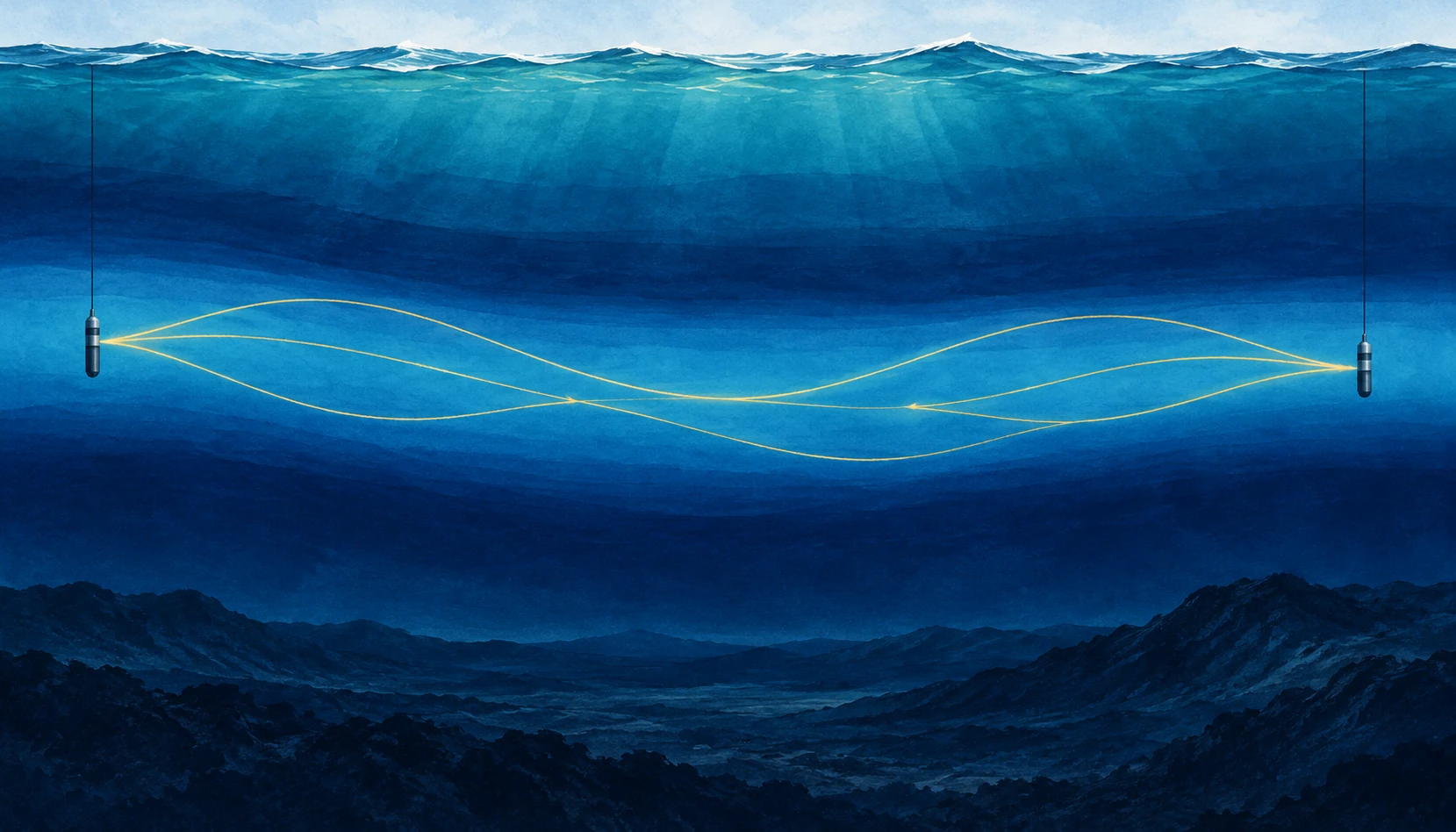
Conceptual illustration of a sound channel. Gold lines depict simplified ray paths, not wavelengths; scales are compressed. Temperature and pressure shape an underwater sound guide that can carry low-frequency signals across remarkable distances.
Read the article →
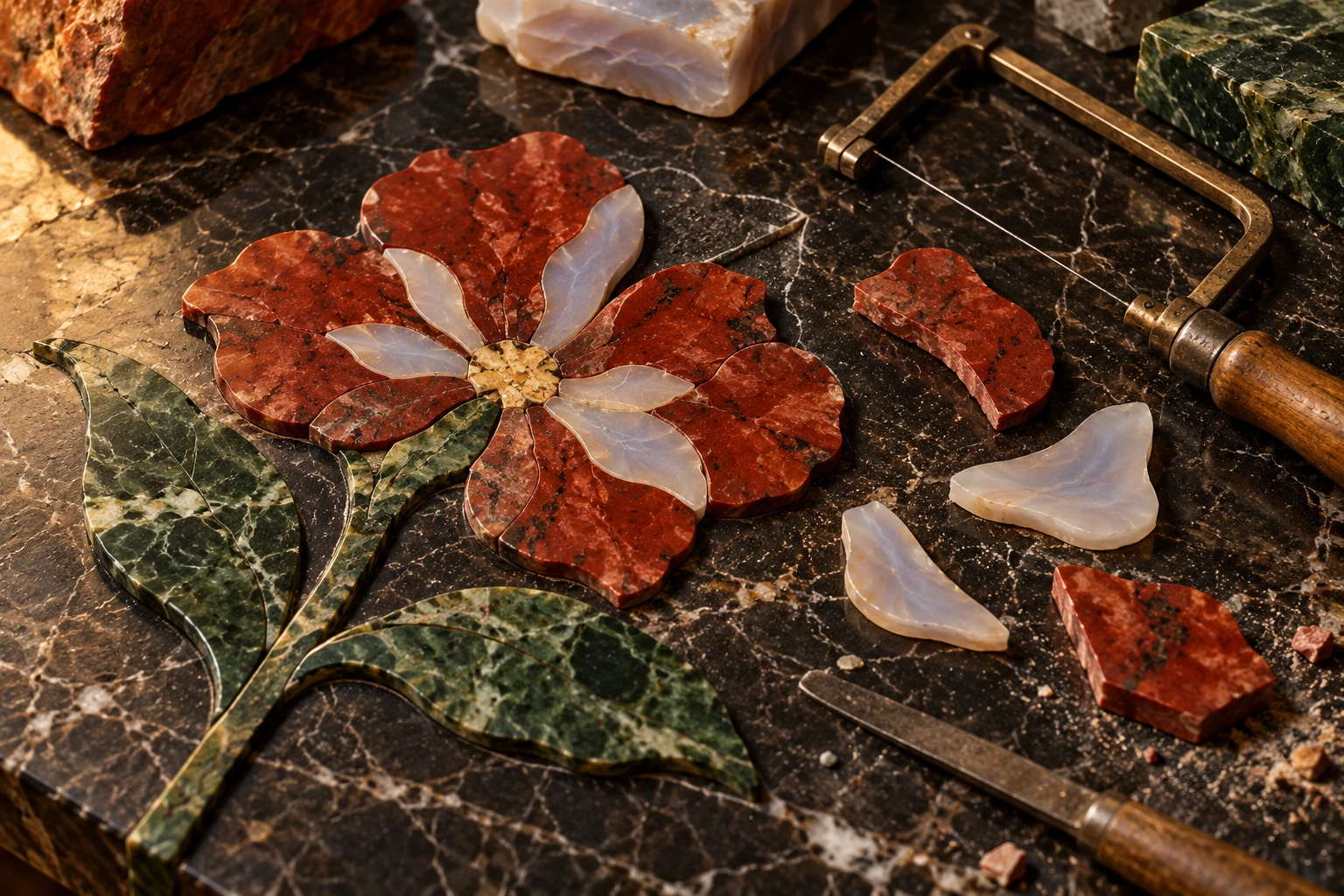
Conceptual craft scene with an original floral design. It does not reproduce a historical panel or document a specific workshop. Follow the seams in hardstone inlay to discover how a flower or landscape grows from patterns already present inside the stone.
Read the article →
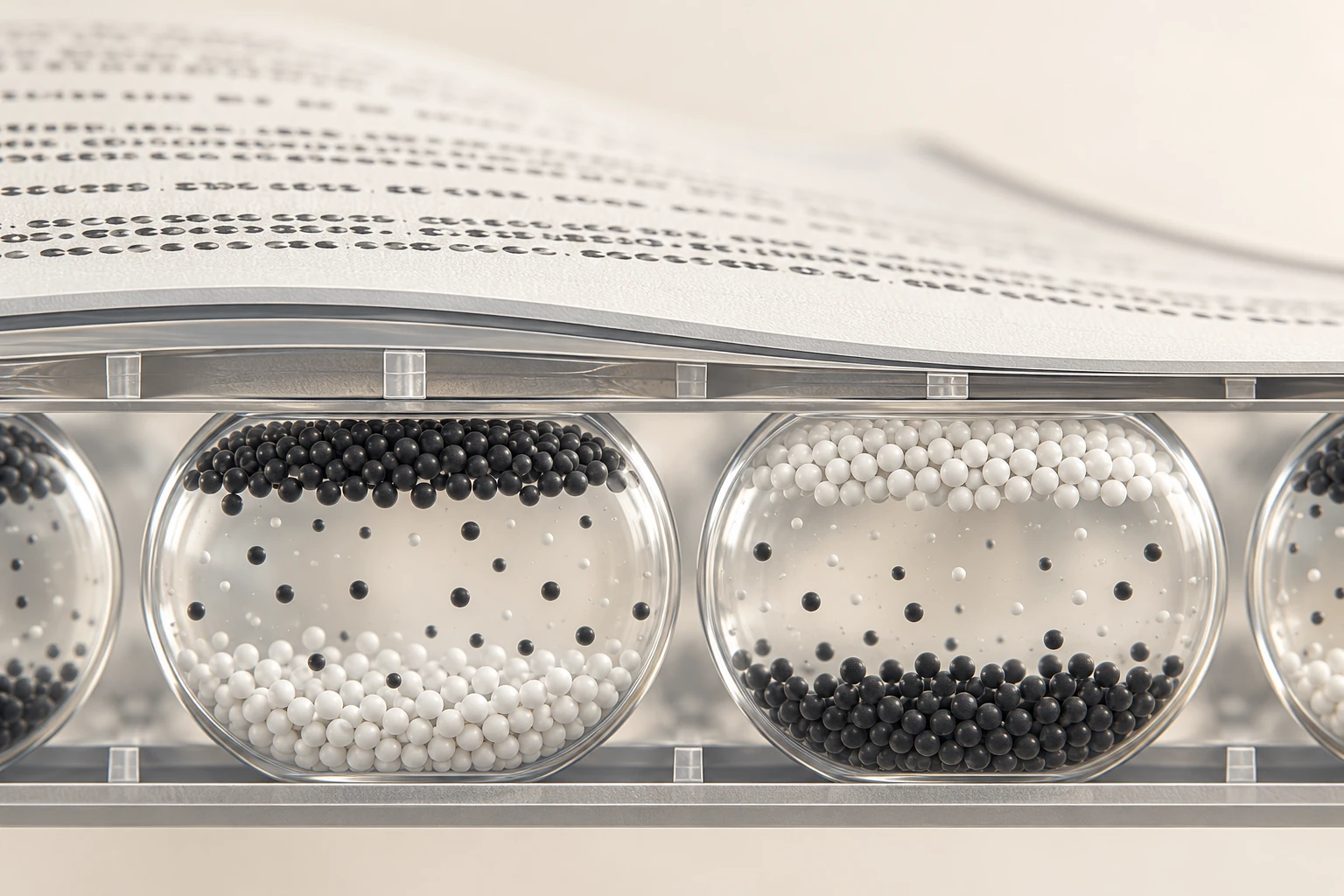
Conceptual illustration. Capsules are enlarged and simplified; the image is not microscopy or a product specification. Moving pigments, retained images, reflected light and the difference between a display’s power use and a whole device’s battery life.
Read the article →
Conceptual natural-history illustration; visible internal forms are artistic interpretation, not anatomical evidence. A transparent frog solves an optical problem by moving red blood cells into its liver—and raises new physiological questions.
Read the article →
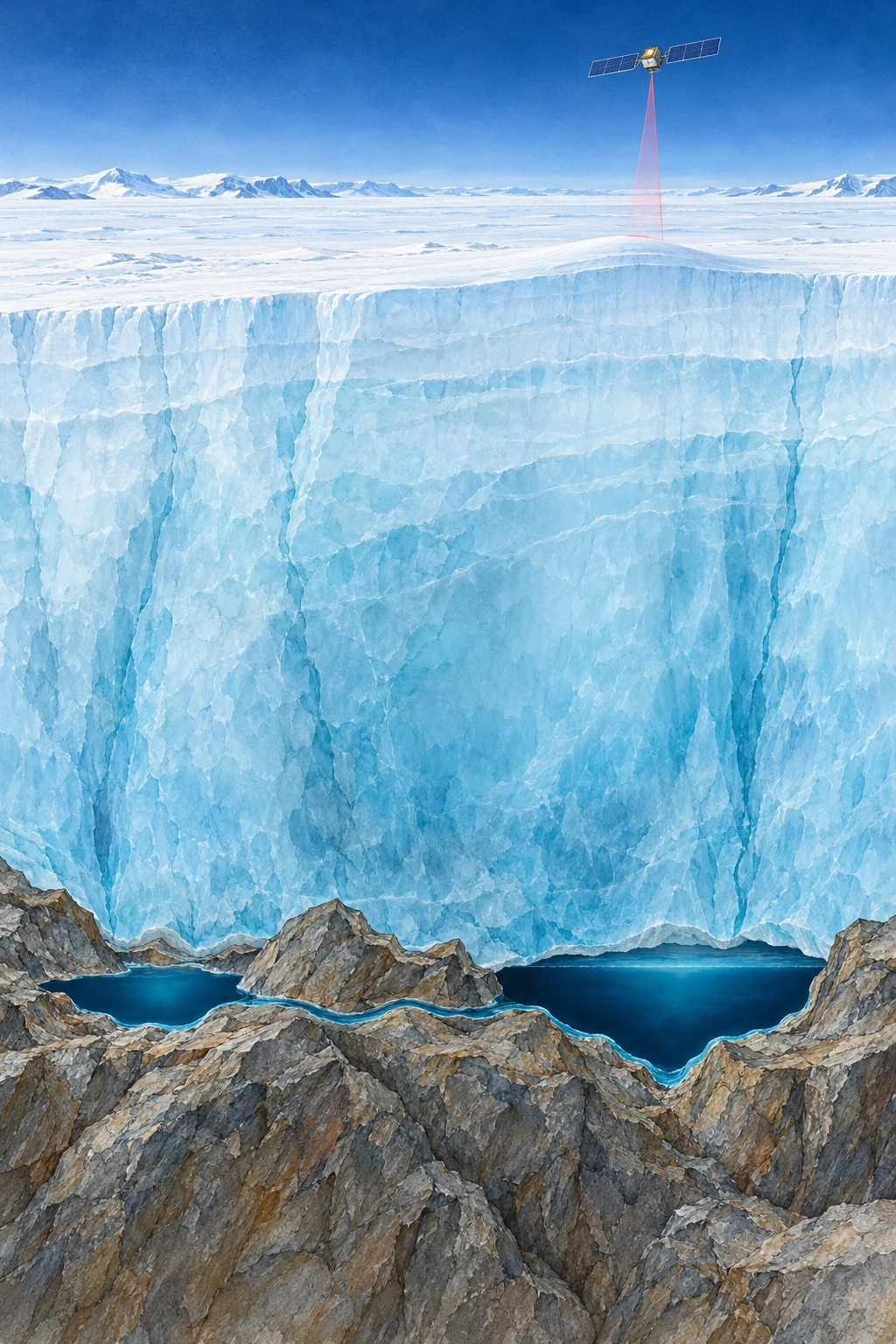
Conceptual cutaway of basal lakes. Ice depth, lake shape, and satellite distance are compressed and are not observations of a named site. Satellites read subtle movements in the ice roof to reveal active water reservoirs far beneath Antarctica.
Read the article →
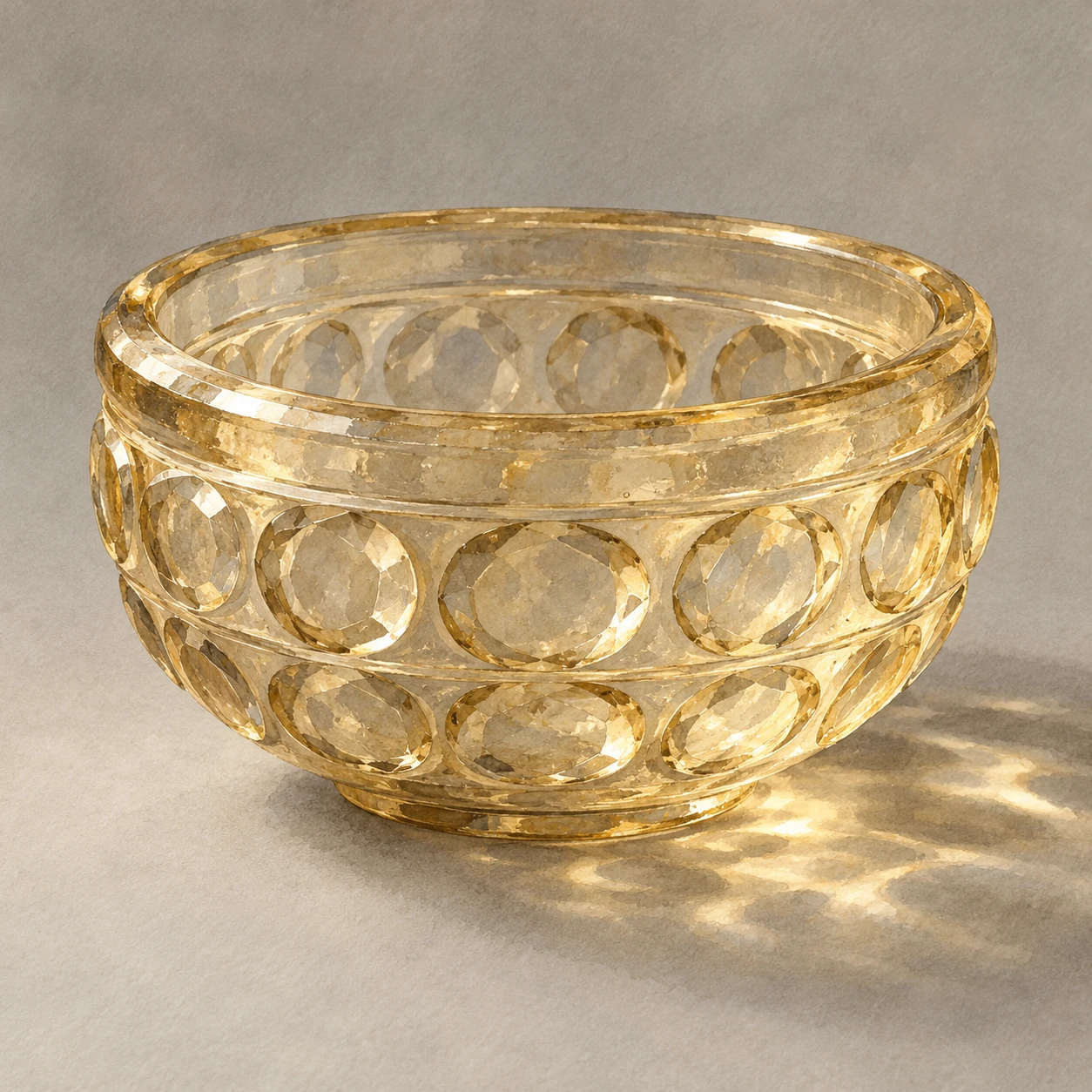
Conceptual cut-glass study, not a facsimile or photograph of the Shōsōin White Glass Bowl. A small cut-glass bowl in Nara reveals long connections—and teaches us to separate material evidence from an imagined itinerary.
Read the article →
Night-road illustration. Apparent brightness is artistic and does not represent a measured sign performance. Why roadside signs return headlights toward a driver, and how tiny optical structures depend on the viewer’s position.
Read the article →
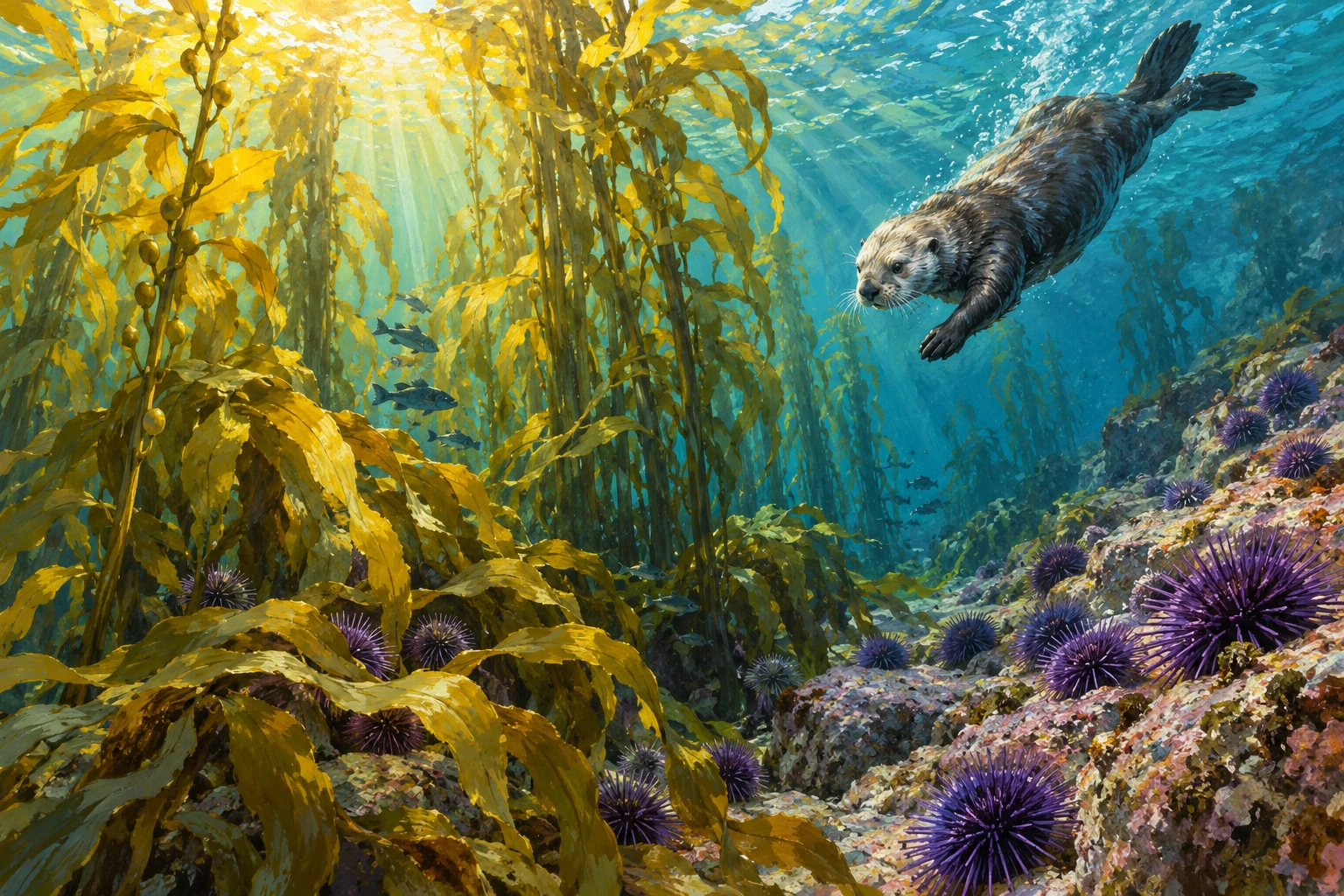
Conceptual ecological painting combining contrasting habitat patches; not a survey image or map. Otters, urchins and kelp form a famous food chain, but prey quality helps explain why forests and barrens can persist side by side.
Read the article →
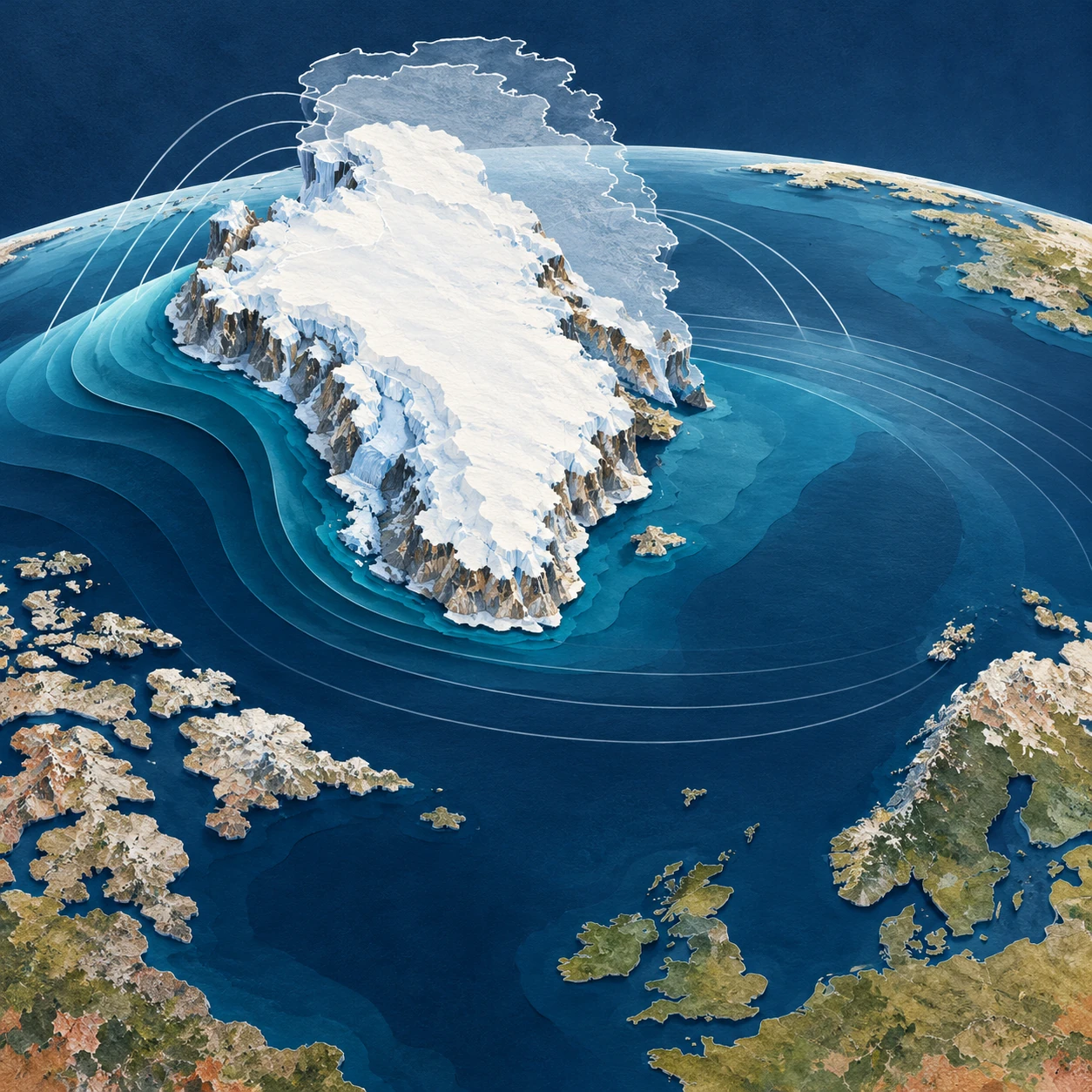
Conceptual artwork of ice loss and ocean redistribution. Relief, coastlines, gravity arcs, and water-height differences are exaggerated and not a forecast. Gravity, moving land, and redistributed water explain why ice-sheet melt has a different sea-level signature at every coast.
Read the article →
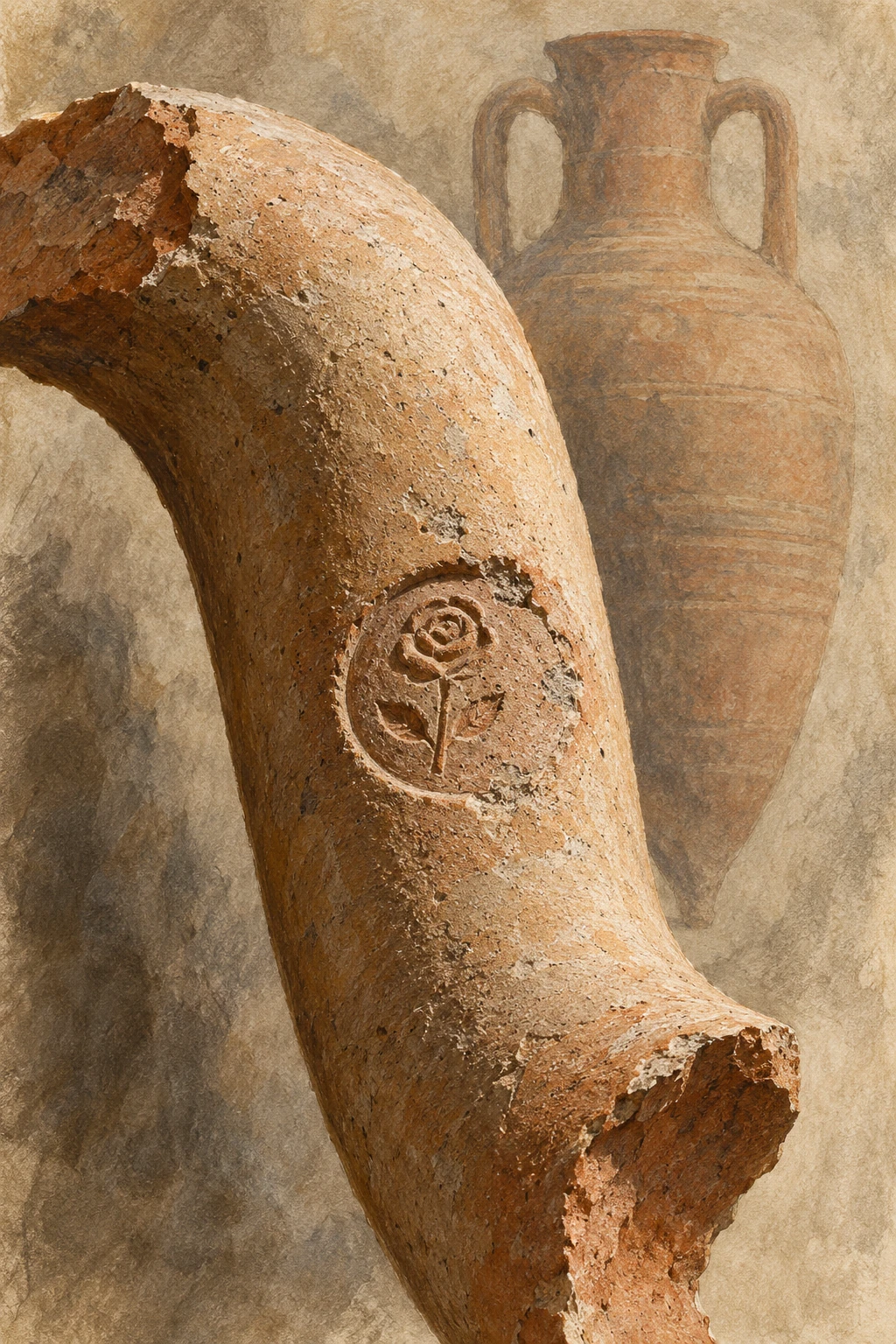
Conceptual archaeology illustration. The impression is an original generic motif, not a readable ancient inscription. A small impression on a broken jar handle can connect production, dates, and trade—if we ask exactly what its evidence supports.
Read the article →
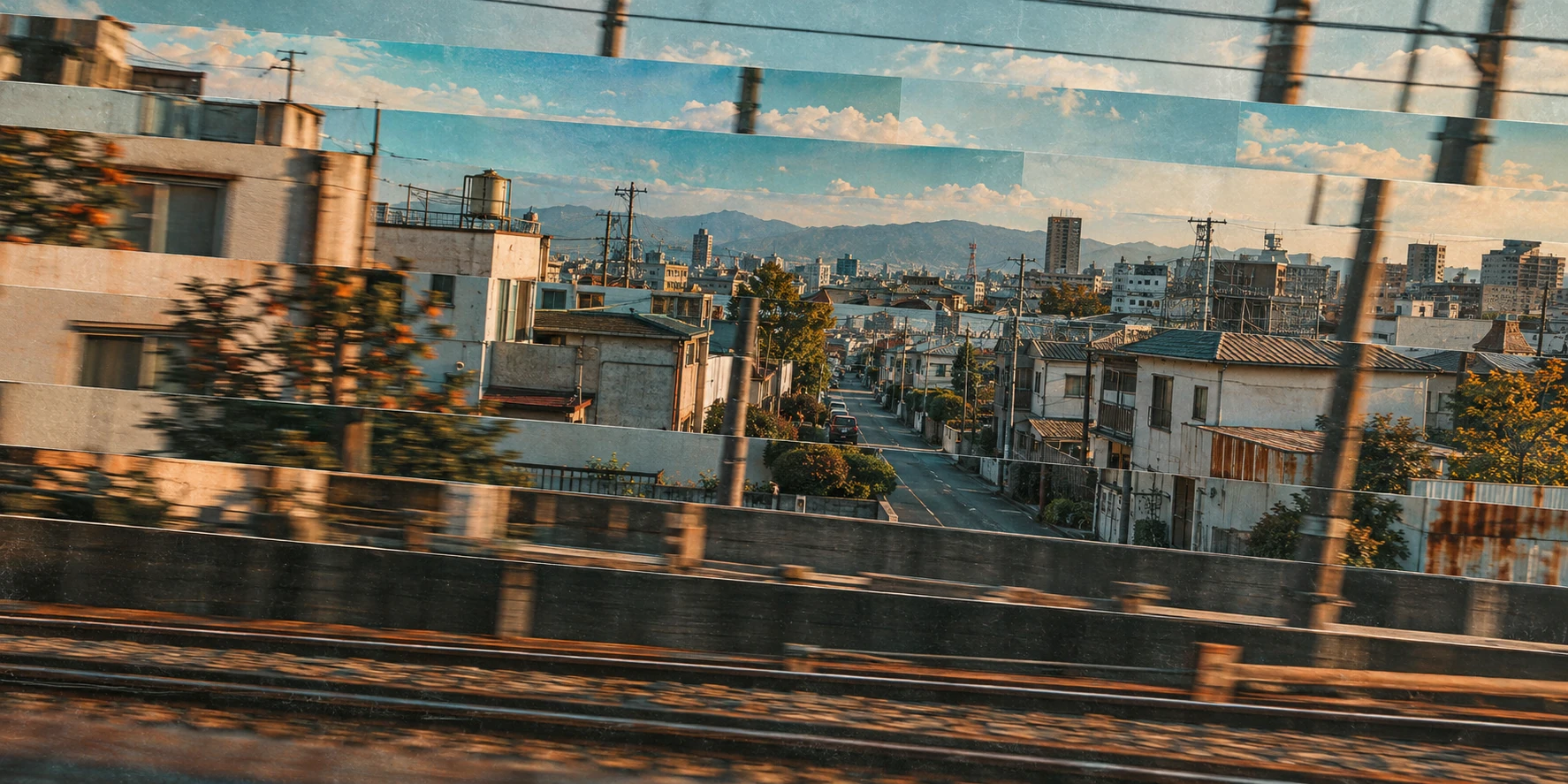
Temporal collage. It illustrates an idea, not a camera test or an actual captured rolling-shutter example. A fast exposure can still assemble several moments. Explore row timing, skew, motion blur and a simple image-building experiment.
Read the article →
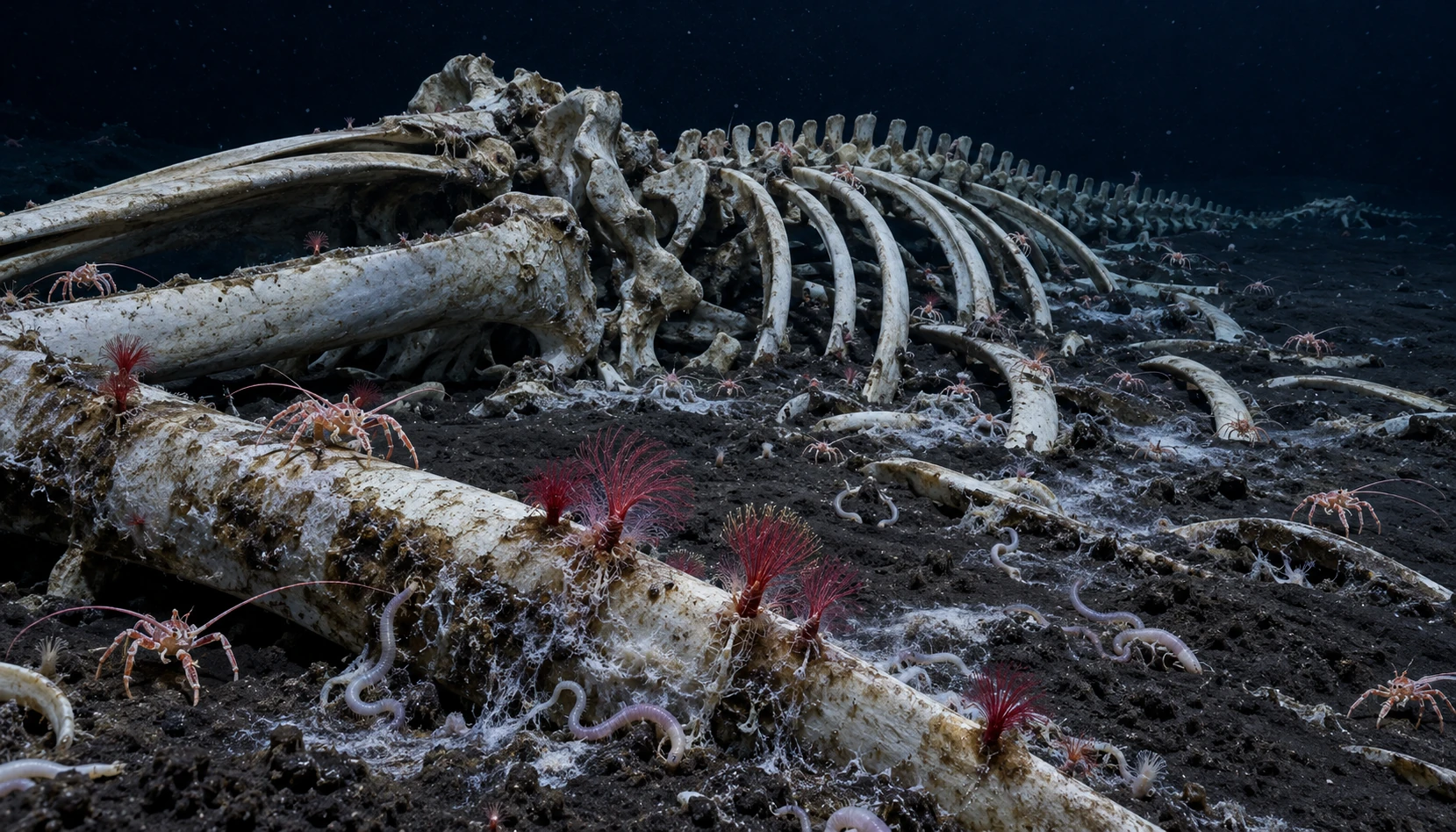
Conceptual late-stage whale-fall community; organisms and visibility are arranged for explanation, not a recorded dive. A sunken whale becomes a changing resource landscape, from scavenger meals to bone specialists and microbial partnerships.
Read the article →
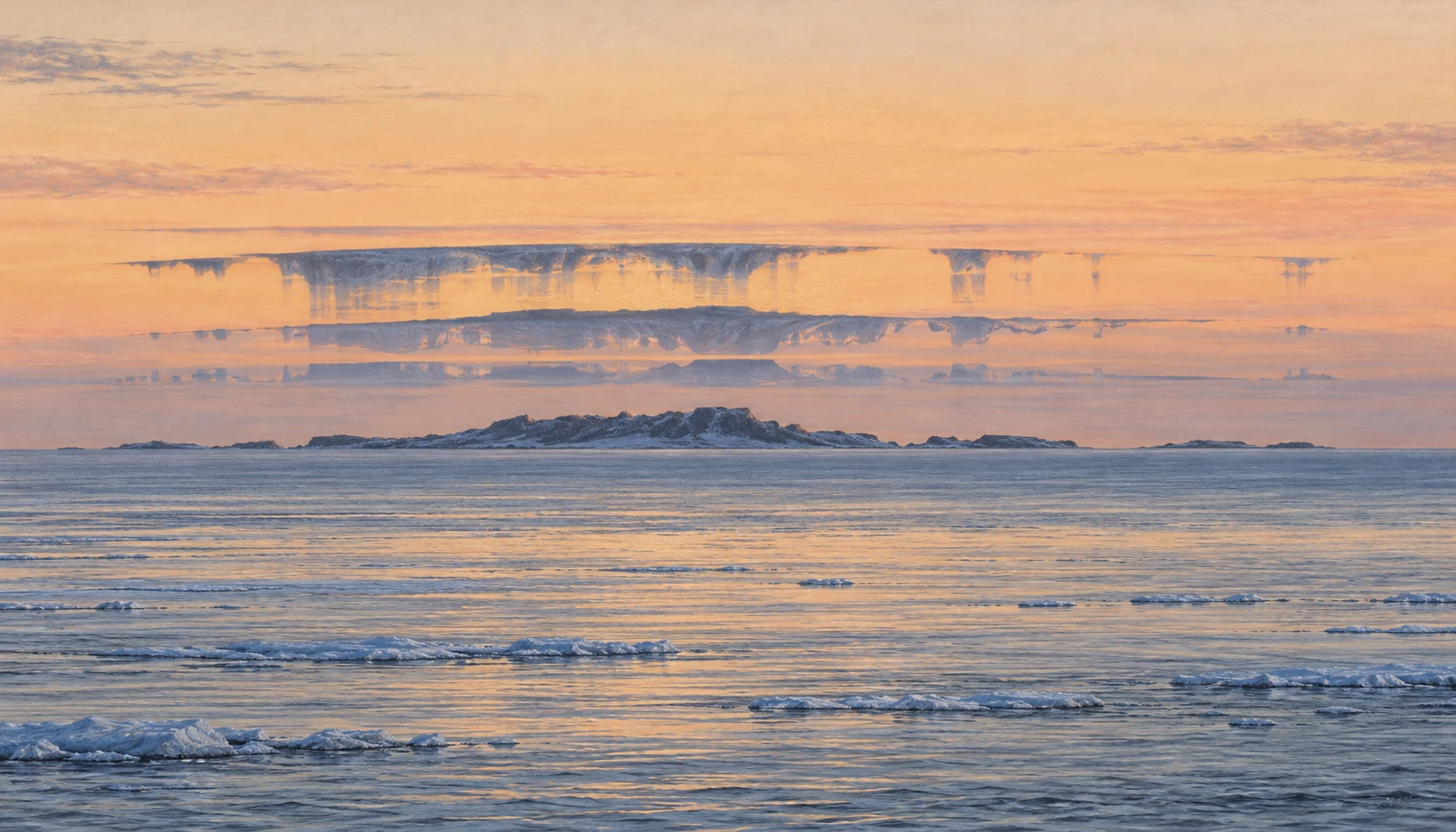
Illustrative interpretation of a complex horizon mirage, not a documented sighting. Distortion is emphasized for visibility. Complex refraction can stretch a distant shore into apparent architecture. A careful observation guide keeps the wonder and the evidence.
Read the article →
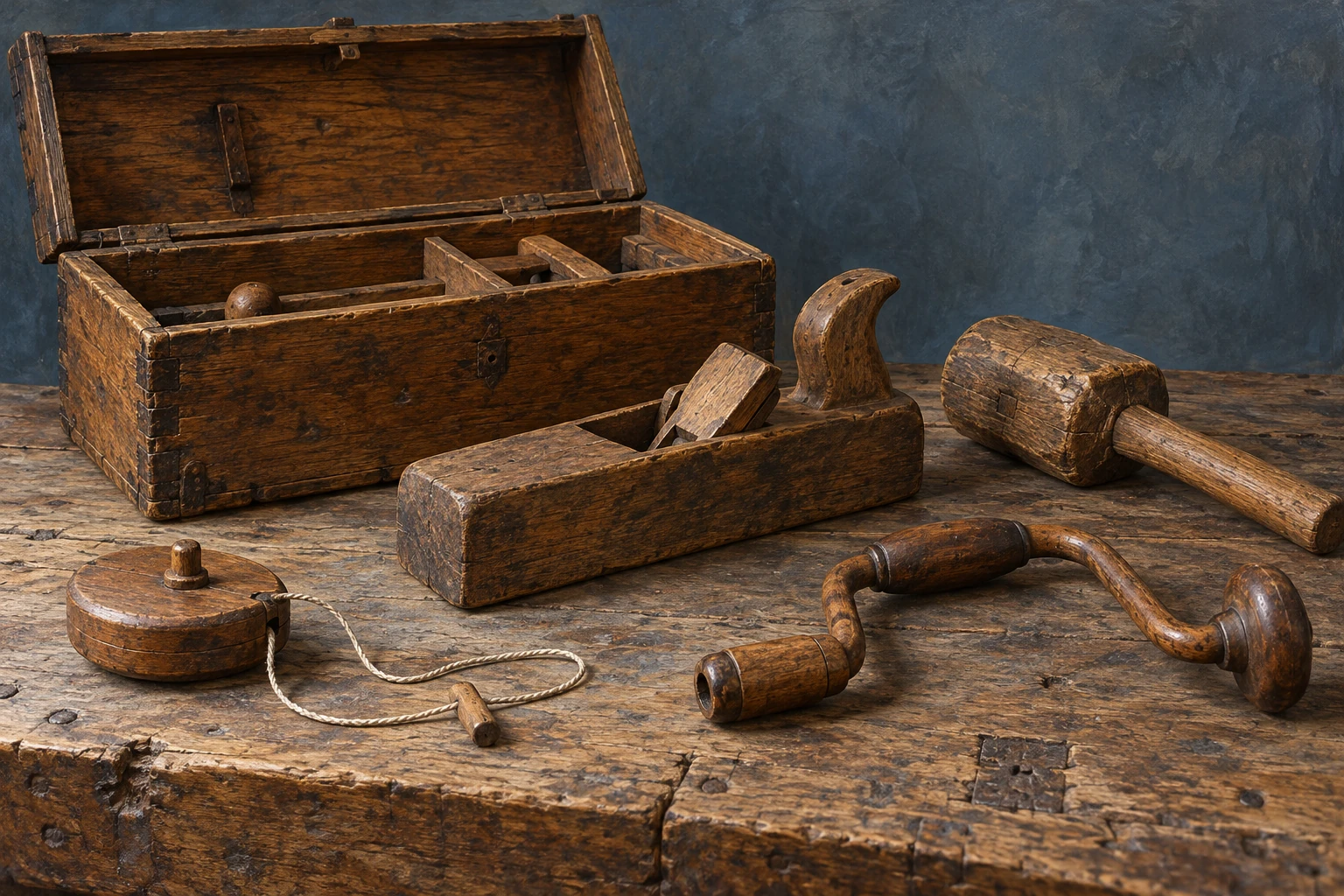
Conceptual Tudor tool study. These are illustrative forms, not photographs or exact replicas of the Mary Rose finds. Wooden handles, a drill, and a misplaced chalk reel reveal how to read a working life from an incomplete Tudor tool collection.
Read the article →
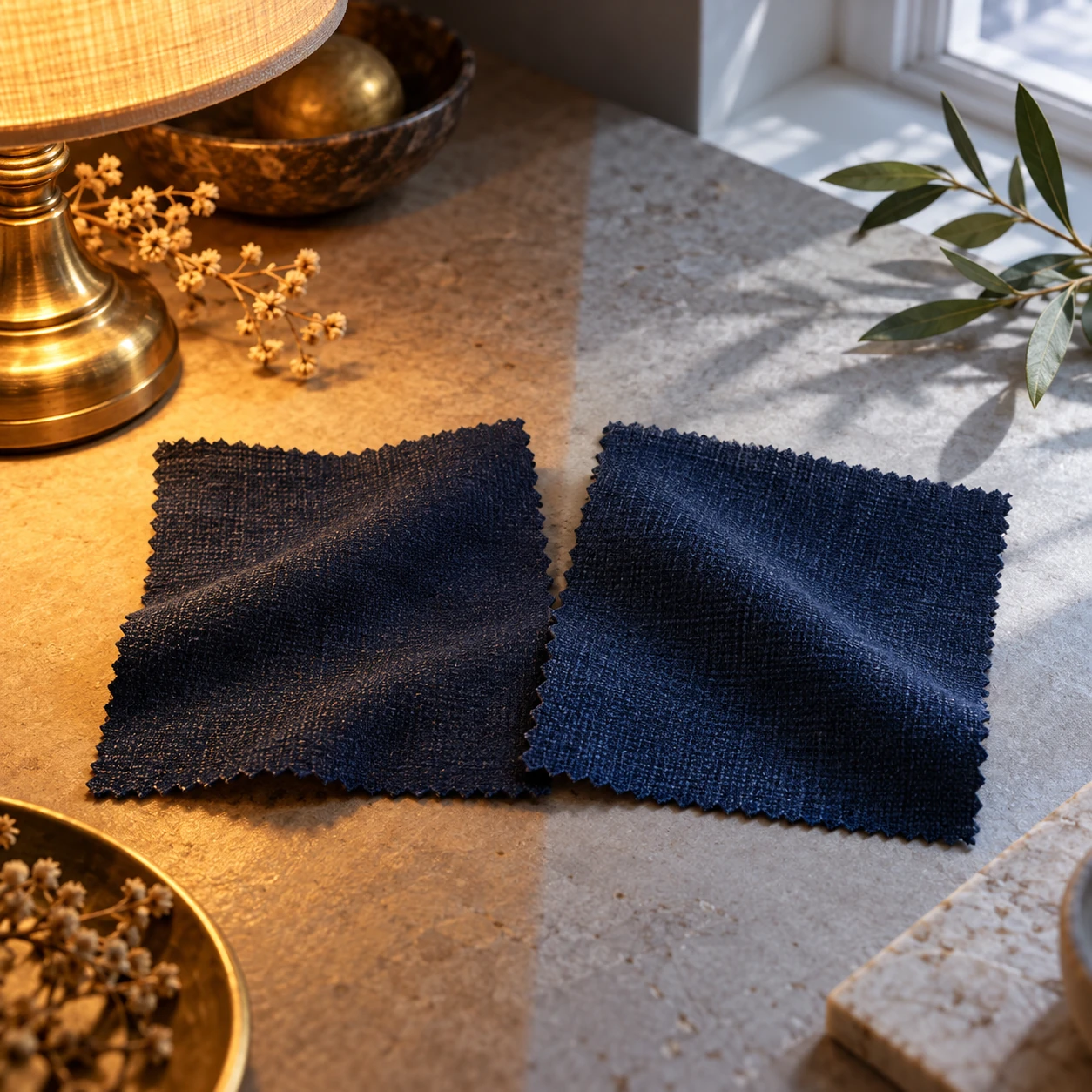
Lighting study. Display colors are illustrative; this image is not a calibrated metameric pair. Two materials can match under one light and separate under another. Learn to inspect the conditions behind a color match.
Read the article →
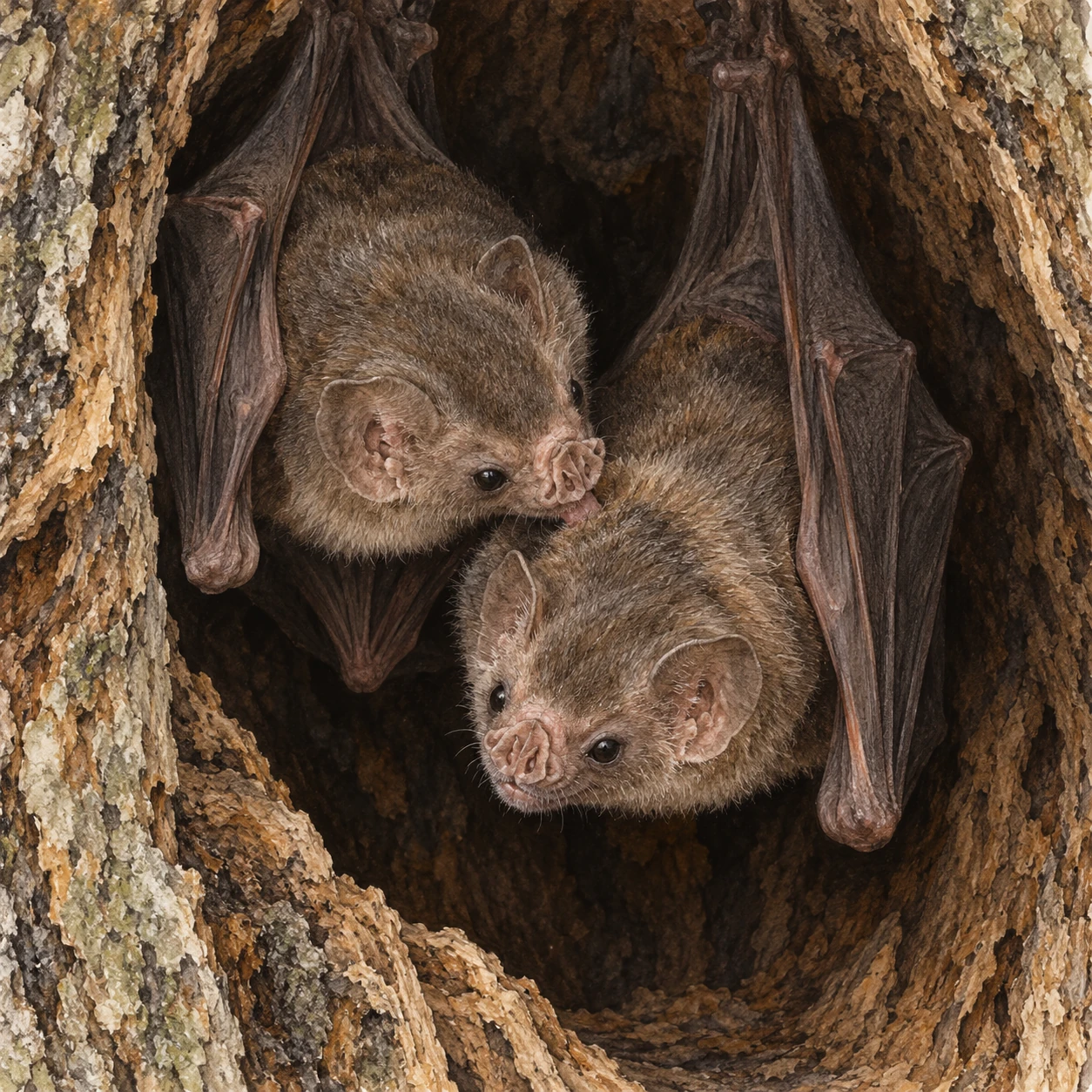
Interpretive illustration of social grooming in common vampire bats; not an observation of a named study pair. Food sharing grows out of selective social histories, and experiments reveal how bat partnerships develop and persist.
Read the article →
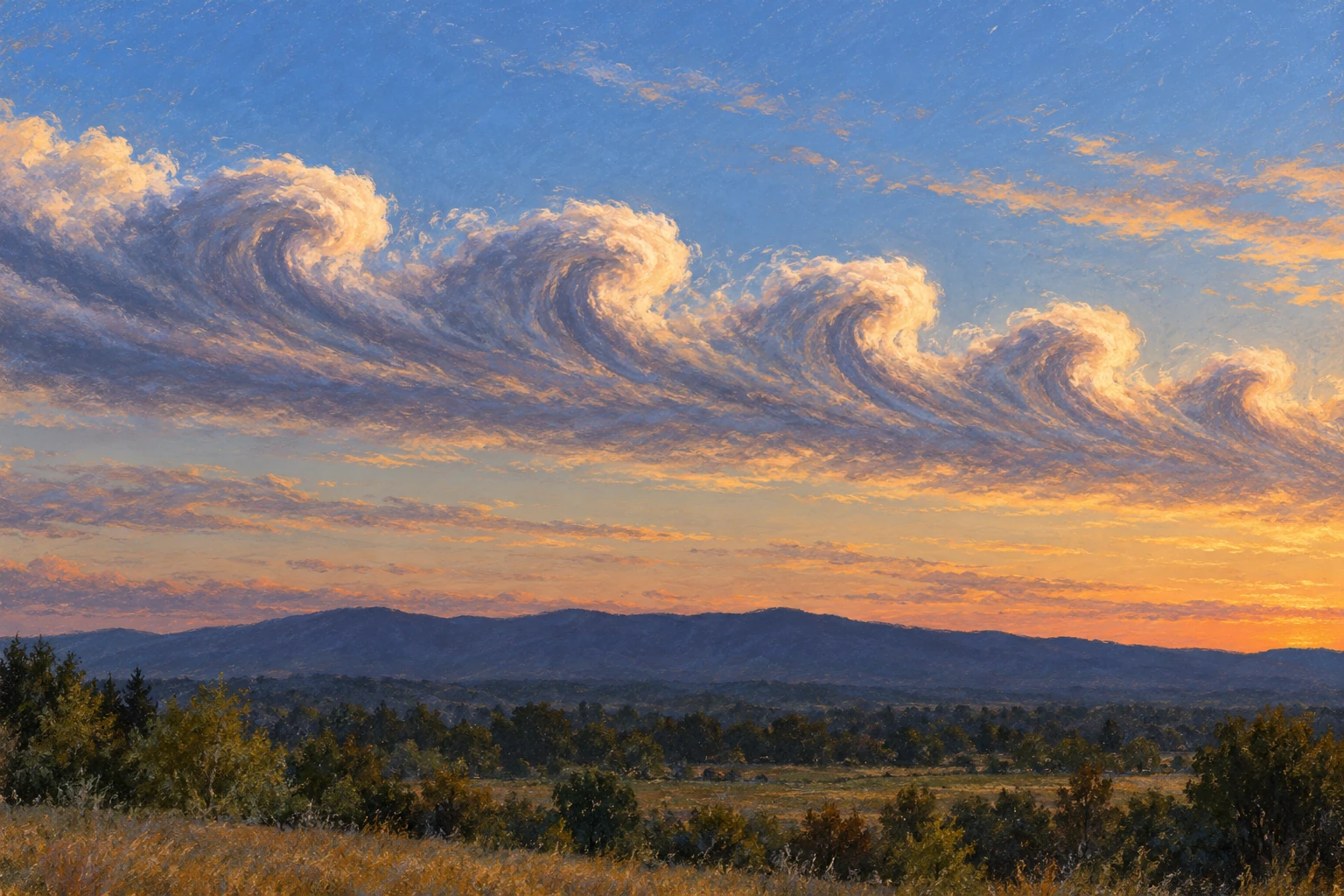
Illustration of fluctus clouds. It depicts a plausible pattern, not a recorded weather event or a turbulence forecast. Brief curling clouds reveal shear between moving air layers. Learn to read the pattern and distinguish it from other atmospheric waves.
Read the article →
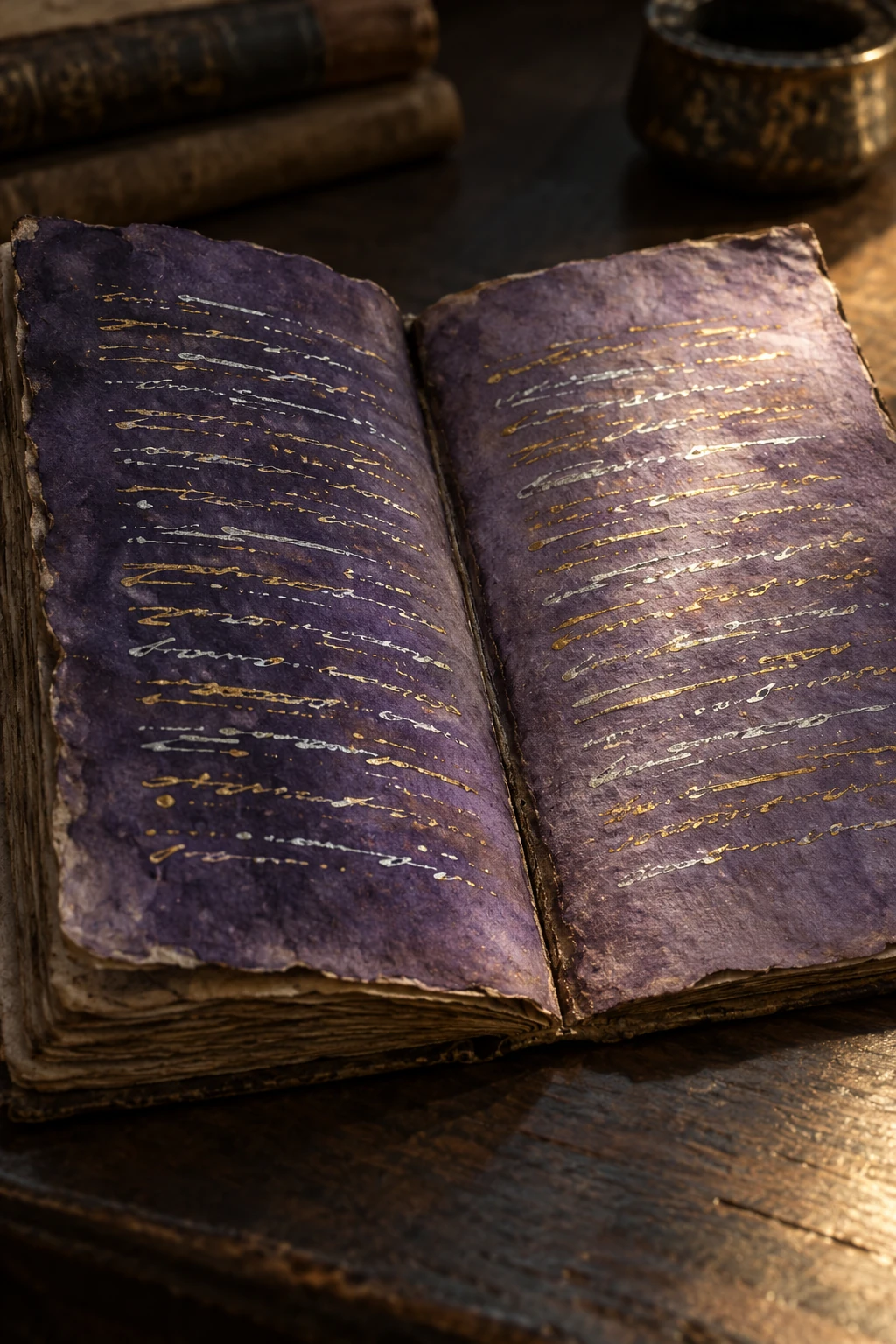
Manuscript material study. The marks are non-readable illustrative strokes, not a facsimile or invented ancient text. Purple parchment and metallic words invite a closer look at luxury books, uncertain dyes, and the material decisions behind a page.
Read the article →
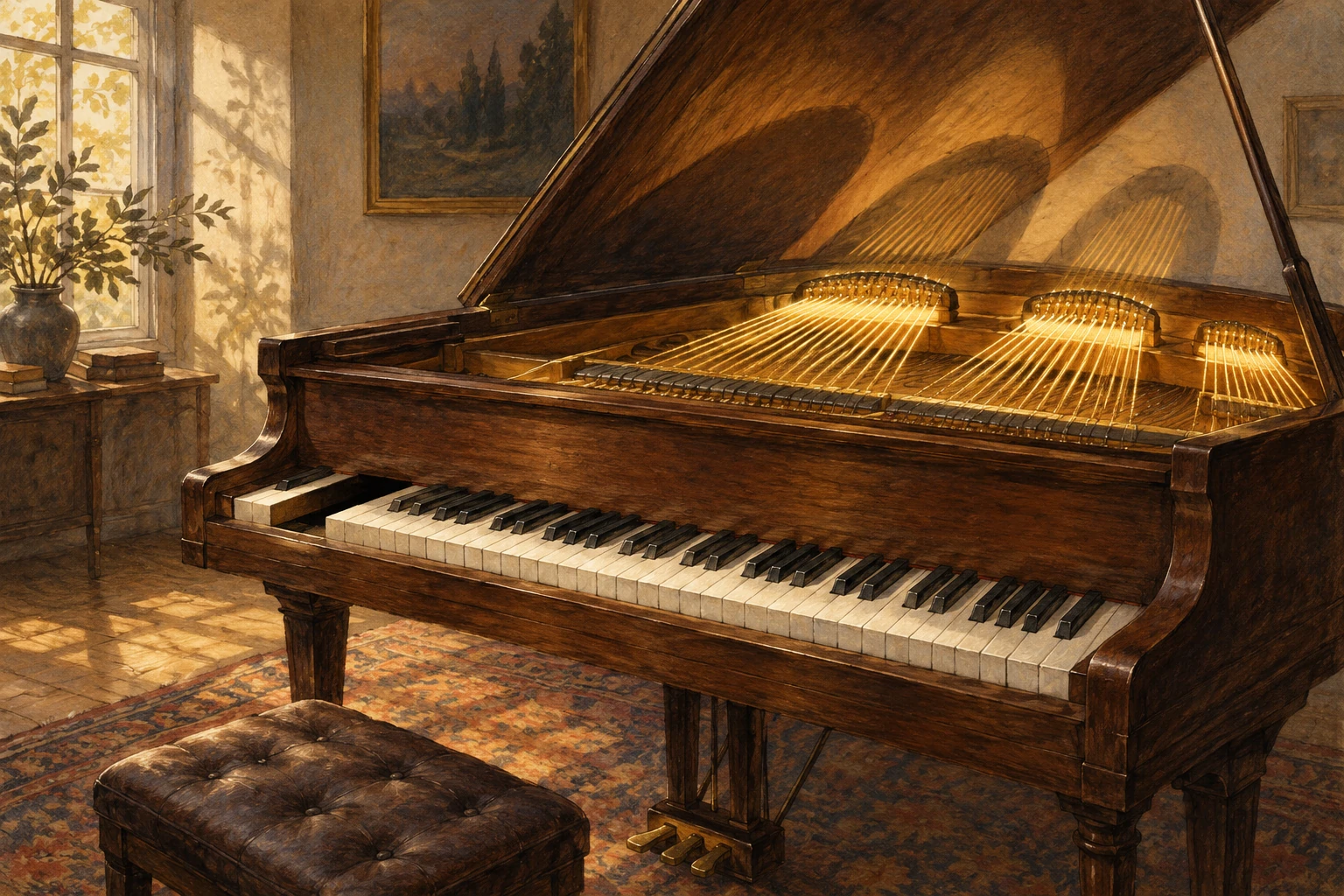
Musical metaphor, not a piano construction diagram. The audio examples are original deterministic synthesis, not generated recordings. Listen to original sound comparisons and explore how harmonic structure can preserve a low pitch without its lowest component.
Read the article →
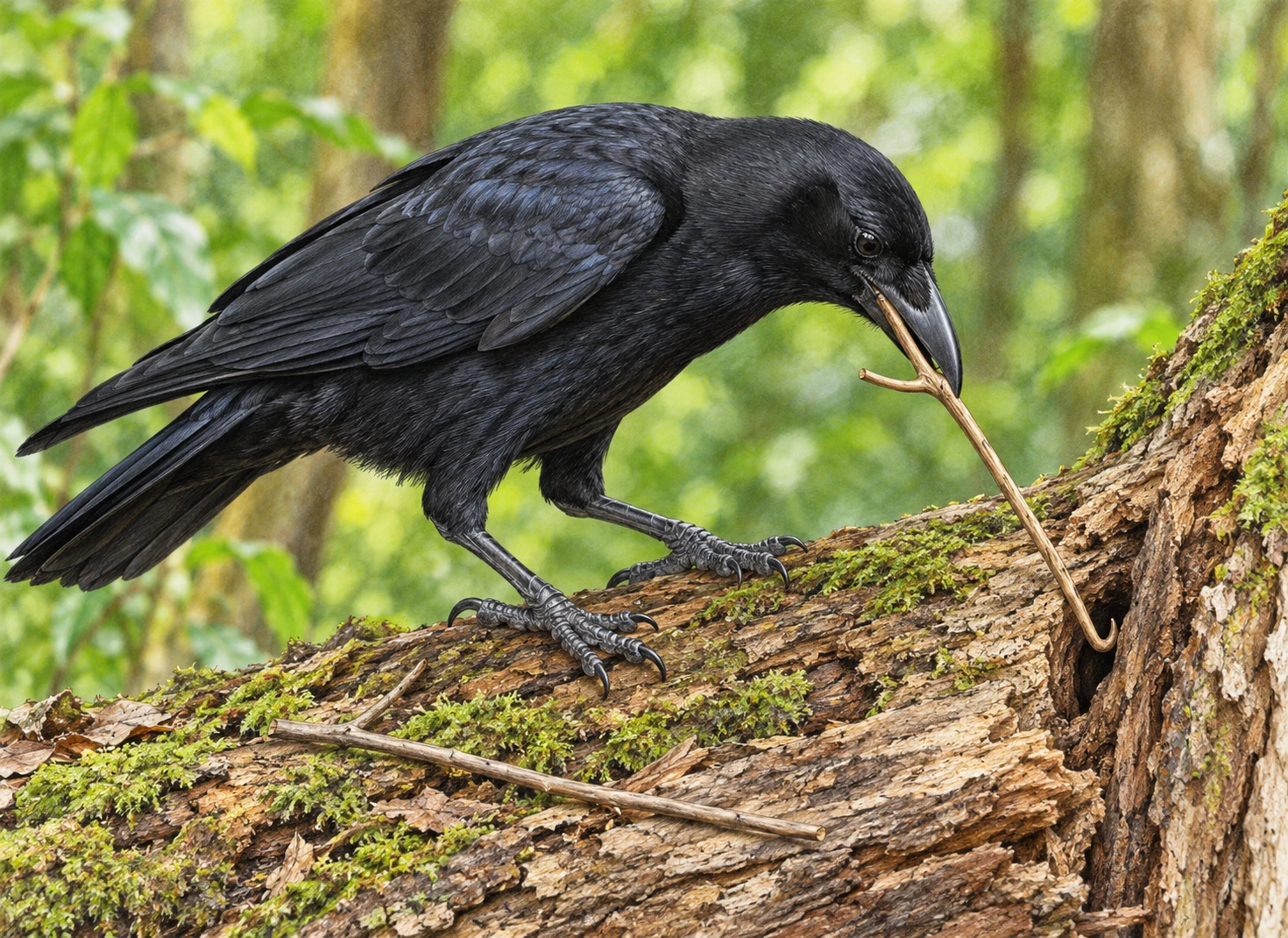
Conceptual illustration of New Caledonian crow tool use; the tool form is interpretive rather than a measured specimen. New Caledonian crows reveal the benefits, material constraints and safekeeping decisions behind a useful tool.
Read the article →
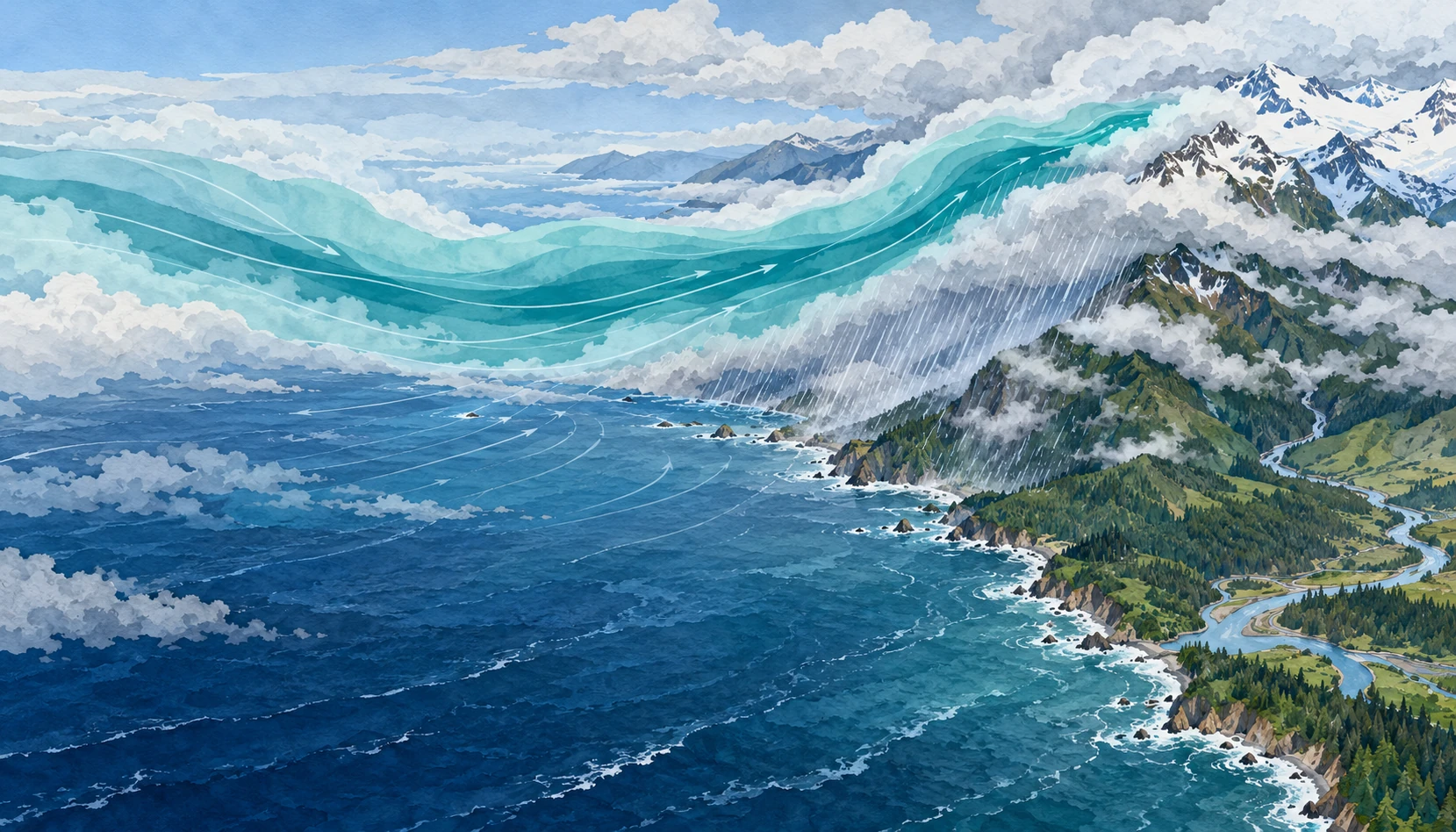
Conceptual moisture-transport illustration, not a satellite observation or storm forecast. The visible plume represents invisible vapor transport. Read atmospheric-river forecasts through moisture transport, duration, uncertainty, and the watershed waiting below.
Read the article →
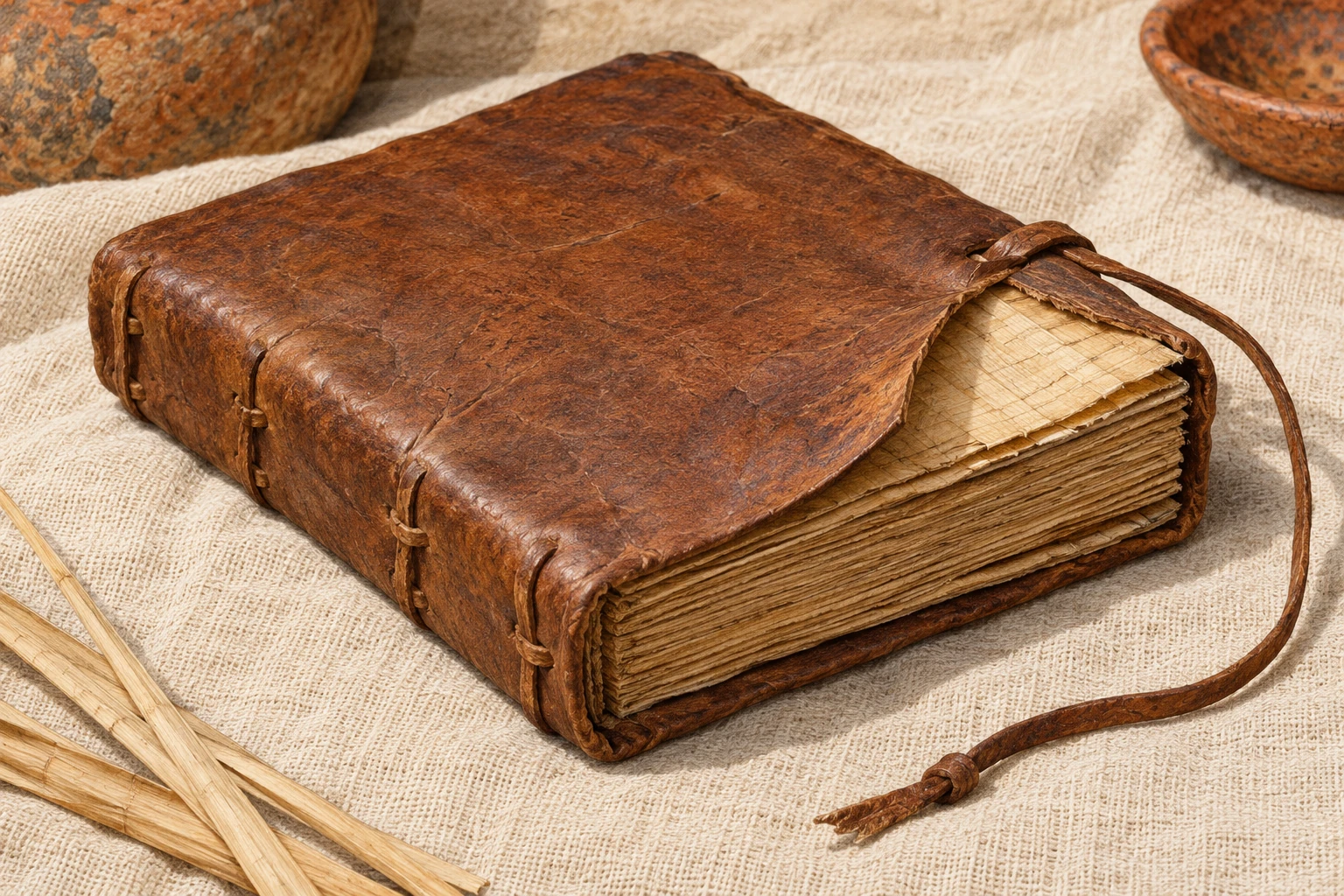
Conceptual late antique binding study, not a replica of a Nag Hammadi manuscript or its original condition. Reused papyrus inside ancient book covers offers a second archive—and a lesson in what a date can and cannot prove.
Read the article →
Architectural metaphor. The accompanying sound is an original synthesized Shepard-style demonstration; the artwork is not an acoustic diagram. An original listening demonstration reveals how octave mixtures can keep suggesting ascent while their physical pattern repeats.
Read the article →
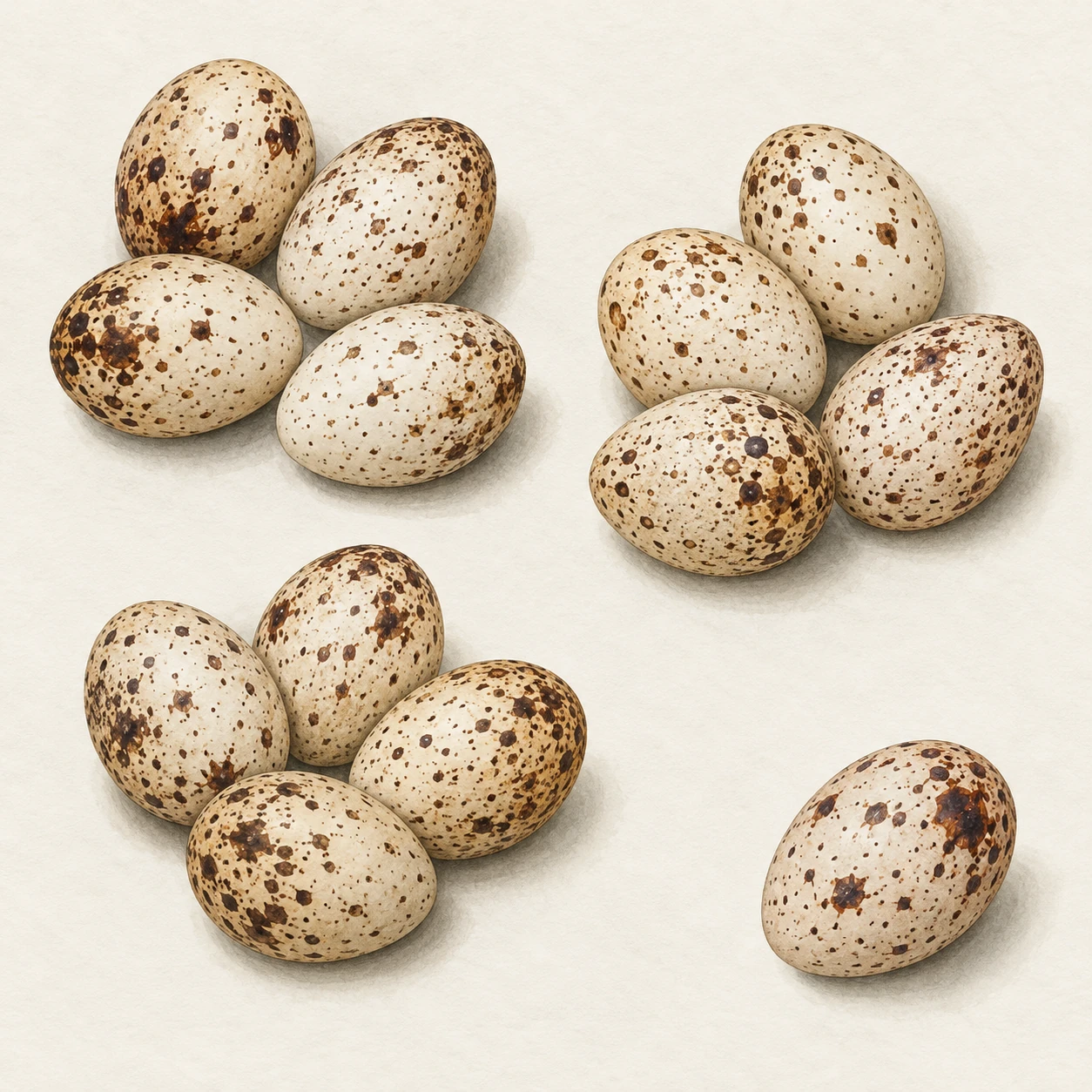
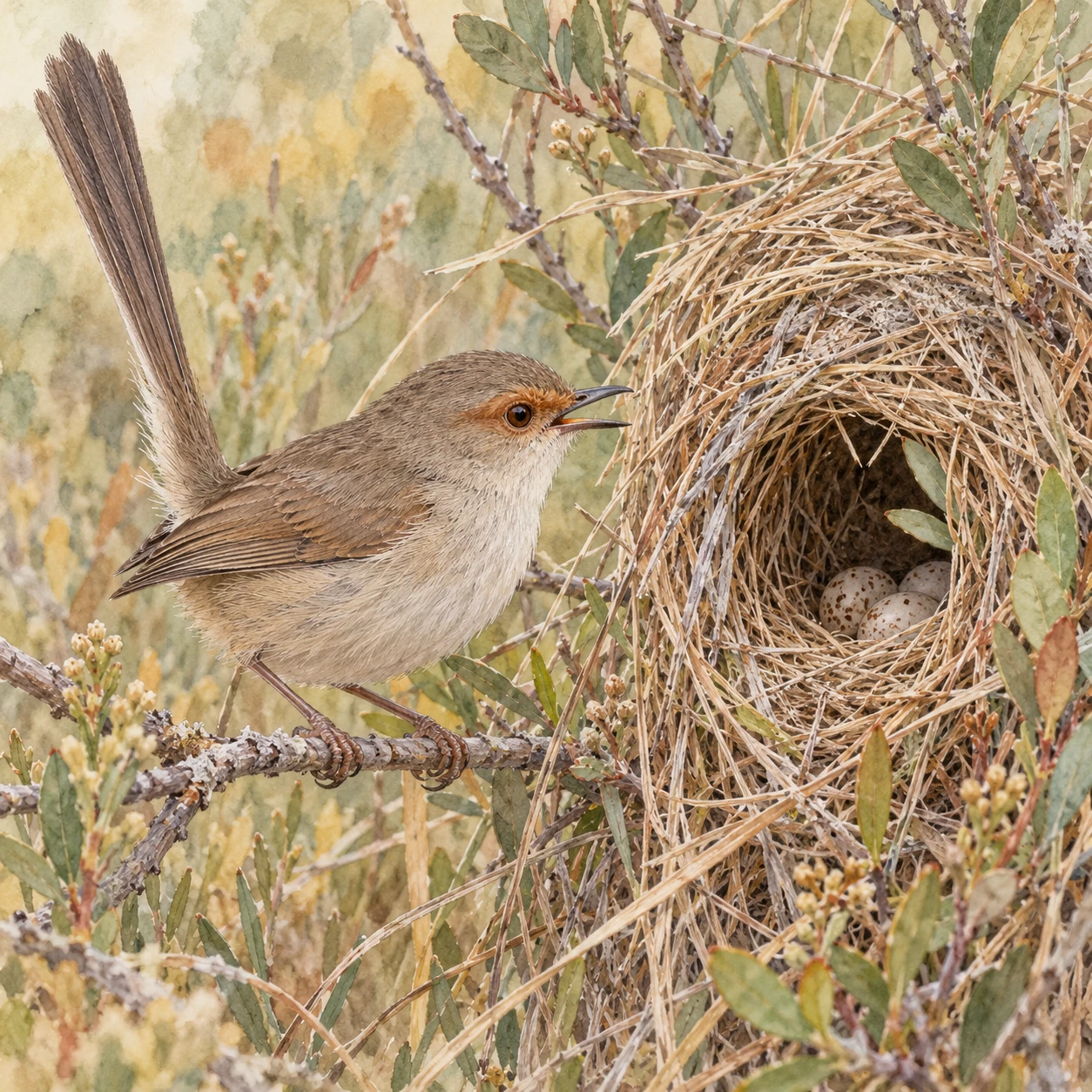
Conceptual egg-pattern study; the markings are invented illustrations, not species identifiers or research data. Host birds can use individual egg signatures to defeat mimicry that looks excellent when averaged across a whole population.
Read the article →
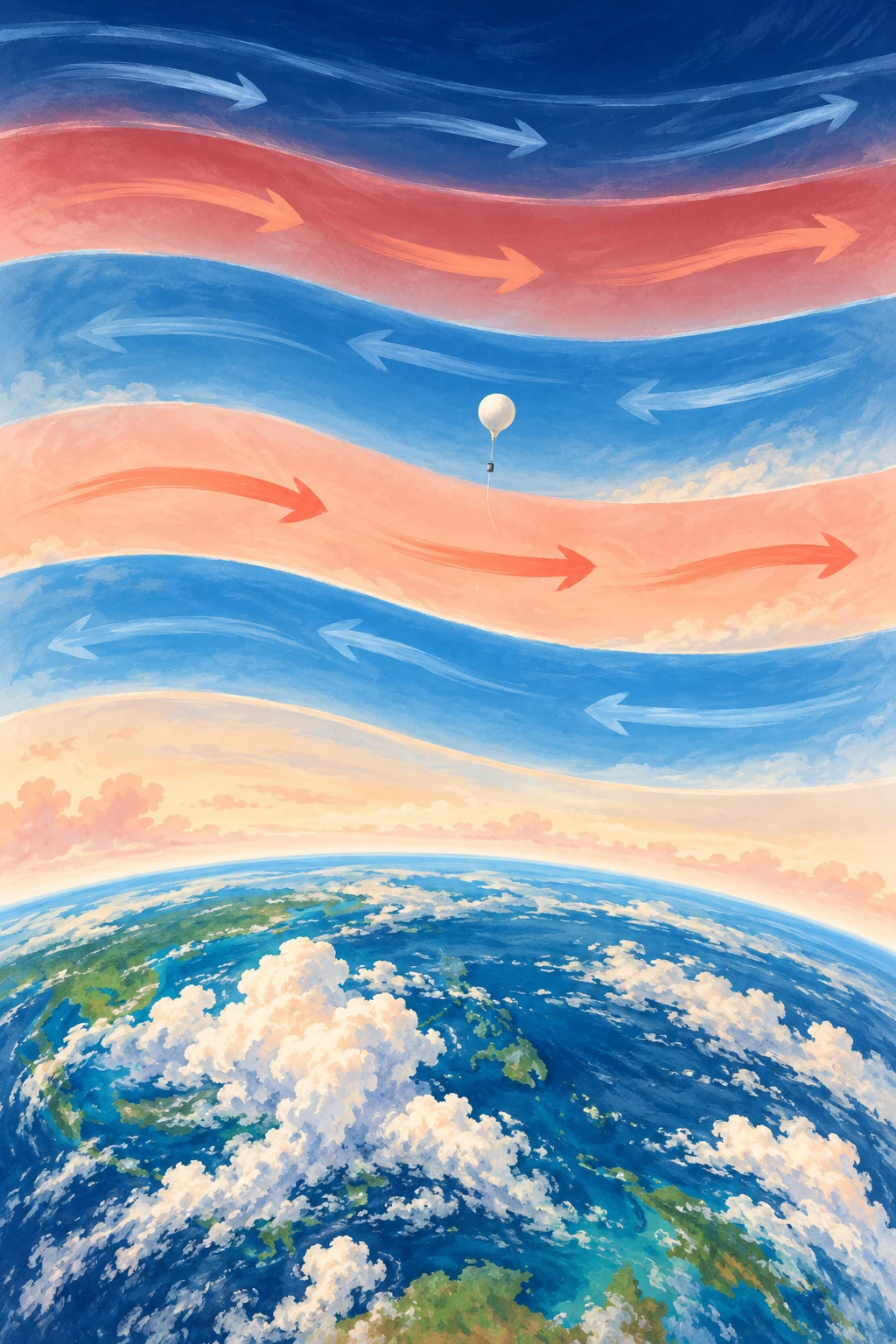
Conceptual illustration of alternating stratospheric wind regimes, not a measured QBO chart; heights and band thicknesses are schematic. Alternating tropical stratospheric winds descend in a recognizable rhythm, but their phase, disruptions, and distant influences need careful reading.
Read the article →
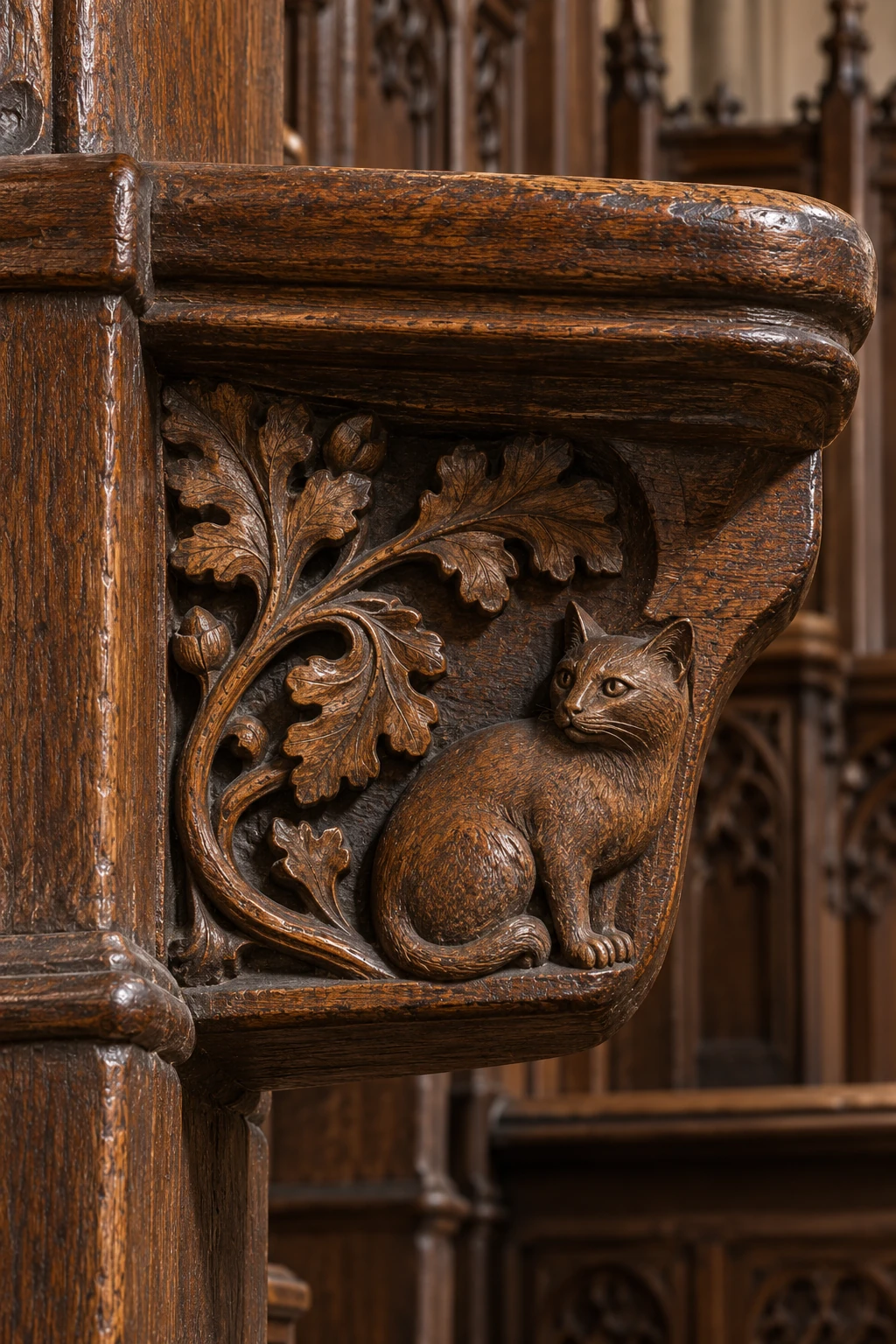
Conceptual misericord with an original cat-and-leaf design, not a depiction of a particular cathedral carving. Under a hinged choir seat, a small carved ledge combines bodily comfort, skilled woodwork, and an image that may resist easy decoding.
Read the article →
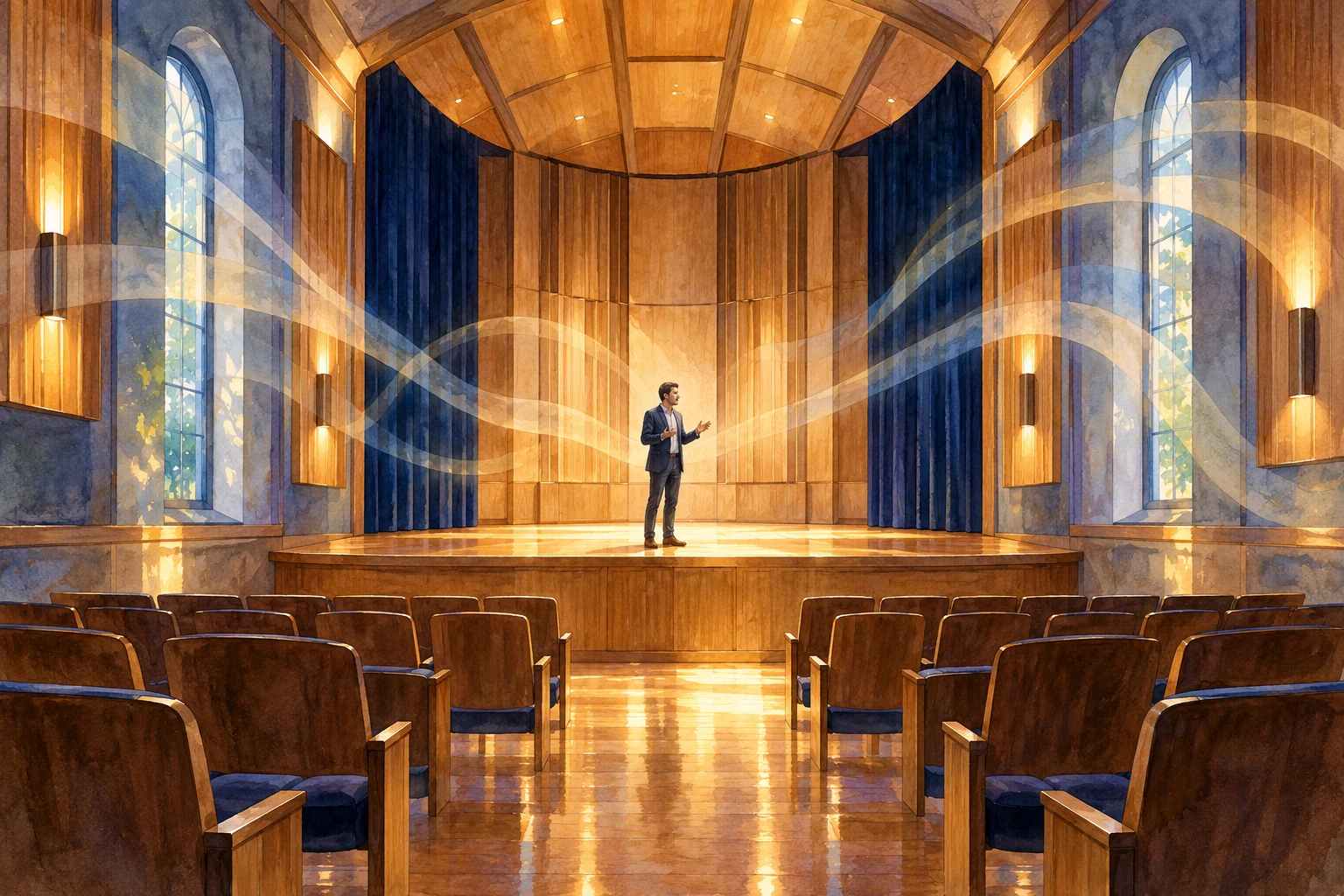
Room illustration. Curved washes are metaphorical, not calculated acoustic paths. Audio files are original controlled timing examples. Explore direct sound, reflections, location and echo through original stereo timing examples and a careful room-listening guide.
Read the article →
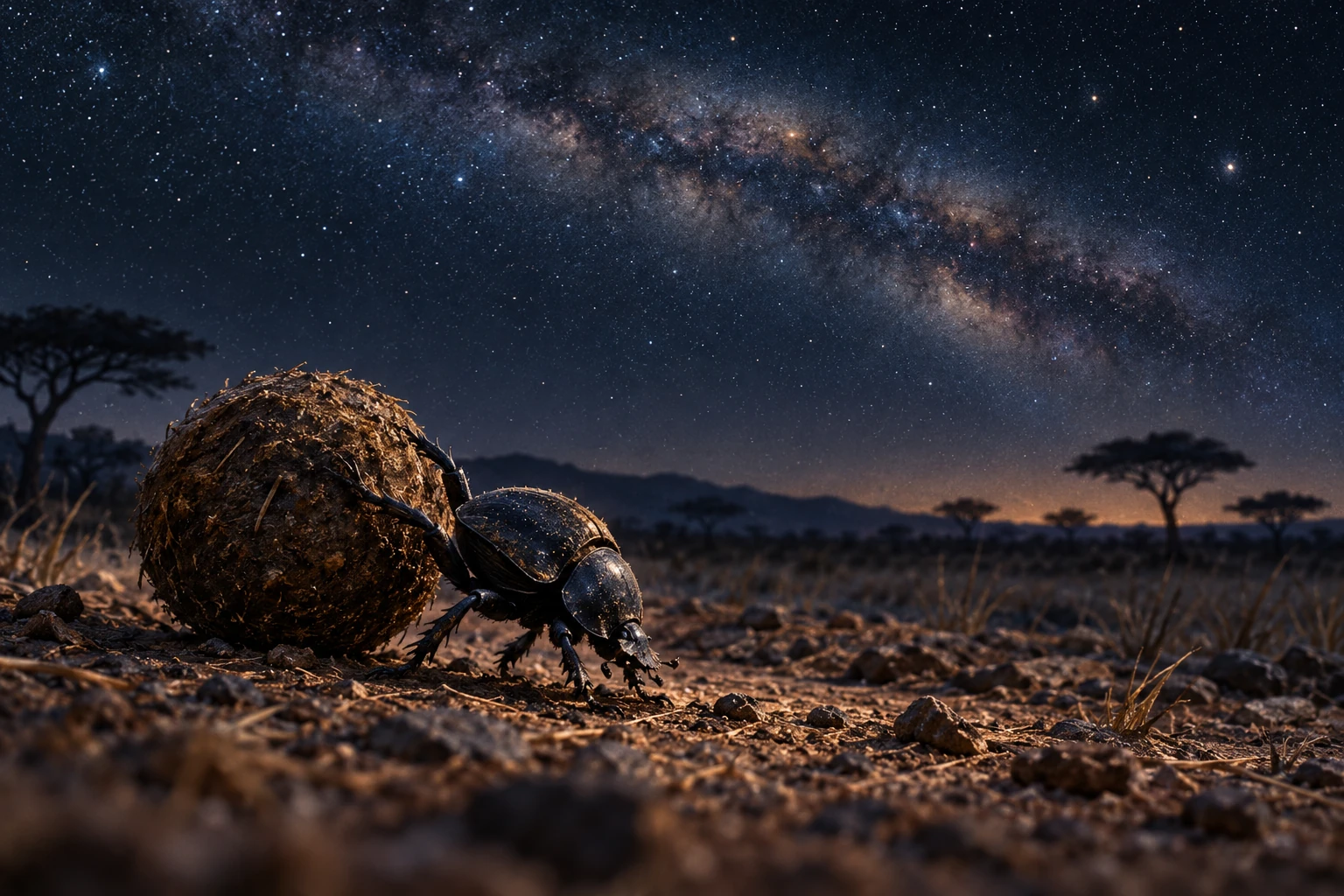
Conceptual nocturnal scene; sky brightness and beetle visibility are artistic interpretation, not a field measurement. Planetarium and light-pollution experiments reveal the difference between holding a bearing and navigating to a destination.
Read the article →
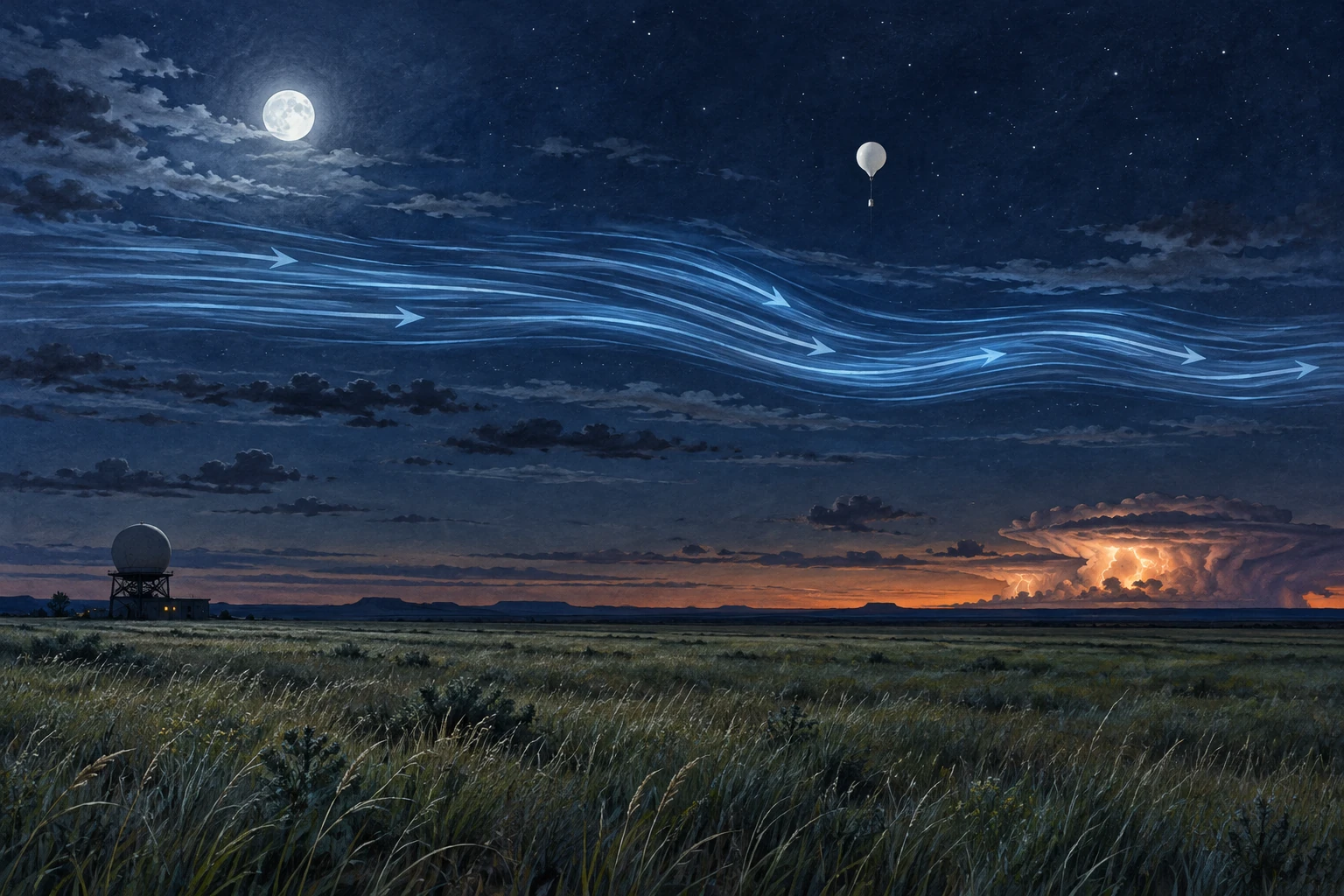
Conceptual illustration of a nocturnal low-level jet. Airflow streaks are visual aids, not visible air or measurements of a specific night. A calm surface can hide a fast nighttime wind maximum overhead, carrying moisture through the Great Plains.
Read the article →
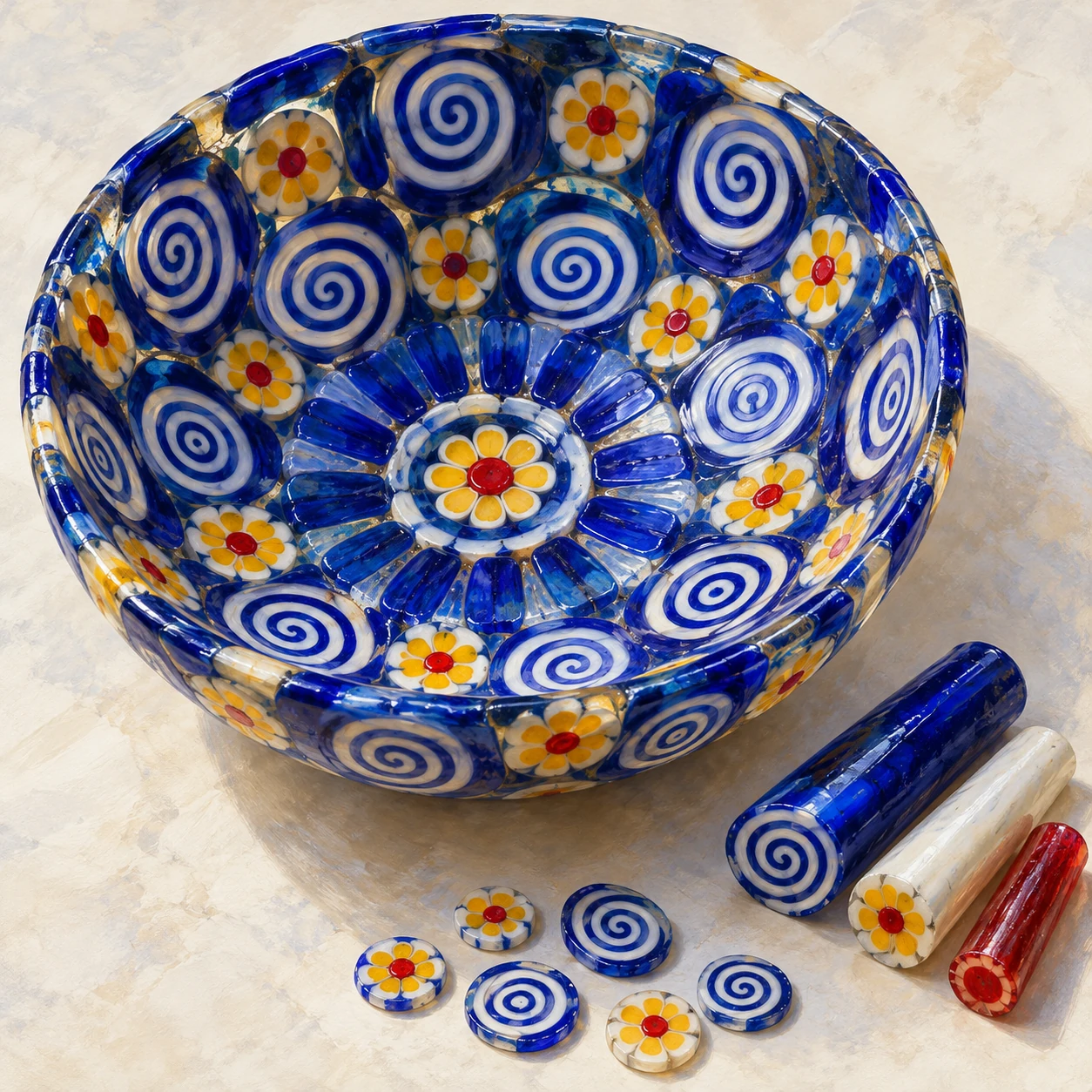
Conceptual glassmaking study with an original pattern. It is not a museum artifact or a measured process diagram. Ancient mosaic glass begins with patterns inside a cane. Follow the slices to see how those patterns become a bowl.
Read the article →
Audiovisual-perception illustration. This still image is not a McGurk test; use the credited moving-image demonstration for that comparison. A guided audiovisual demonstration, the research on individual variation, and why the question asked can change the reported illusion.
Read the article →
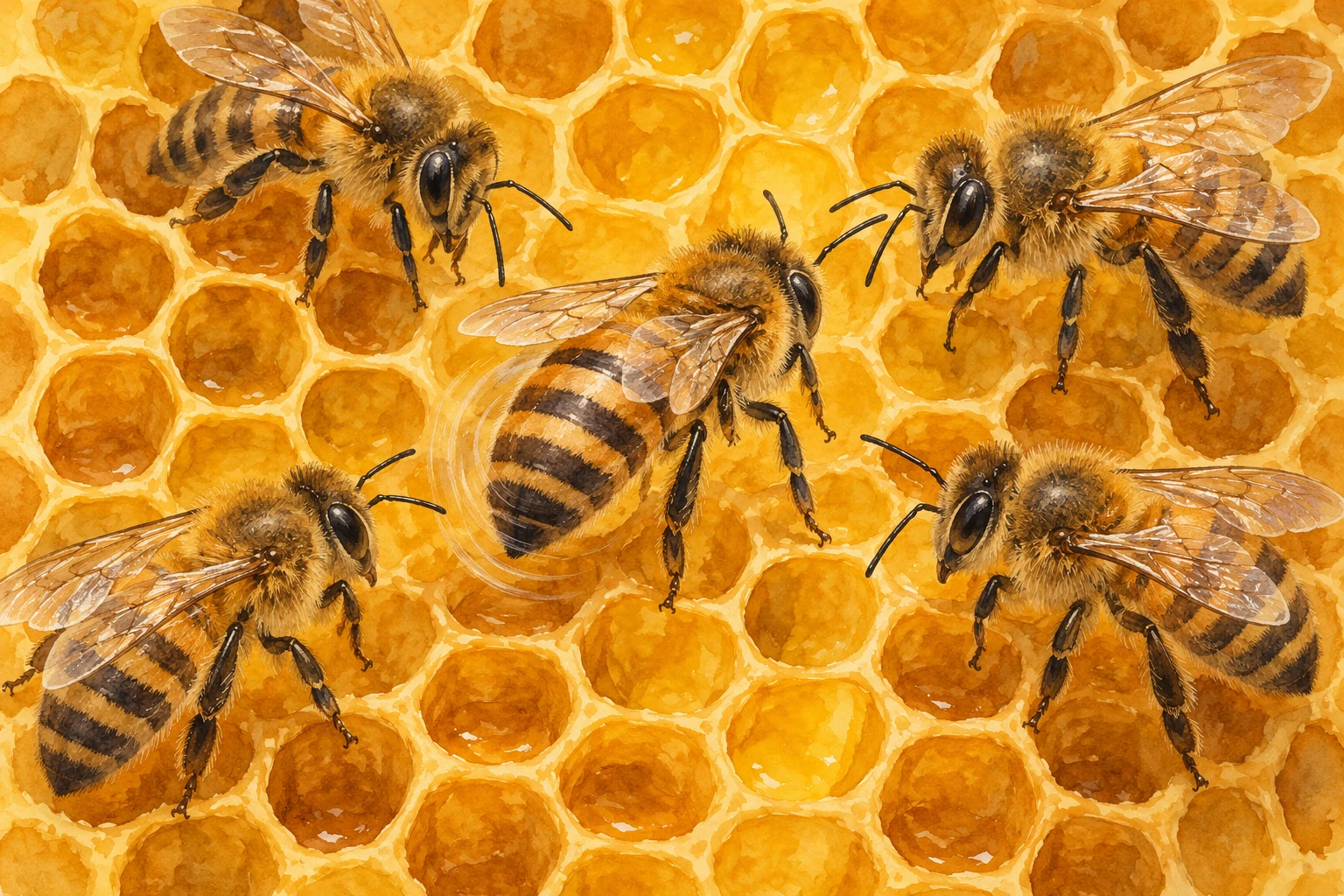
Conceptual honeybee scene; motion is suggested artistically and is not a diagram of measured dance trajectories. The dance encodes a distant resource, but its accuracy also depends on social experience, calibration and repeated signals.
Read the article →
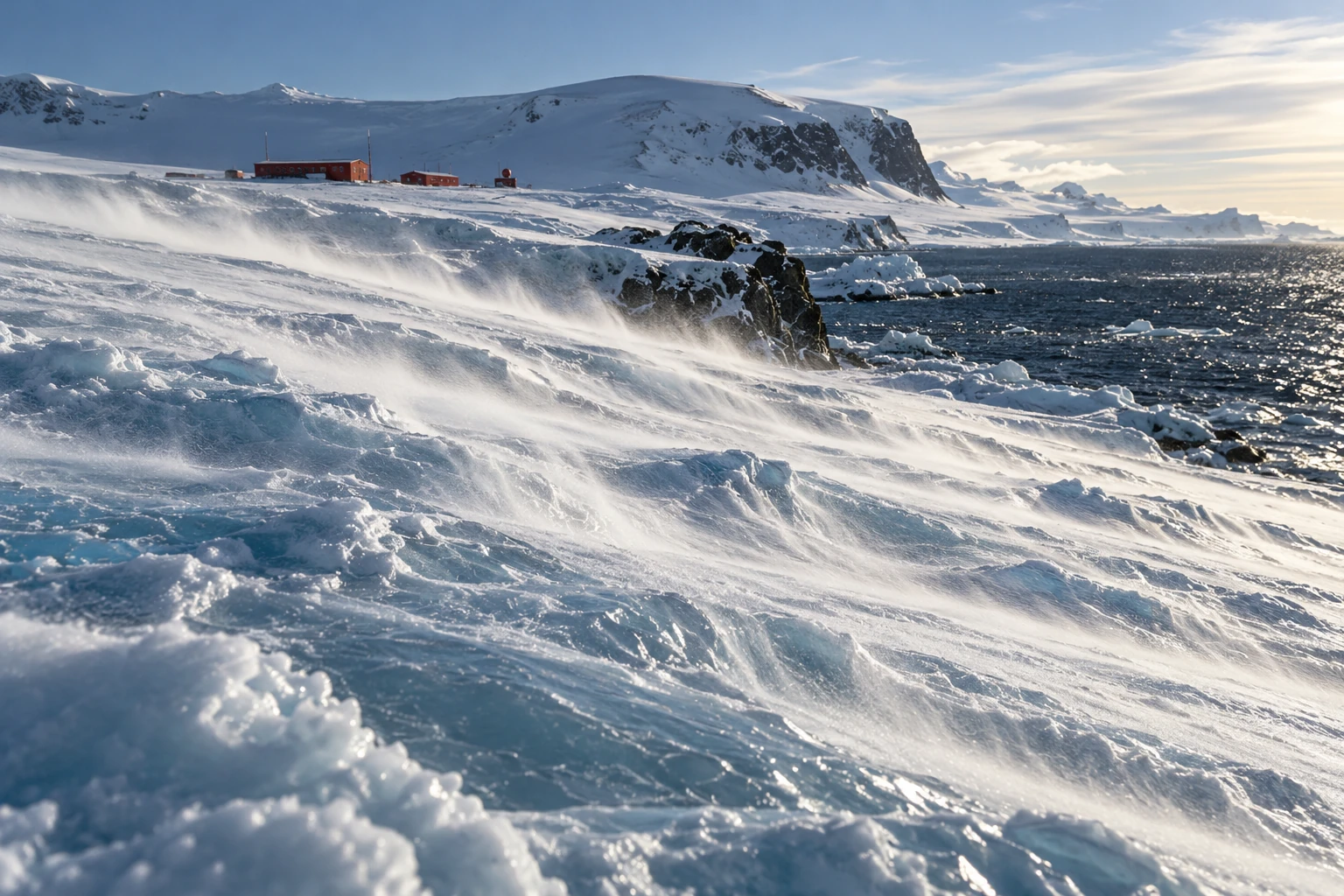
Illustrative Antarctic wind scene, not a photograph or evidence of wind speed at a real station. Cold dense air, sloping ice, and the wider weather combine to create Antarctica’s organized downslope winds.
Read the article →
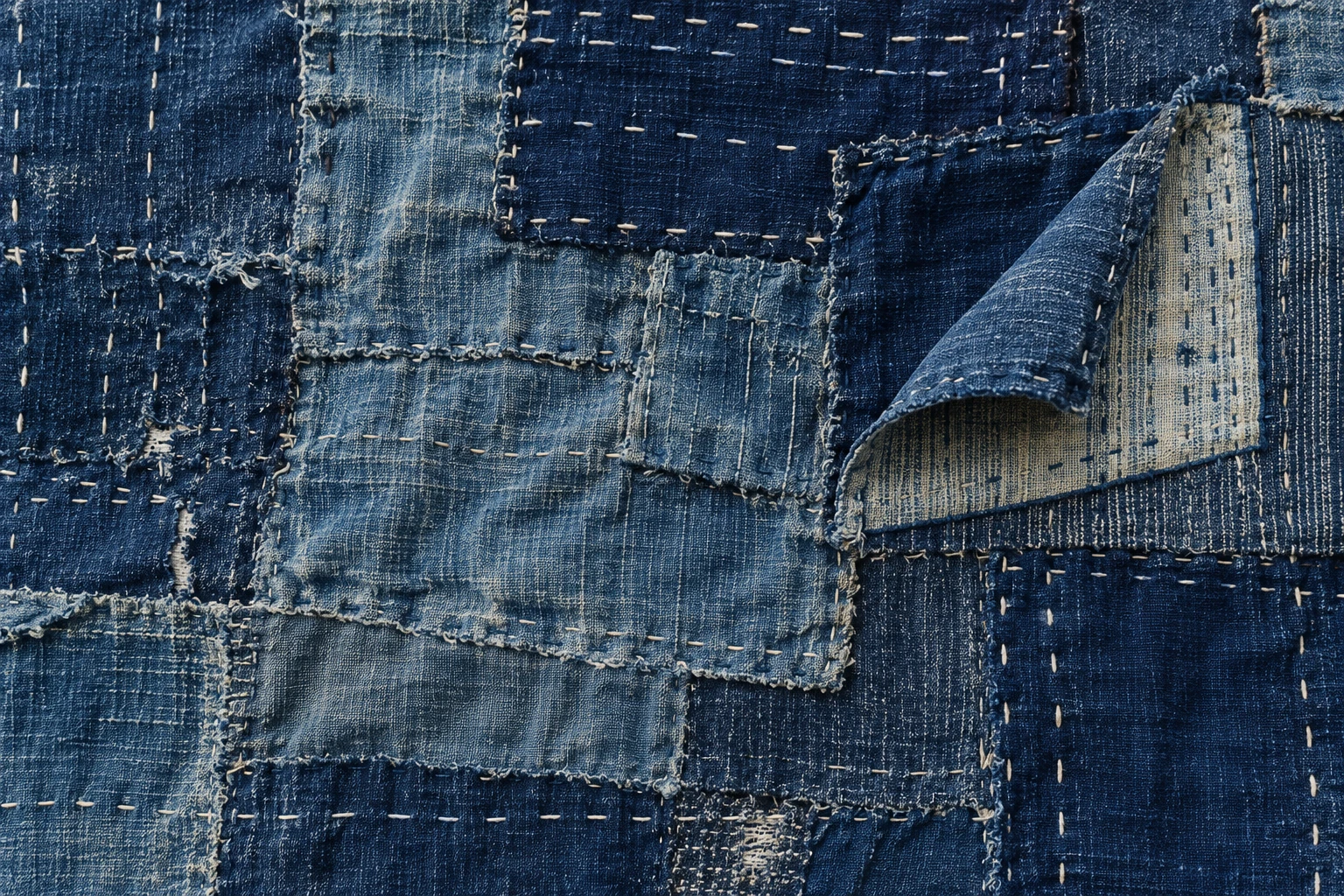
Original mending study, not a historic boro textile or a documented family artifact. Reading the layers of Japanese boro reveals repair, labor, and changing value—without turning material hardship into a decorative story.
Read the article →
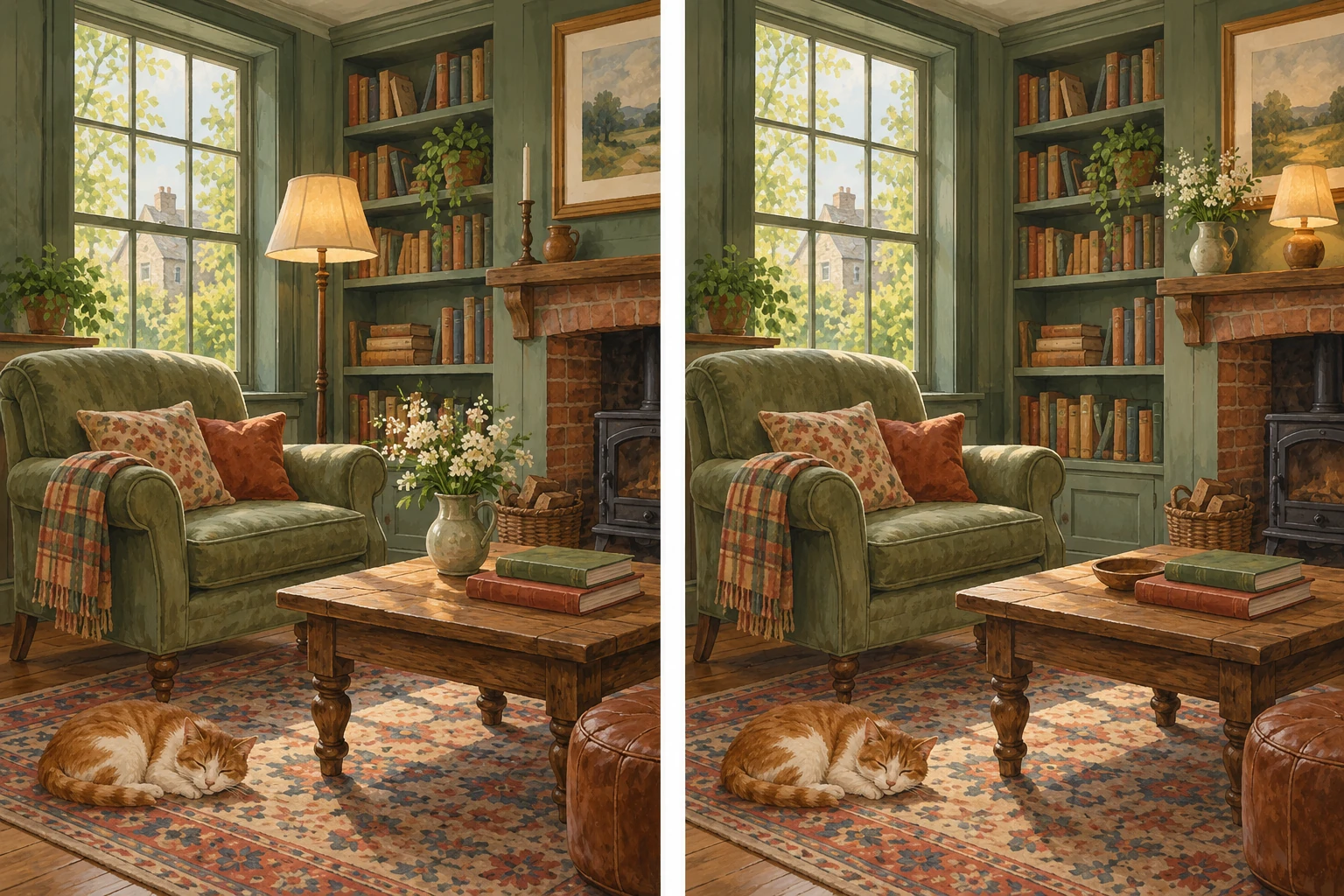
Conceptual room comparison. Artistic details vary; use the separate original shape diagrams for the precisely specified comparison. Try an original controlled comparison, then explore why interruptions and attention can hide surprisingly large visual changes.
Read the article →
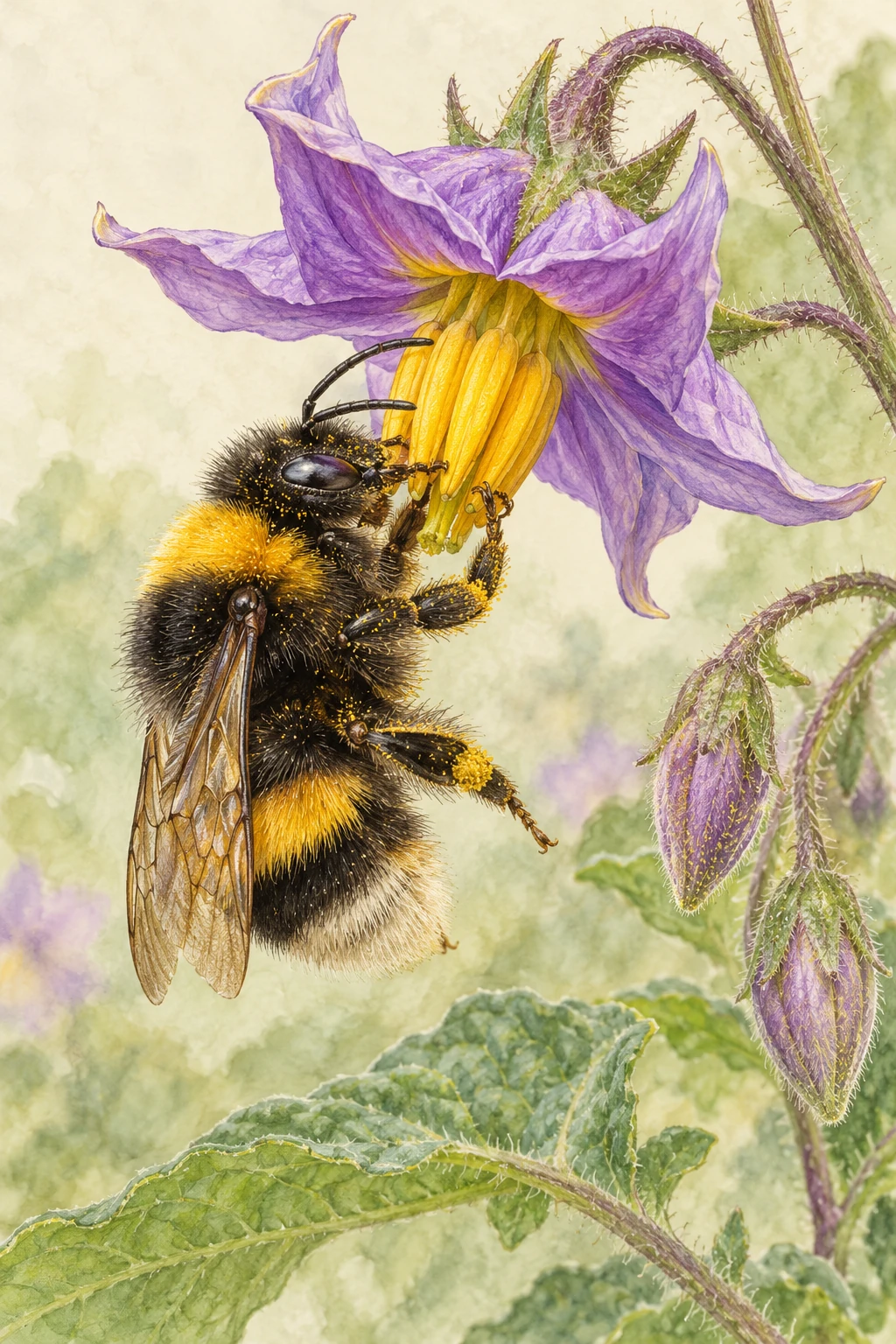
Conceptual botanical illustration of floral buzzing; not a measured vibration or a diagnostic species plate. A bee’s buzz is a mechanical action, and the flower’s structure changes how that action releases pollen.
Read the article →
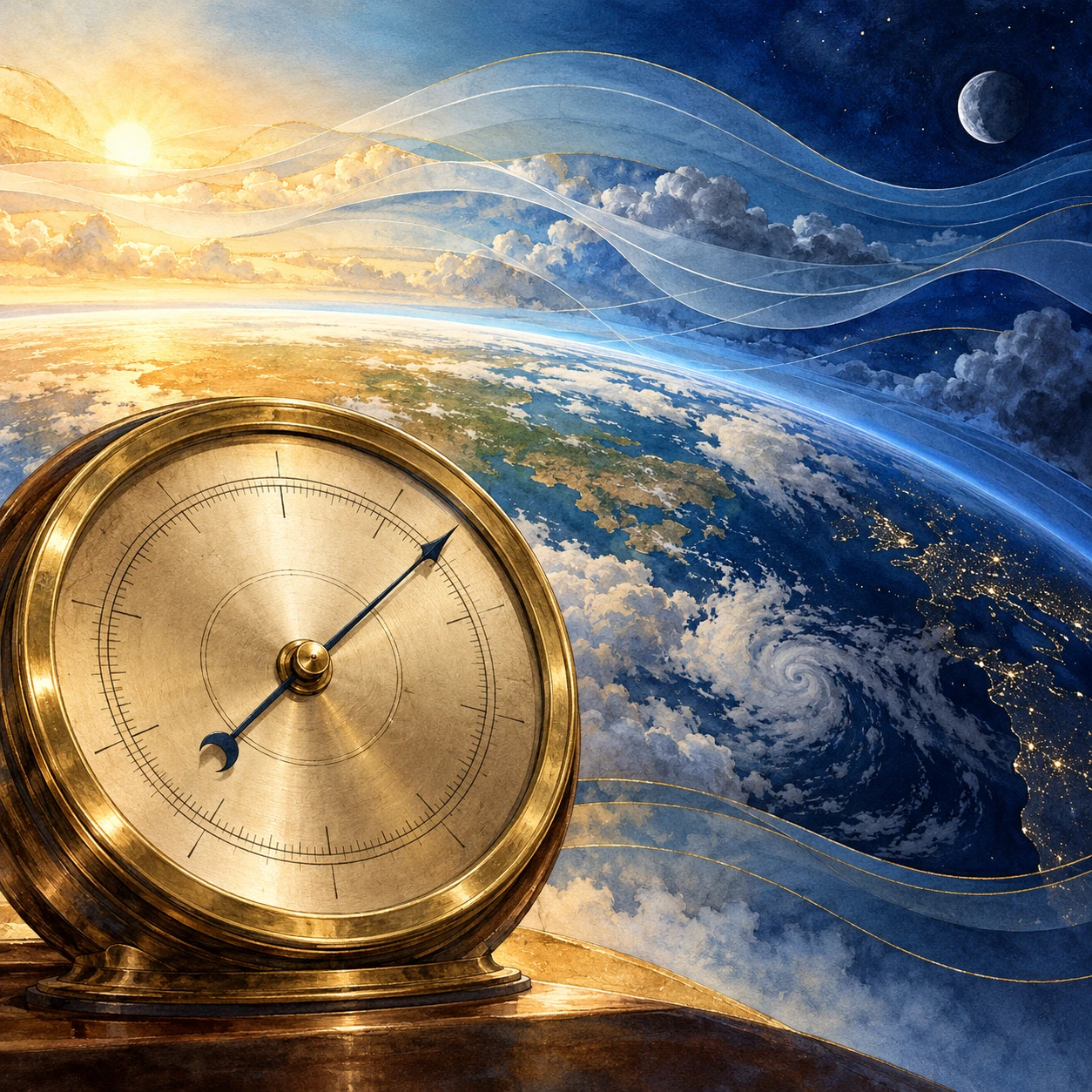
Conceptual artwork of atmospheric pressure tides. The instrument face and colored air bands are illustrative, not data. A regular pressure rhythm hides beneath the weather. Learn how solar heating drives atmospheric tides and how to look for them carefully.
Read the article →
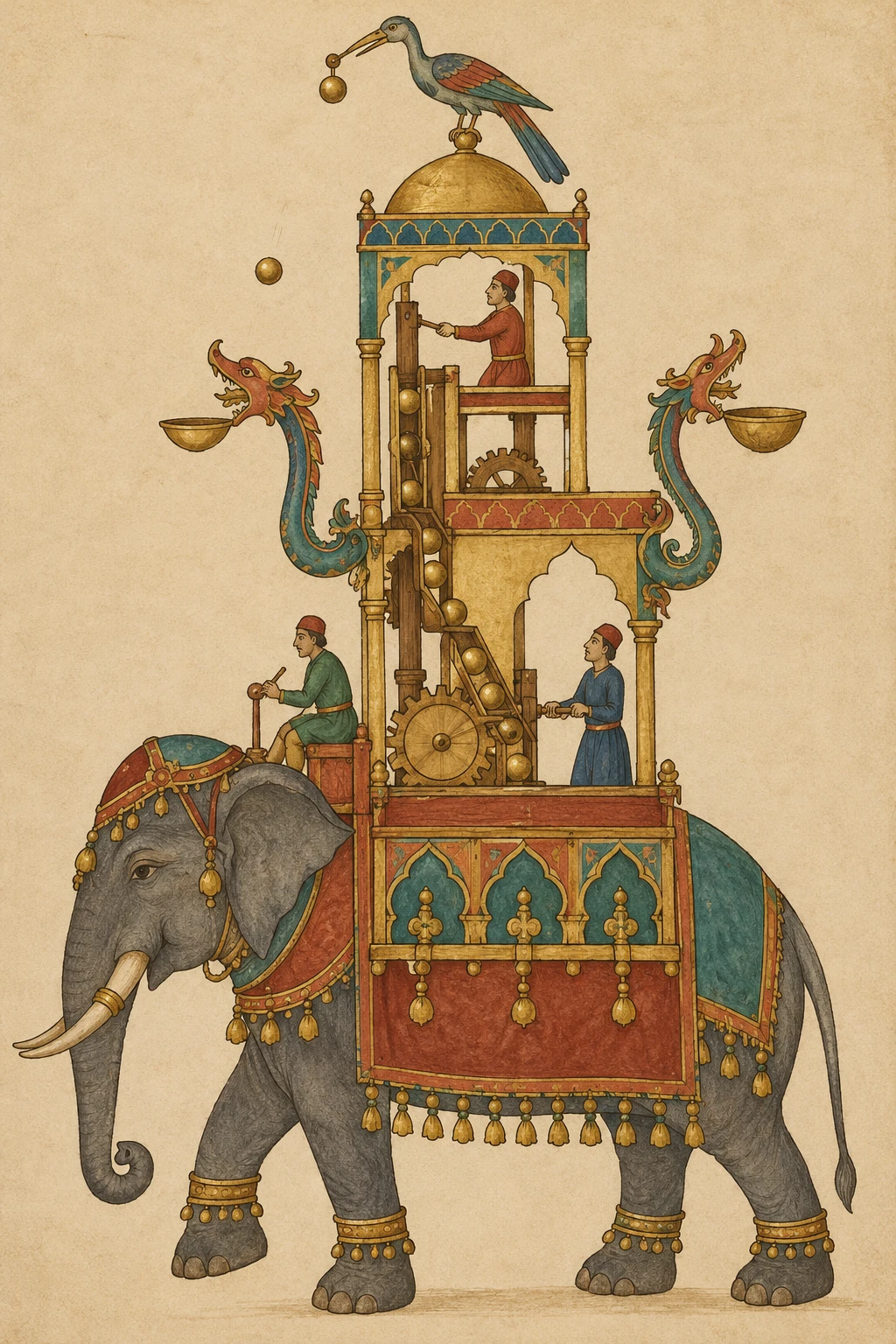
Conceptual illustration inspired by mechanical manuscripts. It is neither a facsimile nor a working construction diagram. Al-Jazari’s elephant clock turns an interval into a performance. Read its manuscript, moving sequence, and modern replicas carefully.
Read the article →
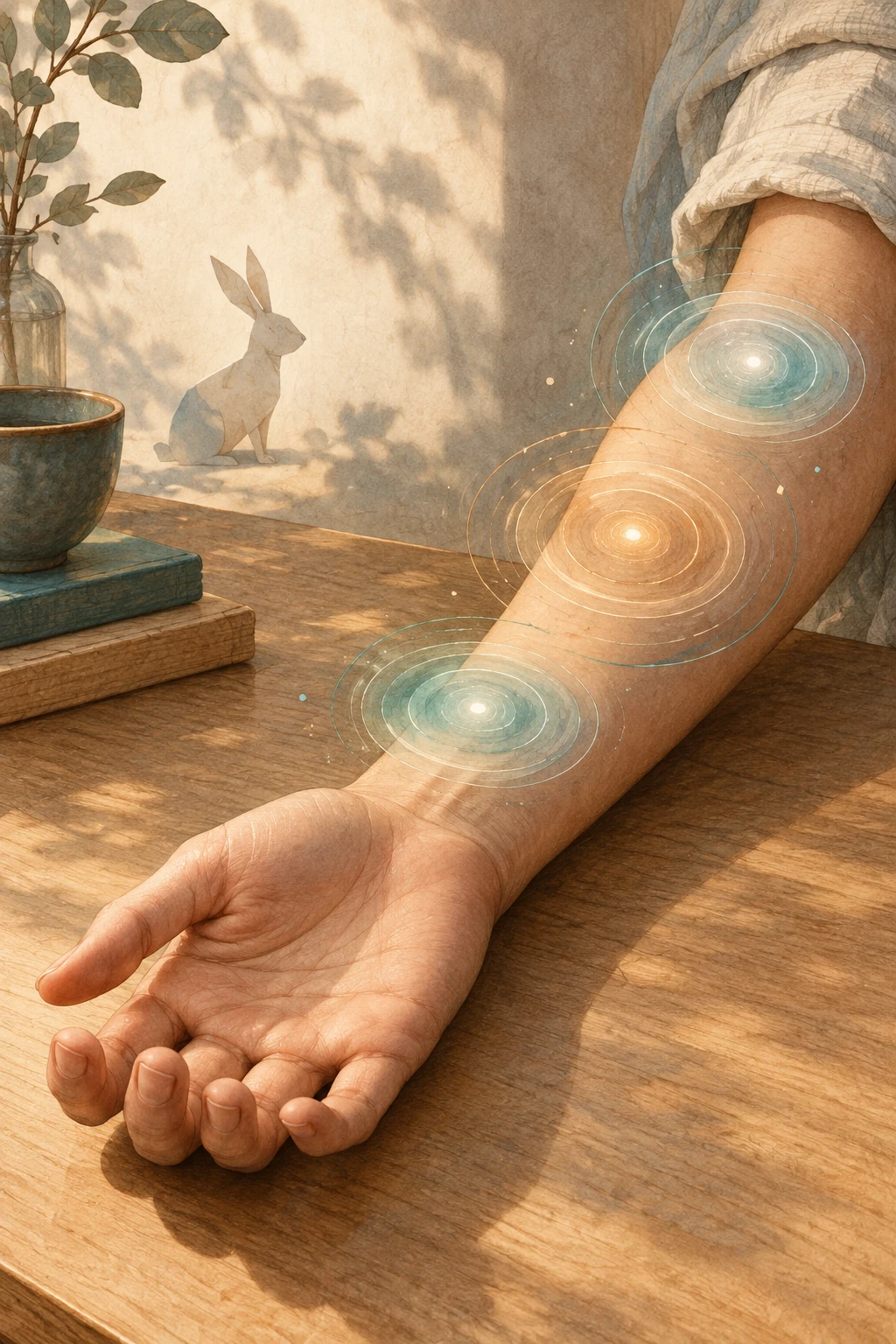
Metaphorical illustration. Ripples do not show actual neural activity or a stimulus sequence; the source studies provide the controlled arrangements. A tactile illusion separates contact from perceived location, with brain-mapping evidence, a computational model and a paper thought experiment.
Read the article →
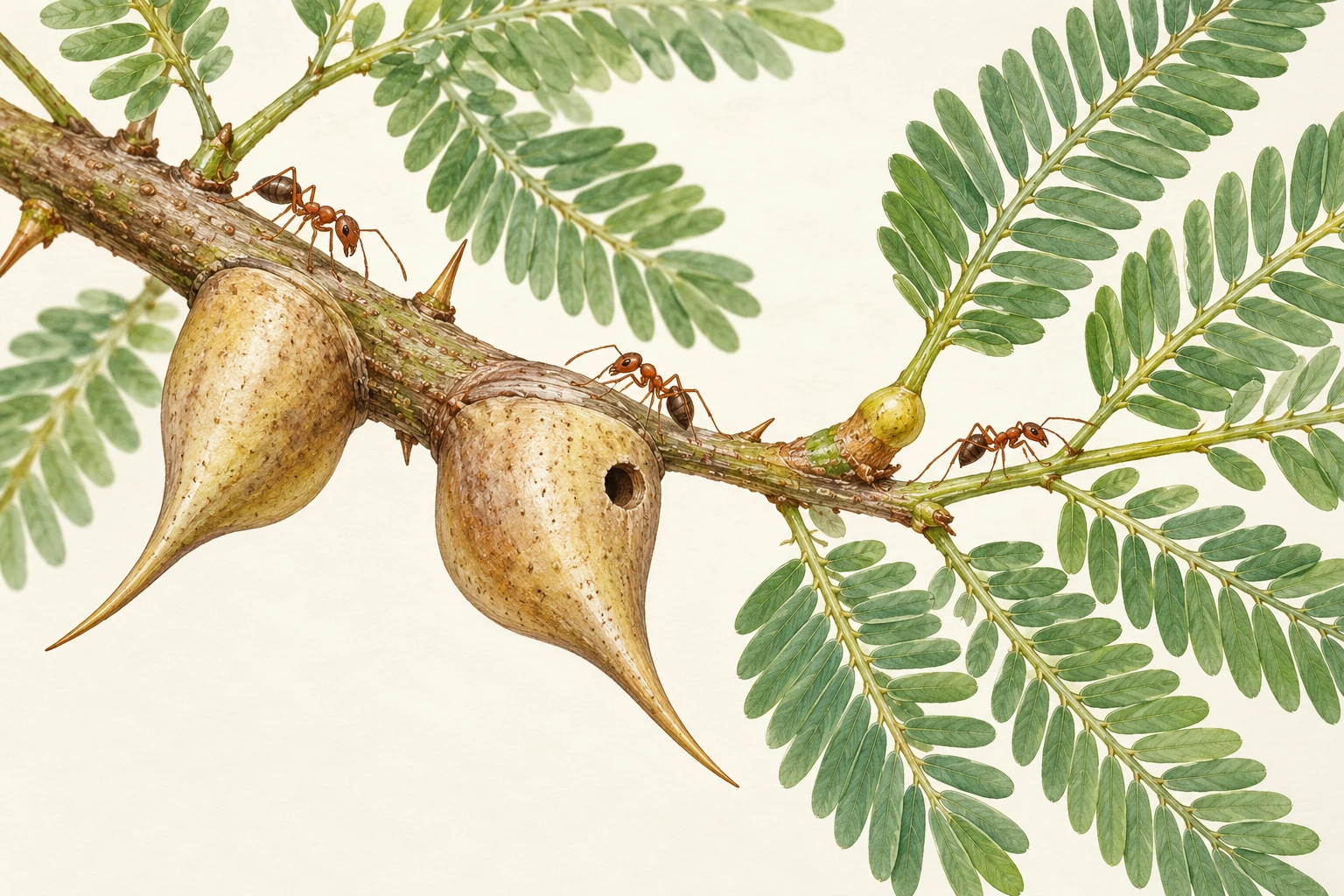
Generic acacia–ant illustration; not a named specimen, species diagnosis, or representation of one study site. A plant can support ant defenders, but rewards, partner identity and neighboring vegetation change whether the exchange pays off.
Read the article →
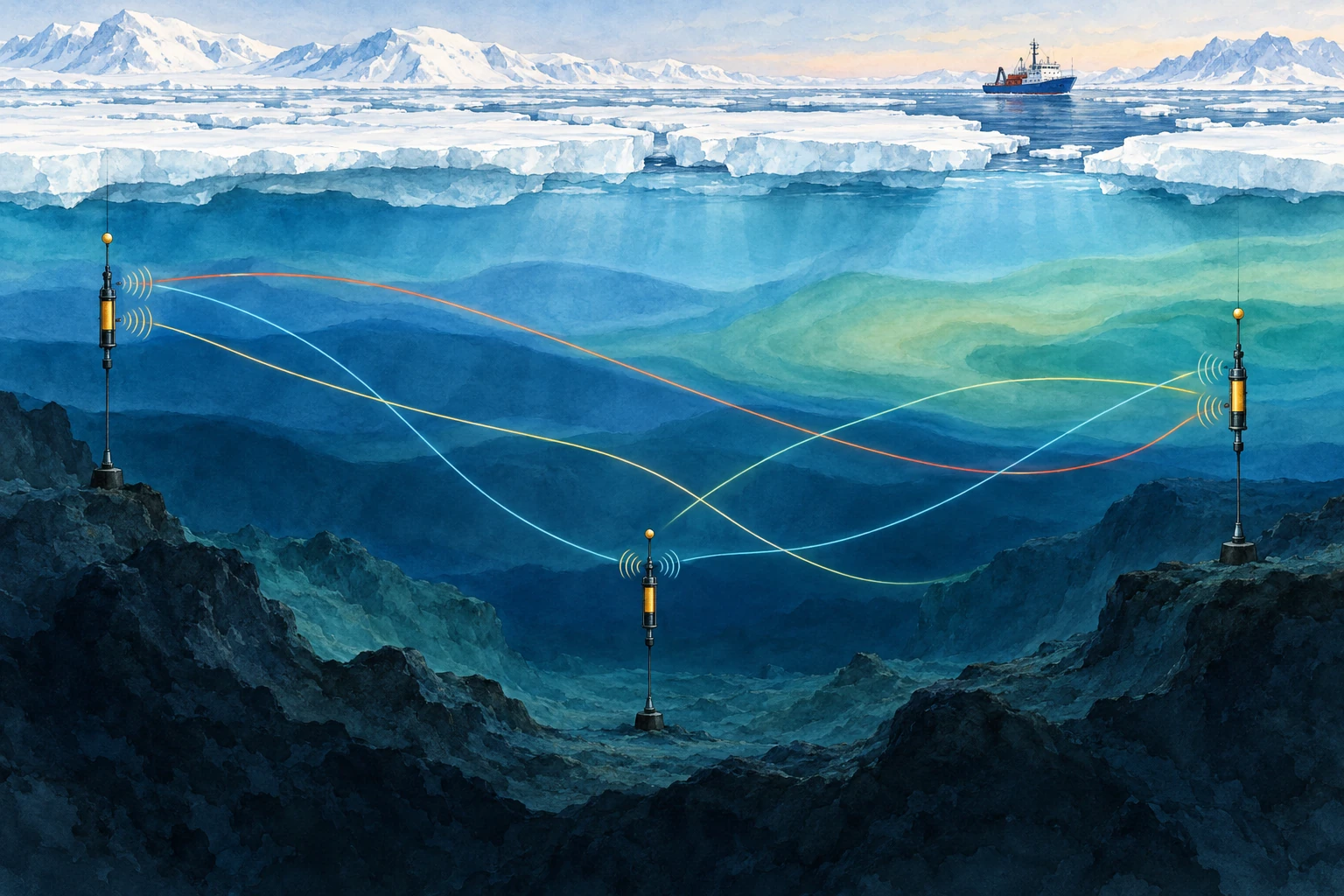
Conceptual acoustic-tomography illustration. Colors are water-mass metaphors, not measured temperatures; paths and scales are simplified. Sound travel times can measure broad ocean temperature changes, provided geometry, currents, and the inverse problem are handled carefully.
Read the article →
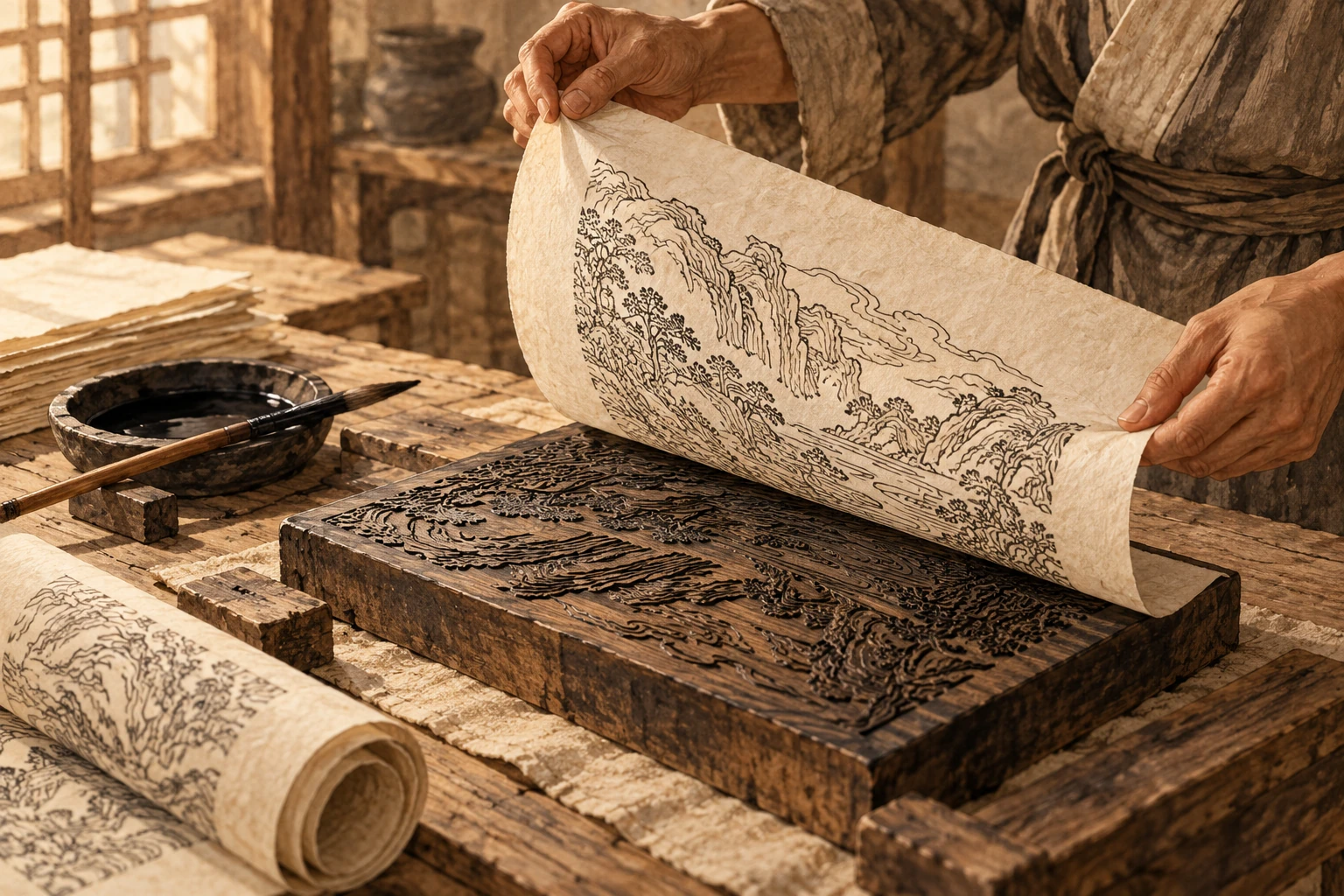
Conceptual woodblock-printing scene. It depicts no named printer and reproduces no Diamond Sutra text. The Diamond Sutra’s dated colophon reveals sponsorship and devotion, while its paper and format tell a wider story about printing.
Read the article →
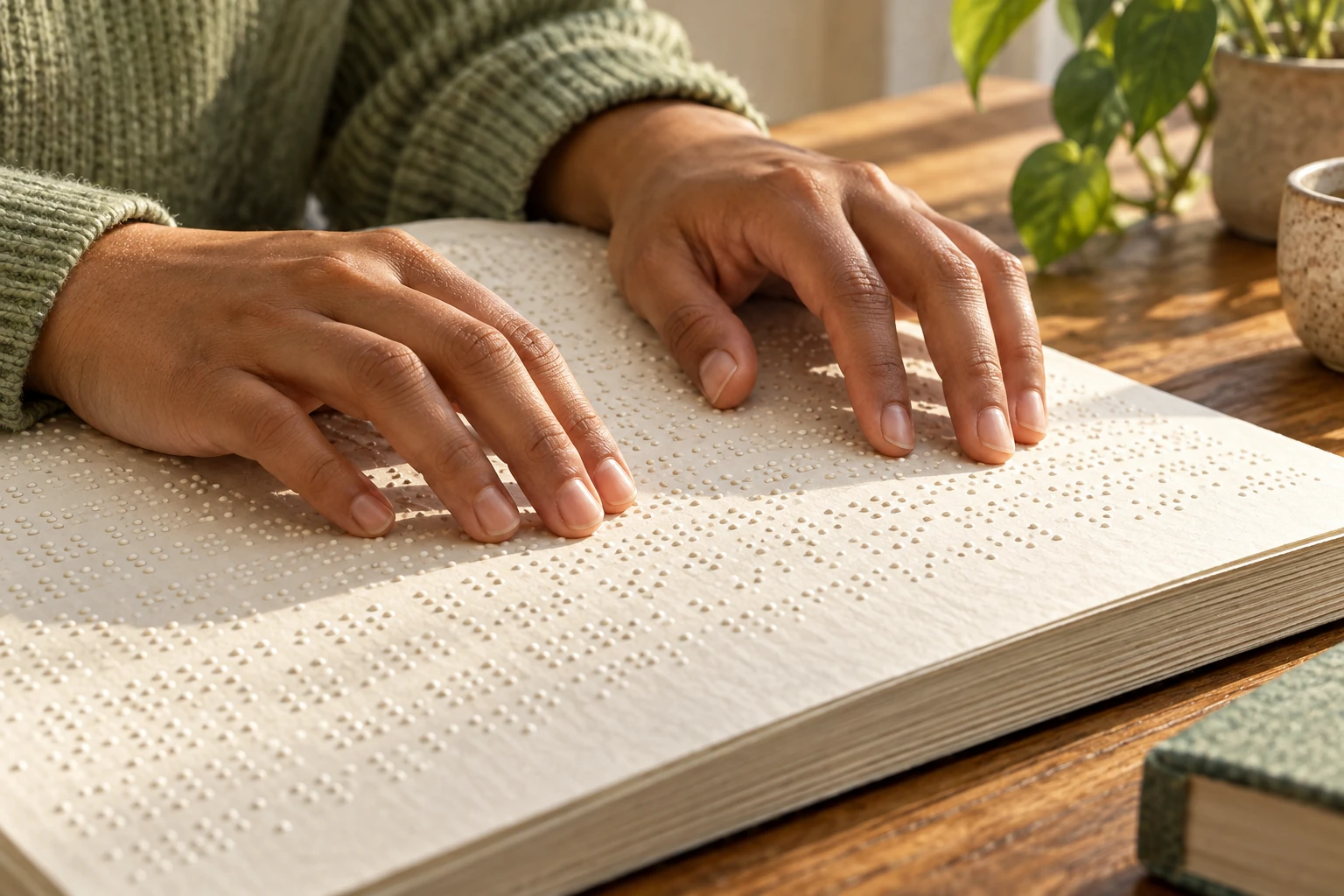
Editorial illustration. Dot patterns are illustrative and do not constitute a verified readable braille text. The raised dots are only part of the story: explore active touch, reading movements, evidence and the design of a tactile page.
Read the article →
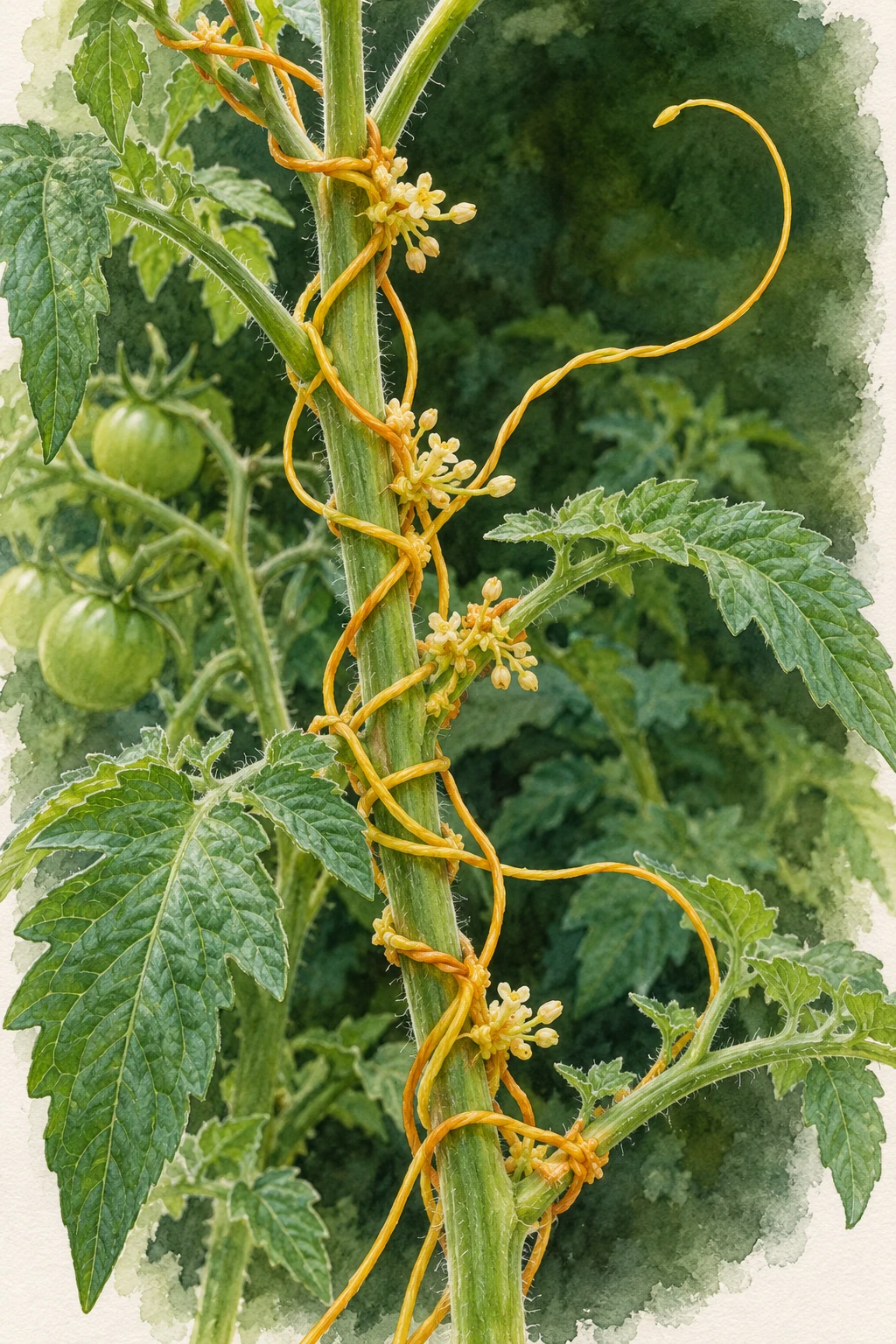
Conceptual botanical illustration of dodder and a tomato host; attachment structures and growth direction are interpretive. A parasitic vine follows chemical cues, then forms an intimate connection through which resources and regulatory molecules can move.
Read the article →
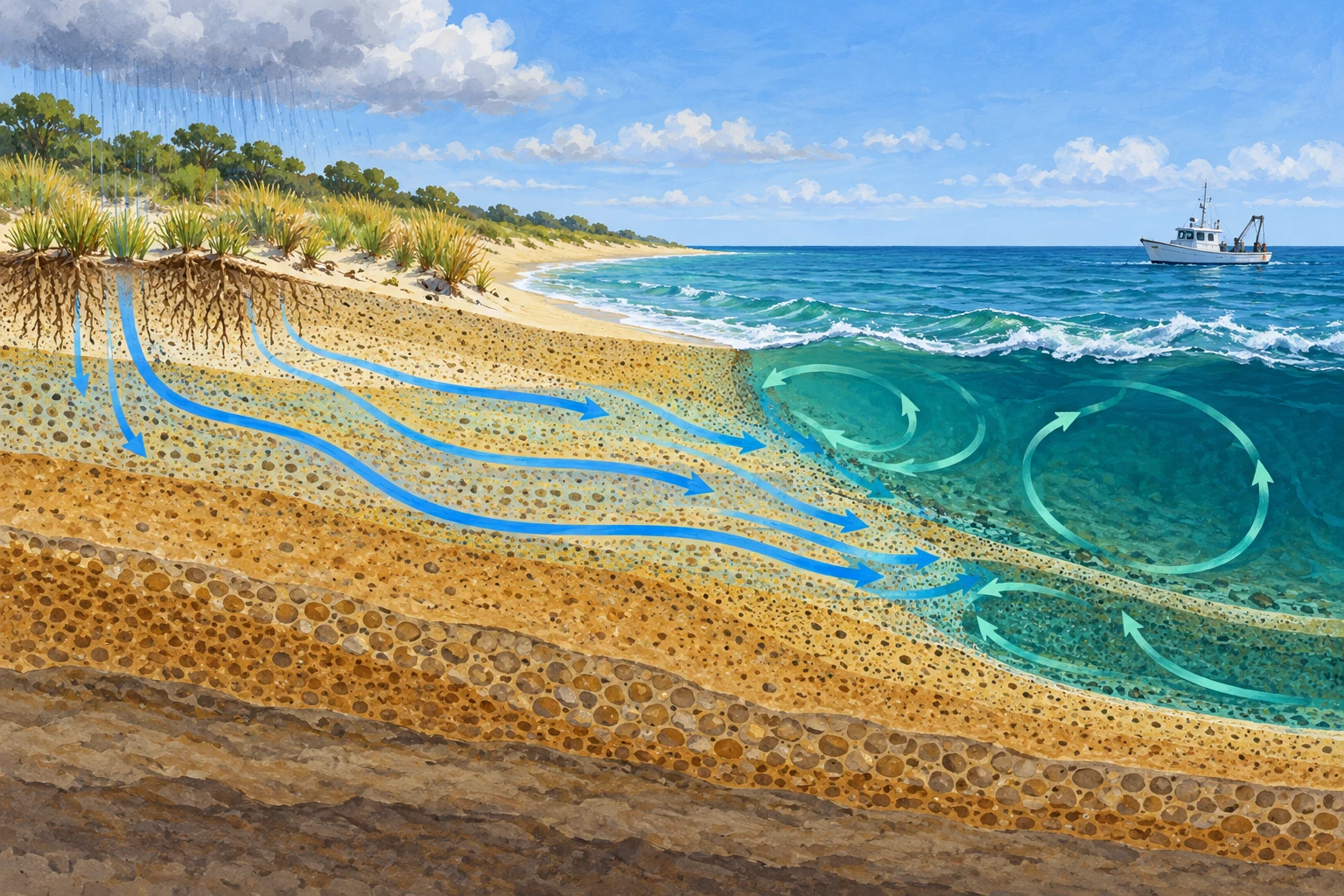
Conceptual coastal-aquifer illustration. Colored paths show possible flow types, not measured routes or contamination at a real site. Fresh groundwater and recirculated seawater cross the coast underground, carrying chemical loads that visible rivers alone cannot explain.
Read the article →
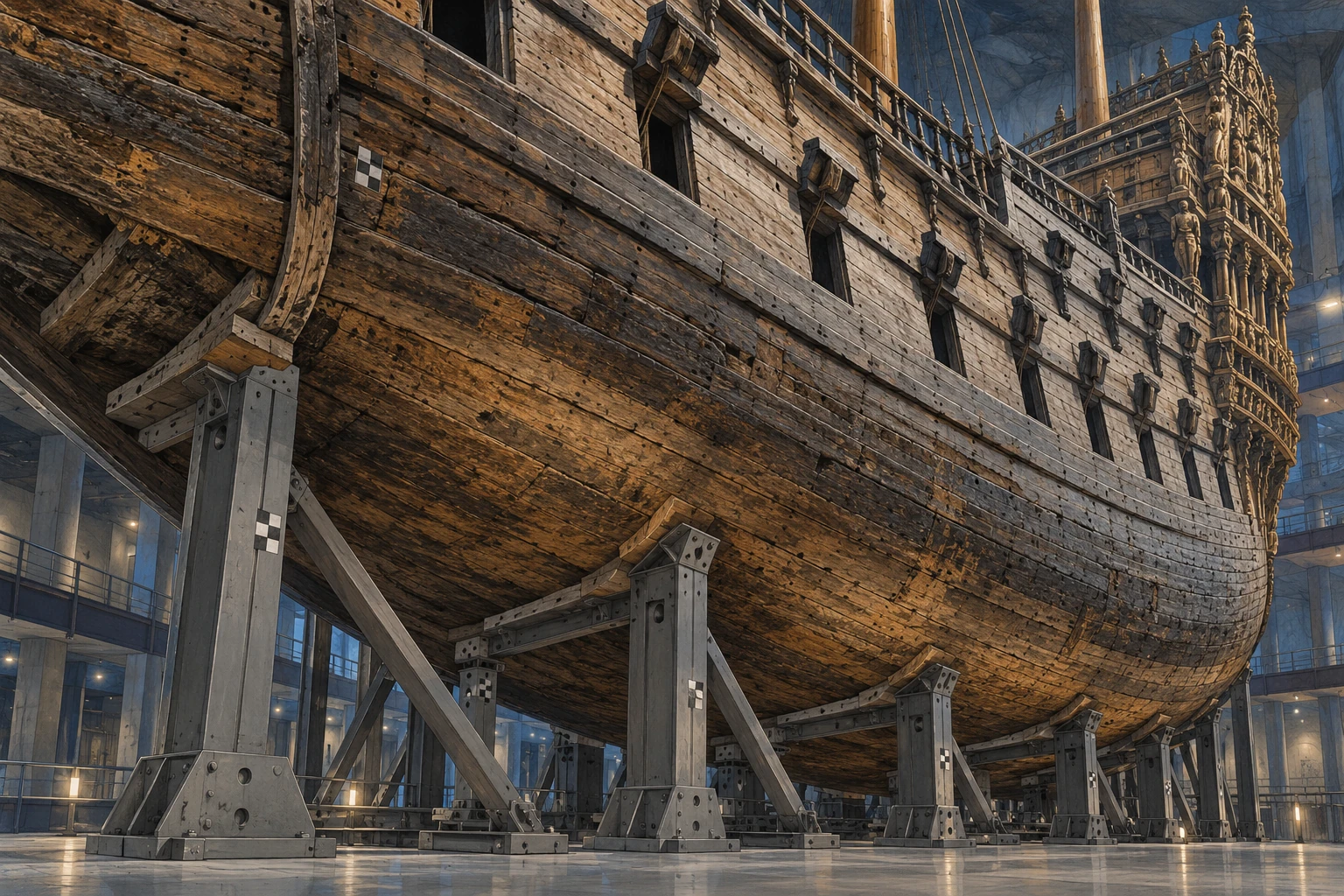
Conceptual museum conservation scene, not a photograph or an exact model of Vasa’s current support system. Vasa’s rescue began a continuing experiment in waterlogged wood, chemistry, climate, measurement, and carefully placed support.
Read the article →
Materials illustration. The displayed curve is not a measured result; real behavior depends on paper, orientation and wetting history. A wet sheet changes at several scales. Follow moisture gradients, fiber networks, permanent curl and a controlled scrap-paper experiment.
Read the article →
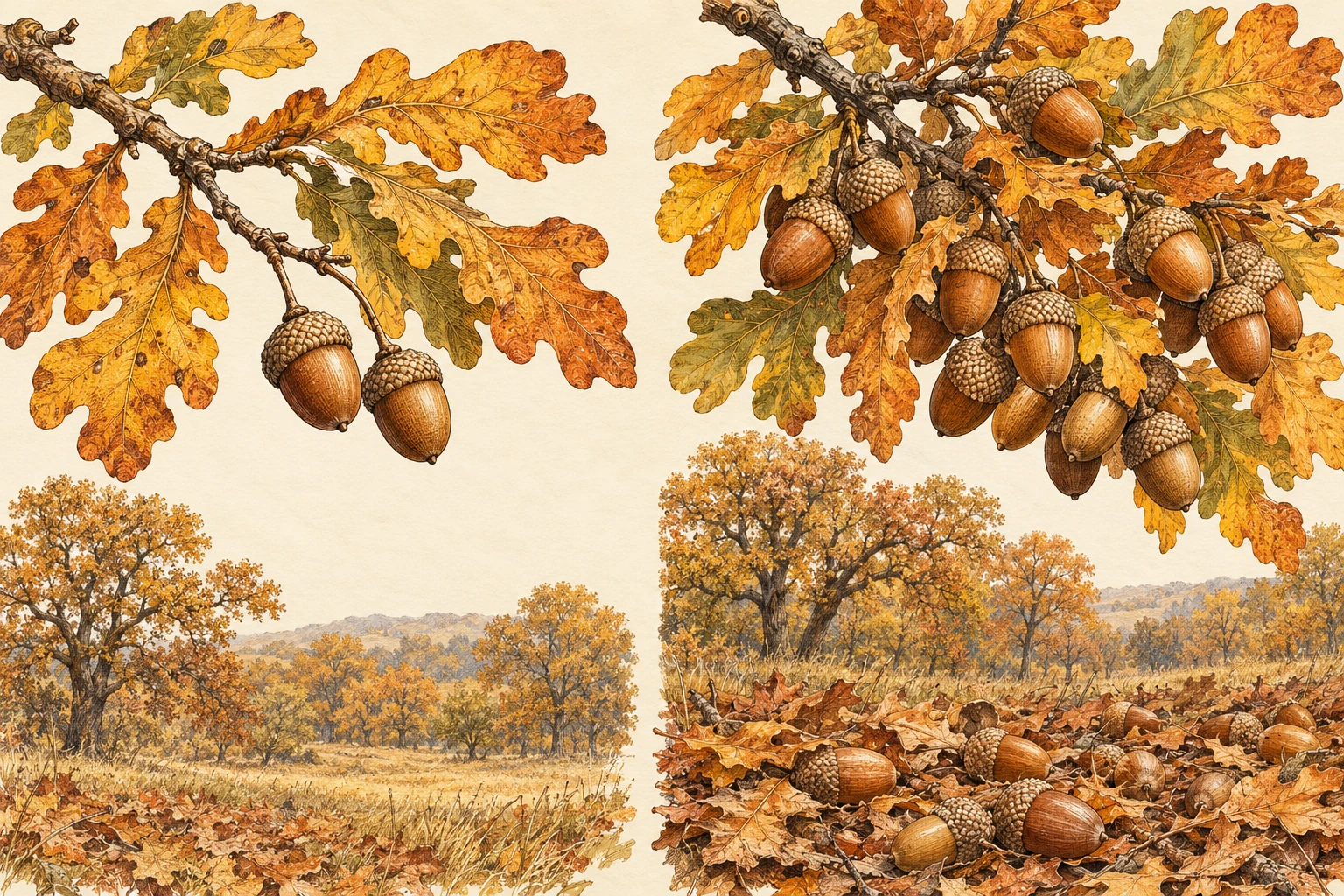
Conceptual comparison of sparse and heavy seed production; not observations from two measured years. Heavy seed years are more than abundance: synchrony, predators, pollination and environmental cues shape what the crop achieves.
Read the article →
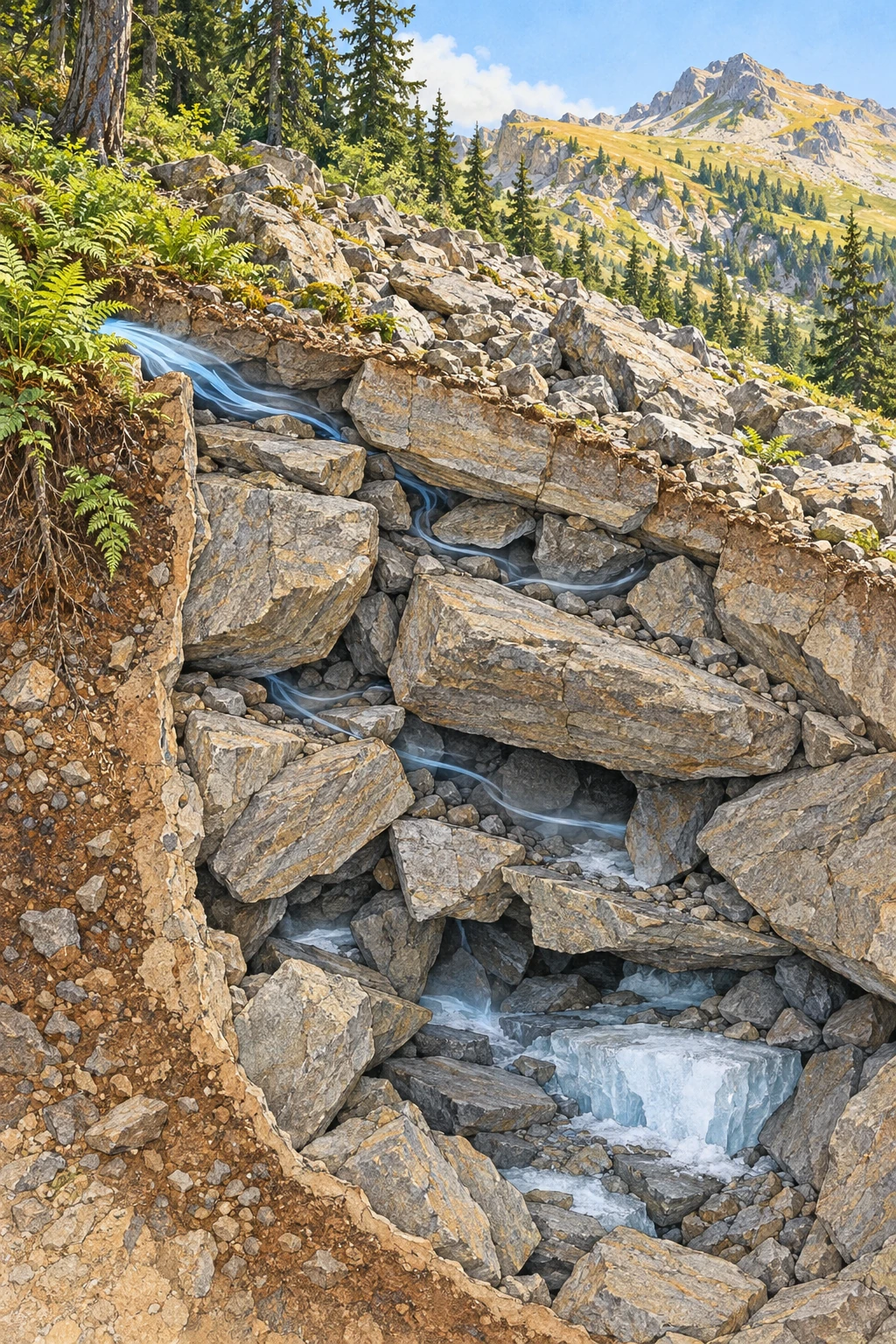
Conceptual talus cutaway, not a surveyed site. Ice distribution and airflow are illustrative possibilities rather than measured conditions. Airflow, stone, snow, and ice can preserve a pocket of winter beneath summer boulders, with no single mechanism fitting every slope.
Read the article →
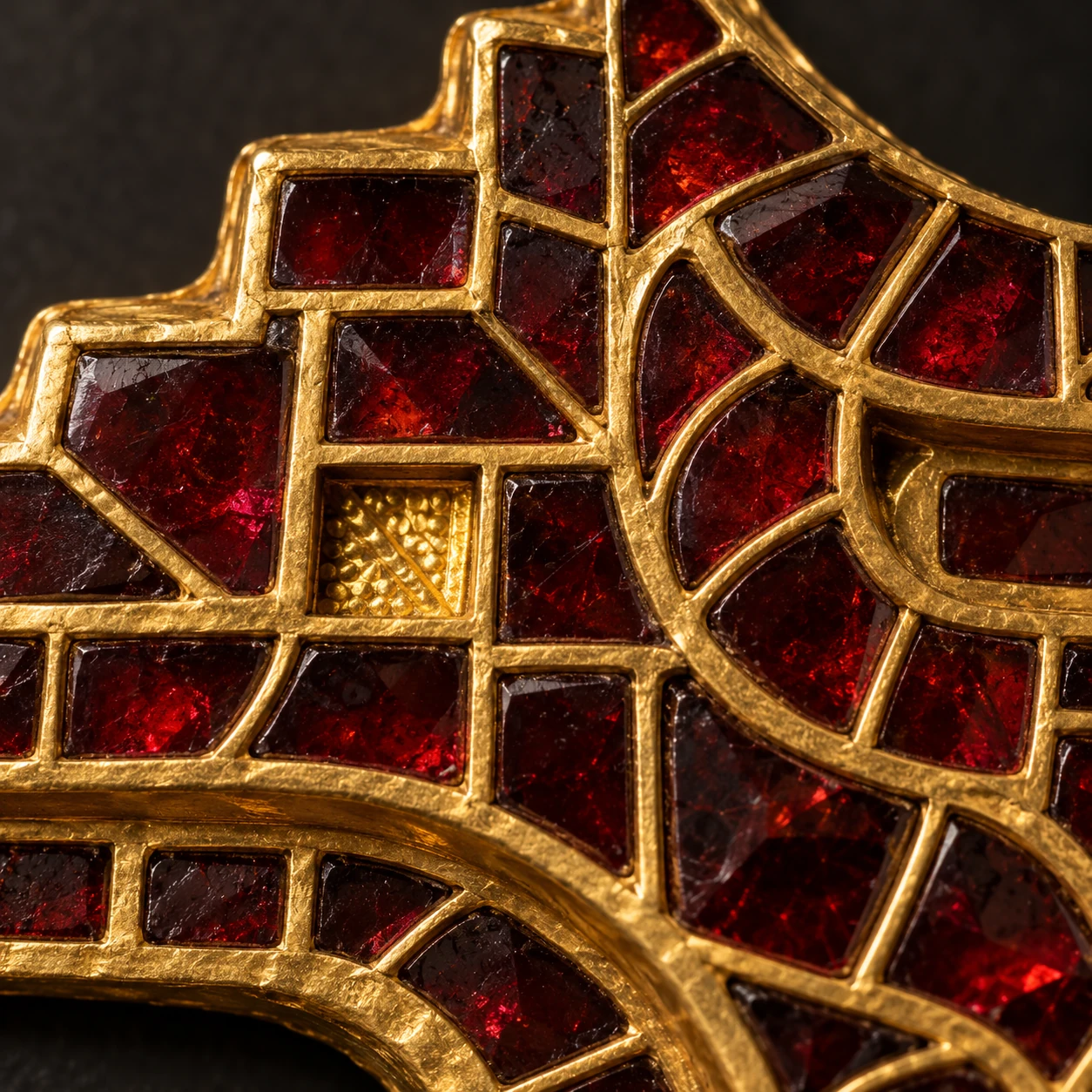
Conceptual garnet-cellwork study with an original geometric design, not a replica of a Sutton Hoo object. Look inside garnet cloisonné to see the gold cells, hidden backing, patient fitting, and long material connections of Sutton Hoo.
Read the article →
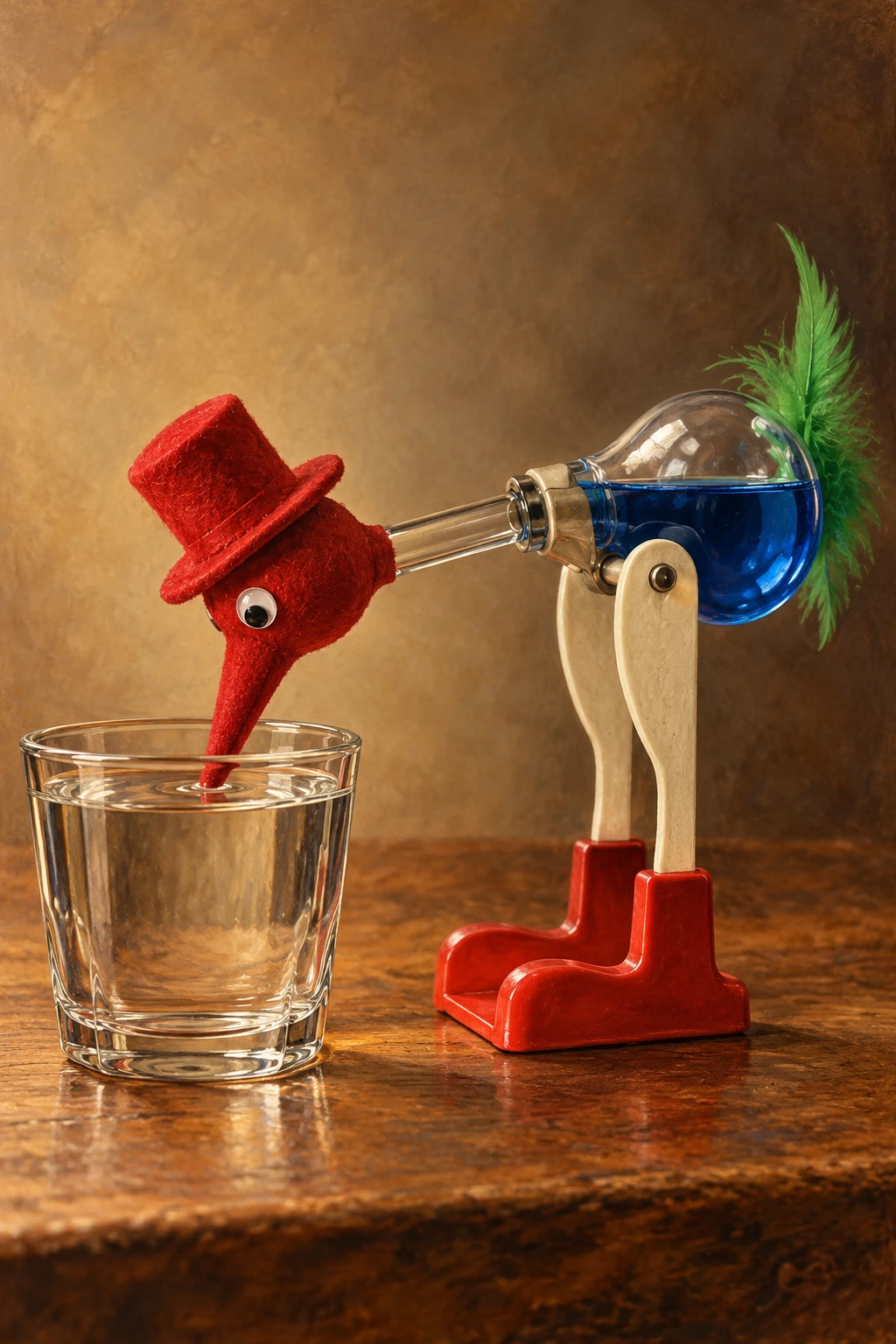
Toy illustration. Fluid placement and proportions are artistic; the text follows the documented cycle rather than treating this image as a cutaway. A sealed toy turns evaporative cooling into a repeating bow. Follow the energy route, pressure change, balance and reset.
Read the article →
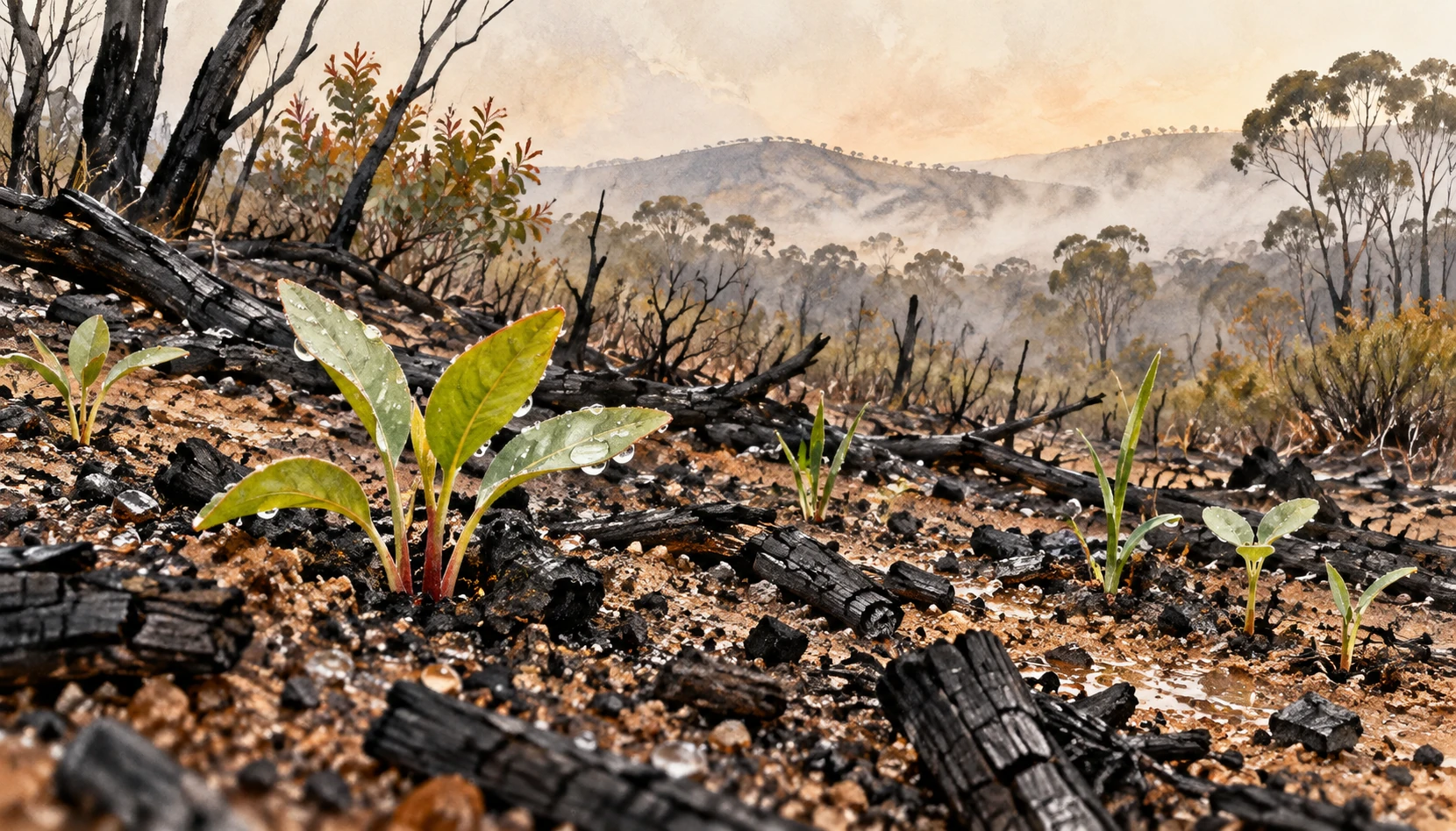
Conceptual postfire scene; no species or smoke-response mechanism can be identified from this illustration. Smoke-derived karrikins connect postfire ecology with seed dormancy, light responses and a still-unfolding molecular story.
Read the article →
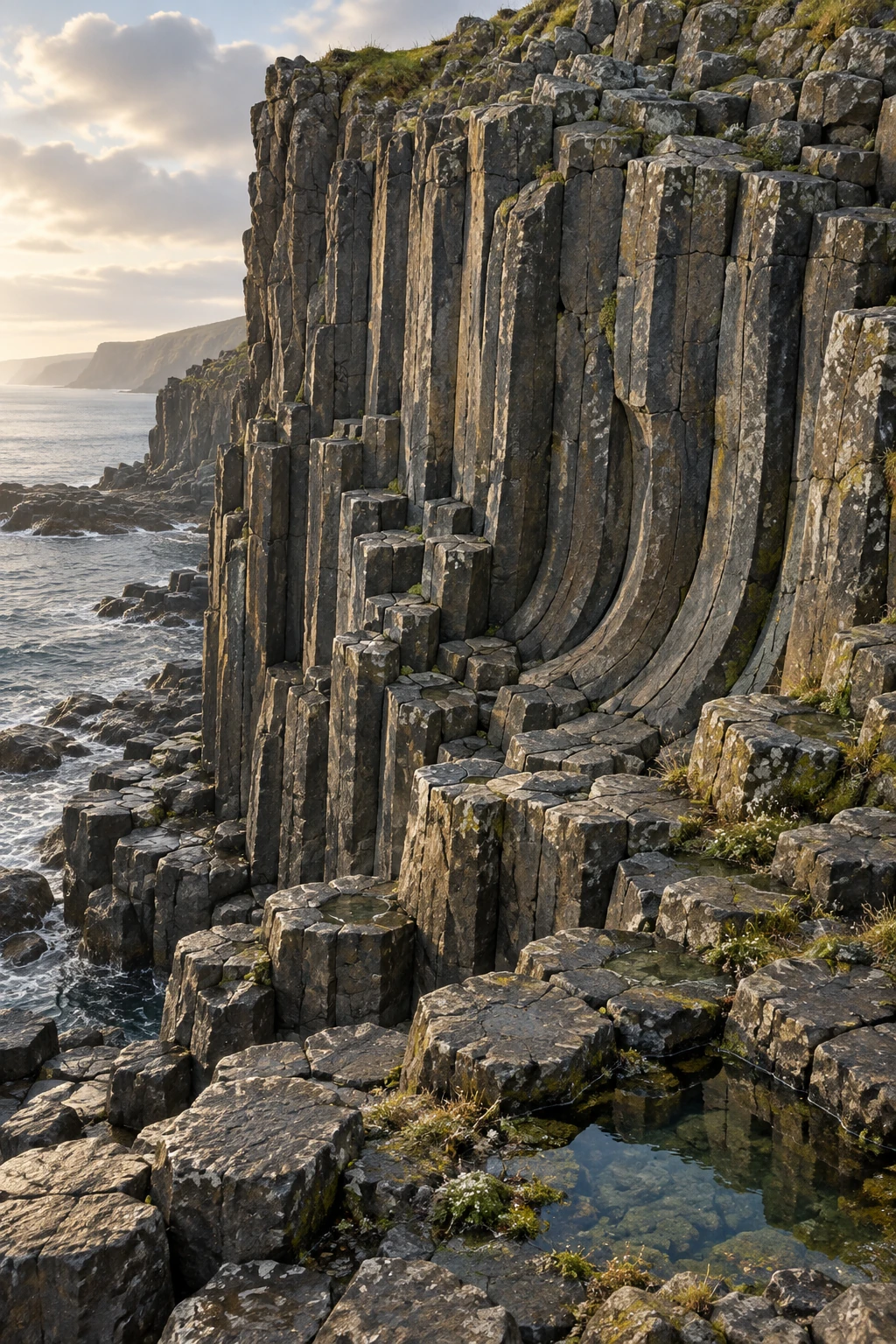
Geological illustration inspired by columnar jointing, not a photograph or mapped reconstruction of a named outcrop. Basalt columns preserve a moving fracture front. Their polygons, curves, and irregularities reveal more than a simple hexagon story.
Read the article →
Conceptual featherwork study with an original arrangement, not a replica of a Wari artifact or a proposed original setting. Wari feather panels turn thousands of small surfaces into broad color fields, revealing skilled assembly and far-reaching material networks.
Read the article →
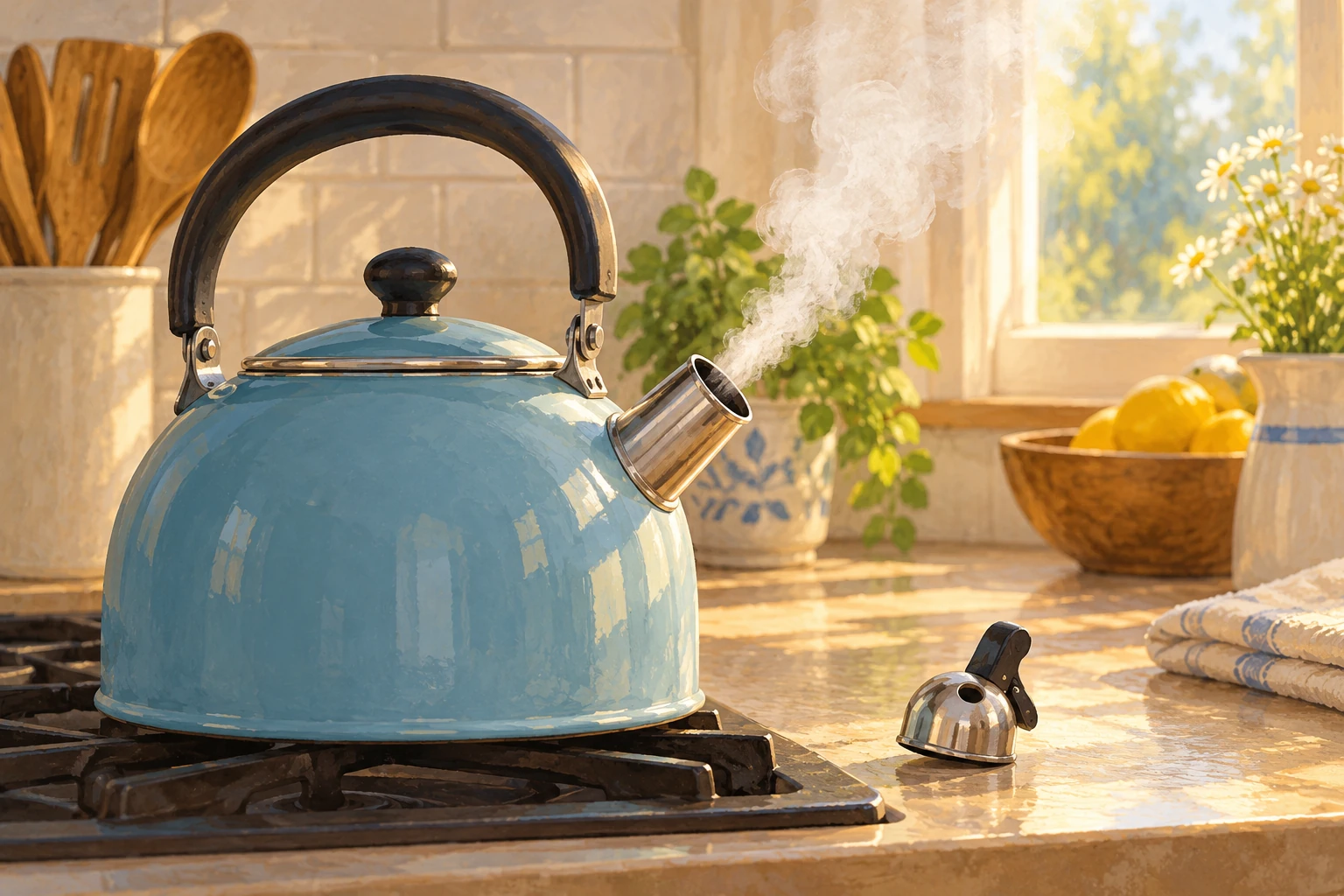
Editorial illustration. The visible white plume represents condensed droplets; the image is not a flow visualization or acoustic measurement. A classic kettle cap is a small flow-and-sound system. Explore two whistling regimes and learn what an observation can actually show.
Read the article →
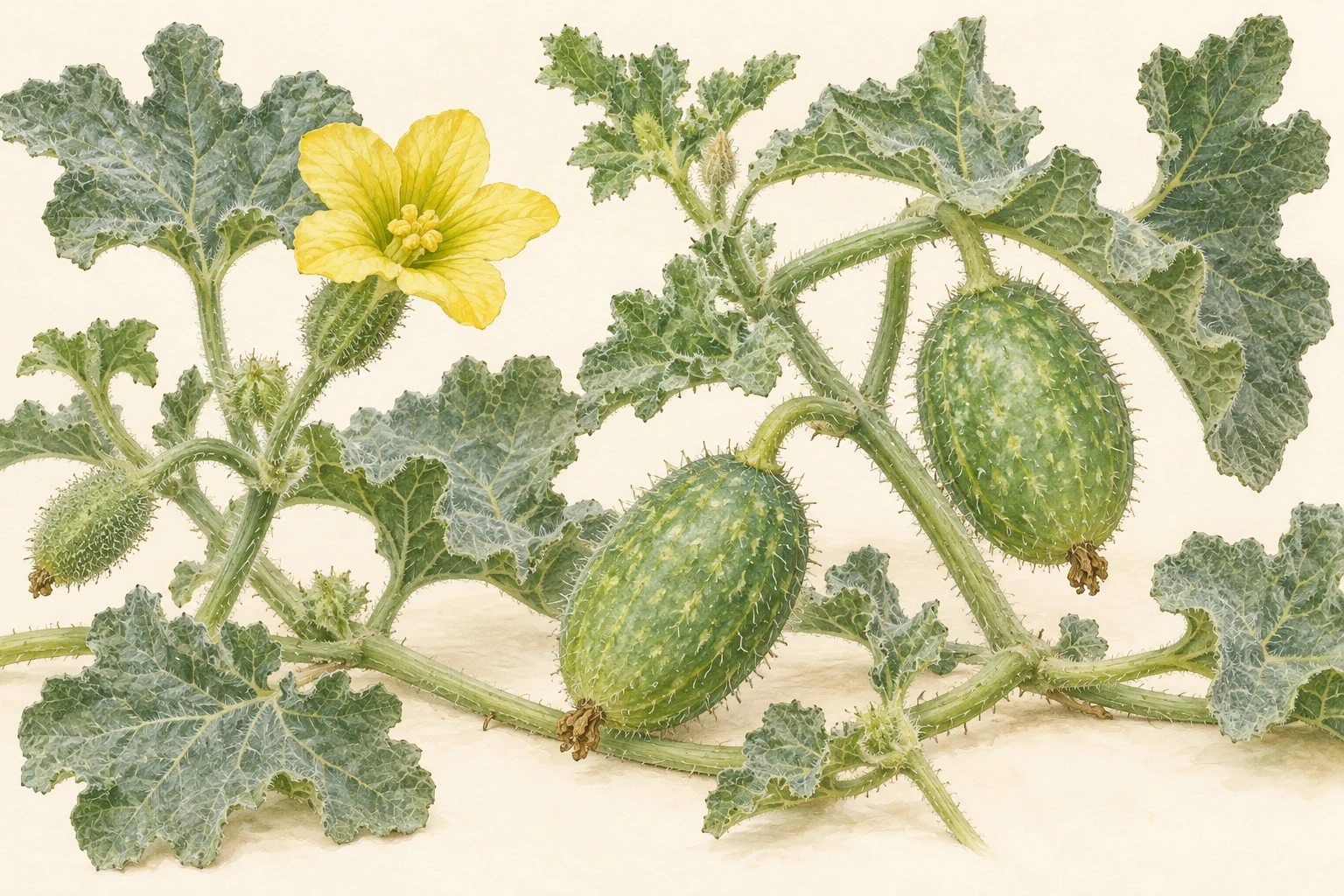
Still botanical interpretation of Ecballium elaterium; it does not depict or measure seed ejection. High-speed research shows how pressure, fluid redistribution and fruit orientation combine in a brief seed launch.
Read the article →
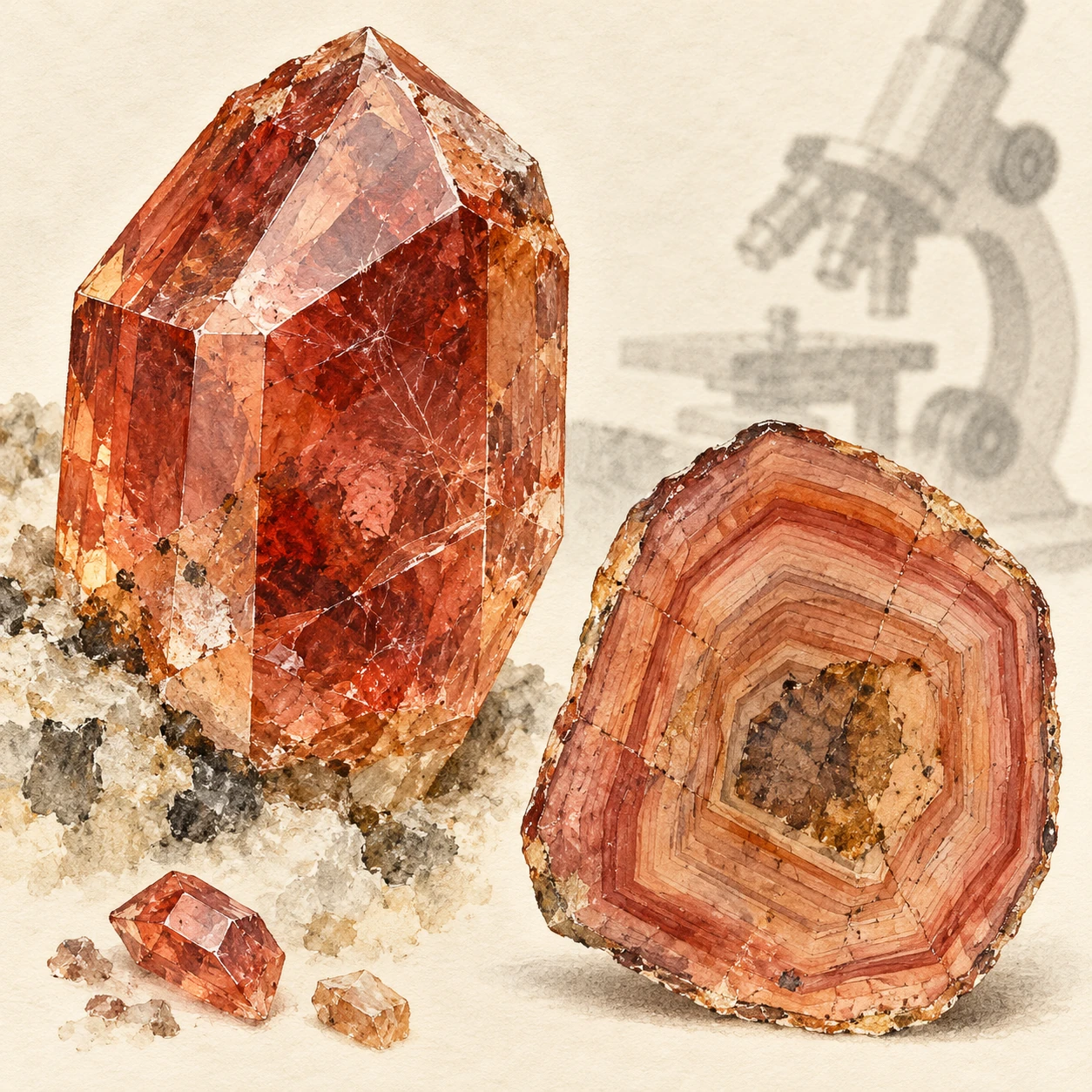
Mineral study and conceptual growth-zone section. It is not a microscope image, isotope map, or dated specimen. Zircon can preserve old cores, young rims, and disturbed isotope clocks. The key is asking which geological event each date records.
Read the article →
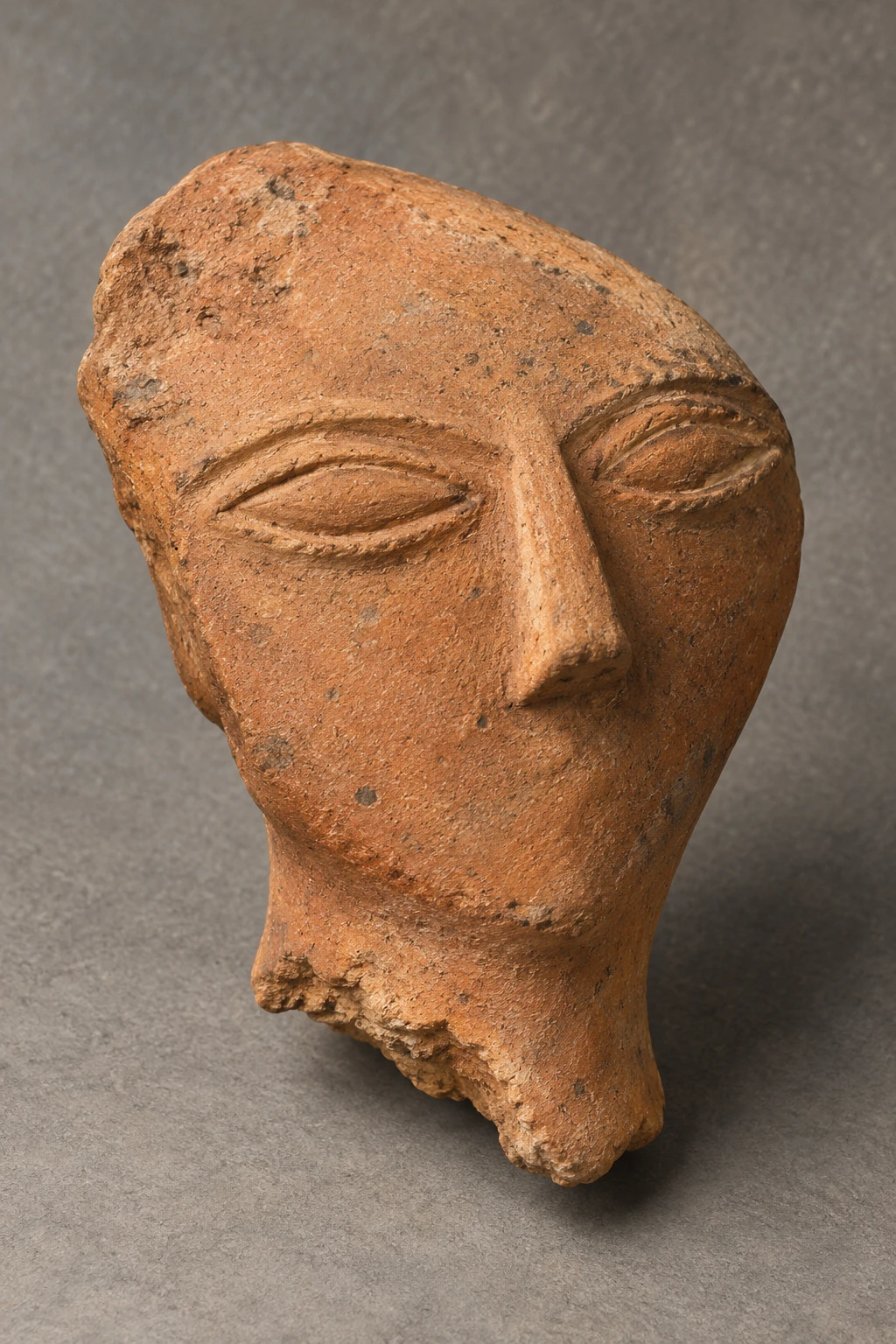
Original conceptual Neolithic head study, not an excavated Vinča artifact or a claim about a deity’s appearance. A small clay face invites large claims. Learn to read Vinča figurines through form, context, and competing interpretations.
Read the article →
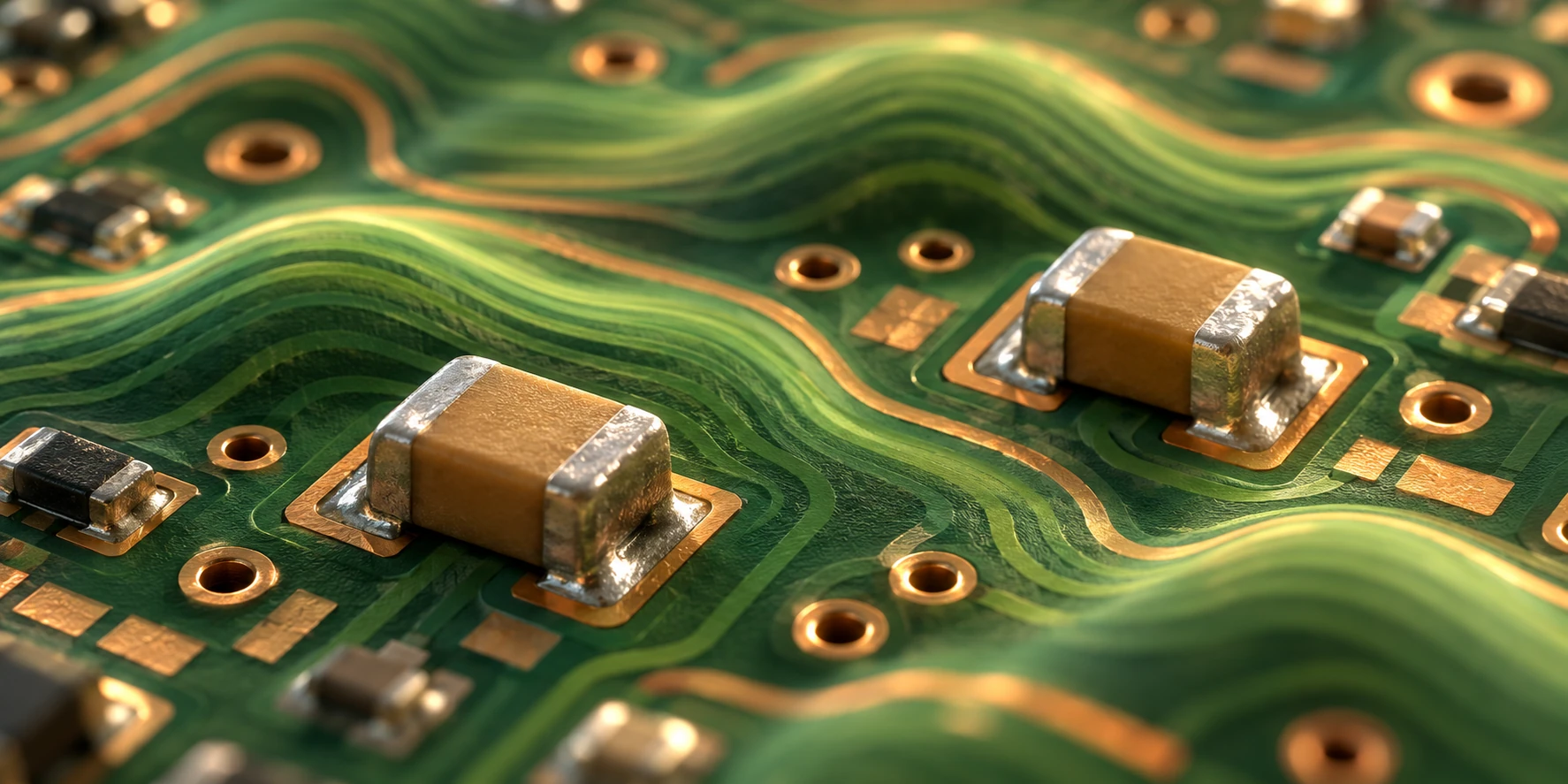
Electronics illustration. Shadow contours are artistic and do not represent measured displacement, sound level or a particular circuit. How a voltage-driven material change can reach a circuit board and become sound—and why a high note does not identify one component.
Read the article →
Conceptual aspen cutaway; root connections are schematic, not a map or reconstruction of Pando. A giant aspen clone separates stem age, genetic identity and the practical need to grow a new generation of trunks.
Read the article →
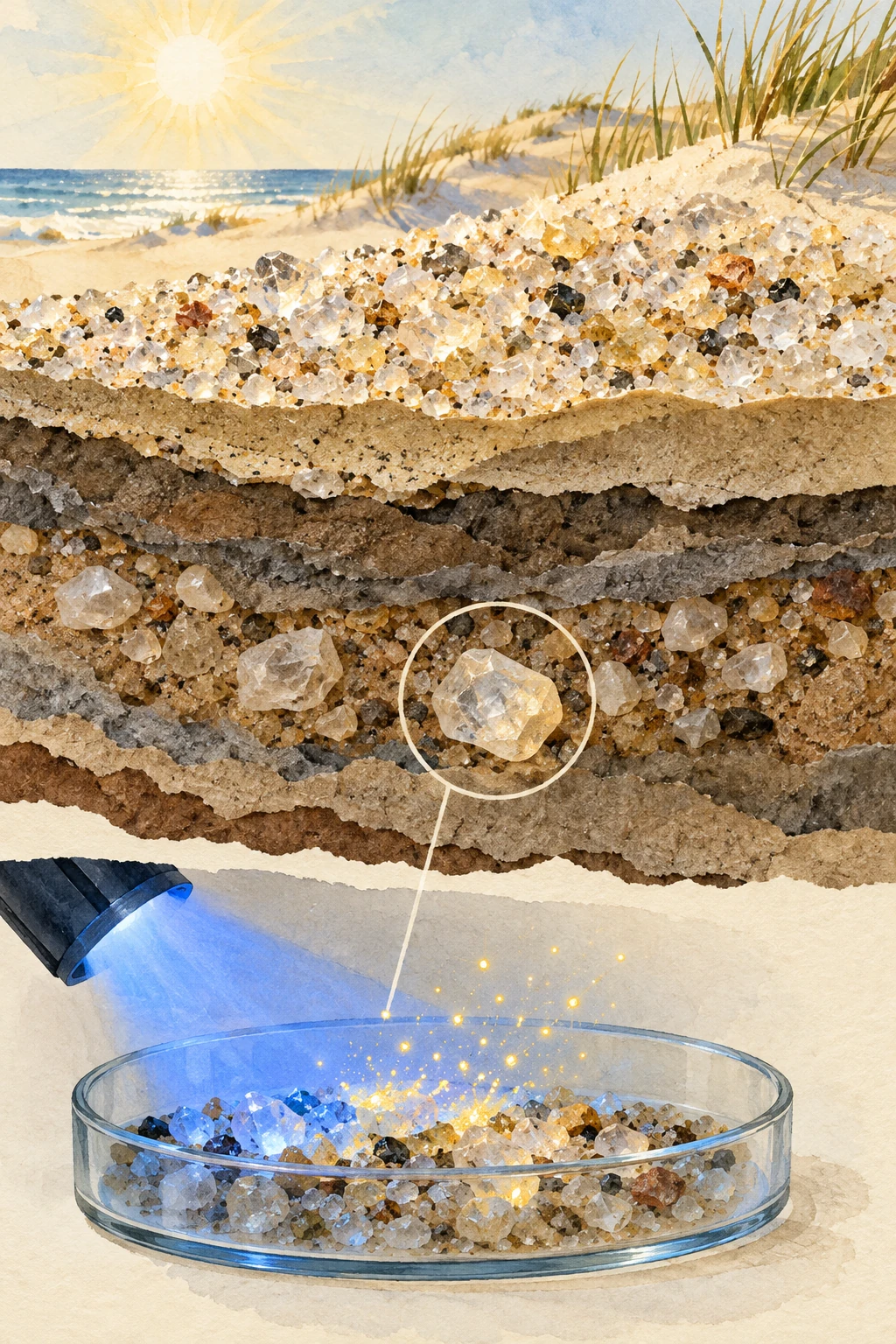
Conceptual illustration of luminescence dating. Gold specks visualize a stored signal; buried grains do not visibly glow this way. Buried mineral grains accumulate a radiation signal. Its reset history and dose rate determine what a luminescence age can mean.
Read the article →
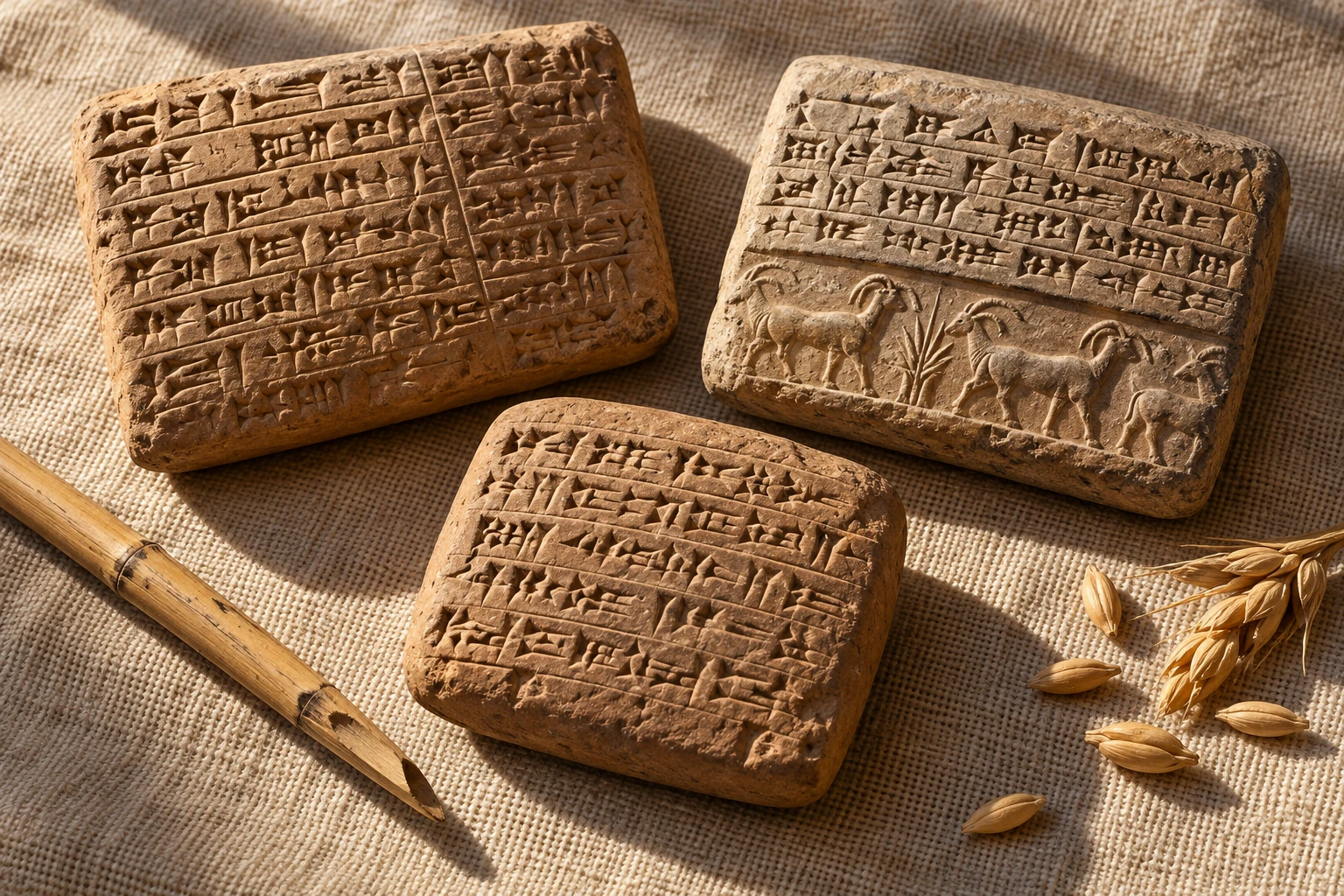
Conceptual tablet study. The marks are not readable transcriptions, and the article’s small sample table is explicitly invented. Food accounts and seal impressions reveal the people and practical relationships behind an imperial center at Persepolis.
Read the article →
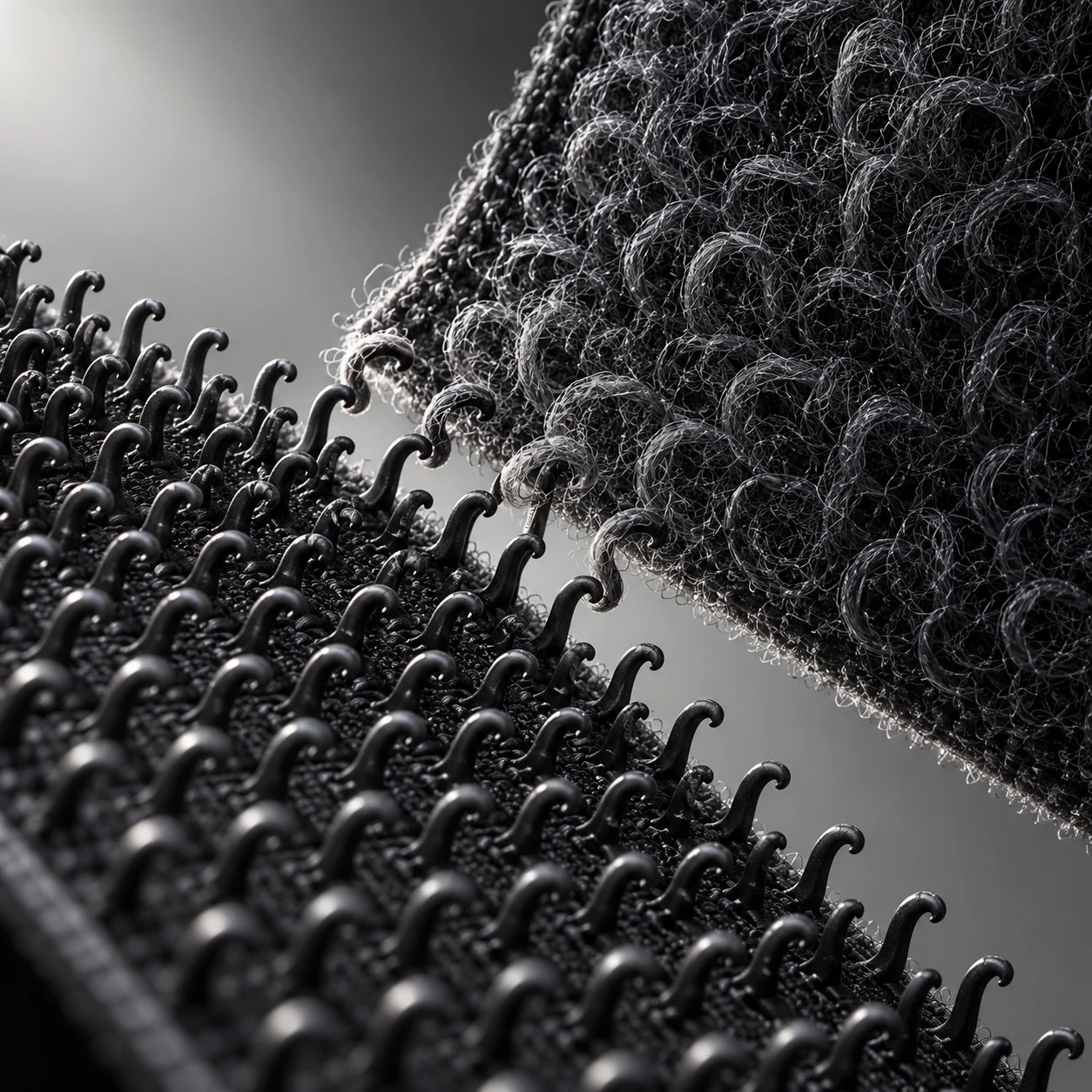
Material study, not microscopy. Hook shape and loop construction are illustrative and do not specify a commercial product. Explore why peeling differs from sliding, how lint blocks engagement, and how to read the strength claims of a familiar closure.
Read the article →
Conceptual maternal-calling scene; not an experimental nest or evidence of an embryo’s response. Cross-fostering and playback reveal prenatal vocal learning, while later work asks how maternal calling affects the result.
Read the article →
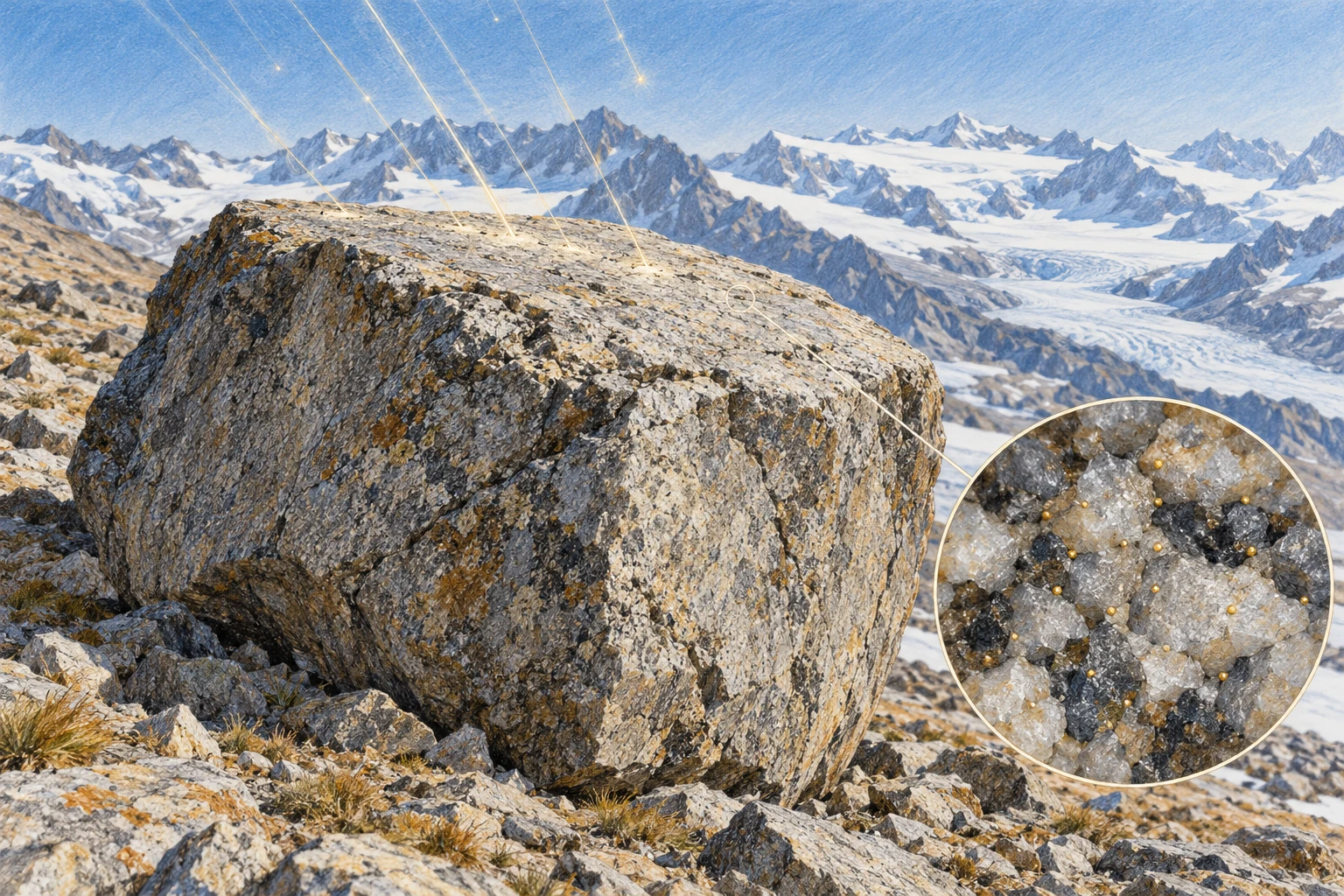
Conceptual artwork of cosmogenic exposure. Particle tracks and isotope dots are visual metaphors, not visible features or measured data. Rare isotopes made by cosmic rays can date a rock surface’s exposure, while inheritance, shielding, and erosion shape the answer.
Read the article →
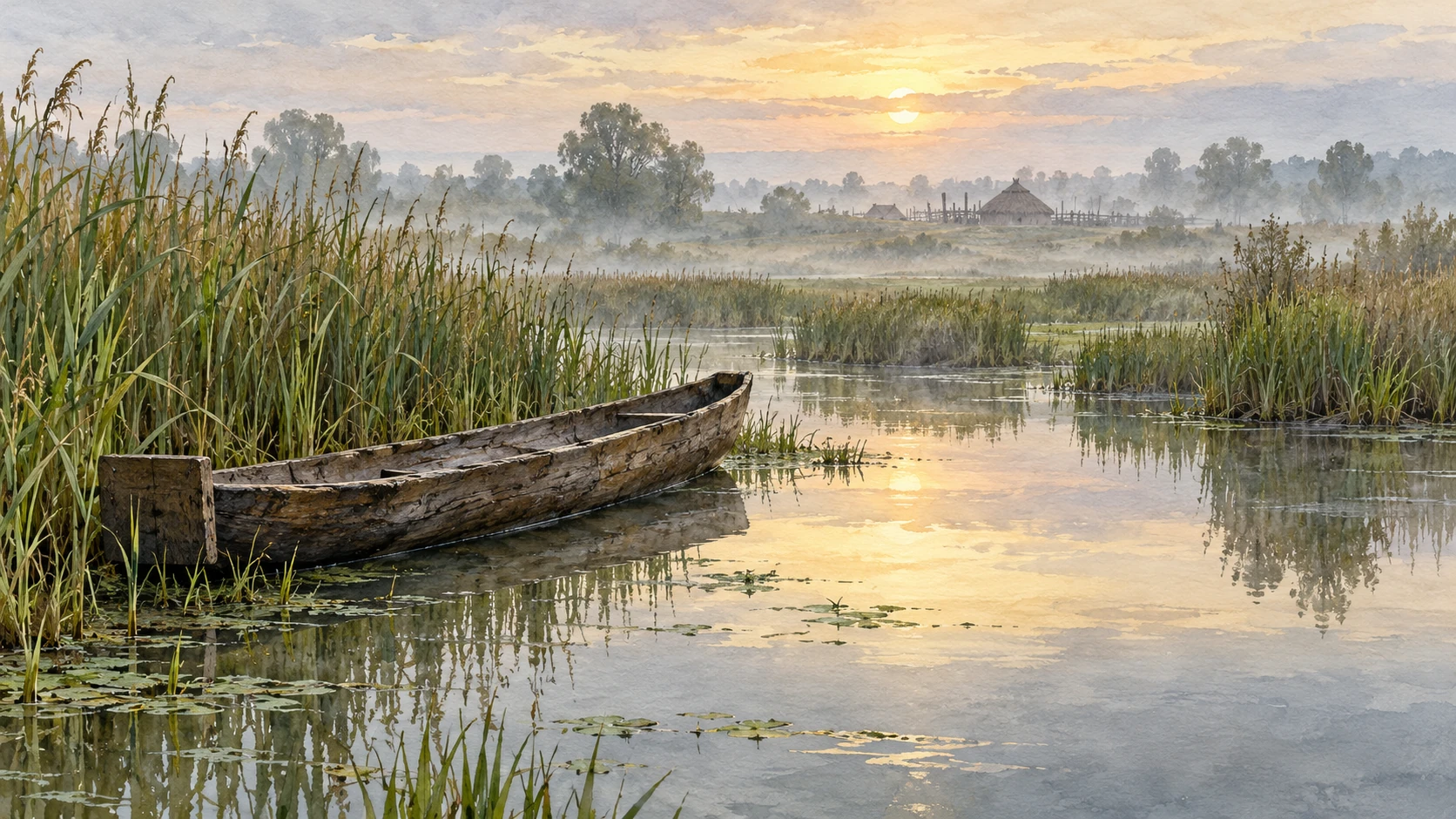
Conceptual Fenland waterway. It is not a measured reconstruction of Must Farm or a claim that all boats shared one date. Nine logboats reveal the waterways around Must Farm across centuries, rather than one fleet captured in a single prehistoric disaster.
Read the article →
Conceptual scene of supervised prey handling; not a specific experimental event or a handling guide. Helpers adjust prey-handling opportunities as pups grow, and experiments separate feeding, cues and accelerated learning.
Read the article →
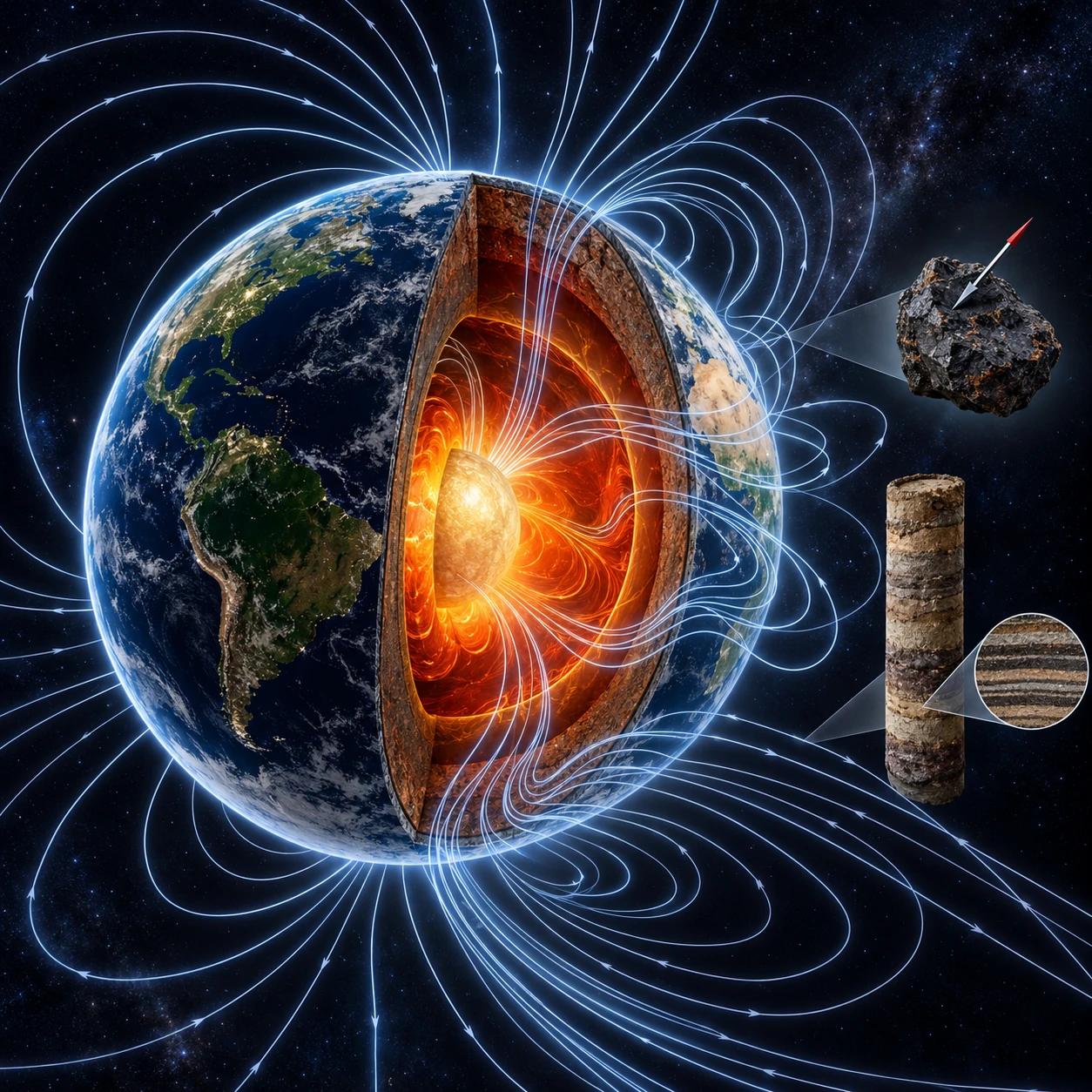
Conceptual paleomagnetic artwork, not a reconstruction of the Laschamp field. Field lines, colors, and sample scales are illustrative. Lava, sediment, and ice preserve a brief geomagnetic detour. Their different recording processes explain both the evidence and its limits.
Read the article →
Conceptual garden study inspired by Suzhou design; it does not depict a documented garden. Explore Suzhou garden views through frames, changing distances, and a simple looking exercise.
Read the article →
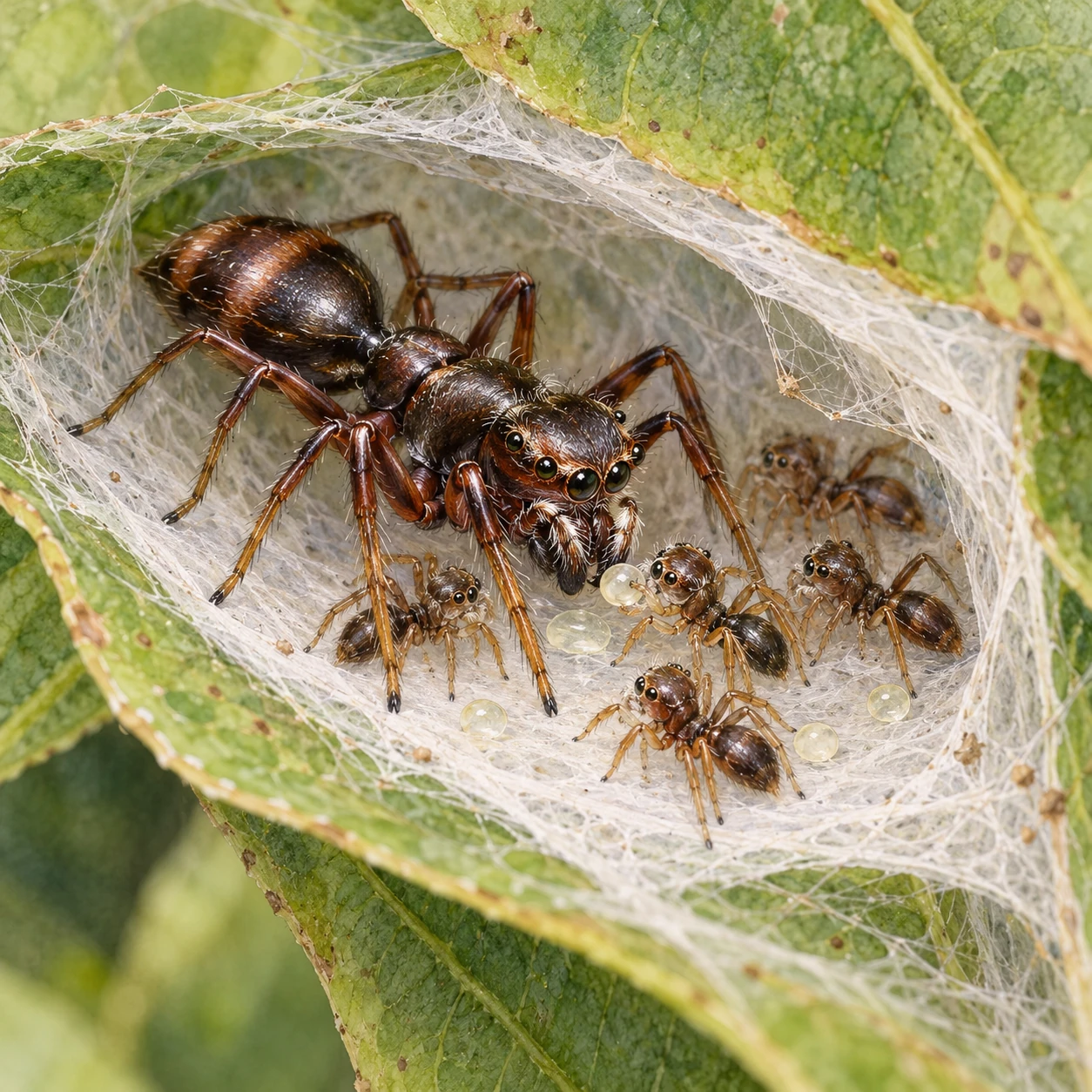
Conceptual family scene; droplets and anatomy are interpretive and do not document a feeding experiment. Toxeus magnus separates the nutritional and social parts of maternal care, while showing why resemblance does not imply a mammary gland.
Read the article →
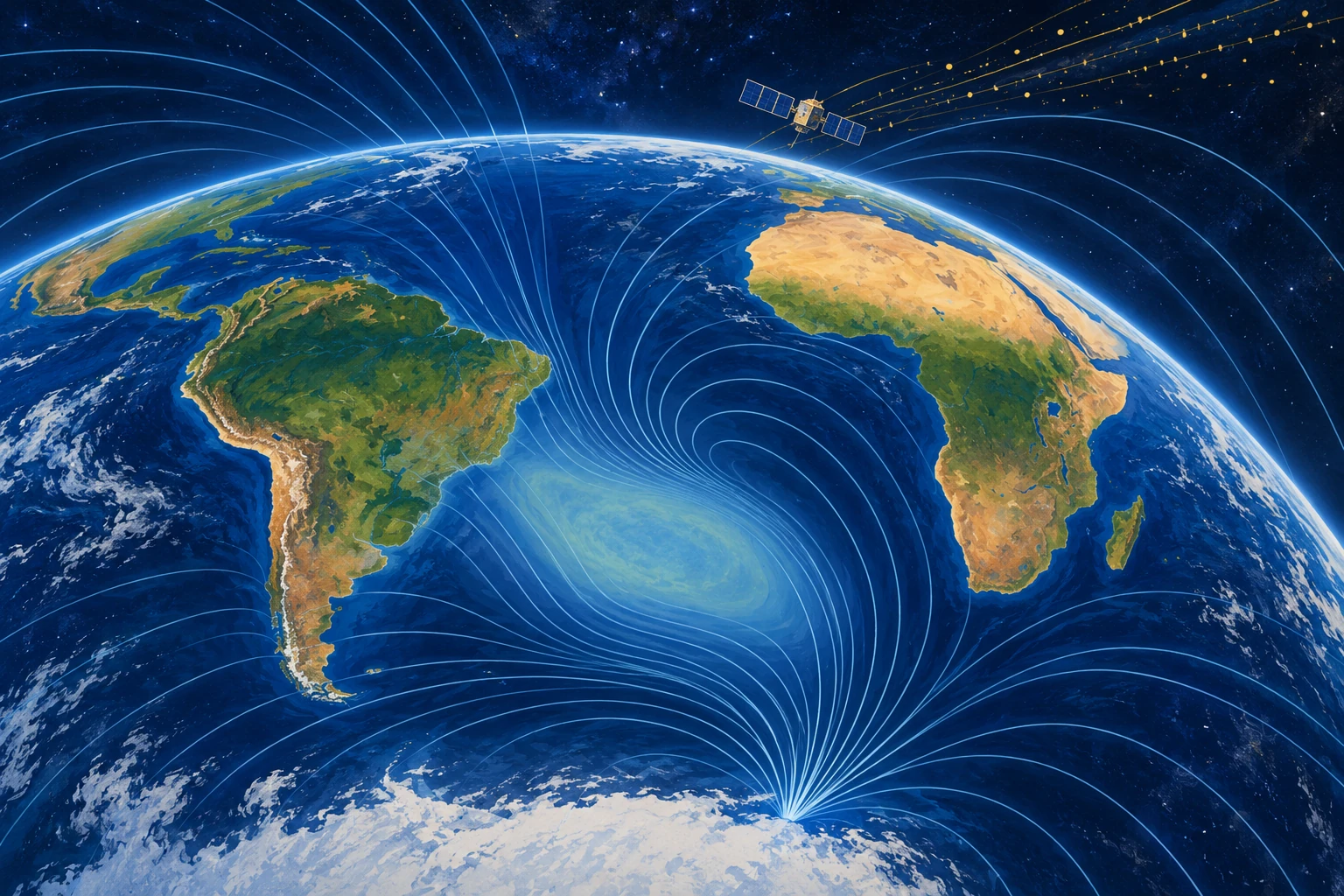
Conceptual illustration of the South Atlantic Anomaly. The patch, field lines, and particles are schematic, not a radiation or magnetic-intensity map. A weak magnetic region affects spacecraft radiation and reveals changes in Earth’s field. Reading its maps requires altitude, dates, and context.
Read the article →
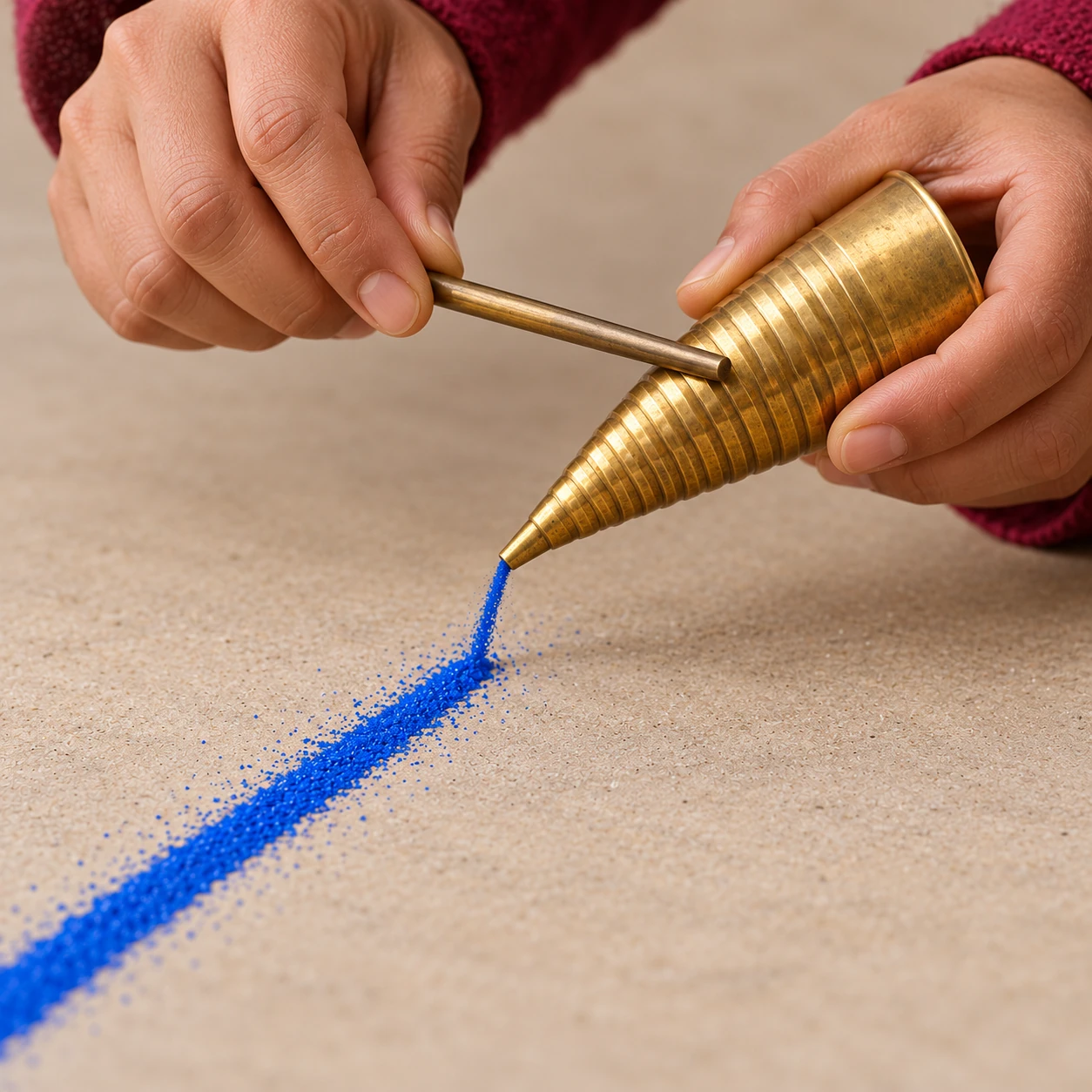
Tool study; the abstract lines are not a sacred mandala or a record of a ceremony. Look closely at the tools, time, and intentional ending of documented public Tibetan sand-mandala events.
Read the article →
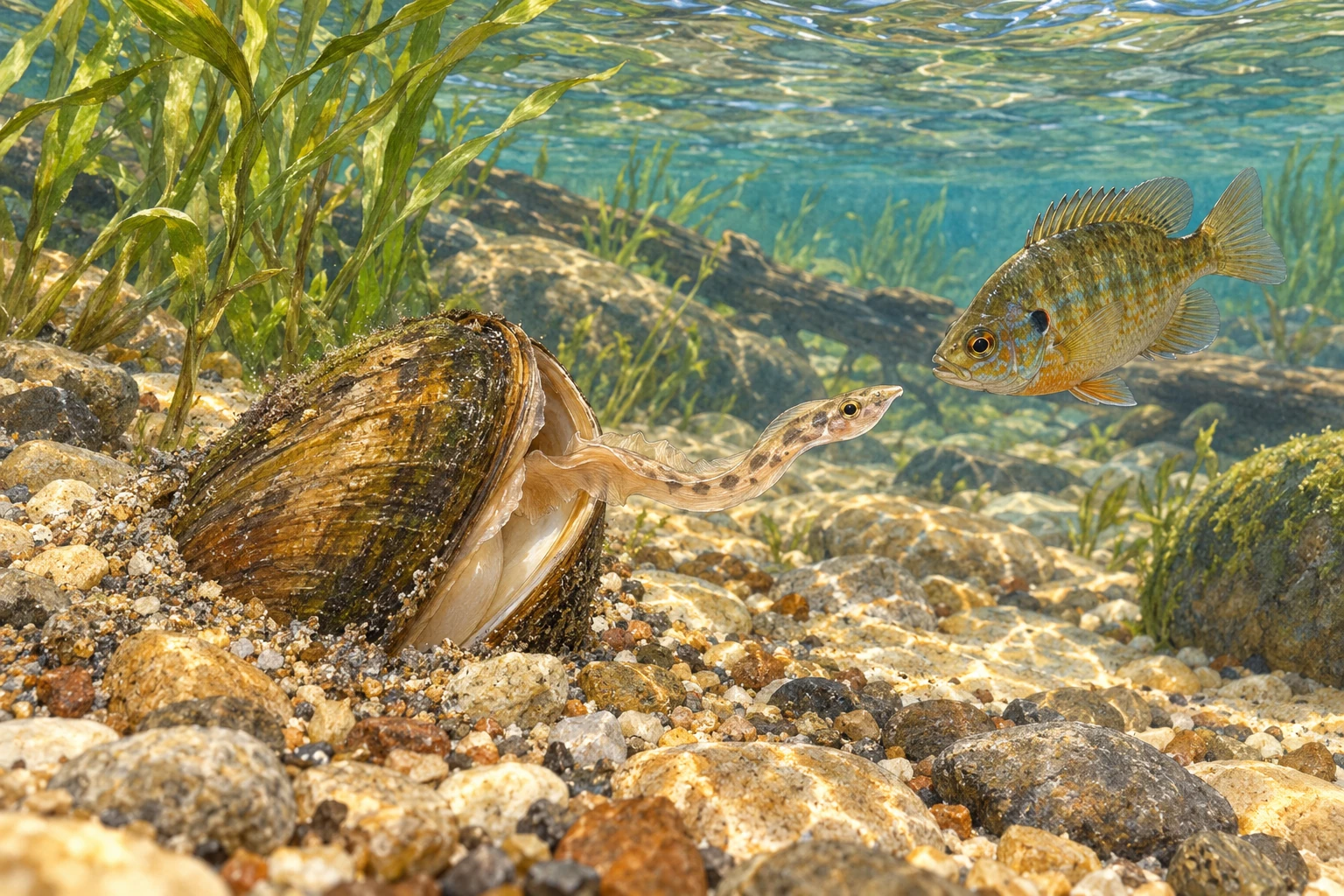
Conceptual host-attraction scene; no mussel or fish species, host compatibility, or larval scale can be inferred from it. Mantle lures are only the visible part of a life cycle that depends on host compatibility, movement and successful transformation.
Read the article →
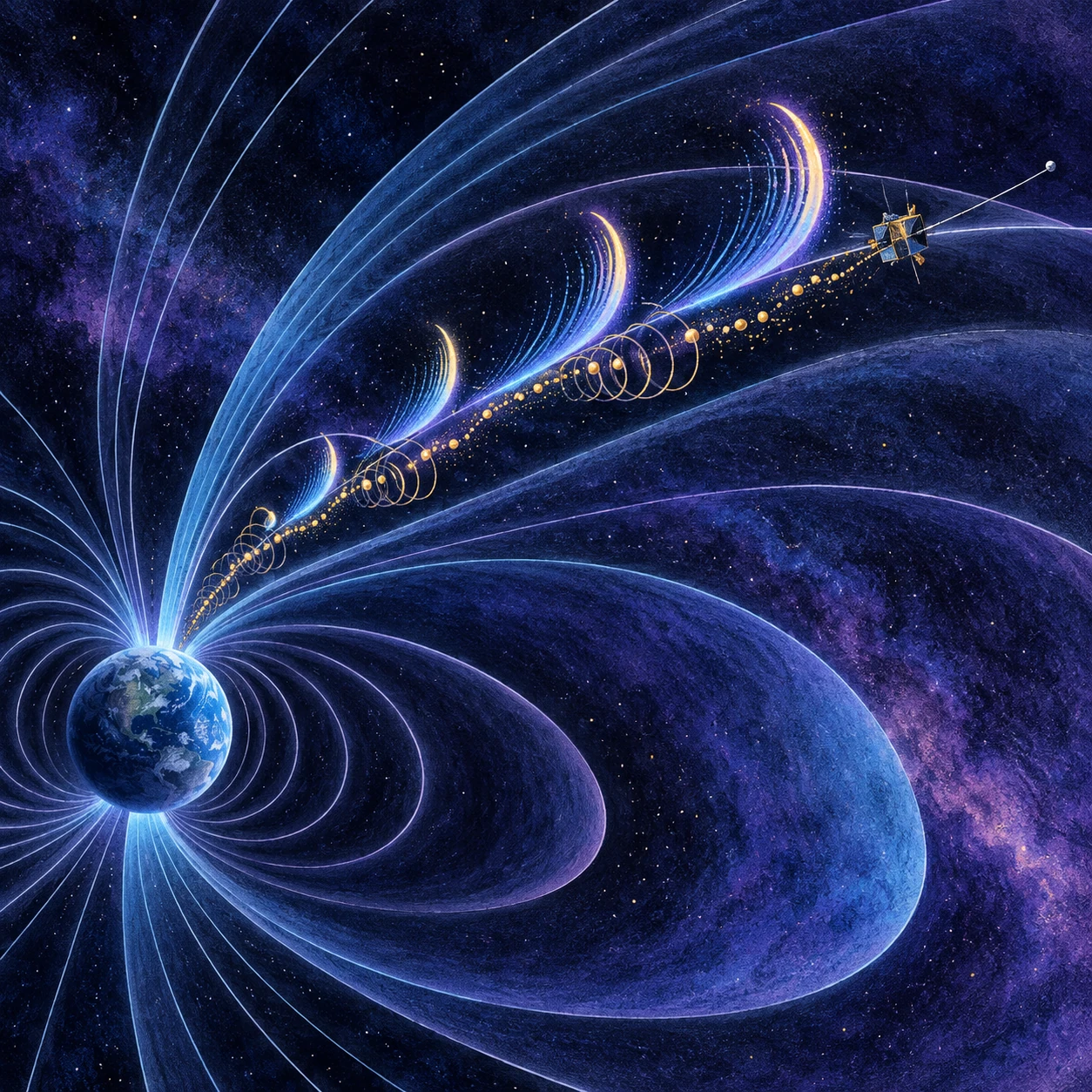
Conceptual plasma-wave artwork. Arcs and dots visualize invisible fields and particles; the article links an actual NASA measurement recording. Birdlike audio reveals electromagnetic plasma waves. Listen alongside a spectrogram to see how chorus exchanges energy with electrons.
Read the article →
Material study with an original abstract pattern; it does not reproduce a documented Bamana motif. Meet a named bogolan artist and explore the plant–iron chemistry and planned spaces inside the cloth.
Read the article →
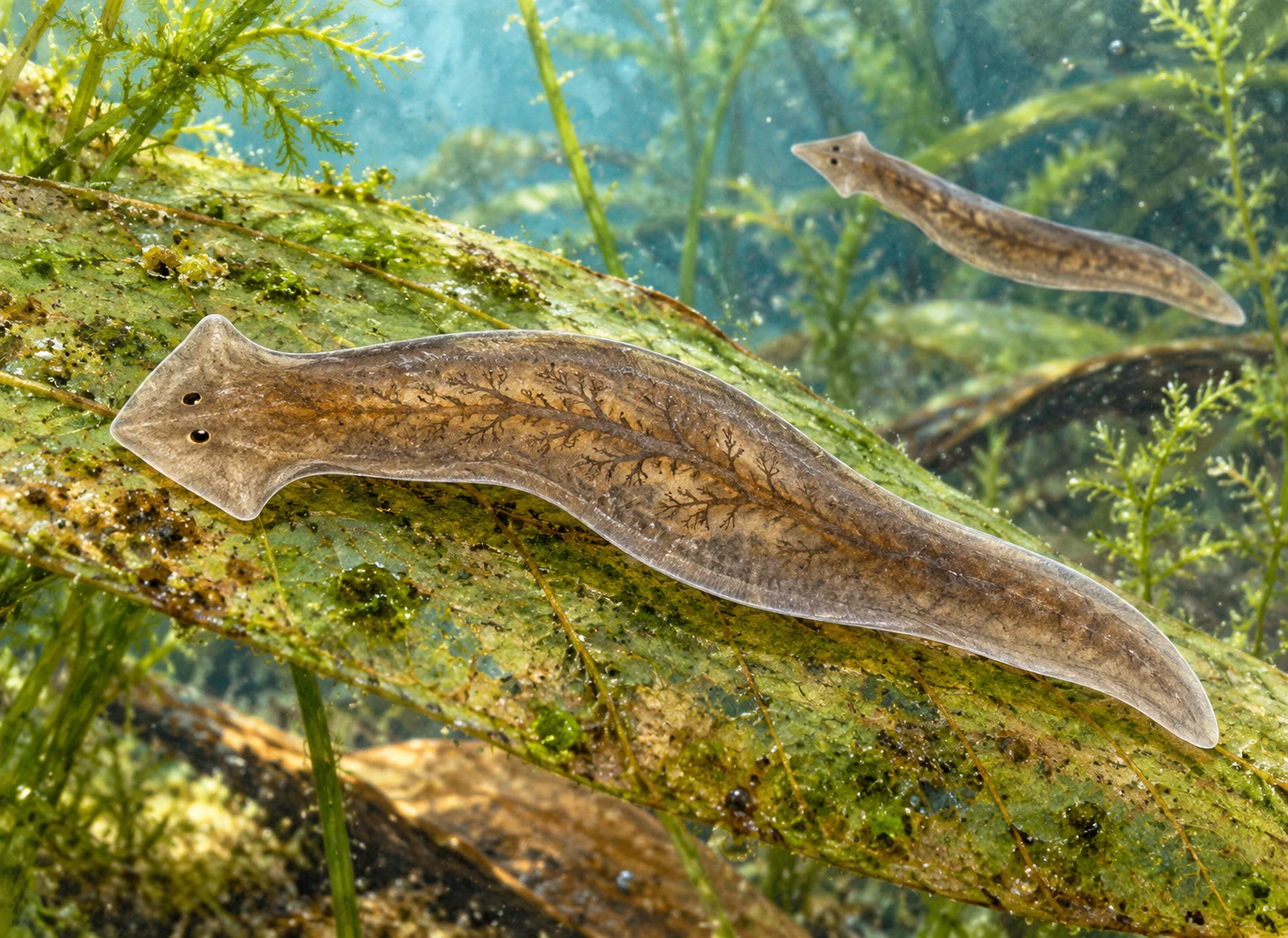
Conceptual natural-history illustration; internal shading is interpretive, not microscopy or gene-expression data. Muscle-borne positional signals help explain why regeneration produces an organized body rather than only more cells.
Read the article →
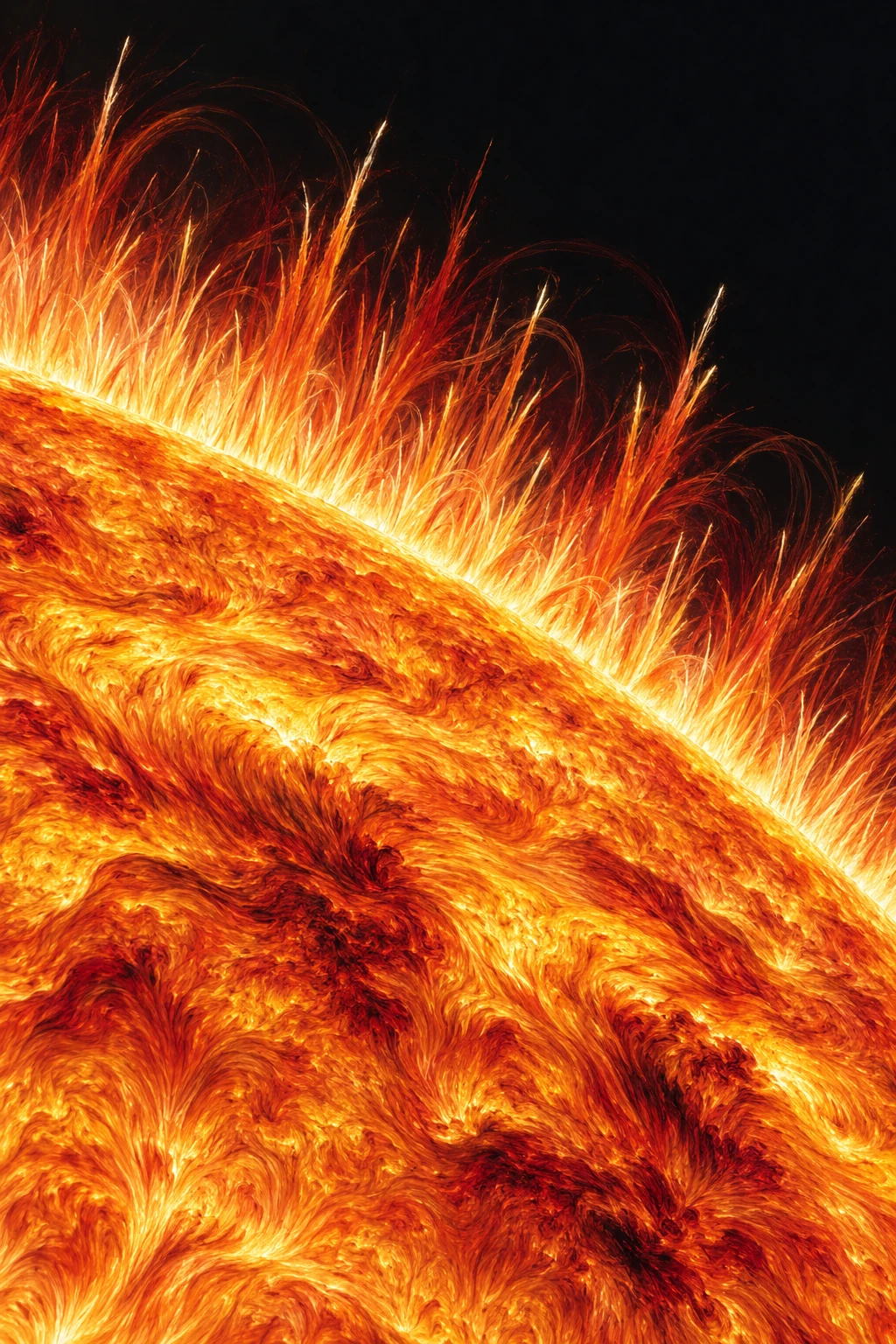
Solar-science illustration, not telescope data. Colors and fine structures are interpretive and do not measure plasma temperature. Brief solar jets carry mass and energy upward. Their role in heating the atmosphere is a quantitative question, not a solved-by-one-video story.
Read the article →
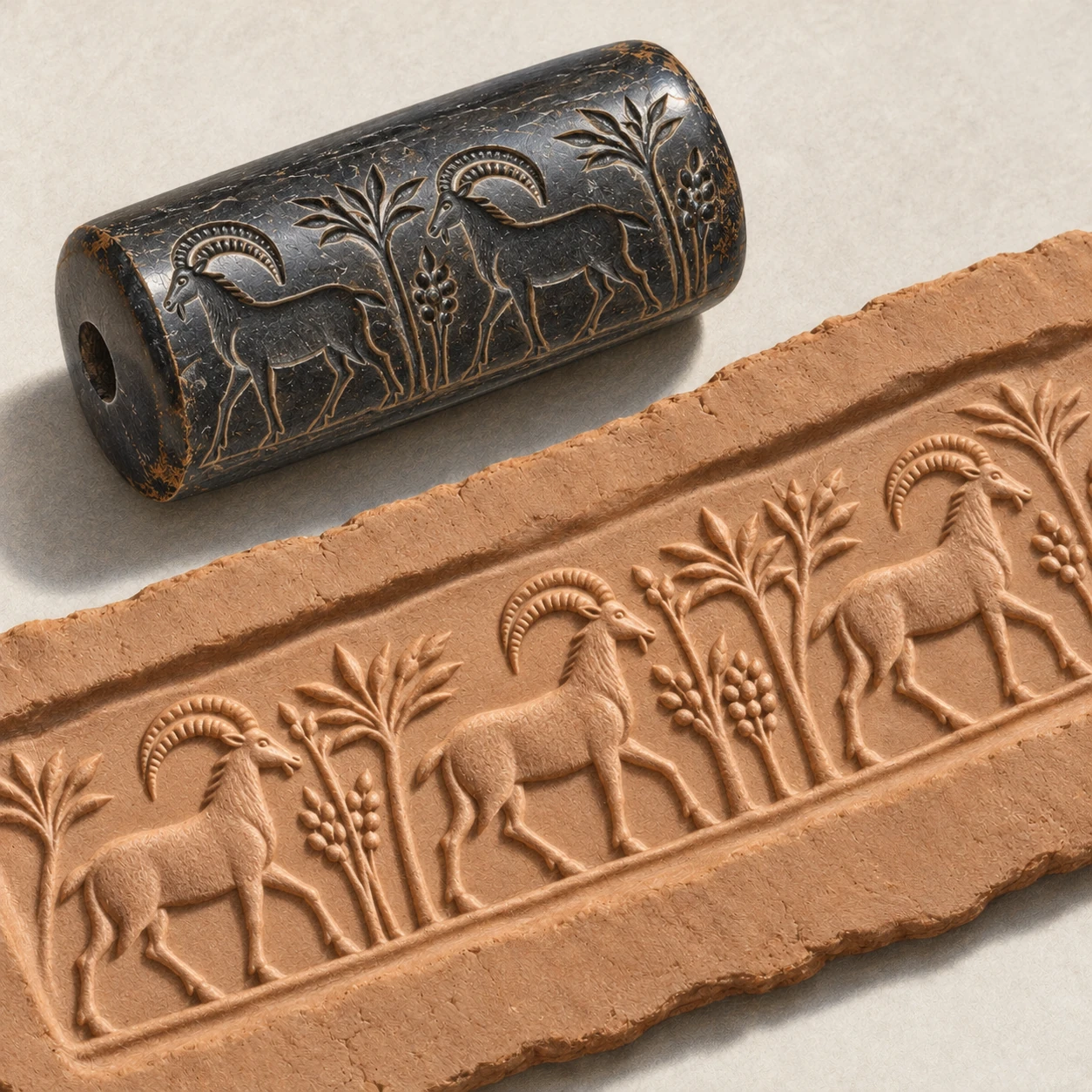
Conceptual seal and modern-style impression; the invented design is not an archaeological artifact. A tiny carved cylinder becomes a continuous picture—and a claim—when rolled into clay.
Read the article →
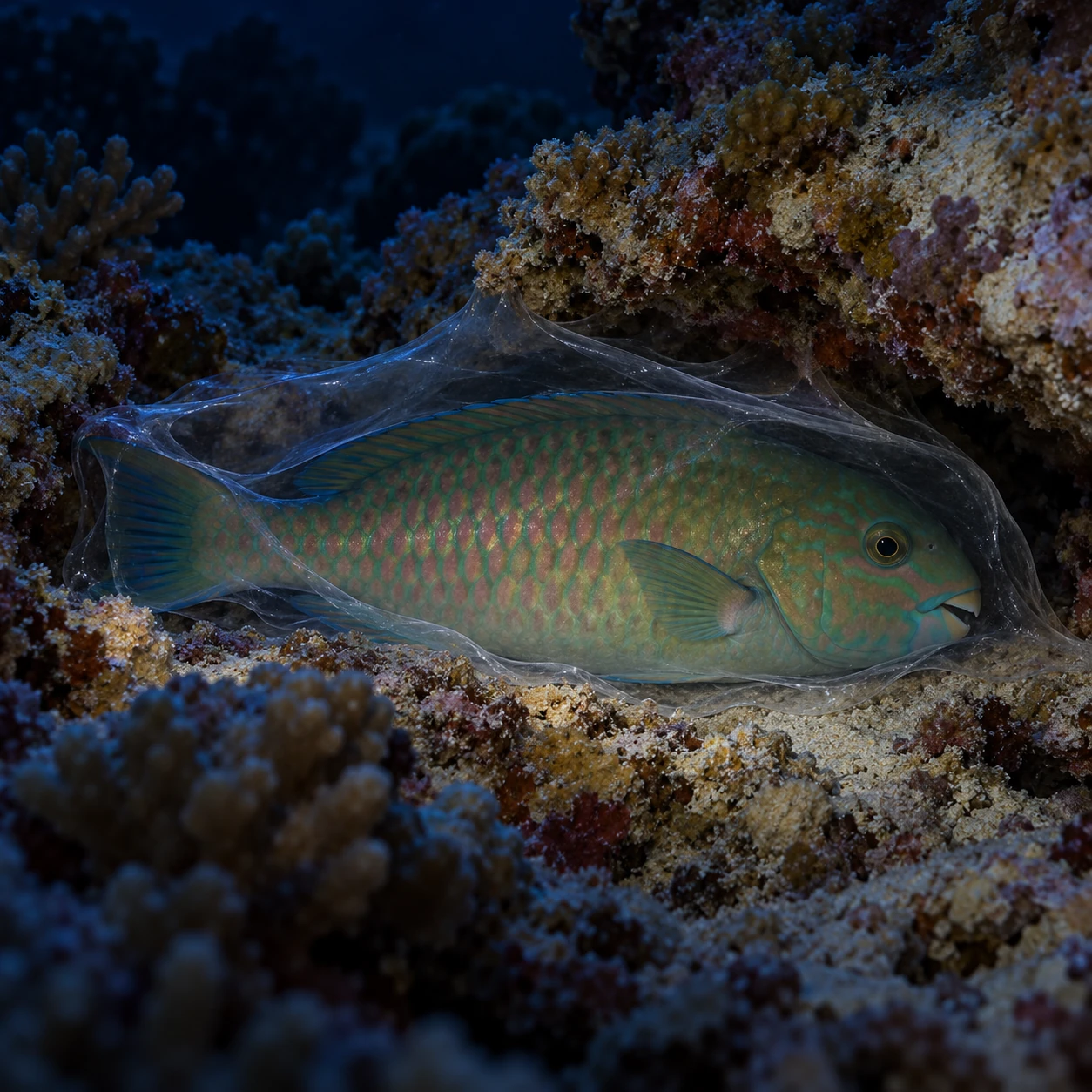
Conceptual resting scene; the envelope is interpretive, not an experimental specimen or a measured barrier. An experiment supports protection against blood-feeding isopods, while other parasites reveal why the claim needs limits.
Read the article →
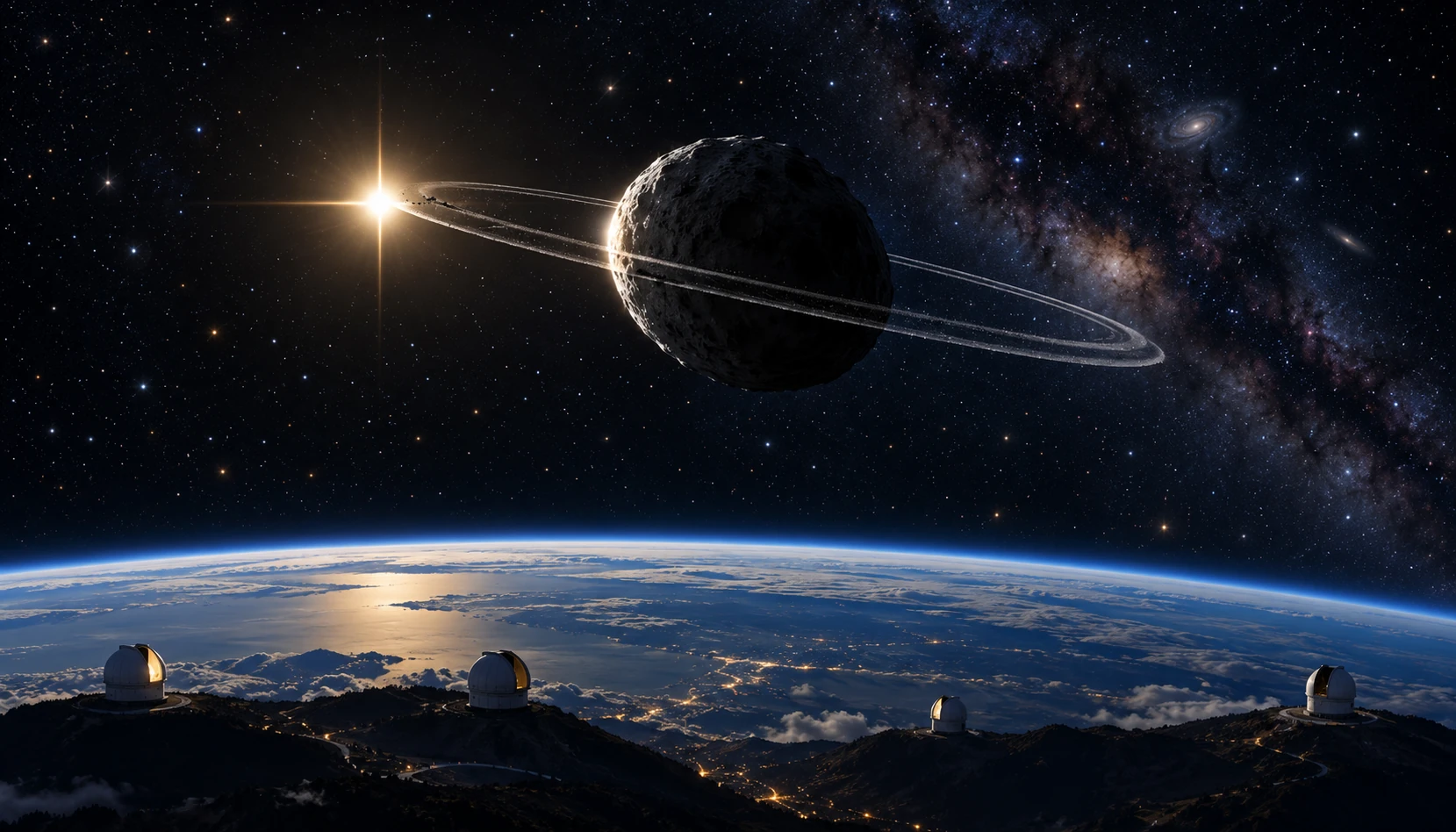
Occultation concept, not a direct image of Chariklo. Object sizes, star separation, and telescope spacing are exaggerated. A star’s brief disappearance can measure a distant body and reveal rings. The timing, chords, and wavelength tell the story.
Read the article →
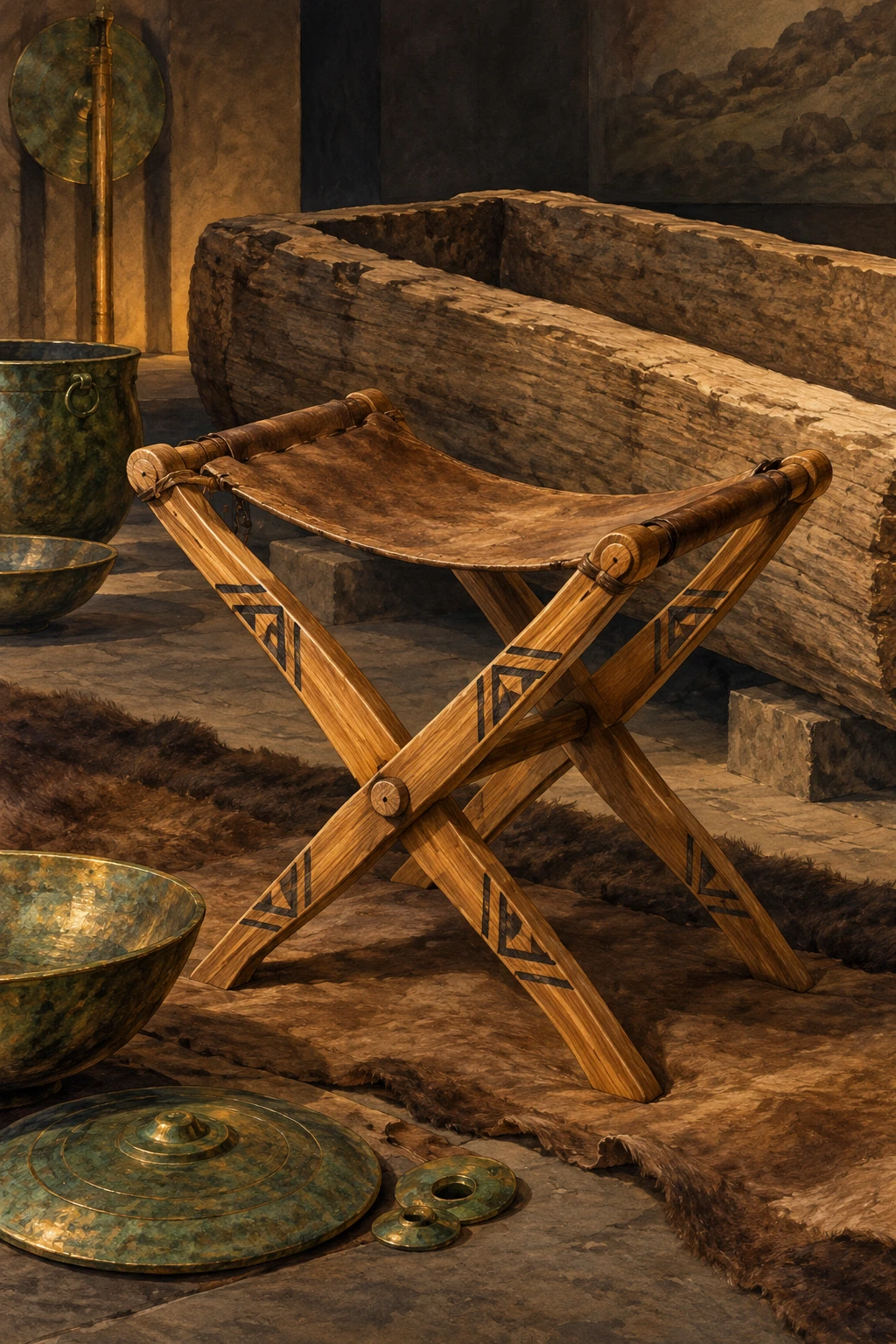
Historical reconstruction; the complete hide seat is conjectural, and no human remains are shown. A rare folding chair links Bronze Age woodworking, portable prestige, and a carefully dated burial.
Read the article →
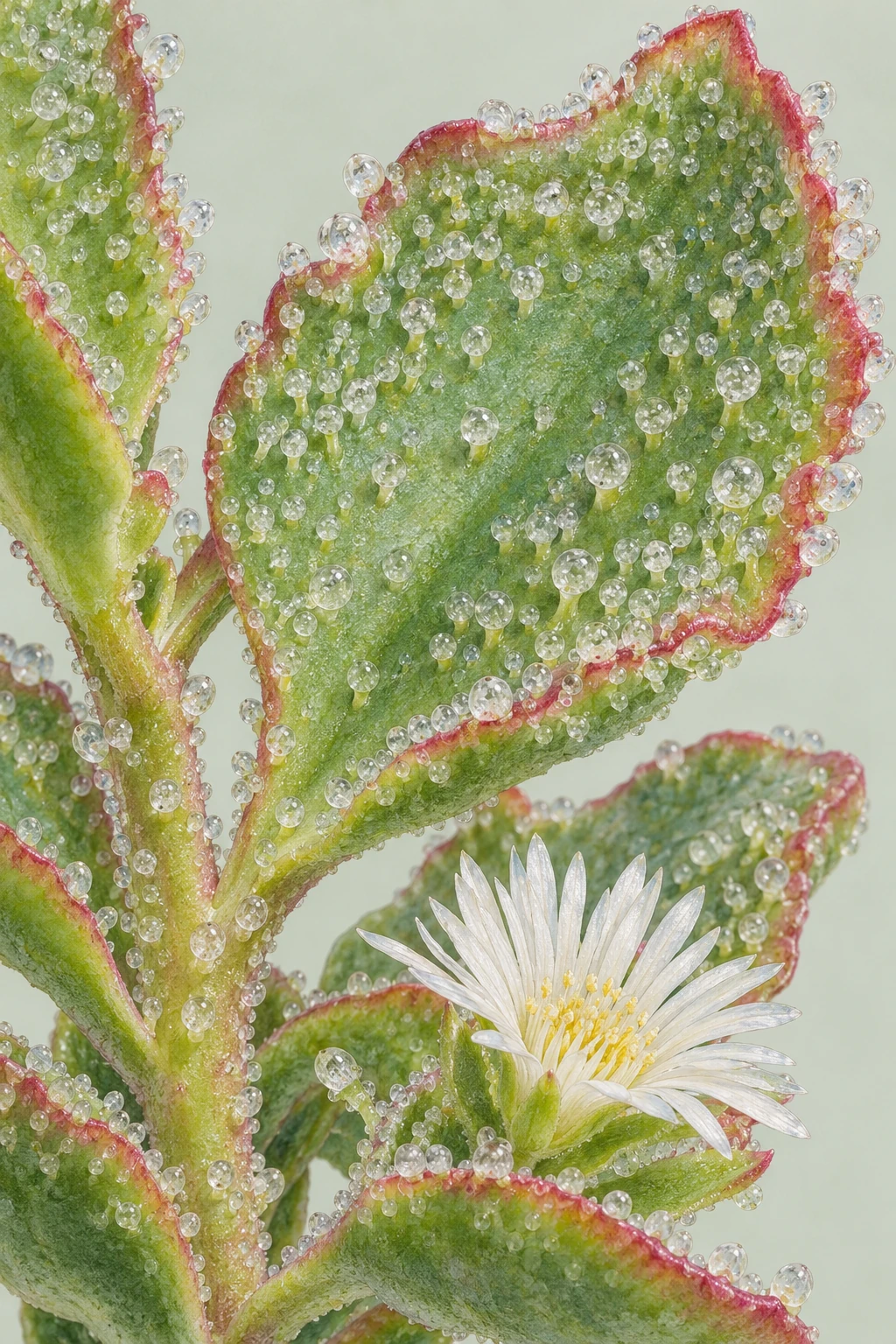
Botanical interpretation of epidermal bladder cells; the sparkling structures are conceptual, not microscopy or salt crystals. Research on iceplant and quinoa separates salt-storage assumptions, herbivore defense, water retention and what experiments actually show.
Read the article →
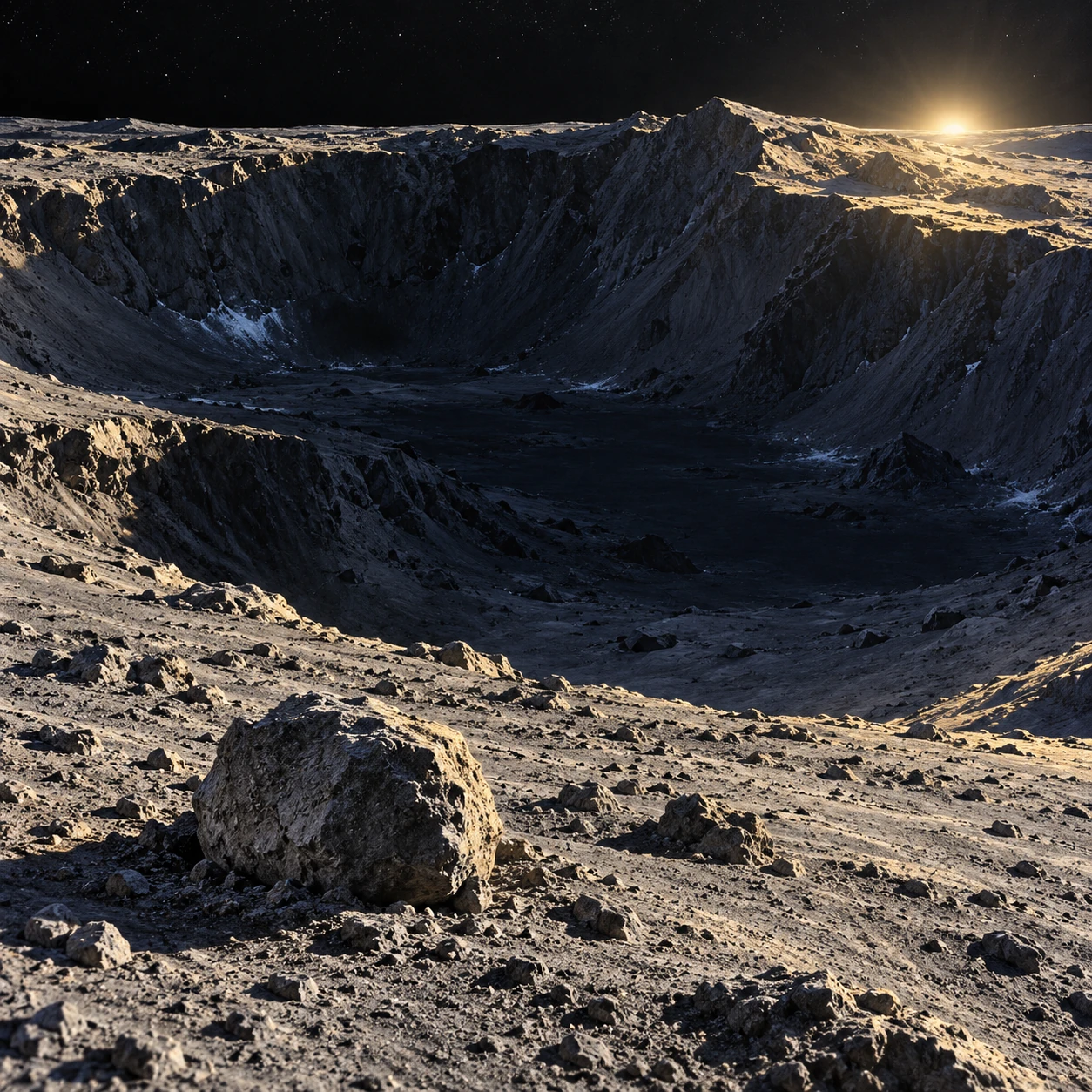
Conceptual lunar terrain, not a spacecraft image. Frost patches illustrate possibilities and do not identify a measured deposit. Lunar shadows differ in temperature and history. Learn why a place suitable for ice is not automatically a measured water deposit.
Read the article →
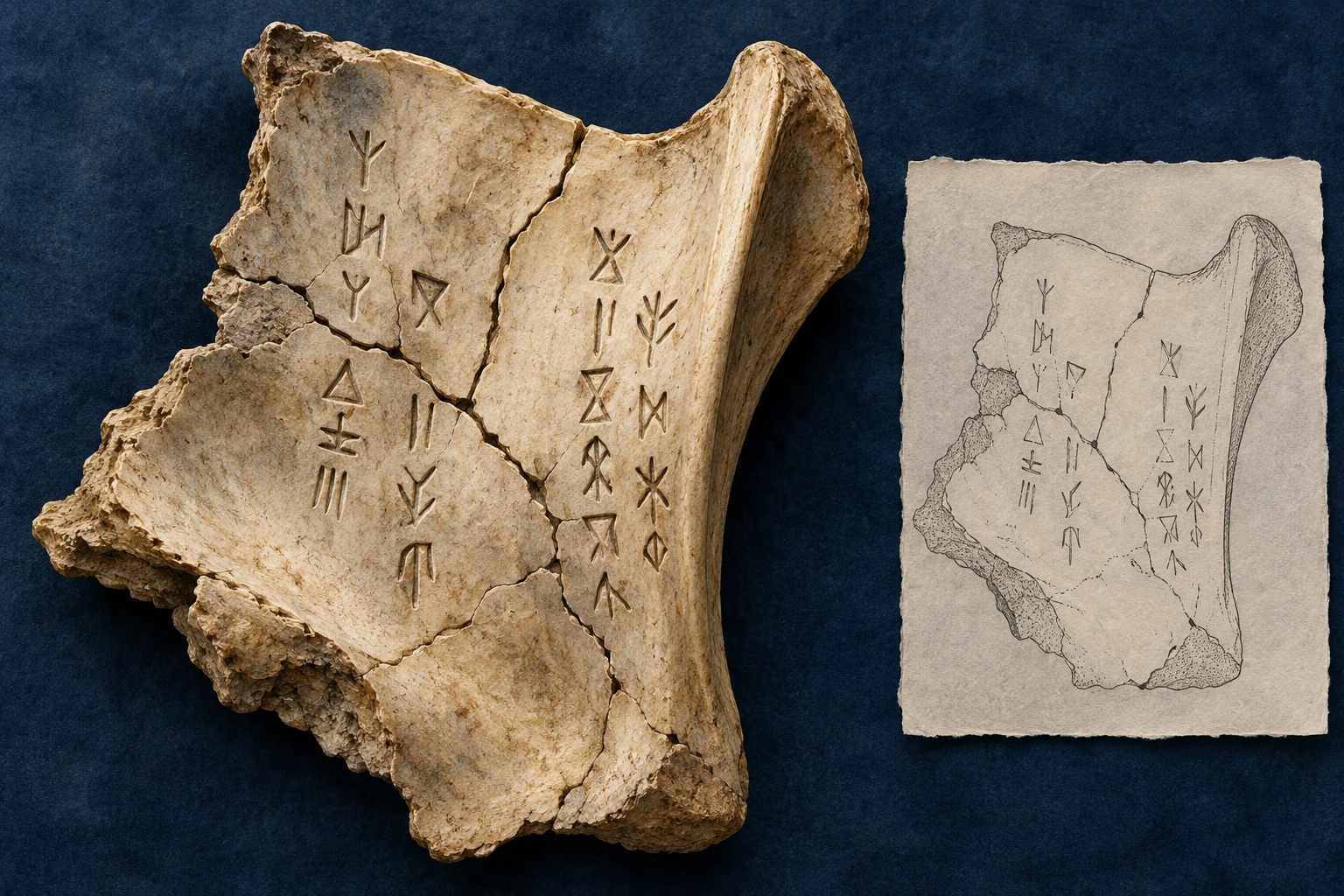
Archaeological concept; the marks are invented and carry no translation. Separate cracks, writing, interpretation, and outcomes when looking at Shang oracle bones.
Read the article →
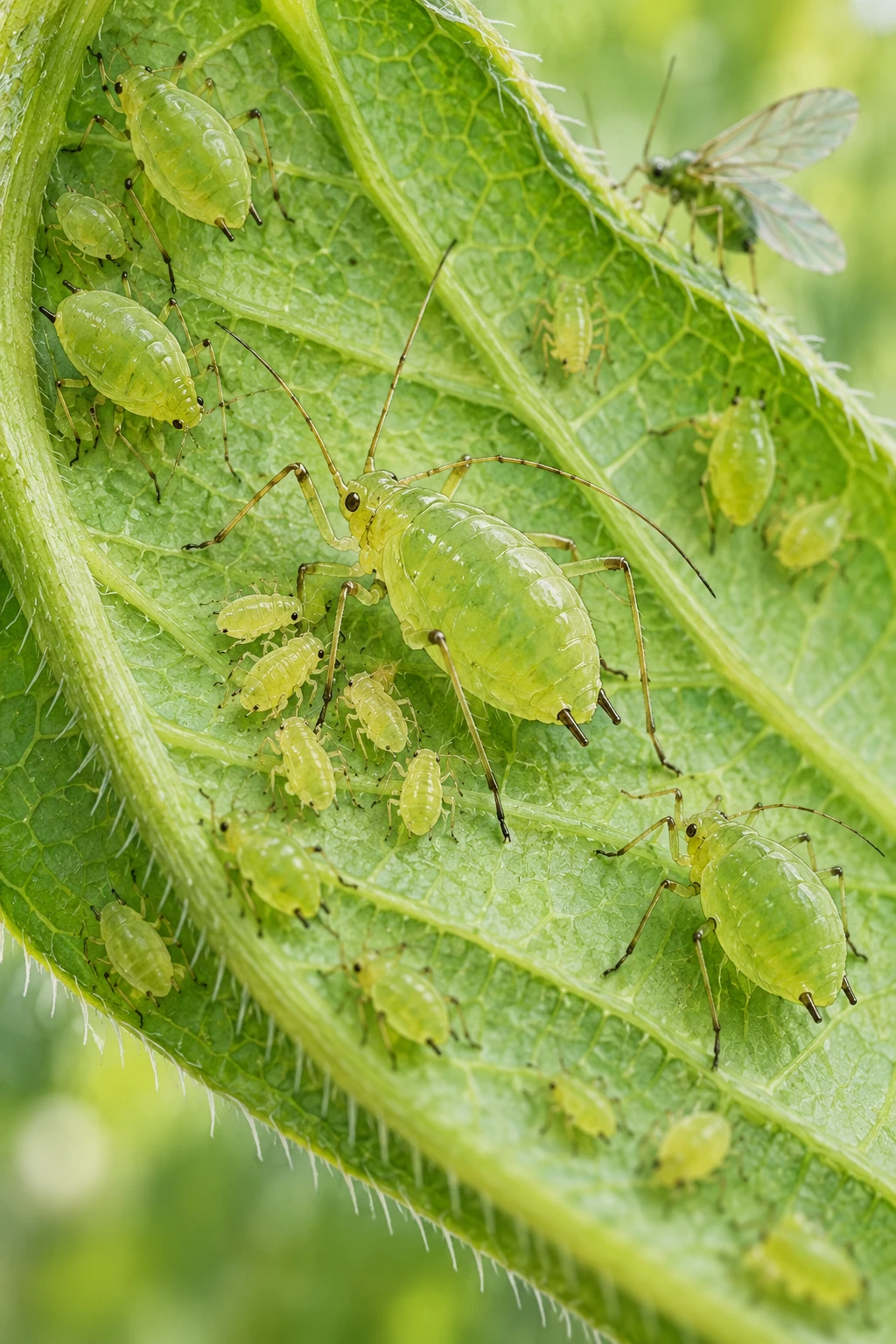
Conceptual aphid colony; visible sizes illustrate overlapping ages, not a census or an anatomical view of embryos. Telescoping generations connect rapid reproduction with maternal environments, developmental switches and careful experimental design.
Read the article →
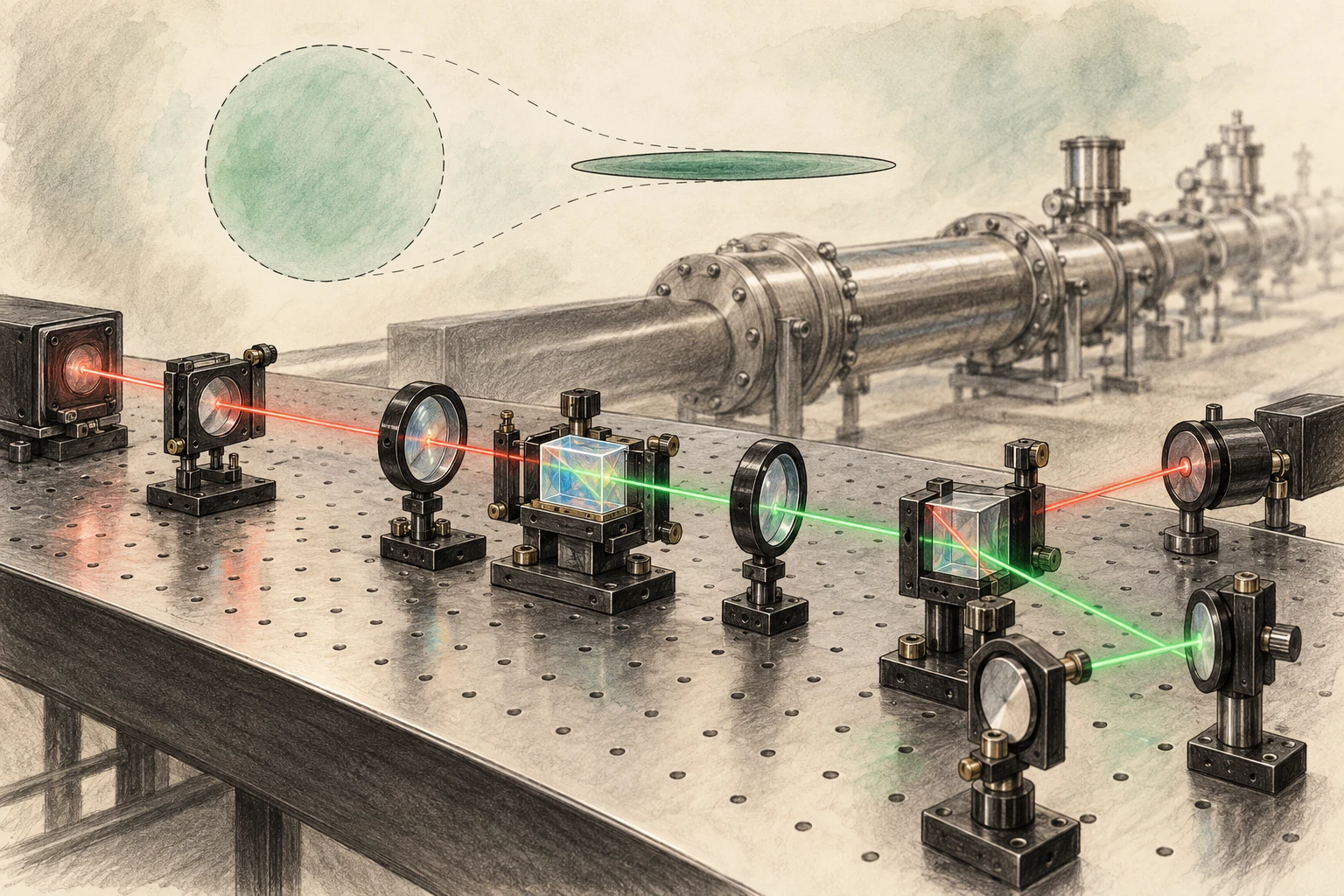
Conceptual quantum-optics artwork, not a photograph or exact LIGO optical layout. The ellipse visualizes uncertainty qualitatively. LIGO improves its cosmic ruler by rotating quantum uncertainty across frequencies, reducing noise while preserving the uncertainty trade.
Read the article →
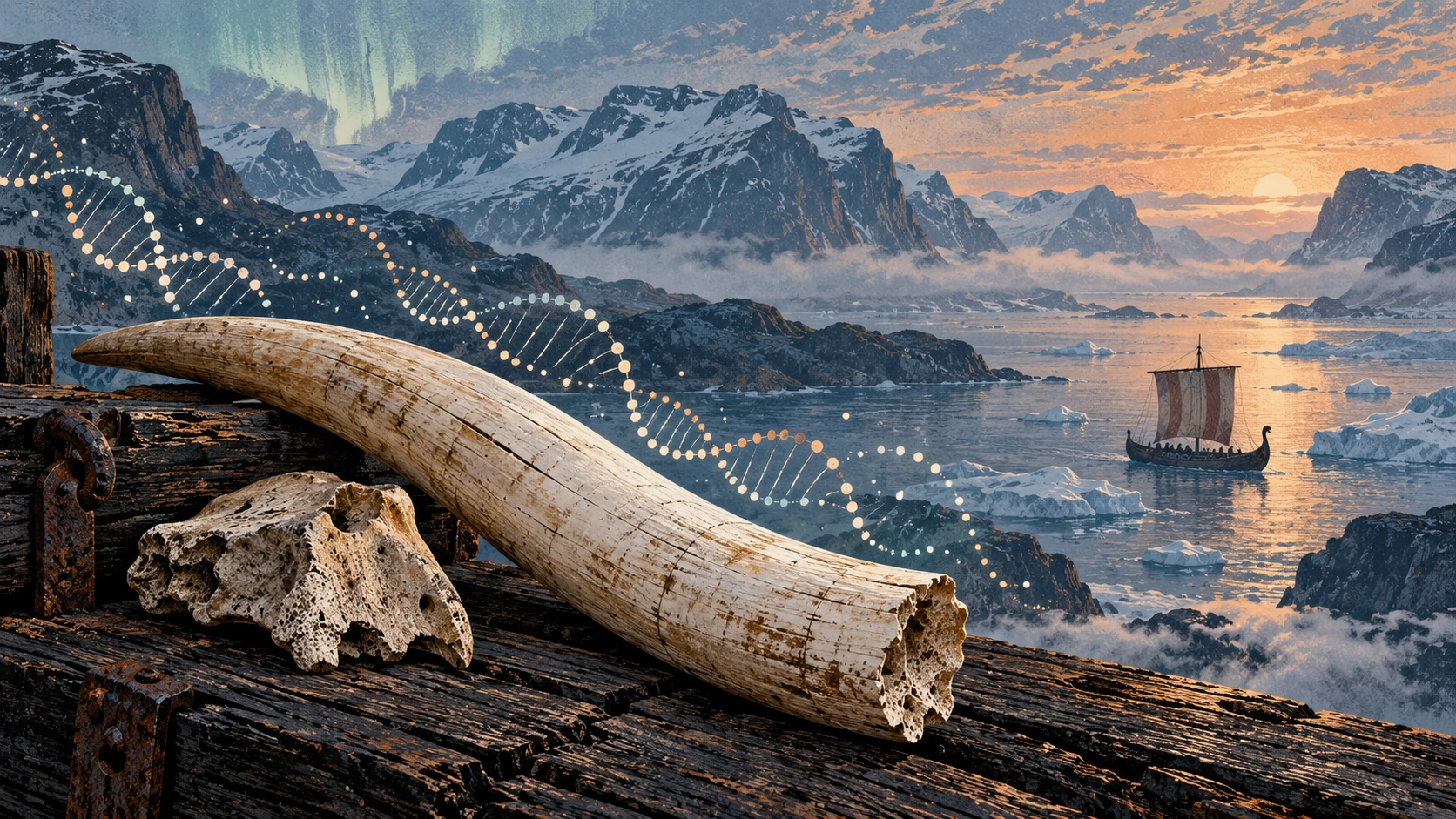
Historical concept; the vessel and molecular motifs do not document a specific route or DNA sequence. Ancient walrus DNA reveals changing ivory supplies while leaving room for the people and routes still unknown.
Read the article →