ANCIENT MEALS · 092 / 100
Moche fruit representation and food landscape · North coast and adjacent valleys of Peru · c. 100–700 CE
Evidence: historically informed adaptation. The historical evidence and modern cooking choices are distinguished below.
A fruit enters the museum
Ancient Peruvian artists modeled plants as well as people and animals. Museo Larco's fruit gallery identifies a Moche bottle representing lúcuma, within a broad first-millennium date range. The object demonstrates that the fruit mattered enough to depict. It cannot reveal whether the vessel ever held a lúcuma pudding, and its museum date is wider than this article's approximately 700 CE cutoff.
The El Brujo archaeological complex's discussion of lúcuma considers plant remains and the use of the tree's wood in a Moche context. Fruit, tree, material, and image are different lines of evidence. They enrich the historical setting without adding up automatically to a preserved recipe.
A sweet preparation without dairy
Lúcuma has a dense, yellow-orange flesh that is not always juicy like a peach. This modern adaptation mixes commercially sold frozen fruit pulp into fully cooked maize meal. Water provides the liquid; there is no cow's milk, cream, or egg custard projected into precontact Peru. The soft dessert format is our culinary choice, not a named Moche dish.
Maize supplies body and makes the fruit preparation a more substantial spoonable food. The method is deliberately short: cook meal thoroughly, fold in fruit, then heat gently until the mixture is hot throughout. The proportions depend on modern products. Frozen purée and fine meal cannot recreate the labor, varieties, or storage of an ancient household, and are identified as conveniences.
Food objects need careful reading
A sculptural fruit vessel is a representation. Its symbolism and function may reach beyond a kitchen inventory. Calling every plant-shaped pot a recipe illustration would ignore that complexity. At the same time, visual evidence helps a food collection escape a narrow list of only grains and meat; an ancient table also included valued fruits.
Serve the cream warm in four small bowls, or chill promptly for a modern cold presentation. No claim is made that refrigeration belongs to the ancient method. Its historical anchor is lúcuma within the Moche plant world, while the maize-fruit combination, proportions, cooked-cream format, and optional cold service are explicitly adapted. A museum object can inspire cooking without being asked to certify the exact contents of a modern bowl.
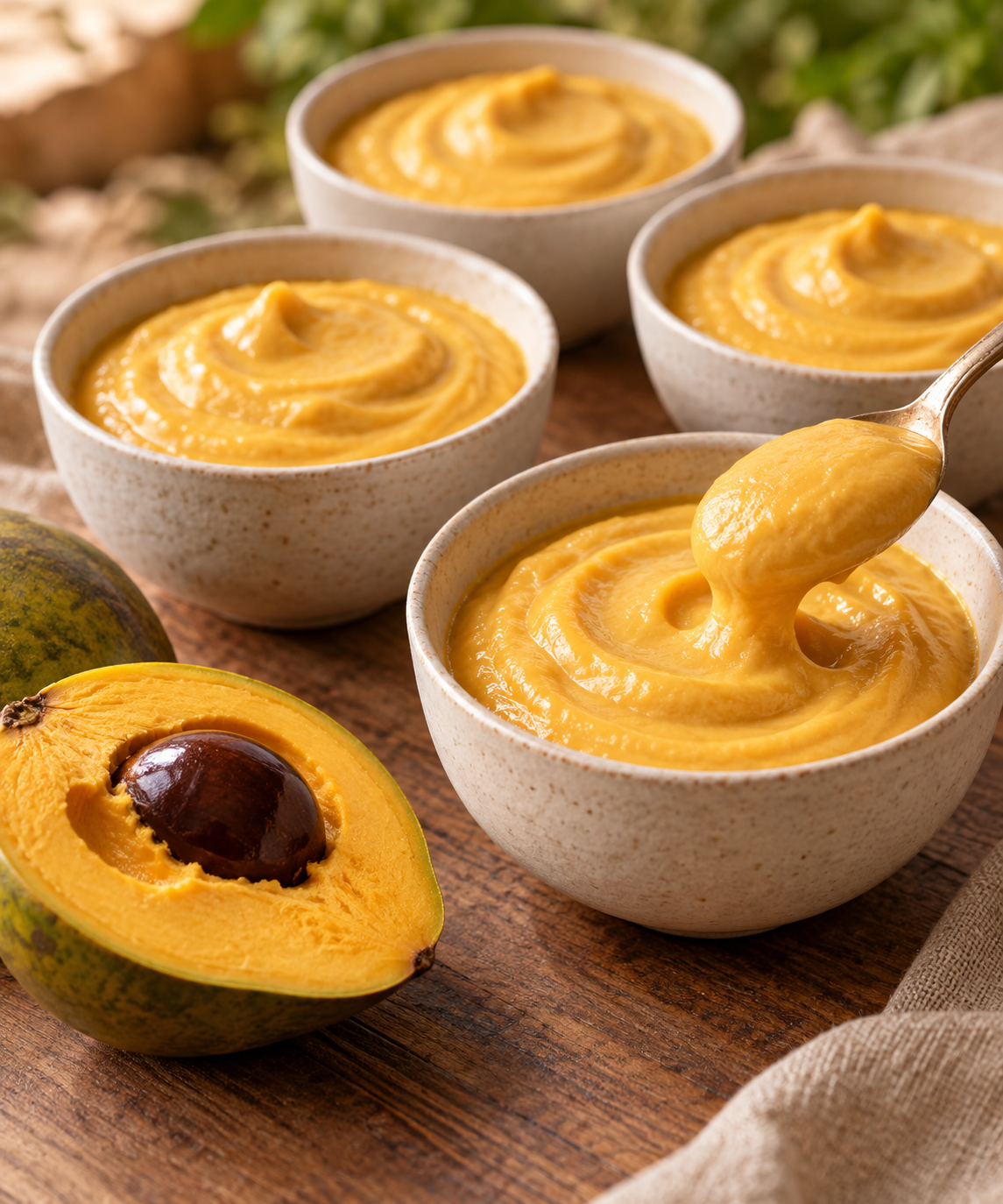
Lúcuma-and-maize spoon cream
Serves 4 · Preparation 10 min · Cooking 20 min · Optional 2 hours refrigeration
A modern adaptation for home cooking. Times are approximate.
Ingredients
- 300 g commercial frozen plain lúcuma pulp, thawed in refrigerator
- 70 g fine plain maize meal
- 450 ml water
- 1 g salt, optional
Method
- Whisk maize meal with 150 ml cold water. Bring remaining water to a simmer.
- Add slurry gradually, whisking; simmer gently 12–15 minutes, stirring often, until meal is fully cooked. Add a little water if needed.
- Stir in lúcuma pulp and optional salt. Heat gently 3–5 minutes until hot throughout.
- Serve warm in four small bowls, or cool in shallow containers and refrigerate promptly for cold service.
Substitutions and adjustments
- If frozen pulp is unavailable, use 50 g commercial lúcuma powder plus 250 ml water, adjusting texture; flavor differs.
- Do not substitute dairy custard and call it the same ancient adaptation.
Historical choices: Lúcuma is evidenced in Moche representation and plant context; the maize-fruit spoon cream is a modern culinary adaptation.
Kitchen note: Use commercial edible fruit products, cook maize meal fully, and refrigerate within 2 hours if serving cold.
Sources and further reading
- Museo Larco, Fruits in Ancient Peru. Moche lúcuma bottle, broadly dated 1–800 CE; representation does not establish a pudding.
- El Brujo, Andean foods: lúcuma. Archaeological-complex discussion of lúcuma remains and Moche tree use; no complete recipe.