ANCIENT MEALS · 090 / 100
Formative-period Chiripa food landscape · Taraco Peninsula, Lake Titicaca Basin, Bolivia · c. 1500–100 BCE
Evidence: archaeological reconstruction. The historical evidence and modern cooking choices are distinguished below.
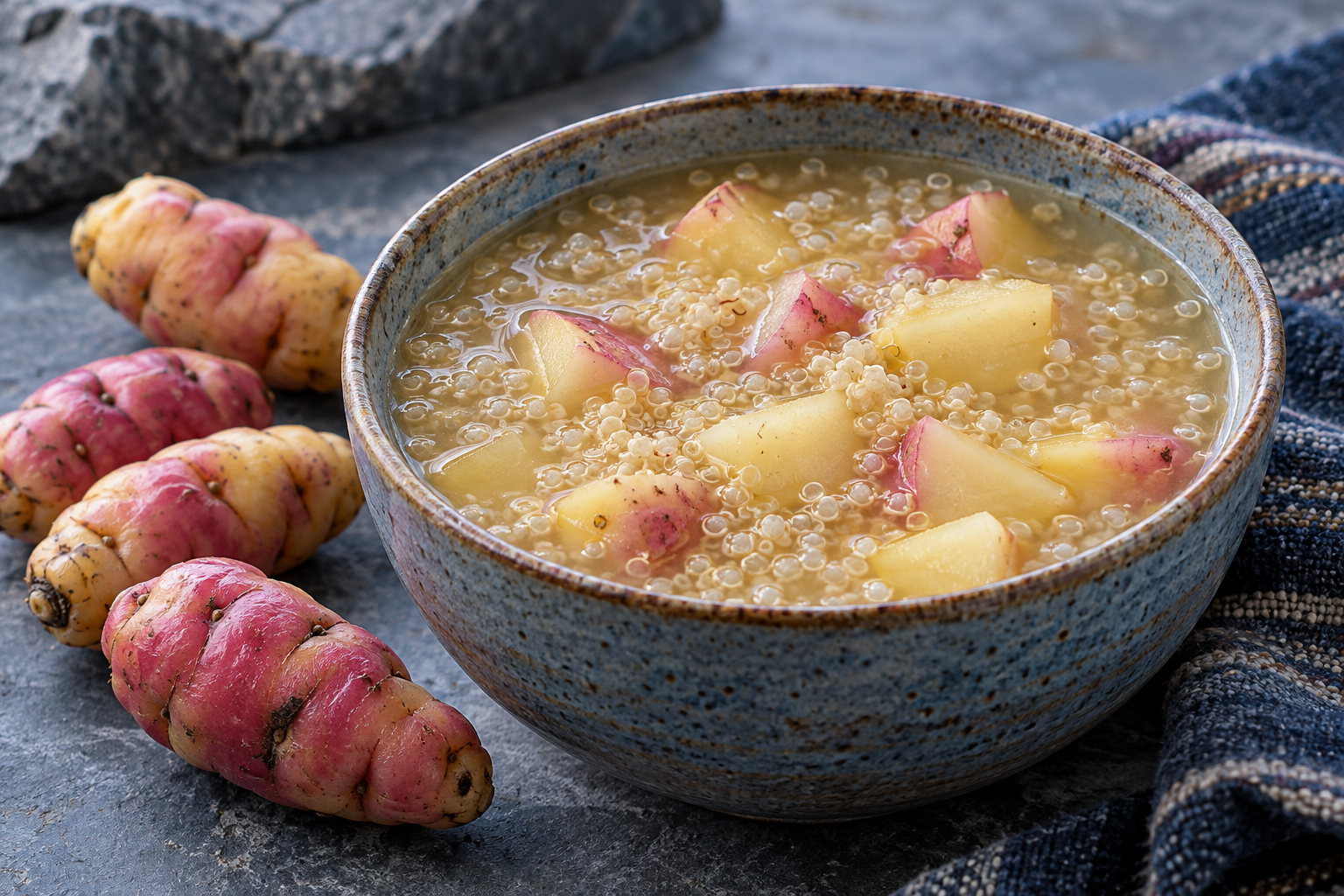
A seed suited to a highland story
Quinoa's modern fame can hide the communities that cultivated it long before it became a globally traded product. Research on seeds from Chiripa identifies cultivated quinoa and its weedy relative by about 1500 BCE. Microscopic differences help separate plants that a casual look at tiny charred seeds might miss.
A broader study of Lake Titicaca Basin food systems connects quinoa, tubers including potatoes and oca, and animal resources to developing communities. Its evidence spans much longer than this article's selected Formative-period scope, so it must not be read as dating every crop or practice to one moment. Our recipe focuses on a plausible highland combination rather than borrowing the much later Inca name for the whole past.
A different tuber beside the grain
Oca is an Andean edible tuber with a flavor and texture different from potato. Commercial cultivated oca, when available, gives this soup a useful distinction from a generic grain-and-potato pot. We simmer the pieces until tender, while quinoa contributes small grains that open during cooking. Modern rinsed quinoa reduces the bitterness associated with its seed coating.
No written Chiripa soup recipe survives in the cited evidence. Water cooking, the combination, salt, proportion, and timing are reconstruction. Nor does the recipe claim that the archaeological seeds were polished and sold like a modern packet. Processing steps leave different traces, and a current product can conceal work once done in a household.
Food systems have more than one ingredient
The bowl should contain plenty of tender tuber pieces rather than serve as a token quinoa garnish. Seed and tuber resources offer different storage, cultivation, and preparation possibilities. That variety is one reason a food history should avoid reducing highland diets to a single heroic crop.
Serve four warm bowls and keep the seasoning modest so the oca and quinoa remain clear. The archaeological anchor is the regional crop record and quinoa cultivation at Chiripa; the assembled soup is a contemporary interpretation. Where oca is unavailable, potato is a sensible modern substitute, but it changes the recipe's defining ingredient and must be named. A practical replacement can help people cook without pretending two distinct ancient crops were the same.
Quinoa-and-oca soup
Serves 4 · Preparation 15 min · Cooking 30 min · None
A modern adaptation for home cooking. Times are approximate.
Ingredients
- 160 g quinoa, well rinsed
- 500 g commercial edible oca, scrubbed and cut into 2 cm pieces
- 1.3 litres water
- 4 g salt
Method
- Rinse quinoa in a fine sieve under running water and drain.
- Bring water to a boil in a saucepan; add oca and simmer 10 minutes.
- Add quinoa and salt. Simmer 15–20 minutes until quinoa is cooked and oca is fully tender.
- Adjust thickness with a little hot water and divide between four bowls.
Substitutions and adjustments
- Use 500 g potato if oca is unavailable; label the changed tuber.
- Use prewashed quinoa but rinse again if its package recommends it.
Historical choices: Quinoa and regional tuber use are archaeologically supported; this particular water-based soup is reconstructed.
Kitchen note: Use food-safe commercial ingredients.
Sources and further reading
- Bruno and Whitehead, Chenopodium cultivation at Chiripa. Specific quinoa crop/weed seed identification by 1500 BCE; no soup recipe.
- Quinoa, potatoes and llamas in the Titicaca Basin. Regional food systems and resources across a long sequence; dates cannot all be assigned to earliest Chiripa.