ANCIENT MEALS · 089 / 100
Teotihuacan plant-food reconstruction · Central Mexico, with wider American crop context · c. 100–650 CE
Evidence: archaeological reconstruction. The historical evidence and modern cooking choices are distinguished below.
Heat was an American food history
Chile peppers belong to the Americas. Their later global journeys should not obscure a much earlier local history. Smithsonian-linked research on chile starch fossils traces archaeological evidence at sites across the Americas, including early Ecuadorian finds. That broad history establishes antiquity without proving that one modern pepper variety was used everywhere.
For the particular setting of our recipe, Teotihuacan's Plaza of the Columns plant-food study includes chile and squash among recovered resources. Pumpkin seeds and chile can therefore anchor a reconstruction in a documented food landscape. The assembled sauce below is not a translated ancient pipián recipe, nor a later dish projected backward unchanged.
A seed supplies body
Roasting seeds changes both aroma and texture. Ground pumpkin seeds mixed with water become a thick, rich sauce without dairy or flour. A rehydrated dried chile supplies flavor and modest heat. The recipe uses a commercial mild ancho because it is easy to obtain and control; the named dried variety is a modern pantry choice, not a species identification from an ancient pot.
We briefly simmer the blended mixture after grinding. The sauce should remain spoonable rather than turn into a stiff paste. Water quantity is adjusted to the actual seed meal, because grinding fineness changes how the mixture thickens. Salt and the exact roast are modern culinary choices. No tomato, onion, garlic, or elaborate spice blend is needed to make the two main ingredients worth tasting.
A reconstruction can stay small
A sauce may be a small component of a meal, but it is a complete usable preparation with a different function from the grain dishes around it. Spoon it over plain cooked squash or serve it alongside tortillas. That pairing is today's serving suggestion, not a claim that the cited archaeological assemblage contains a plated meal.
Wear care around hot peppers and wash hands after handling them; modern safety does not require imitating every historical practice. The evidence supports ancient chile use and the local availability of squash; this seed-and-chile combination, roast, blender method, measurements, and serving style are reconstructed. It lets an ingredient often treated as decoration become the substance of a dish while keeping the limits of the historical claim clear.
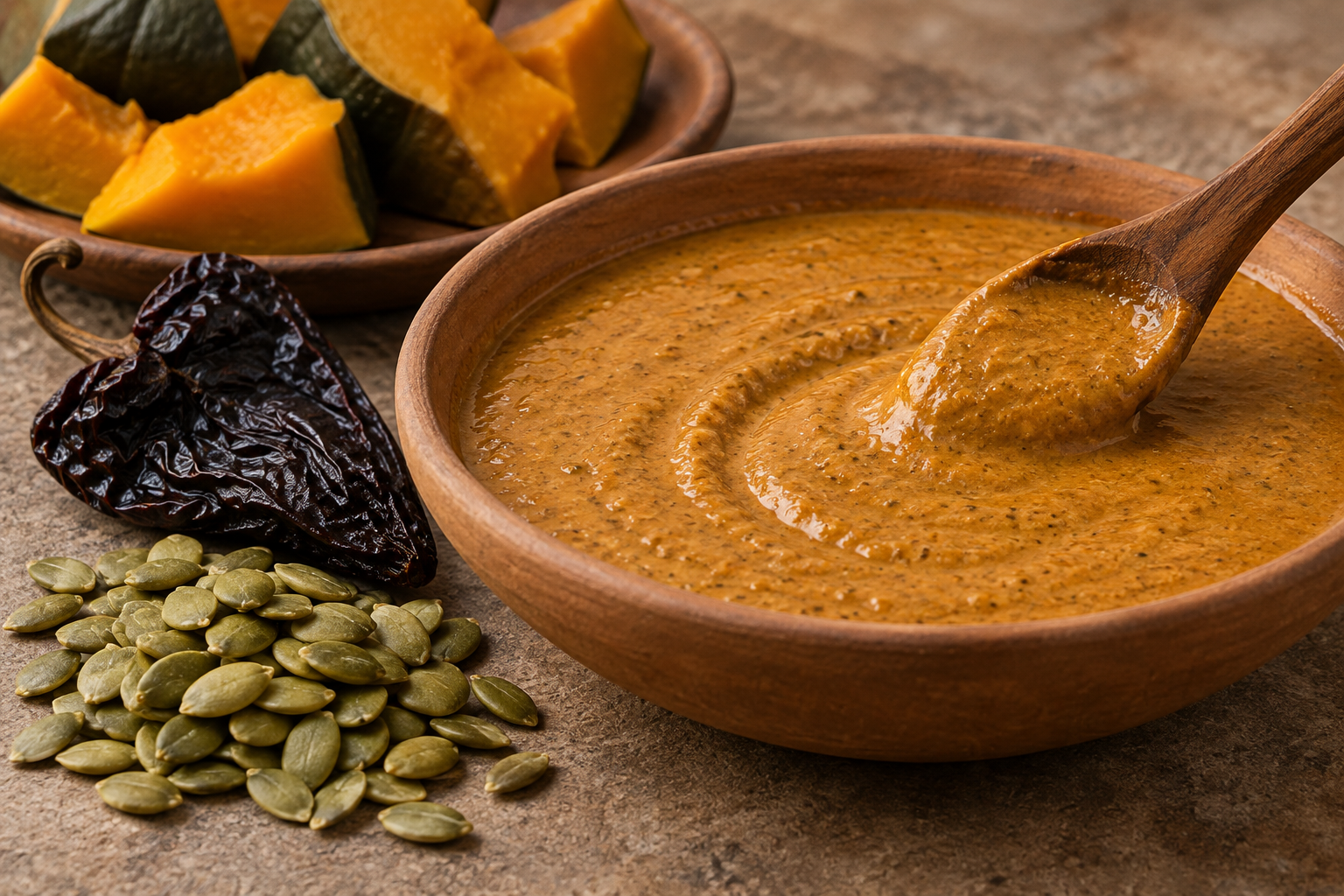
Roasted pumpkin-seed and chile sauce
Serves 6 · Preparation 20 min · Cooking 15 min · 15 minutes chile soaking
A modern adaptation for home cooking. Times are approximate.
Ingredients
- 120 g hulled pumpkin seeds
- 1 small (8–10 g) dried mild ancho chile, stem and seeds removed
- 350–450 ml hot water
- 3 g salt
Method
- Soak dried chile in 150 ml hot water for 15 minutes until soft.
- Toast pumpkin seeds in a dry skillet over medium-low heat 4–5 minutes, stirring, until lightly golden; do not scorch.
- Blend seeds, chile, soaking water, salt and another 200 ml water until smooth.
- Transfer to a saucepan and simmer gently 5–7 minutes, stirring continuously. Add more water by tablespoons for a spoonable sauce.
- Serve warm over plain cooked vegetables or beside tortillas.
Substitutions and adjustments
- Use a mild guajillo or other food-grade dried chile; heat and flavor will change.
- Use ½ teaspoon mild paprika plus a pinch of cayenne if whole dried chile is unavailable; this is a modern shortcut.
Historical choices: Ancient chile and squash are evidenced; the seed sauce, commercial ancho type and measured recipe are reconstructed.
Kitchen note: Avoid touching eyes after chile handling and wash hands and utensils. Handle hot blending cautiously.
Sources and further reading
- Perry et al., chile pepper starch fossils. Primary research abstract via Smithsonian; ancient chile evidence across the Americas, not this sauce.
- Plaza of the Columns, Plant-based Diet and Plants. Specific Teotihuacan crop setting includes chile and squash; no complete recipe.