ANCIENT MEALS · 088 / 100
Teotihuacan plant-food traditions · Central Mexico · c. 100–650 CE
Evidence: historically informed adaptation. The historical evidence and modern cooking choices are distinguished below.
Tiny seeds in a large city
Maize dominates many summaries of ancient Mesoamerican food, but it was not alone. Archaeologist Emily McClung de Tapia's account of amaranth evidence discusses ancient finds, including Teotihuacan. Small seeds require careful recovery and identification; their place in a diet cannot be read simply from their physical size.
The Plaza of the Columns project's plant-food page likewise includes amaranth among recovered resources. These sources justify putting amaranth on an ancient-food table. They do not establish the exact popped-seed rounds below, which are a modern adaptation made from historically relevant ingredients.
Choose a format and name its invention
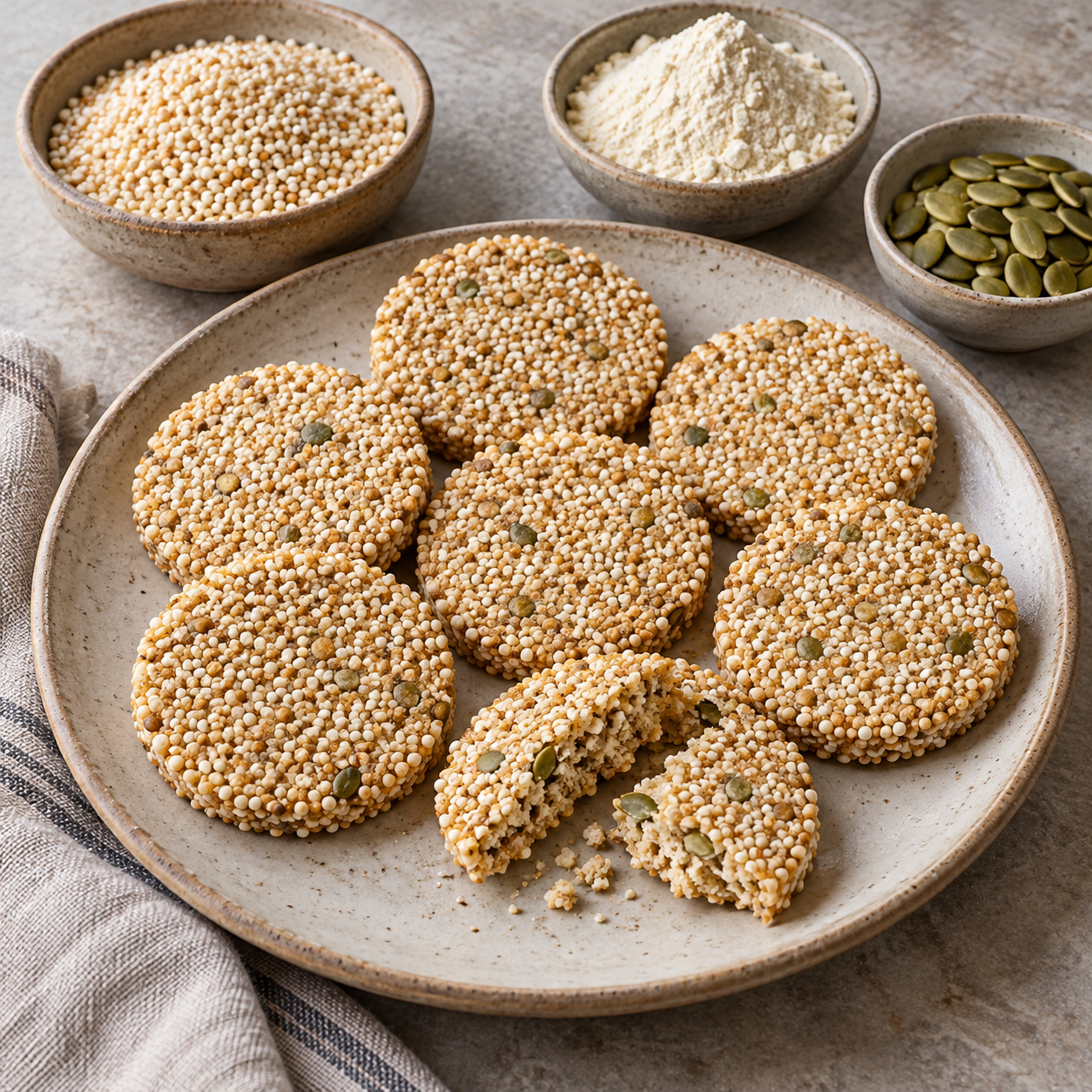
Popped amaranth gives a light, small-grained texture very different from a wet gruel. In our recipe, commercially popped seed is mixed with a little maize dough and pumpkin-seed meal, shaped into thin rounds, and baked. It is savory, with no cane-sugar syrup or later festival identity assigned to it. Commercial popping is a convenient preparation step, not evidence that every ancient Teotihuacan household popped its crop.
Amaranth is often called a pseudocereal because its edible seeds can be used like cereal grain without belonging to the grasses. That botanical difference does not diminish the culinary work required. Sorting, cleaning, heating, and grinding all change a seed's role. A modern shop can hand us the finished popped ingredient while concealing most of that labor.
Reconstructing without a famous name
There is no need to attach a later Aztec ceremony to this earlier urban setting. Teotihuacan's archaeology is interesting on its own terms, and an amaranth recipe can be labeled as a contemporary interpretation rather than borrowing an apparently ancient title. The small amount of maize dough binds the rounds; pumpkin seed supplies richness. Their proportions and combination are our choices within a documented regional food landscape.
Serve the rounds freshly baked, with one broken to show the tiny pale seeds. The expected texture is firm with light seed fragments rather than a delicate puffed candy. The evidence supports amaranth in the ancient city; popping source, binder, shape, seasoning, and oven schedule belong to the adaptation. An honest reconstruction can make an overlooked crop visible while leaving its ancient preparations open to further research.
Savory popped-amaranth and maize rounds
Serves 4 · Preparation 20 min · Cooking 25 min · 5 minutes dough rest; 10 minutes cooling
A modern adaptation for home cooking. Times are approximate.
Ingredients
- 70 g commercial plain popped amaranth
- 80 g nixtamalized masa harina
- 50 g hulled pumpkin seeds, finely ground
- 140–170 ml warm water
- 15 ml neutral cooking oil
- 3 g salt
Method
- Heat oven to 190°C and line a tray.
- Mix masa harina, ground pumpkin seeds and salt with 140 ml warm water and oil. Rest 5 minutes.
- Fold in popped amaranth. Add a little water if needed until the mixture holds together without being runny.
- With damp hands form eight thin rounds about 7 mm thick.
- Bake 20–25 minutes, turning gently once, until firm and lightly browned. Cool 10 minutes.
Substitutions and adjustments
- Do not substitute uncooked amaranth seed for popped seed; it will need a different cooking method.
- Use commercial toasted amaranth meal as a modern variation, adding water according to texture.
Historical choices: Amaranth is attested at Teotihuacan; commercial popped seed, maize binder and savory baked-round formula are modern adaptations.
Kitchen note: Use food-safe commercial ingredients.
Sources and further reading
- McClung de Tapia, archaeological evidence for amaranth. Archaeologist-authored review of ancient amaranth finds including Teotihuacan; no precise round recipe.
- Plaza of the Columns, Plant-based Diet and Plants. Site project lists amaranth and other plant resources; not a claim of popping or binding in this ratio.