ANCIENT MEALS · 084 / 100
Classic Maya courtly cacao traditions · Maya lowlands, Mexico and Guatemala · c. 250–700 CE
Evidence: historically informed adaptation. The historical evidence and modern cooking choices are distinguished below.
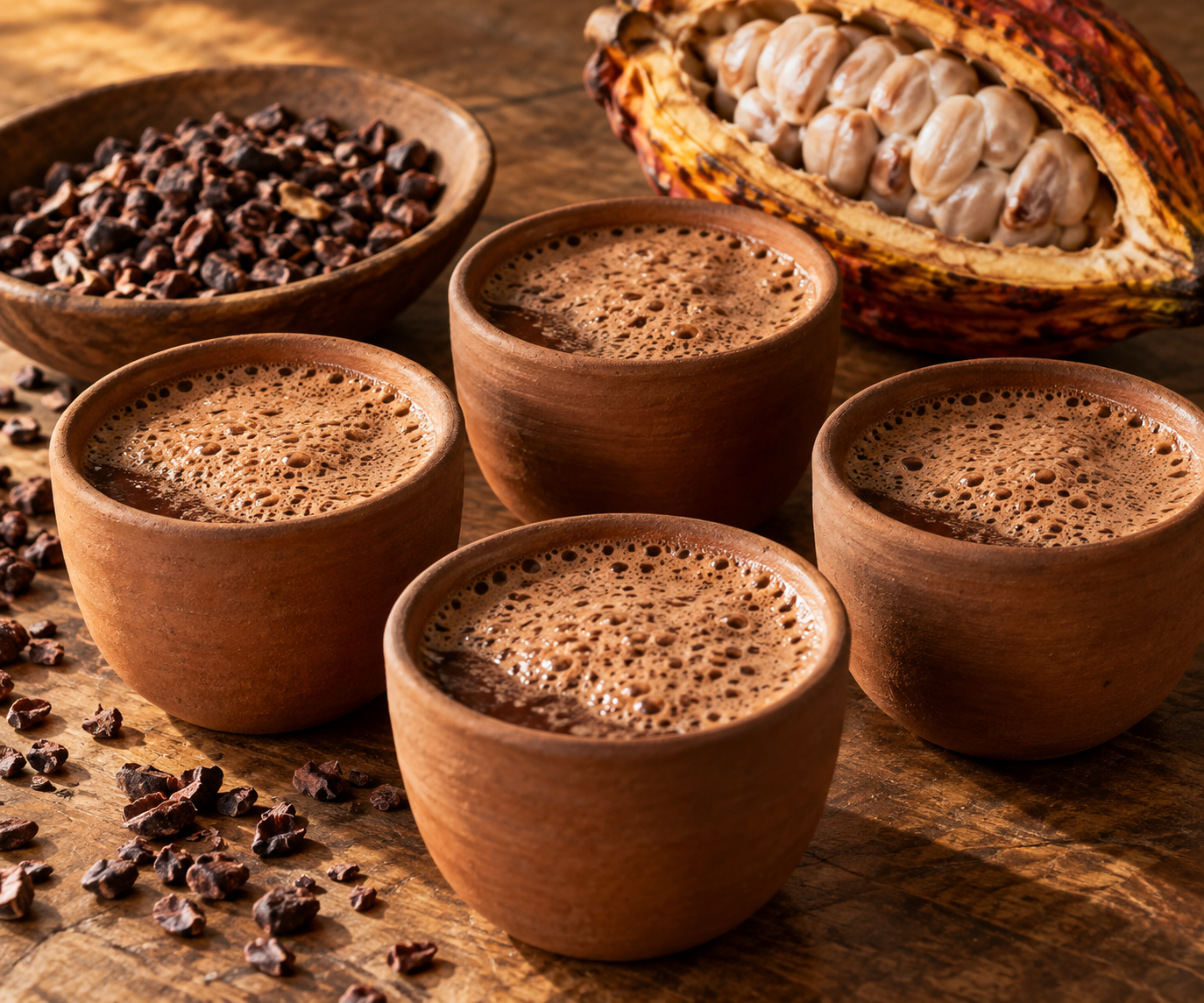
The surface mattered
A cacao drink is not automatically a mug of sweet hot chocolate. Classic Maya images show a preparation in which liquid is poured between vessels to raise a froth. The Metropolitan Museum's discussion of Maya drinking cups explains this action and how vessel inscriptions can name their intended contents. Our historical focus stops around 700 CE; some objects discussed on that page have wider dates extending later, and are not all treated as securely earlier than the cutoff.
Cacao had a history before the Classic courts. University of California, Berkeley reporting on archaeological residue research describes early Honduran cacao evidence and makes an important distinction: chemical markers cannot by themselves tell whether a vessel held a seed-based drink or a fermented preparation of fruit pulp. Our recipe uses roasted cacao seeds and is not a reconstruction of every earlier cacao beverage.
A seed drink in a modern kitchen
Commercial roasted cacao nibs give a grainy, bitter drink with fat from the seeds. A blender takes the place of the labor of grinding. We combine nibs with warm water and a little maize dough to give body, then whisk the strained liquid. The maize quantity is a culinary adaptation; the cited vessel discussion does not supply this formula.
There is no milk, cane sugar, cinnamon, or vanilla in the base recipe. Their omission keeps our chosen reconstruction focused, rather than claiming that one ingredient list represented all Maya drinking practices. A little honey is offered as a modern preference, clearly separate from the core preparation. No unsafe fermentation is attempted.
Prestige is not a universal diet
Fine painted vessels and courtly scenes tell us especially about presentation, identity, and elite occasions. They should not be made into a statement that every ancient person drank cacao every morning. The social setting is part of what makes this food history interesting: the vessel itself could communicate ownership and status alongside the drink inside.
Pour four small servings and whisk at the last moment so the foam remains visible. The historical anchor is cacao drinking and attention to froth; roasted commercial nibs, blending, straining, maize thickening, measurements, and our serving temperature are modern choices. Bitter flavor and a foamy surface provide a useful companion to the evidence without pretending to restore a royal cup exactly.
Frothed cacao-and-water drink
Serves 4 · Preparation 15 min · Cooking 10 min · None
A modern adaptation for home cooking. Times are approximate.
Ingredients
- 80 g commercial roasted cacao nibs
- 800 ml water
- 15 g commercial nixtamalized masa harina
- up to 20 g honey, optional modern sweetening choice
Method
- Grind nibs as finely as possible in a blender or spice grinder.
- Whisk masa harina with 100 ml cold water. Heat remaining water, stir in the masa slurry and simmer 5 minutes.
- Cool slightly, then blend carefully with the cacao in batches, following blender guidance for hot liquids.
- Strain through a fine sieve if desired. Rewarm gently for 2 minutes, add optional honey and whisk vigorously just before pouring into four small cups.
Substitutions and adjustments
- Use 60 g pure unsweetened cocoa powder as a convenient modern replacement for nibs, with different fat and texture.
- Leave unsweetened to foreground cacao bitterness.
Historical choices: Classic Maya cacao drinking and frothing are attested; the maize-thickened formula, blender method and quantities are a modern interpretation.
Kitchen note: Use roasted commercial nibs. Handle warm liquids safely and do not seal very hot liquids in a blender. Honey is unsuitable for infants under 12 months.
Sources and further reading
- Metropolitan Museum, The Drinking Cup of a Classic Maya Noble. Museum explanation of cacao vessels and frothing; discussed objects include dates extending beyond 700 CE.
- Berkeley, early cacao beverage research. University explanation of earlier residue evidence and its inability to distinguish seed versus pulp drinks.