ANCIENT MEALS · 080 / 100
Mature Harappan settlement at Farmana · Haryana, northwestern Indian subcontinent · c. 2600–2200 BCE
Evidence: archaeological reconstruction. The historical evidence and modern cooking choices are distinguished below.
A pot remembers plants
Some ancient food evidence is too small to see without a microscope. At Farmana, researchers examined plant starches from tools, pottery, and dental calculus. Their Antiquity project report identifies starches compared with eggplant, ginger, and turmeric from a cooking vessel. The cautious botanical identifications matter: these are interpreted microremains, not a handwritten recipe for a named curry.
A later study combining lipid and starch analyses in northern Gujarat discusses the value of multiple methods and the wider evidence for plant use in Harappan foodways. Different analytical approaches reveal different parts of a meal. Oil residues, seed remains, and starch traces should inform each other rather than becoming a complete menu through imagination alone.
Let a narrow claim remain narrow
The reconstruction below simmers modern eggplant with ginger and turmeric. It keeps those three plants central and resists the temptation to add chilies, tomatoes, potatoes, or a modern curry-powder mixture. Those additions would change the historical question, and several came to South Asia only in much later exchange histories.
We call it a braise because that describes the chosen kitchen technique. We do not claim the archaeological vessel establishes the exact heat, liquid quantity, spice dose, or serving style. Modern cultivated eggplant and standardized powdered turmeric may differ from the ancient plants. The finished yellow broth is a practical interpretation of the evidence, not a chemical reconstruction of the pot's contents.
A useful small experiment
Cutting eggplant into large cubes helps it soften without disappearing completely. Ginger enters early, while turmeric is briefly warmed in oil before water is added. Oil is included for flavor extraction and handling, but the precise oil use in this recipe is not demonstrated by the Farmana starch report. It is marked as a modern decision.
Serve the tender pieces with their liquid in shallow bowls. Its story is less tidy than a claim to the oldest curry, and more informative: particular plant traces can survive food processing, researchers compare them with reference materials, and interpretation still has limits. A simple dish gives those plants a tangible role while keeping the uncertainties that make archaeology honest.
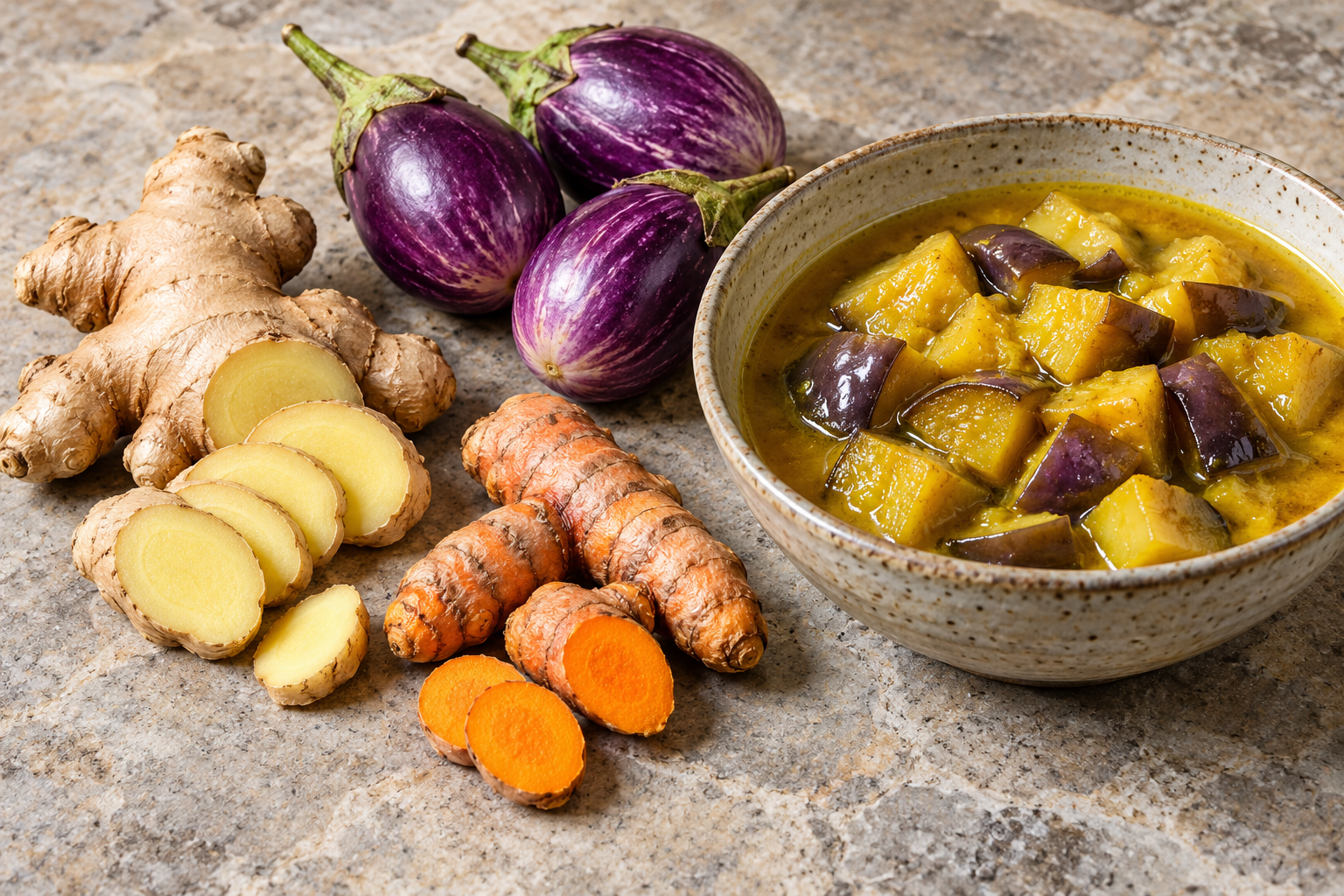
Eggplant simmered with ginger and turmeric
Serves 4 · Preparation 15 min · Cooking 25 min · None
A modern adaptation for home cooking. Times are approximate.
Ingredients
- 650 g eggplant, cut into 3 cm cubes
- 20 g fresh ginger, finely grated
- ½ teaspoon (about 2 g) ground turmeric
- 20 ml sesame or neutral cooking oil
- 250 ml water
- 4 g salt
Method
- Heat oil gently in a wide saucepan. Add ginger and cook 1 minute.
- Stir in turmeric for 15 seconds, then immediately add water and salt to prevent scorching.
- Add eggplant, cover and simmer 20–25 minutes, stirring gently twice, until every piece is fully soft.
- Uncover for the last 3 minutes if the liquid is excessive. Serve warm with its sauce.
Substitutions and adjustments
- Use 10 g freshly grated food-grade turmeric instead of powder.
- Use small Asian eggplants when available; modern cultivar differences remain.
Historical choices: Inspired by cautiously identified eggplant, ginger and turmeric starches at Farmana. Combination, braising method, oil and quantities are reconstructed.
Kitchen note: Use food-safe commercial ingredients.
Sources and further reading
- Kashyap and Weber, Harappan plant use at Farmana. Specific starch identifications from Farmana cooking pot; cf. identifications and no preserved recipe.
- Integrating Lipid and Starch Grain Analyses, northern Gujarat. Peer-reviewed discussion of methods and regional plant-food evidence; does not certify this precise braise.