ANCIENT MEALS · 079 / 100
Southern Neolithic crop traditions · Deccan and peninsular India · c. 2500–1000 BCE
Evidence: archaeological reconstruction. The historical evidence and modern cooking choices are distinguished below.
A crop hidden by its reputation
Horsegram rarely attracts the attention given to wheat, rice, or a fashionable bean. That imbalance is a poor guide to its past. Fuller and Murphy's study of horsegram origins combines archaeological seeds, historical language evidence, and wild plant records to examine a crop important in ancient South Asia. Its modest modern status can obscure a long history of cultivation.
Southern Indian farming had its own crop package. Research on plant domestication in the subcontinent discusses horsegram, mung beans, and local millets among the recurring resources of the Southern Neolithic. This does not imply every crop was domesticated at one site or that one meal defined the whole region. It establishes a distinctive agricultural context that deserves attention on its own terms.
From seed to a different format
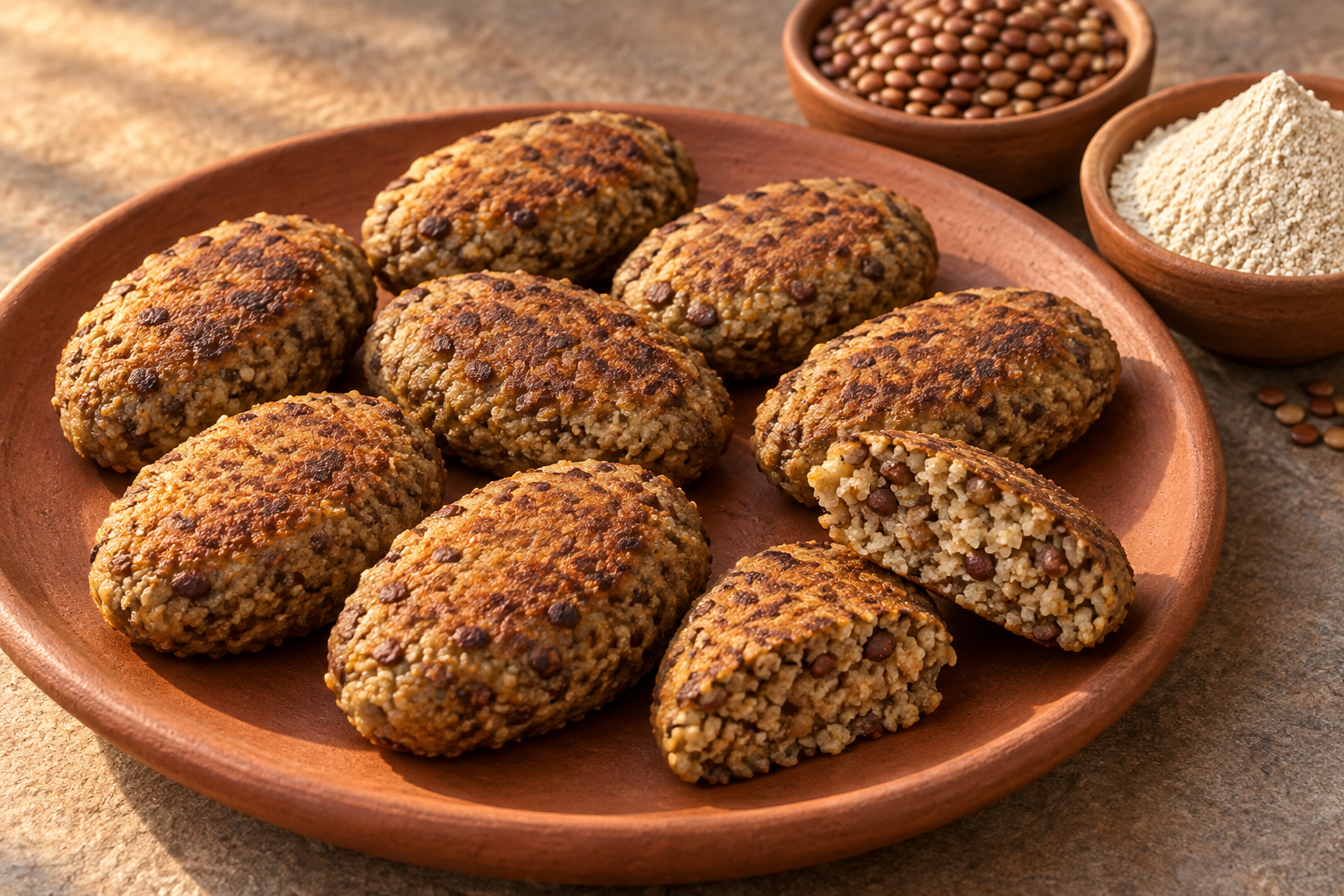
Our recipe cooks horsegram thoroughly, mashes it, mixes it with millet flour, and bakes small savory cakes. The pulse and millet combination draws on that crop setting, but no excavated cake has supplied this formula. Baking on a modern tray is a culinary reconstruction, not a claim that the archaeological assemblage preserved an oven meal.
The cakes offer a firm, portable format instead of adding one more lightly altered lentil soup to the collection. Horsegram has a hearty texture; pounding or mashing changes how it can be portioned and combined with grain. The flour acts as a binder. Oil and salt are practical additions, and their precise use here is not demonstrated by the cited seed evidence.
The work before eating
Soaking and simmering occupy far more time than shaping the cakes. That is part of the story rather than an inconvenience to hide. Ancient meals depended on tasks whose marks can be subtle: obtaining water, sorting seeds, managing fuel, and recognizing when a pulse had softened. Packaged food can remove those tasks from sight without removing their historical importance.
Make the mixture moist enough to hold together but stiff enough to form with damp hands. Serve the cakes warm, with their coarse surface visible. Its strongest historical claim concerns the crops and regional farming tradition; the combined cake, binder ratio, seasoning, and oven schedule are declared modern choices. An overlooked pulse can illuminate an ancient food system without being dressed in an invented traditional name.
Horsegram-and-millet baked cakes
Serves 4 · Preparation 25 min · Cooking 110 min · 8–12 hours refrigerated soaking
A modern adaptation for home cooking. Times are approximate.
Ingredients
- 180 g dried food-grade horsegram
- 70 g millet flour
- 25 ml sesame or neutral cooking oil, divided
- 4 g salt
- 30–60 ml water as needed after cooking
Method
- Soak horsegram in plenty of water in the refrigerator 8–12 hours, then drain.
- Cover with fresh water in a saucepan, bring to a full boil for 10 minutes, then simmer 60–90 minutes until completely tender. Drain well.
- Mash or pulse cooked beans coarsely. Mix in millet flour, salt and 15 ml oil; add enough measured water for a firm moist mixture.
- Heat oven to 200°C. Shape eight flattened cakes about 1.5 cm thick on a lined tray; brush with remaining oil.
- Bake 20–25 minutes, turning once, until firm, lightly browned and hot throughout.
Substitutions and adjustments
- Use cooked brown lentils as a convenient modern substitution, changing the defining pulse.
- Use wholemeal rice flour instead of millet flour; the grain evidence changes.
Historical choices: Horsegram and millet are regionally attested ancient crops; the combined baked-cake format is reconstructed.
Kitchen note: Use commercial edible horsegram and cook until fully tender; do not forage unidentified seeds. Refrigerate leftovers within 2 hours.
Sources and further reading
- Fuller and Murphy, origins and dispersal of horsegram. Peer-reviewed crop-history study with archaeological, botanical and linguistic evidence; no cake recipe.
- Fuller, Finding Plant Domestication in the Indian Subcontinent. Southern Neolithic crop package including pulses and millets; no proof these were baked together.