ANCIENT MEALS · 068 / 100
Early Neolithic Cishan communities · Hebei, northern China · c. 8300–5500 BCE
Evidence: archaeological reconstruction. The historical evidence and modern cooking choices are distinguished below.
A grain with a different homeland
Imagine tipping a handful of tiny golden grains into a pot. This meal begins in northern China, where the early farming story belongs to millet rather than to a universal rice culture. Research at Cishan identified broomcorn millet in ancient storage deposits through characteristic plant silica bodies and chemical markers. The 2009 study also records grinding equipment, pottery, and remains of nuts, including hazel and walnut. The ingredients of a simple grain-and-nut meal therefore belong to the site's wider food landscape, although they were not found as this assembled dish.
The deposits have a complicated history. Fragile plant remains changed when exposed to air, and older identifications did not always distinguish broomcorn from foxtail millet. Gary Crawford's accompanying archaeological commentary explains why revised dating and species identification matter. A precise bowlful is easier to picture than the evidence warrants; the proper achievement is recognizing an established grain economy, not recovering somebody's breakfast.
Storage was part of cooking
A store of grain connects harvest to hungry months. Its value depends on work before a pot ever reaches the fire: collecting seed, tending crops, separating husks, protecting supplies, and grinding or pounding. In this recipe, packaged hulled millet takes the place of that labor. Hazelnuts contribute texture and a rich flavor without turning the pot into a modern dessert. Their proportion is our choice.
Water cooking is a plausible use of pottery, not a demonstrated Cishan recipe. We use a covered saucepan and a short dry toast to make the grain's aroma noticeable. Neither the toast nor the exact water ratio can be read from a storage pit. The modest seasoning keeps attention on the cereal, but an absence of seasoning evidence should never become a claim that prehistoric food was always bland.
What the reconstruction lets us notice
Serve the pot thick enough to mound on a spoon. It differs from a rice congee in grain, texture, and the role given to nuts, yet it should not be sold as an unchanged regional tradition. This is a practical archaeological reconstruction of an ingredient pairing. The ancient evidence supports the food resources and their processing context; our measurements, cooking time, and serving arrangement make them usable in a present-day kitchen. Eating it can suggest the effort stored in a small seed without pretending to reproduce an individual ancient meal.
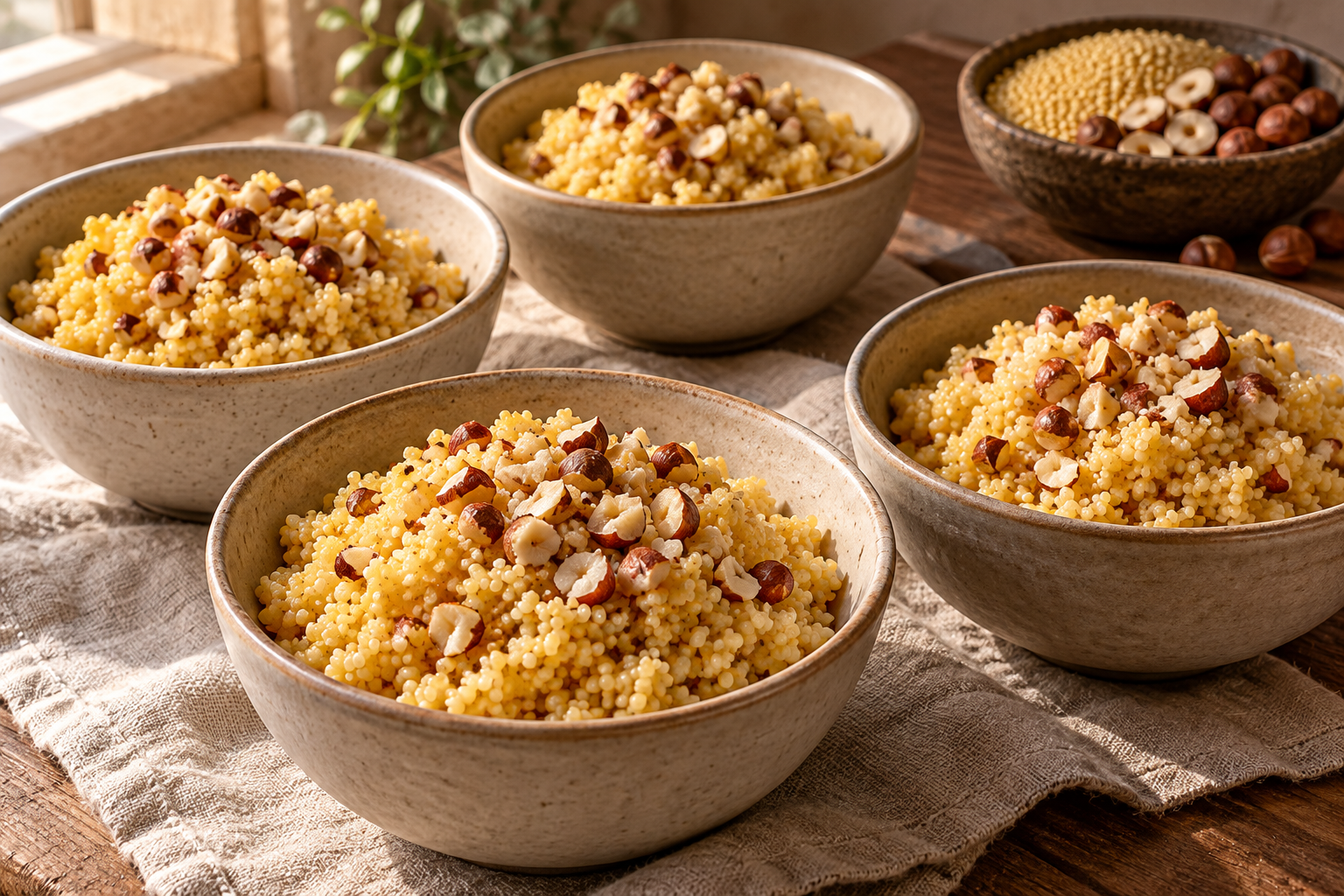
Toasted millet with crushed hazelnuts
Serves 4 · Preparation 10 min · Cooking 25 min · None
A modern adaptation for home cooking. Times are approximate.
Ingredients
- 200 g (about 1 cup) hulled broomcorn millet
- 850 ml water
- 60 g shelled hazelnuts, chopped
- 2 g (⅓ teaspoon) salt
Method
- Rinse millet in a fine sieve and drain.
- Toast millet in a dry saucepan over medium heat for 3 minutes, stirring. Add water carefully and salt; bring to a boil.
- Cover and simmer gently for 20–25 minutes, stirring twice and adding a little hot water if necessary, until grains are tender.
- Toast hazelnuts in a dry skillet for 4 minutes. Stir half into the pot and scatter the rest on the four portions.
Substitutions and adjustments
- Foxtail millet may replace broomcorn; label the change in grain.
- Use walnuts instead of hazelnuts, both recorded among the Cishan finds.
Historical choices: The ingredient resources are attested at Cishan; their combination and toasting sequence are reconstructed.
Kitchen note: Use food-safe commercial ingredients.
Sources and further reading
- Lu et al., Earliest domestication of common millet. Cishan millet identification, pottery, grinding tools and nut remains; no assembled recipe.
- Crawford, Agricultural origins in North China. Commentary on dating and the agricultural interpretation; not a recipe.