ANCIENT MEALS · 066 / 100
European Copper Age · Ötztal Alps, present-day Italy–Austria border region · Approximately 3300 BCE
Evidence: historically informed adaptation. The historical evidence and modern cooking choices are distinguished below.
Ingredients survive; a recipe does not
The Iceman known as Ötzi provides unusually direct evidence of food consumed in the Copper Age. In a 2018 Current Biology study, researchers examined his stomach contents with microscopy and molecular methods. The analysis identified game meat and fat associated with ibex and red deer, together with cereal material including einkorn. Those findings reveal meal components. They do not amount to a written recipe with weights and roasting instructions.
The Eurac Research account of the study explains the high fat content and the uncertainties around fresh or dried meat. Our recipe uses commercial venison and a small quantity of rendered animal fat as an accessible modern adaptation. It focuses on a meat-and-fat component rather than pretending to reconstruct the entire meal. The original ibex contribution is not replaced silently, and cereal evidence is discussed without requiring a second bread recipe here.
Why a roast is an interpretation
Roasting is the present method selected to make the ingredient framework usable. It is not asserted to be the demonstrated method of every piece of meat in Ötzi's stomach. The analysis leaves important preparation questions open. A claim that our oven reproduces his exact meal would therefore overstate both the archaeological evidence and the kitchen result.
Modern food-grade beef tallow provides a manageable fat coating for lean venison. It differs from the animal fat detected in the study, so it is clearly named as a substitution. A little salt is optional modern seasoning. No wine, pepper, exotic spices, honey, or vegetables are added. The restrained ingredient list helps keep the dish distinct from the richly seasoned Roman roasts in this collection.
Evidence is not a safety instruction
The study also found bracken traces. Their role is uncertain, and potentially toxic plants are omitted entirely from the cooking directions. Nor is an ancient possibility of drying meat turned into advice to preserve raw game at home. This recipe instead uses reputable commercially supplied meat, careful cold storage, and a fully cooked endpoint.
The historical setting is the Alpine Copper Age around 3300 BCE, not the Roman world and not an undifferentiated prehistoric diet. One individual's meal is powerful evidence, but it cannot represent all contemporary Europeans. Roast timing depends on the cut's shape, so measure the centre and allow a rest before slicing. The finished food is an openly modern venison roast inspired by analysed meal components, while the exact ancient preparation remains unknown.
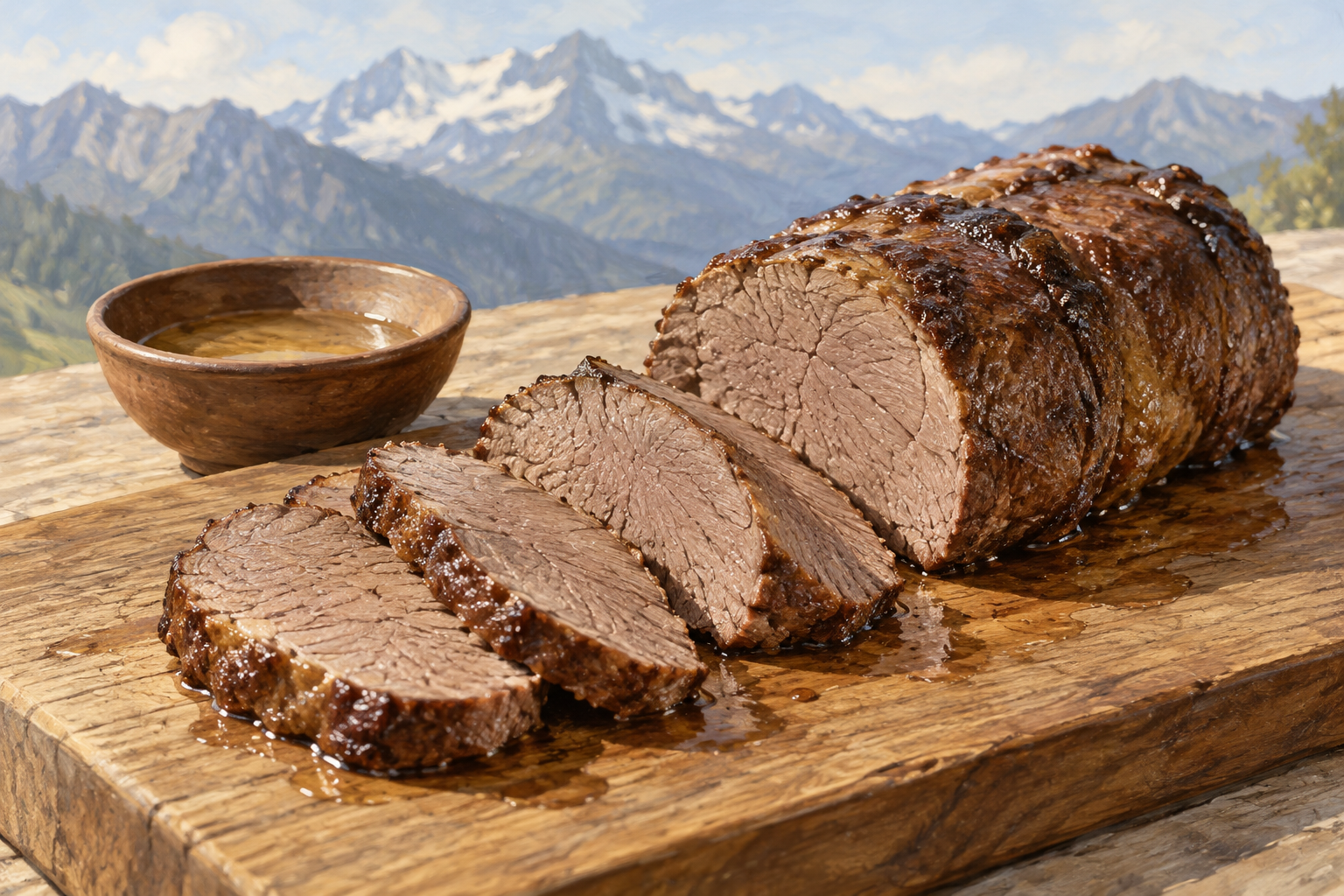
Simply roasted venison with rendered animal fat
Serves 4 portions · Preparation 15 min · Cooking 40 min · Rest 10 minutes.
A modern adaptation for home cooking. Times are approximate.
Ingredients
- 600 g commercial venison loin roast, trimmed
- 20 g (about 1½ tbsp) commercial food-grade beef tallow
- 75 ml water for roasting dish
- ½ tsp salt, optional modern seasoning
Method
- Heat oven to 180°C/350°F. Keep venison cold until preparation, then pat dry.
- Melt tallow in an ovenproof pan. Brown the roast briefly on all sides for about 6 minutes.
- Add water around the meat and optional salt. Transfer to the oven.
- Roast 25–40 minutes, depending on thickness, until the thickest centre reaches 71°C/160°F for this fully cooked game adaptation.
- Rest 10 minutes, slice across the grain, and spoon a little hot pan liquid over the portions.
Substitutions and adjustments
- Beef loin can replace venison as a more distant ingredient adaptation, with cooking time adjusted.
- Rendered food-grade lamb fat can replace beef tallow; neither is claimed to be an exact substitute for ibex fat.
Historical choices: Game meat, animal fat, and cereals are directly attested in Ötzi's analysed stomach contents. This recipe selects the meat-fat component; commercial venison, tallow, roasting, salt, and measurements are modern adaptations.
Kitchen note: Use reputable commercial game, keep refrigerated, prevent cross-contamination, and cook fully. Do not add bracken or attempt unsafe home drying.
Sources and further reading
- Maixner et al., The Iceman's Last Meal, Current Biology 2018. Peer-reviewed stomach-content study identifies game, fat, and cereals; exact preparation remains uncertain.
- Eurac Research: The Iceman's last meal contained a remarkably high fat content. Research institution's account of the analysis and fresh/dried meat possibilities; not a measured roast recipe.