ANCIENT MEALS · 059 / 100
Late Roman cookbook tradition · Roman Mediterranean · Approximately 390–450 CE compilation, with earlier material
Evidence: adapted surviving recipe. The historical evidence and modern cooking choices are distinguished below.
The bread is already baked
This sweet begins after the work of making a loaf is finished. In Apicius, Book VII, fine bread is trimmed, broken into substantial pieces, soaked in milk, fried in oil, and covered with honey. The method makes a useful distinction between bread as an ingredient and bread as the counted finished recipe. Our dish is the transformed, fried confection, not another loaf with a different name.
The older English translation includes beaten eggs in its rendering, while the selected Latin instruction does not state them. That discrepancy is a concrete reason to compare texts rather than automatically call the dish ancient French toast. This adaptation follows the milk-and-bread version and adds no egg. The result should be soft inside and browned outside, with honey applied after frying.
How much soaking is enough?
A dry slice can absorb milk without collapsing, while very fresh airy bread may fall apart quickly. The ancient instruction gives no seconds or bread density, so a modern cook needs to judge the piece. Day-old bread is chosen for practical handling. It must be sound and fully baked, not mouldy. Large pieces are easier to turn gently than a fine crumble, retaining the structure named in the short text.
Olive oil supplies the frying medium. A shallow pan uses less fat and is manageable at household scale, but it is a declared choice rather than a recovered ancient pan depth. The milk-soaked pieces should be drained briefly so excess liquid does not splash on entering hot oil. No cinnamon, vanilla, refined sugar, or fruit topping is added; honey is the recorded finishing ingredient.
What a short sweet can show
The late Roman Apicius compilation, approximately 390–450 CE, preserves this recipe among several sweets. Its existence shows a technique for reusing a baked grain food in a new texture, without proving a modern cultural lineage or a universal Roman breakfast habit. A cook's decision to soak, fry, and sweeten is interesting enough on its own.
Serve the pieces soon after frying, when the exterior has some contrast with the softened centre. Let the honeyed surface cool briefly before tasting. Loaf texture, slice thickness, pan temperature, and milk uptake all affect cooking time. The quantities and shallow-frying approach below make a concise instruction usable while preserving the difference between the ancient sequence and a modern measured kitchen formula.
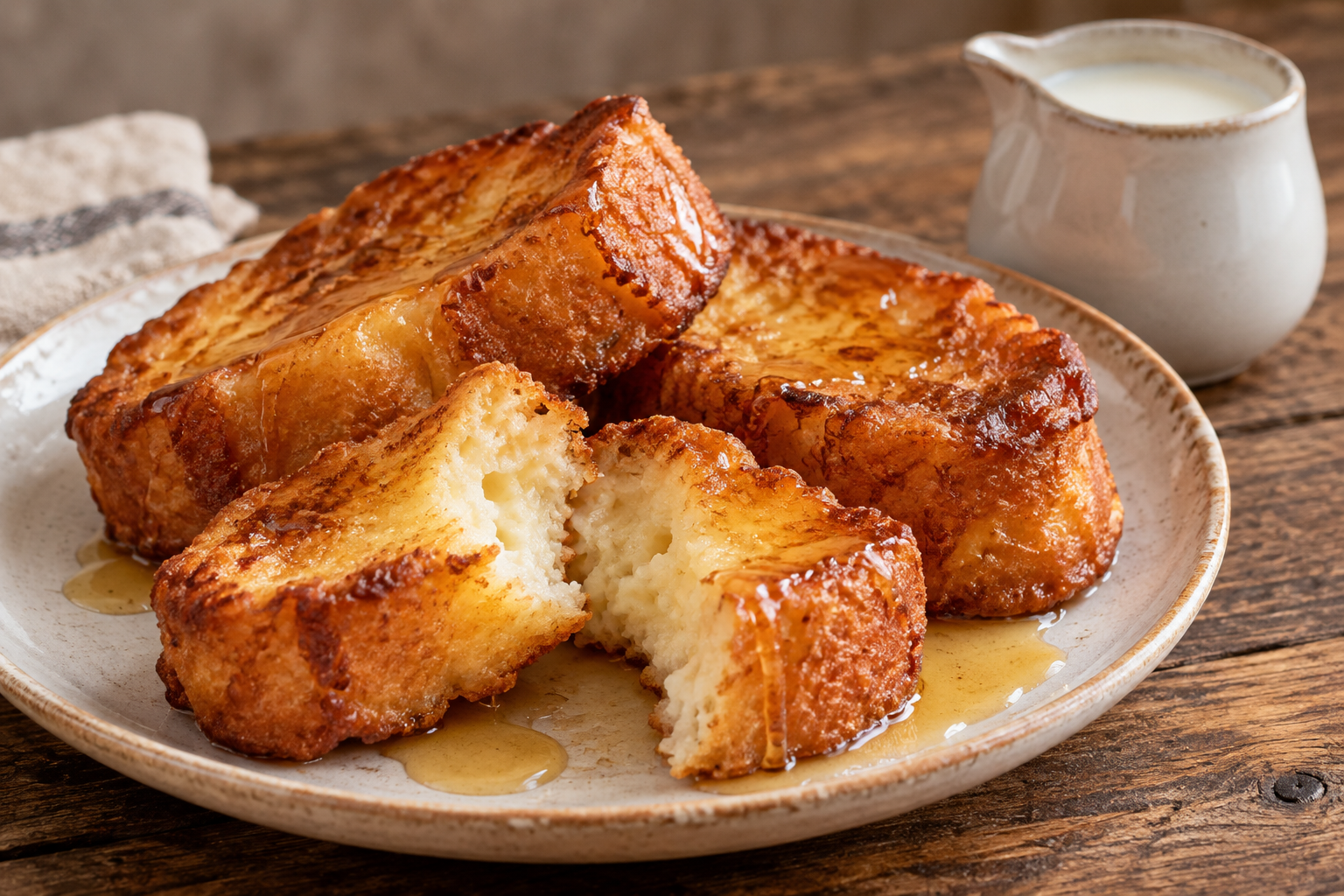
Milk-soaked fried honey bread
Serves 4 small portions · Preparation 10 min · Cooking 10 min · Drain soaked bread 2 minutes; cool briefly after frying.
A modern adaptation for home cooking. Times are approximate.
Ingredients
- 200 g fully baked day-old wheat bread, cut into 2 cm thick pieces
- 150 ml pasteurized milk
- 3 tbsp refined olive oil for shallow frying
- 2 tbsp honey
Method
- Trim very hard crusts. Put milk in a shallow bowl.
- Dip bread pieces for 10–20 seconds per side, stopping before they fall apart. Set on a rack for 2 minutes to drain excess milk.
- Heat oil over medium heat in a broad pan.
- Fry pieces for 3–4 minutes per side until golden and hot through, turning carefully.
- Drain briefly, drizzle with honey, cool 2 minutes, and serve promptly.
Substitutions and adjustments
- A firm plain wheat loaf works better than very airy soft sandwich bread.
- Unsweetened plant milk is a modern dairy-free adaptation and changes the historical ingredient.
Historical choices: Follows Apicius VII's Latin milk-soaked bread sequence without the egg inserted in the older English rendering. Quantities, bread choice, and shallow frying are adaptations.
Kitchen note: Use pasteurized milk, sound bread, and moderate oil heat. Drain excess milk before frying to reduce splashes; honey is unsuitable for infants.
Sources and further reading
- Apicius, Book 7: English translation. Public-domain Vehling translation; differences from the primary Latin are discussed where relevant.
- Bibliotheca Augustana: Apicius, Latin Book 7. University-hosted primary Latin text used to check the selected recipe's framework.