ANCIENT MEALS · 057 / 100
Late Roman cookbook tradition · Roman Mediterranean · Approximately 390–450 CE compilation, with earlier material
Evidence: adapted surviving recipe. The historical evidence and modern cooking choices are distinguished below.
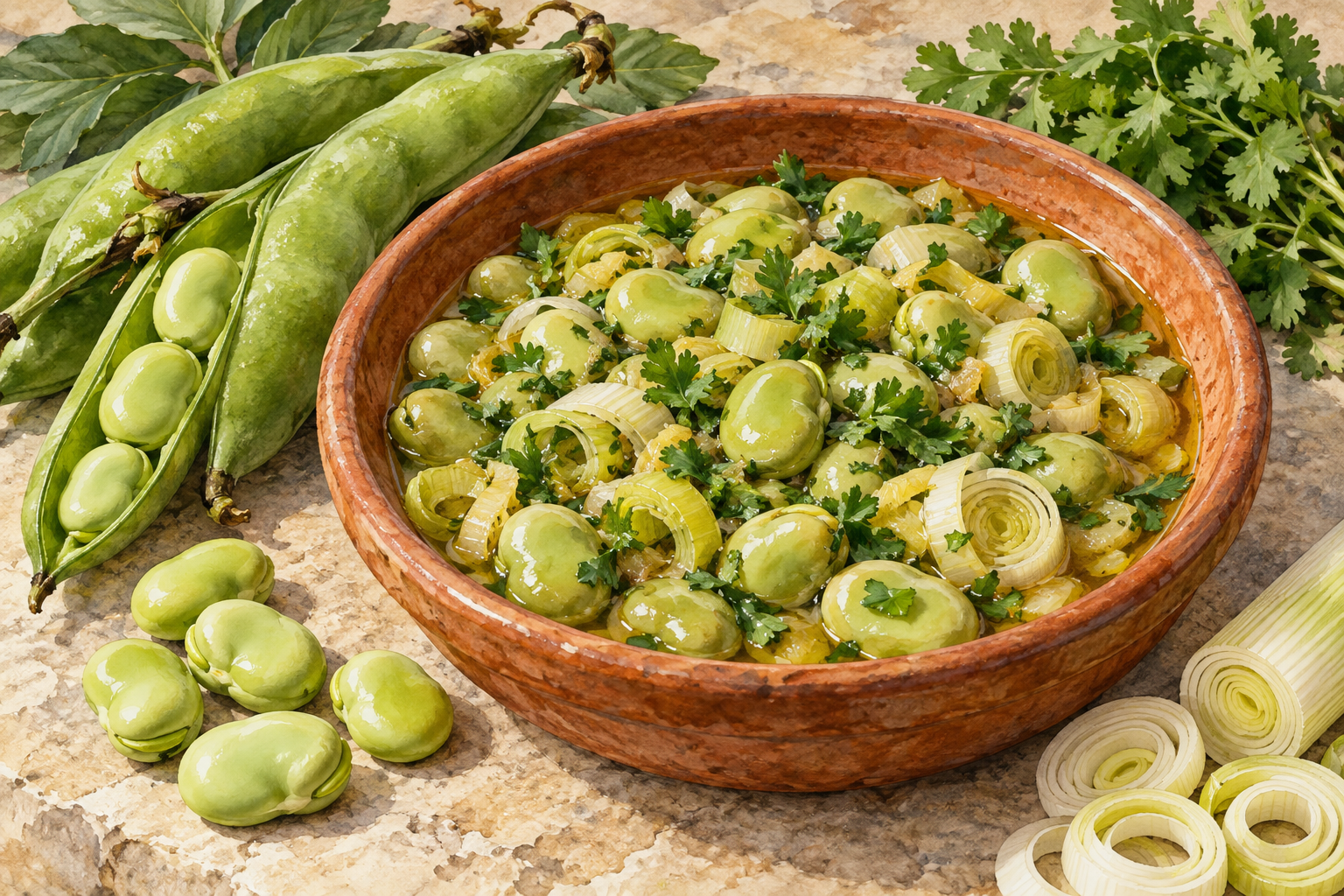
Which green bean?
An English recipe heading can make an ancient dish look deceptively familiar. In Apicius, Book V, the older translation calls fabaciae virides green beans. A modern reader may picture long pods of the common bean, a crop with an American history that should not be casually put into a Roman pot. This adaptation instead uses fresh green fava, or broad, beans, treating the Latin faba-related vocabulary with appropriate care.
The Latin text's fabaciae virides et Baianae section gives a brief preparation with salty liquid, oil, coriander, cumin, and cut leek. Exact ancient varieties are not established by a modern shopping label. The defensible claim is a named Roman legume preparation and its aromatic framework. Our frozen shelled broad beans are a convenient present ingredient, not a claim about ancient freezing or year-round availability.
Leeks and legumes on different clocks
Leek softens more slowly than tender beans. Starting it first in a little oil gives a practical sequence without overcooking the legumes. The ancient passage simply lists the ingredients and cooking relationship; it does not provide separate minute counts. Those counts belong to the adaptation. Young beans can be eaten with their skins, while larger ones may have a tough outer covering that a modern cook chooses to remove after brief boiling.
Fresh coriander provides a leafy aroma, and cumin supplies a seed seasoning. Commercial fish sauce stands in for the salty Roman liquid. It is used lightly, as this dish aims to retain the beans' flavour rather than turn into a sauce-heavy stew. There is no tomato, chili, potato, cream, or butter in the recipe. Those omissions keep the recorded framework visible instead of filling its gaps with a generic contemporary side dish.
Specific evidence, ordinary scale
Apicius is a late Roman cookbook compilation, approximately 390–450 CE, incorporating older material. This particular recipe does not tell us who grew the beans, how often the dish was made, or whether the named Baiae-associated beans were identical to our purchase. A geographic label can preserve an association without resolving a botanical variety.
Serve warm with a little of the leek-rich liquid remaining around the beans. Bean size and whether skins are removed affect cooking time, so check tenderness directly. The modern quantities, frozen ingredient option, and order of cooking make a short ancient instruction usable while preserving a clear distinction between textual evidence and kitchen decisions.
For the modern safety boundary, UCLH advises people with G6PD deficiency to avoid broad beans. The chickpea substitution below is for those who must avoid favas; it changes the historical ingredient.
Green broad beans with leeks and coriander
Serves 4 side portions · Preparation 15 min · Cooking 15 min · Allow 10 extra minutes if removing bean skins.
A modern adaptation for home cooking. Times are approximate.
Ingredients
- 400 g shelled green fava/broad beans, fresh or frozen
- 1 medium leek, thoroughly washed and finely sliced
- 1 tbsp olive oil
- 150 ml water or unsalted vegetable broth
- 1 tsp commercial fish sauce
- ½ tsp ground cumin
- 2 tbsp washed fresh coriander, chopped
Method
- If the beans are large, boil 2 minutes, cool briefly, and slip off tough outer skins; tender young beans can remain whole.
- Soften leek in oil over medium-low heat for 5 minutes.
- Add beans, water, fish sauce, and cumin. Cover and simmer 6–10 minutes until beans are fully tender.
- Stir in coriander and cook 1 minute. Leave a small amount of liquid rather than reducing completely dry.
- Serve warm.
Substitutions and adjustments
- Frozen shelled broad beans are practical and avoid mistaking common green beans for the selected ancient legume.
- For a vegetarian version, replace fish sauce with salt to taste.
- Anyone who must avoid fava beans because of G6PD deficiency/favism can use 400 g canned chickpeas, drained and rinsed; this is a modern ingredient adaptation.
Historical choices: Apicius V supplies the green faba-related beans and leek/coriander/cumin framework. Frozen beans, skin removal, portions, and timing are modern adaptations.
Kitchen note: Cook fava beans fully. People with G6PD deficiency or known favism should avoid fava beans and choose another recipe.
Sources and further reading
- Apicius, Book 5: English translation. Public-domain Vehling translation; differences from the primary Latin are discussed where relevant.
- Bibliotheca Augustana: Apicius, Latin Book 5. University-hosted primary Latin text used to check the selected recipe's framework.
- UCLH: Glucose-6-phosphate dehydrogenase deficiency. Official hospital guidance to avoid broad/fava beans with G6PD deficiency; included for the modern recipe safety boundary.