ANCIENT MEALS · 055 / 100
Late Roman cookbook tradition · Roman Mediterranean · Approximately 390–450 CE compilation, with earlier material
Evidence: adapted surviving recipe. The historical evidence and modern cooking choices are distinguished below.
A root with several possible readings
The vegetable section of Apicius, Book III ends with short instructions for carrots and parsnips. One says to fry the roots and serve them with a wine-based seasoning. Unlike the adjacent boiled-root preparations, this version makes frying its main technique. The adaptation below chooses cultivated carrots, cuts them into thin pieces, and finishes them in a pan so that the edges take on colour.
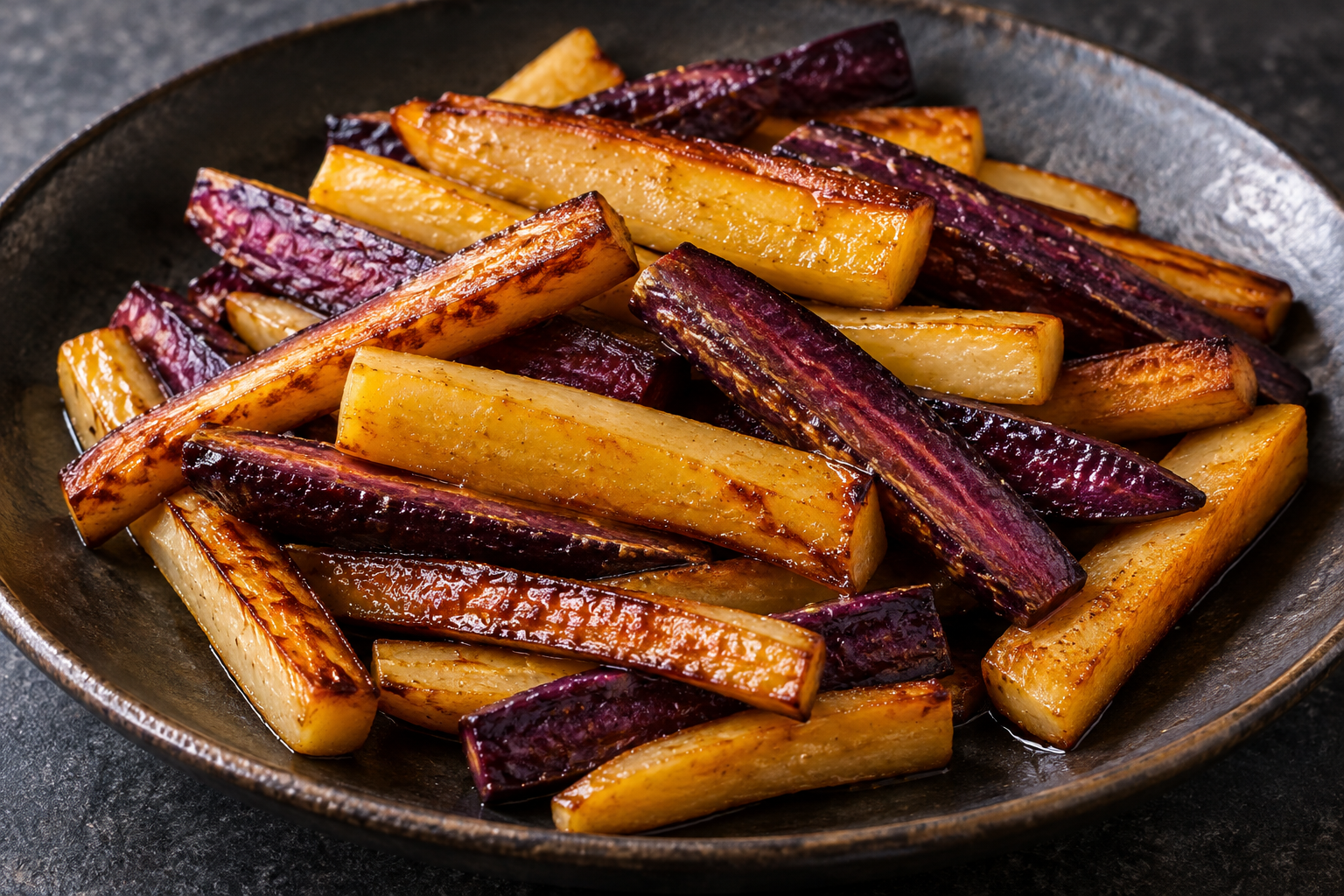
The Latin heading carotae seu pastinacae is a useful reminder that ancient plant terms and modern supermarket categories do not align perfectly. It offers alternatives, and the roots' exact ancient cultivars are not supplied. This recipe does not claim that familiar orange carrots represent every Roman carrot. Pale or purple carrots can be used, but colour alone does not certify archaeological accuracy.
What does a wine sauce mean here?
The instruction's wine-based accompaniment is brief, and the old English translation fills in culinary interpretation. Our sauce combines wine with a small amount of commercial fish sauce and olive oil. It is a modern manageable analogue to a Roman wine-and-salty-seasoning relationship, not a precise recovered formula. Black pepper is offered lightly rather than used to disguise the vegetable's flavour.
Carrots vary in thickness and age. Brief parboiling makes the frying stage practical without burning the exterior before a large piece softens. That preliminary boiling is an adaptation; it is not silently attributed to the selected short passage. Drying the pieces before they enter hot oil reduces splashing and encourages a better surface. A wide pan also lets moisture escape, avoiding an unintended steam bath.
Choosing one preparation on purpose
Apicius supplies adjacent alternatives, but this article counts only the fried roots with wine accompaniment. The neighbouring cumin-boiled option is not turned into a second recipe by swapping a seasoning. That editorial choice keeps the dish distinct within a collection of a hundred meals and techniques. Here the story is about an ancient instruction's direct use of frying and its sparse guidance for sauce.
The historical setting is the late Roman compilation, approximately fourth to fifth century CE, with earlier recipes incorporated. The passage does not tell us how often a household prepared it or which market variety it purchased. Serve the roots hot as a side, using softness and lightly browned edges to judge the result. The measured sauce, modern pan, and timing are declared interpretations.
Pan-fried carrots with wine seasoning
Serves 4 side portions · Preparation 15 min · Cooking 20 min · Dry carrots 5 minutes after parboiling.
A modern adaptation for home cooking. Times are approximate.
Ingredients
- 500 g carrots, peeled and cut into thin batons
- 2 tbsp olive oil
- 100 ml wine
- 1 tsp commercial fish sauce
- ¼ tsp ground black pepper, optional
Method
- Simmer carrot batons in water for 4–6 minutes until just beginning to soften. Drain and pat dry.
- Heat oil in a broad frying pan. Add carrots in a single layer, working in batches if needed.
- Fry 8–10 minutes, turning, until tender with lightly browned edges.
- Mix wine and fish sauce, add to the pan, and simmer 3–4 minutes until reduced to a light coating.
- Add optional pepper and serve hot.
Substitutions and adjustments
- Parsnips follow an alternative root named in the text, though their flavour and timing differ.
- For an alcohol-free adaptation, use 75 ml grape juice plus 1 tbsp wine vinegar.
Historical choices: Apicius III records fried carrots/parsnips with wine seasoning. Parboiling, root variety, proportions, and sauce details are modern adaptations.
Kitchen note: Dry the parboiled roots before frying to reduce hot-oil splashes. Cook until tender and use food-safe cookware.
Sources and further reading
- Apicius, Book 3: English translation. Public-domain Vehling primary-text translation; editorial additions and species identifications need caution.
- Bibliotheca Augustana: Apicius, Latin Book 3. University-hosted primary Latin text for the dish's recorded method and ingredients.