ANCIENT MEALS · 054 / 100
Late Roman cookbook tradition · Roman Mediterranean · Approximately 390–450 CE compilation, with earlier material
Evidence: adapted surviving recipe. The historical evidence and modern cooking choices are distinguished below.
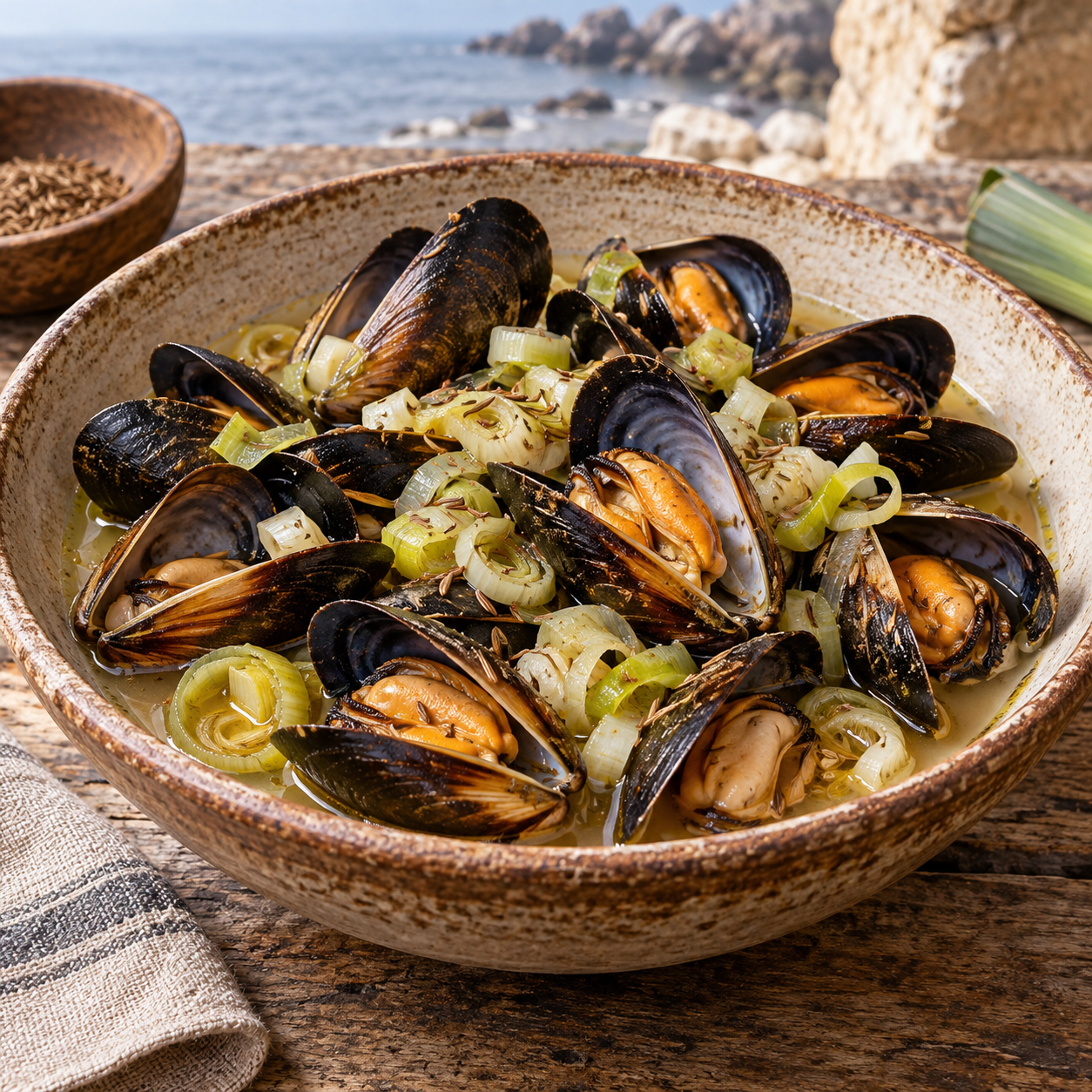
A broth built around shellfish
The mussel preparation in Apicius, Book IX uses finely cut leeks, cumin, salty liquid, grape products, and water as the cooking mixture. It is a short instruction with a clear flavour framework. The shells are not merely decorated for presentation; in a modern covered pan they contain the mussels as moist heat opens them, releasing liquid that joins the broth.
The Latin in mitulis gives a compact text for comparison. Old translations and editions disagree about some details of grape liquids, so this adaptation does not pretend that its wine and juice are exact Roman equivalents. A small amount of unsweetened grape juice alongside wine supplies a manageable sweetness. Commercial fish sauce is a modern analogue for the salty Roman seasoning, used sparingly because the mussels themselves contribute salt.
Why the leek matters
Thinly slicing and softening the leek first makes it pleasant to eat within a quickly cooked shellfish dish. The ancient text names chopped leek but does not provide a modern sautéing timetable. Our brief softening stage in olive oil is therefore explicit interpretation. It gives the cook a practical sequence: finish the vegetable foundation before adding the ingredient that needs only a short time in the pan.
Cumin is the principal dry aromatic. No garlic, cream, tomatoes, or chili is added. Those familiar modern mussel accompaniments could be enjoyable, but they would obscure the particular recorded combination this article explores. Sweet grape liquid and cumin may seem unexpected together, yet the aim is not to exaggerate them. A restrained quantity leaves the shellfish at the centre.
Ancient directions, current shellfish care
The recipe belongs to the late Roman cookbook compilation, approximately 390–450 CE, incorporating older material. It does not document every Mediterranean harbour's shellfish cooking or establish a festival menu. Its value lies in a specific written seasoning combination and a cooking liquid. The identity as mussels is supported by the recipe's title, while exact ancient species and size remain open.
Use commercially sourced live mussels from a reputable supplier, keep them cold, and discard damaged or unresponsive shells before cooking. The modern safety checks below complete what the ancient instruction omits. Pan size and shellfish size affect timing, so inspect the opened mussels for firm, opaque flesh and discard unopened ones. Serve promptly with fully baked bread to collect the leek-rich liquid.
Mussels in leek, cumin, and grape broth
Serves 4 light portions · Preparation 20 min · Cooking 15 min · None.
A modern adaptation for home cooking. Times are approximate.
Ingredients
- 1 kg live mussels from a reputable commercial supplier
- 1 large leek, washed thoroughly and thinly sliced
- 1 tbsp olive oil
- 100 ml white wine
- 50 ml unsweetened grape juice
- 100 ml water
- ½ tsp ground cumin
- ½ tsp commercial fish sauce
Method
- Keep mussels refrigerated until cooking. Scrub and debeard them; discard cracked shells and open shells that do not close when tapped.
- Soften leek in oil in a broad covered pan for 5 minutes.
- Add wine, juice, water, cumin, and fish sauce. Bring to a full simmer.
- Add mussels, cover, and cook 7–9 minutes, shaking the pan occasionally, until shells open and the flesh is firm and opaque. Check representative mussels reach 63°C/145°F.
- Discard unopened shells and serve the mussels immediately with their hot broth.
Substitutions and adjustments
- For an alcohol-free broth, replace wine with water plus 2 tsp wine vinegar.
- Use salt sparingly instead of fish sauce, tasting the finished broth first.
Historical choices: Apicius IX records mussels cooked in a leek/cumin/grape/salty-liquid mixture. Modern wine-juice proportions, oil softening, and shellfish checks are adaptations.
Kitchen note: Buy shellfish from a reputable supplier; cooking does not make contaminated wild shellfish safe. Discard damaged, unresponsive, or unopened shells and cook thoroughly.
Sources and further reading
- Apicius, Book 9: English translation. Public-domain Vehling primary-text translation; editorial additions and species identifications need caution.
- Bibliotheca Augustana: Apicius, Latin Book 9. University-hosted primary Latin text for the dish's recorded method and ingredients.