ANCIENT MEALS · 051 / 100
Late Roman cookbook tradition · Roman Mediterranean · Approximately 390–450 CE compilation, with earlier material
Evidence: adapted surviving recipe. The historical evidence and modern cooking choices are distinguished below.
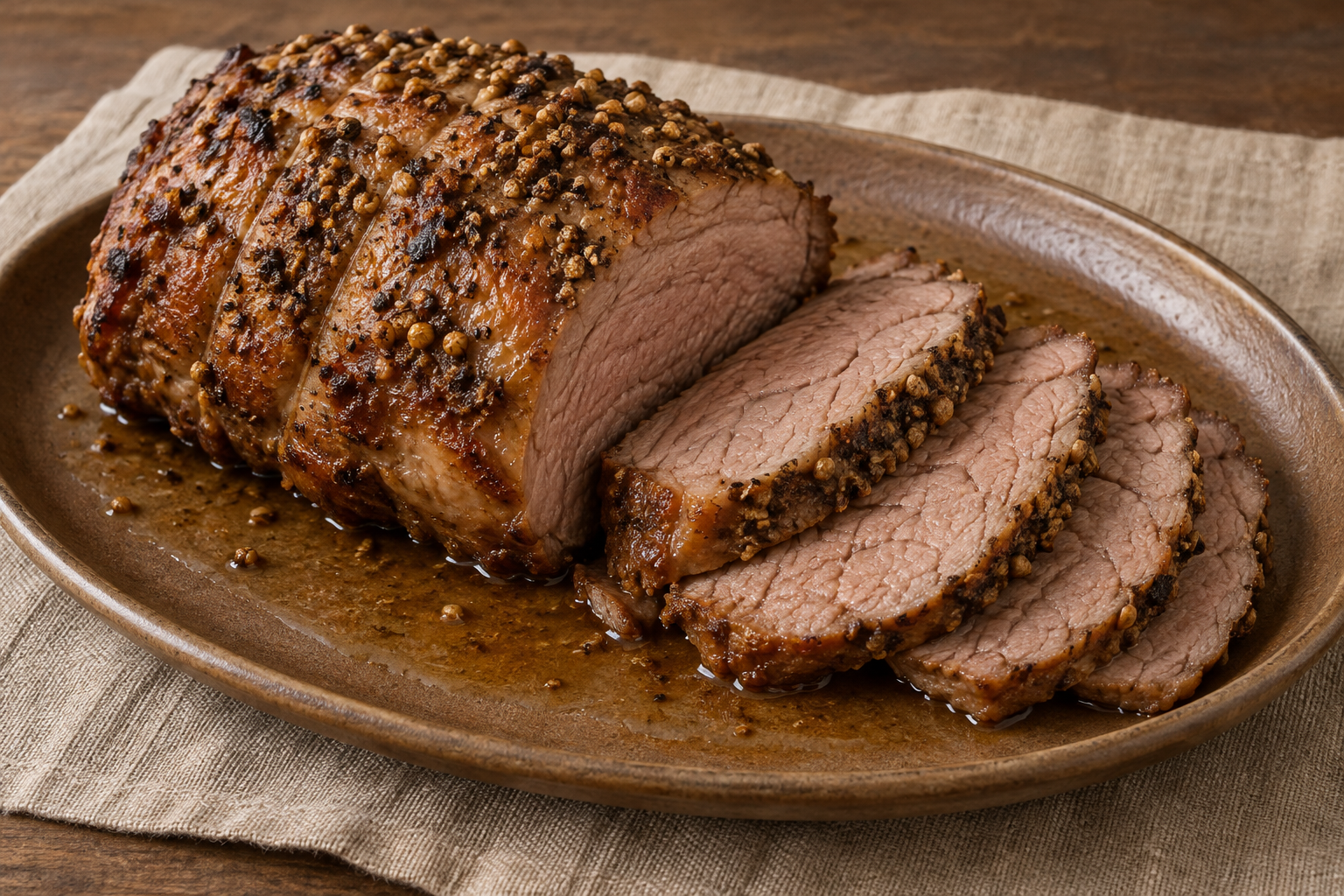
A roast without an elaborate sauce
Apicius can give the impression that every Roman dish needed a mortar full of herbs and a sweet-sour sauce. A lamb instruction in Book VIII offers a different picture: raw kid or lamb is rubbed with oil and pepper, supplied with salt and coriander seed, and roasted. That compact recipe is the basis here. It records a recognisable direct treatment of meat rather than a complicated stuffed animal or a long stew.
The Latin passage headed haedus sive agnus crudus makes the uncomplicated framework available to readers. The choice between kid and lamb is explicit, but the modern cut, weight, oven setting, and final temperature are not. A small boneless lamb leg makes the method achievable without requiring a whole carcass or unfamiliar butchery. The adaptation should therefore be described as a modern portion of a surviving preparation, not an exact Roman serving.
Seed, oil, and heat
Crushed coriander seed has an aromatic character distinct from coriander leaves. Using the seed matters because it follows the selected passage. Pepper and oil make a coating, while salt seasons the meat. A mortar is useful for breaking the seeds, but the recipe does not demand an elaborate spice paste. There is no honey, wine, fruit, garlic, or dairy added to this roast. The restraint helps keep it distinct from other meat recipes in the collection.
Modern ovens provide steady measurable heat that an ancient instruction simply calls roasting. The browned exterior in a generated illustration should not be read as a recovered description of the Roman crust. It is the expected outcome of this modern method. Likewise, letting the roast rest and checking it with a thermometer are present kitchen choices, made visible rather than projected backwards into the text.
One written preparation, not a universal dinner
The compilation associated with Apicius is usually placed around the fourth to fifth centuries CE, with recipes and habits of varied earlier origin. Its inclusion of lamb does not prove that all Romans regularly ate roast meat. The passage records how to prepare an available animal, while leaving frequency, price, and the diners unnamed. An engaging history can respect that silence.
Cut small slices across the grain and serve with cooked vegetables or bread. Roasting time varies with shape and starting temperature, so the meat's measured doneness is more useful than a rigid minute count. Reserve the juices from the pan for serving rather than inventing a separate ancient sauce.
Coriander-seed roast lamb
Serves 6 portions · Preparation 15 min · Cooking 65 min · Rest 10 minutes after roasting.
A modern adaptation for home cooking. Times are approximate.
Ingredients
- 1 kg boneless lamb leg, tied if uneven
- 2 tbsp olive oil
- 2 tsp coriander seeds, crushed
- 1 tsp salt
- ½ tsp ground black pepper
- 100 ml water for roasting pan
Method
- Heat oven to 190°C/375°F. Pat lamb dry and place in a roasting dish.
- Mix oil, coriander seed, salt, and pepper. Rub over the meat.
- Add water to the dish around the lamb. Roast 55–75 minutes, adding a little water if the pan dries.
- Check the thickest part reaches at least 63°C/145°F, then rest at least 10 minutes; cook longer for a more done result.
- Slice across the grain and spoon the hot pan juices over the portions.
Substitutions and adjustments
- A similarly sized boneless goat roast can follow the same seasoning but may need different cooking time.
- Ground coriander is convenient, though freshly crushed seeds give a coarser coating.
Historical choices: Adapted from Apicius VIII's raw kid/lamb roast instruction. Modern cut, portions, oven heat, water, and thermometer endpoint are practical additions.
Kitchen note: Prevent raw-meat cross-contamination. Cook whole lamb to at least 63°C/145°F and rest before slicing.
Sources and further reading
- Apicius, Book 8: English translation. Public-domain Vehling primary-text translation; editorial additions and species identifications need caution.
- Bibliotheca Augustana: Apicius, Latin Book 8. University-hosted primary Latin text for the dish's recorded method and ingredients.