ANCIENT MEALS · 046 / 100
Late Roman cookbook tradition · Roman Mediterranean · Approximately 390–450 CE compilation, with earlier material
Evidence: adapted surviving recipe. The historical evidence and modern cooking choices are distinguished below.
A pear dish that crosses a modern boundary
Pears, honey, and eggs sound like a familiar dessert. Pepper, cumin, and salty fish sauce make the surviving Roman combination less familiar. In Apicius, Book IV, the patina de piris, pears are cooked, cored, crushed, seasoned, and combined with eggs. The resulting dish is finished with pepper. The Latin word patina names a vessel and can also designate the preparation made in it; it does not require the pastry crust implied by some English translations.
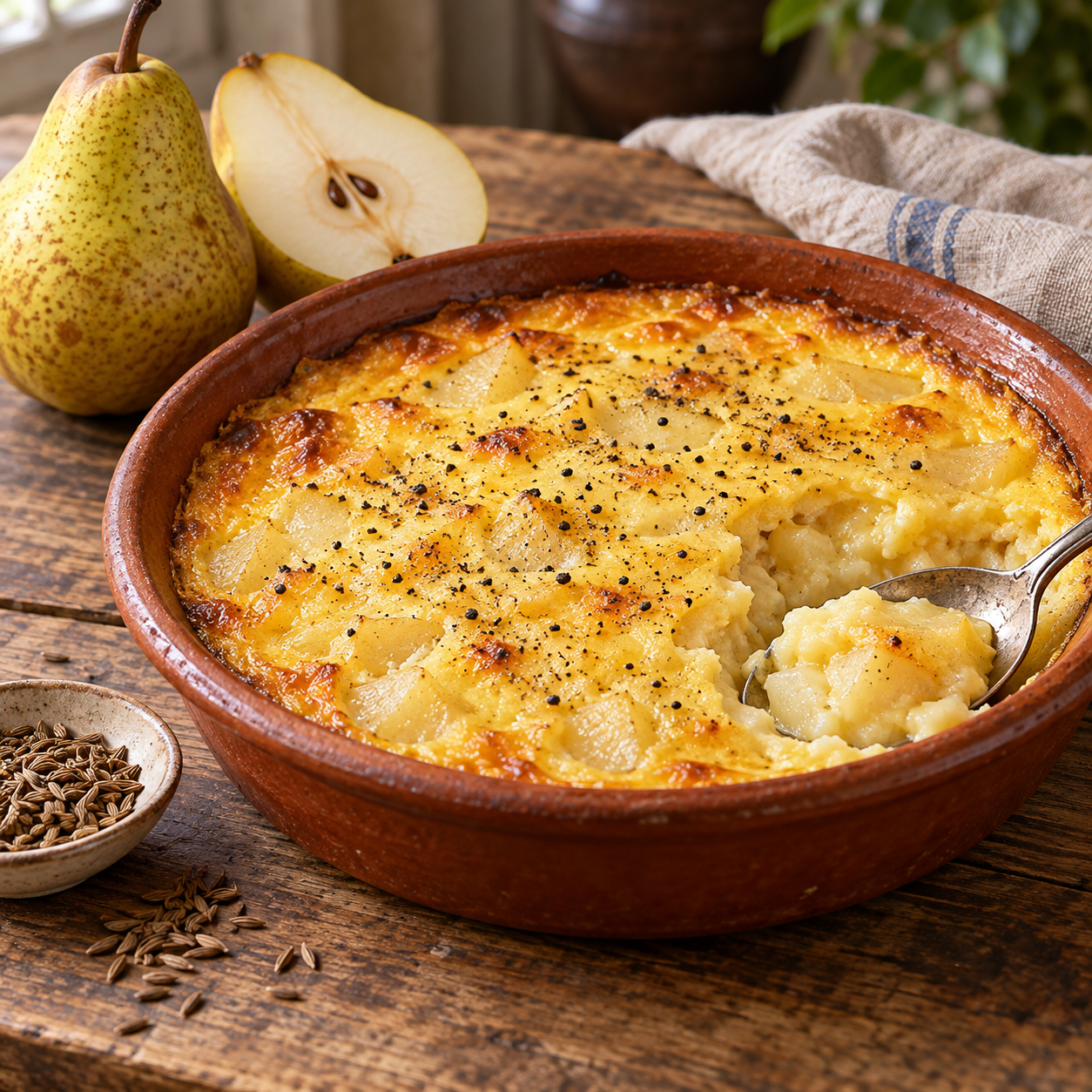
The Latin text preserves the pear, egg, honey, and aromatic framework without giving our oven temperature or a household portion size. Those gaps matter. A sweet ripe pear supplies different water and sugar from a firm cooking pear, and the amount of egg determines whether the result is a loose cream or a sliceable bake. This adaptation chooses a gently set, crustless custard in a shallow dish.
Sweet and salty together
Raisin wine appears among the recorded seasonings. Here a small amount of sweet wine or a declared grape-juice substitute provides that element. Commercial fish sauce is used sparingly as a modern analogue for liquamen, so its salt reinforces the fruit rather than dominating it. A fish-free version uses a small pinch of salt. Cumin and black pepper remain visible choices, while vanilla, cinnamon, and refined sugar are omitted.
The mix challenges a modern division between savoury courses and desserts. That observation does not prove where this particular patina stood in every Roman menu. The short recipe records a preparation, not its place in a banquet sequence. It is more accurate to let the dish's ingredients tell their story than to attach a festival or emperor without evidence.
Gentle heat as interpretation
A water bath provides even modern heat and reduces the chance of an overcooked edge. It is an adaptation, not a claim that the named pear passage specifies exactly this equipment. Cook the pears until soft first, then let them cool before adding eggs; putting eggs directly into very hot fruit would cause premature curdling. The final thermometer check belongs to current food safety rather than ancient measurements.
The historical setting is the late Roman Apicius compilation, approximately 390–450 CE, incorporating older material. Expect a pale brown or golden fruit custard rather than a bright, glossy modern tart. Serve it warm or chilled in small spooned portions and assess the centre directly, because pear moisture makes the stated baking time only approximate.
Peppered pear patina
Serves 6 small portions · Preparation 20 min · Cooking 45 min · Cool pear mixture 15 minutes; optional chilling after baking.
A modern adaptation for home cooking. Times are approximate.
Ingredients
- 600 g ripe pears, peeled and cored
- 60 ml water
- 3 large eggs
- 2 tbsp honey
- 2 tbsp sweet wine or unsweetened grape juice
- 1 tsp olive oil, plus a little for dish
- ½ tsp commercial fish sauce
- ¼ tsp each ground cumin and ground black pepper
Method
- Dice pears and simmer with water for 10–15 minutes until soft. Drain any large excess of liquid, mash, and cool 15 minutes.
- Heat oven to 160°C/320°F. Lightly oil a shallow 18–20 cm baking dish.
- Whisk eggs with honey, wine, oil, fish sauce, cumin, and most of the pepper. Fold in cooled pears.
- Set the dish in a roasting pan. Pour hot water around it to halfway up its sides.
- Bake 25–35 minutes until the centre is set and reaches 71°C/160°F. Remove carefully from the water bath.
- Dust with remaining pepper and serve warm, or cool promptly and refrigerate.
Substitutions and adjustments
- Grape juice replaces raisin wine with a different sweetness and no alcohol.
- Replace fish sauce with a small pinch of salt if needed.
Historical choices: Apicius IV attests cooked crushed pears, honey, cumin, pepper, wine, salty liquid, oil, and eggs. Water-bath baking and quantities are adaptations.
Kitchen note: Cook the egg centre through. Refrigerate chilled custard and leftovers promptly.
Sources and further reading
- Apicius, Book 4: English translation. Public-domain Vehling translation; editorial additions are distinguished from the ancient instruction.
- Bibliotheca Augustana: Apicius, Latin Book 4. University-hosted primary Latin text for the recorded ingredient and method framework.