ANCIENT MEALS · 042 / 100
Late Roman cookbook tradition · Roman Mediterranean · Approximately 390–450 CE compilation, with earlier material
Evidence: adapted surviving recipe. The historical evidence and modern cooking choices are distinguished below.
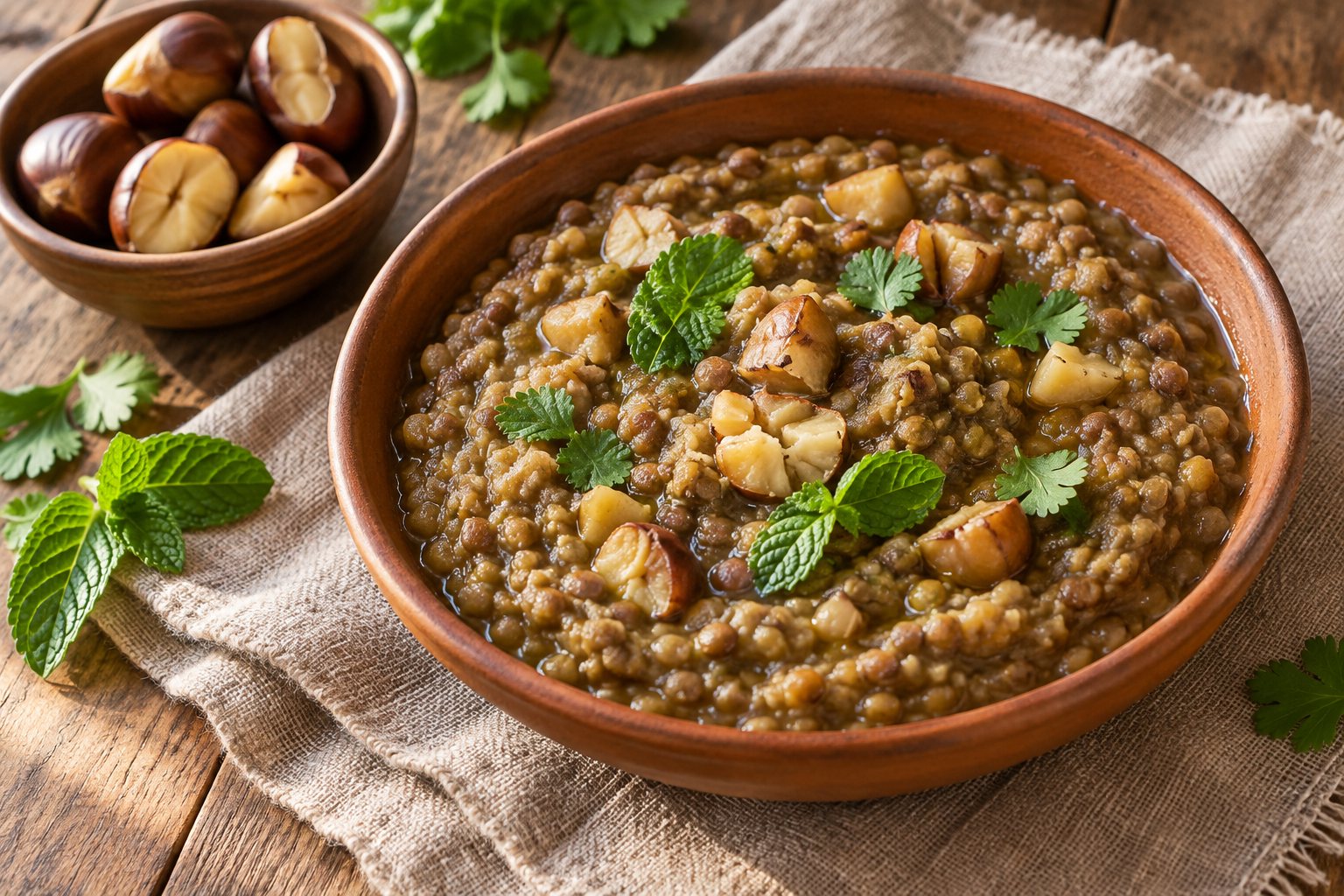
Two textures brought together
Lentils and chestnuts make a substantial dish without needing a cut of meat. Lentils soften into a thick base, while cooked chestnuts add a starchy sweetness and small tender pieces. The surviving recipe group in Apicius, Book V names this pairing and describes a seasoning of pepper, cumin, coriander, mint, vinegar, honey, and salty liquid. It belongs to the cookbook's legume section, where simple ingredients repeatedly receive considerable attention.
The sequence is not completely tidy. In the English translation, a chestnut instruction is followed by another lentil preparation; the editor discusses their relationship rather than hiding the omission of lentils from the chestnut paragraph. The Latin text in Bibliotheca Augustana makes the surviving wording available for comparison. This is a useful case in which a named dish is clearer than every detail of its assembly. The adaptation combines the cooked components, while acknowledging that the exact final ancient texture remains uncertain.
Seasoning beyond salt
A little honey does not make this a dessert. It moderates vinegar in a savoury bowl, with cumin and herbs joining the chestnuts' sweetness. Commercial fish sauce supplies a controllable modern substitute for liquamen. It is not claimed to match the aroma or manufacturing process of every Roman fish sauce. Broth plus salt is offered for a fish-free version. Such choices allow the recipe to be usable while retaining the contrast that makes the ancient combination interesting.
Several herbs and aromatics in the longer ancient seasoning list are omitted or replaced. Rue and uncertain pennyroyal-related identifications are not included in the cooking instructions. Celery leaf gives an accessible aromatic accent, although it is a substitute rather than an exact translation of lovage or other named plants. Commercial cooked, peeled chestnuts eliminate a long peeling stage; buying them should not be mistaken for evidence that ancient cooks had the same convenience.
A bowl with a documented framework
This page concerns the Roman cookbook tradition of approximately the fourth to fifth centuries CE, with material of varied earlier origin. It does not attribute the dish to the first-century gourmand personally. The proportions, simmering times, and partial mashing below are modern decisions. Serve the purée warm with bread or alongside cooked greens, keeping some chestnut pieces visible. Different lentils soften at different speeds, so add the acid after they are tender and adjust the liquid gradually.
Lentil and chestnut purée with mint
Serves 4 bowls · Preparation 15 min · Cooking 35 min · None when using cooked peeled chestnuts.
A modern adaptation for home cooking. Times are approximate.
Ingredients
- 200 g green or brown lentils, rinsed
- 200 g commercial cooked peeled chestnuts, roughly chopped
- 800 ml water or unsalted vegetable broth
- 2 tbsp olive oil
- 1 tsp each ground cumin and ground coriander
- 1 tbsp wine vinegar
- 2 tsp honey
- 1 tsp commercial fish sauce
- 1 tbsp each chopped fresh mint and celery leaves
- ¼ tsp ground black pepper
Method
- Simmer lentils in the water or broth for 25–30 minutes until very tender. Add water if needed.
- Add chestnuts, cumin, coriander, pepper, vinegar, honey, and fish sauce. Simmer 5 minutes.
- Mash about half the mixture with a spoon or potato masher, leaving some texture.
- Stir in oil, mint, and celery leaves. Adjust thickness with hot water and serve warm.
Substitutions and adjustments
- For a fish-free dish, replace fish sauce with ¼ tsp salt plus 1 tbsp broth.
- Use fully cooked vacuum-packed chestnuts rather than unsafe or unidentified wild nuts.
Historical choices: Based on the chestnut/lentil sequence in Apicius V. Modern proportions combine the associated passages; hazardous or uncertain herbs are omitted.
Kitchen note: Cook lentils fully; use commercial chestnuts and fish sauce. Cool leftovers promptly.
Sources and further reading
- Apicius, Book 5: English translation. Public-domain Vehling translation; editorial expansions and uncertain plant names require caution.
- Bibliotheca Augustana: Apicius, Latin Book 5. University-hosted primary Latin text used to check the recipe's ingredient and method framework.