ANCIENT MEALS · 031 / 100
Middle Persian court literature · Sasanian Iran, literary court setting · Sasanian court tradition, approximately 531–628 CE; preserved in later manuscripts
Evidence: historically informed adaptation. The historical evidence and modern cooking choices are distinguished below.
Cold is part of the design
A thin slice of cooked beef behaves differently when cold. The fat becomes firmer, the texture feels denser, and a little vinegar remains noticeable on its surface. Husraw and the Page discusses afsard, cold meat dishes, and favours calf meat prepared with vinegar. The relevant passage is section 31 in the edited text, explained by Jaleh Amuzgar’s culinary study. It does not provide our oven temperature or chilling schedule.
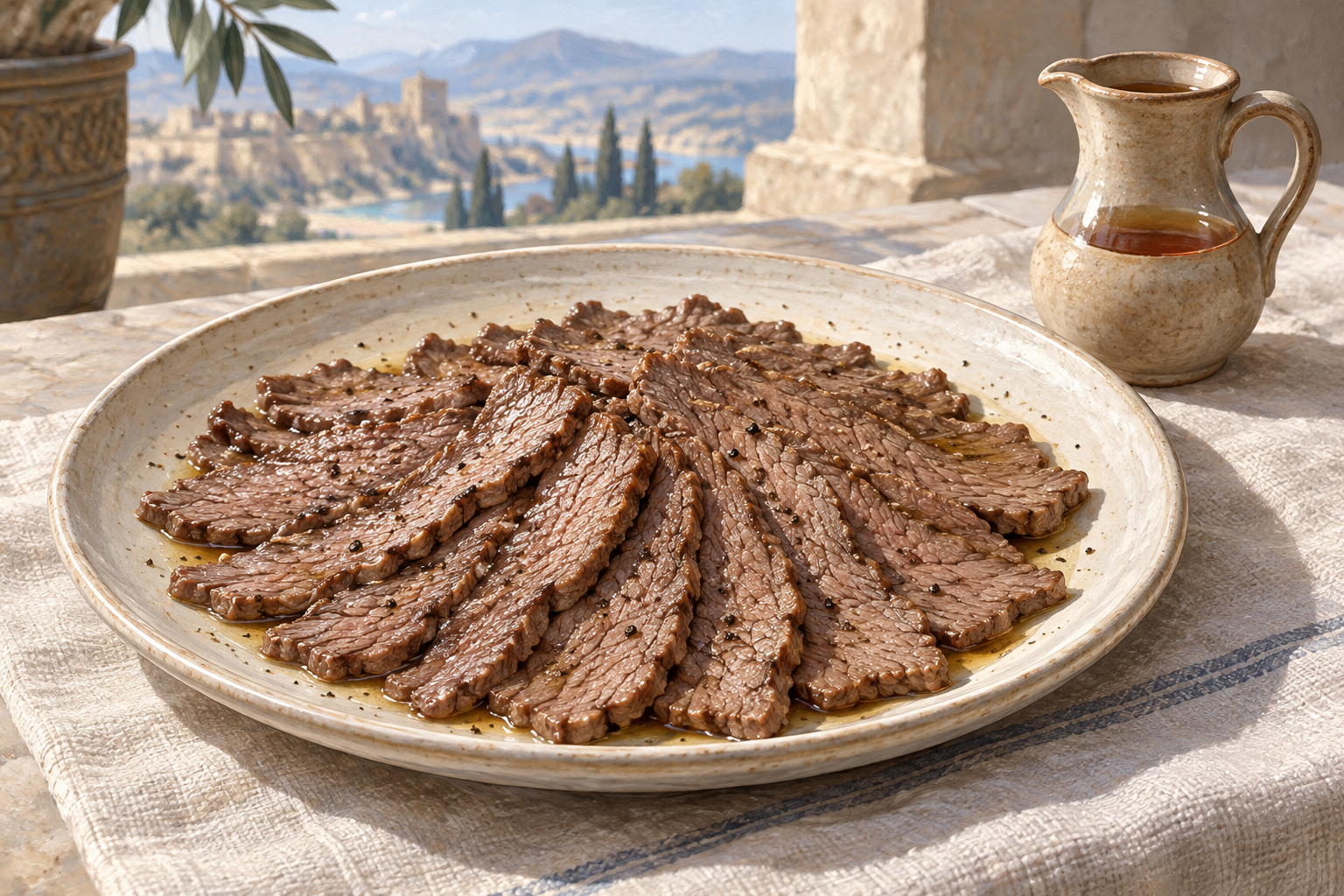
We choose a lean commercial beef roasting joint rather than trying to reproduce the source’s detailed animal preference. More significantly, this adaptation fully cooks the meat before cooling and dressing it. The same literary discussion includes other preparations associated with raw pickling. Those are separate references, not instructions for this recipe, and vinegar is not treated as a substitute for cooking or refrigeration.
A cool dish without a preservation claim
The measured method begins with a plain roast. A thermometer check makes the modern safety boundary explicit. Cooling in a shallow container, keeping the meat refrigerated and adding the dressing before serving produce a short-lived fresh dish. They do not recreate an ancient way to store meat through a season.
Cutting across the grain after chilling gives smaller fibres in each slice. Mix vinegar with a little oil before spooning it over the meat, and use a modest quantity so the plate is seasoned rather than flooded. The oil and black pepper are modern choices for this adaptation. The source’s instruction to season appropriately leaves much unsaid, and should not be expanded into a historically certain spice mixture.
What the preference reveals
The scholarly introduction to the work identifies a Sasanian royal setting and later manuscript transmission. That matters when describing evidence: a polished literary judgement about the finest food is not an inventory of ordinary meals. It offers a category and a preferred ingredient relationship, not a view into every kitchen.
Serve small portions directly from the refrigerator and return unused meat promptly. Its purpose is to make a documented cold, vinegar-seasoned meat design tangible while being unusually clear about what changed. The source supplies the dish category and acid seasoning. A modern cook supplies the fully cooked roast, safe cooling, thin slicing and immediate service. Those choices create a useful meal without allowing the historical preservation references to become unsupported practical advice.
Fully cooked cold beef with vinegar
Serves 4 · Preparation 15 min · Cooking 50 min · 10 minutes resting and at least 3 hours chilling
A modern adaptation for home cooking. Times are approximate.
Ingredients
- 600 g lean commercial beef roasting joint
- 1 tbsp olive oil for roasting
- ¾ tsp salt, divided
- 25 ml commercial wine vinegar
- 1 tbsp olive oil for dressing
- ¼ tsp ground black pepper, a modern seasoning
Method
- Heat oven to 180°C/350°F. Rub beef with roasting oil and ½ tsp salt. Put in a small roasting pan.
- Roast for approximately 40–55 minutes, checking the thickest centre with a food thermometer; continue until it reaches at least 71°C/160°F. Timing depends on the joint’s shape.
- Rest 10 minutes. Slice into two or three smaller pieces for faster cooling and transfer to a shallow clean container. Refrigerate within 2 hours, then chill until cold, at least 3 hours.
- Slice cold beef thinly across the grain. Whisk vinegar, dressing oil, pepper and remaining salt; spoon over portions just before serving.
- Keep chilled until service. Use within 3 days and return unused portions to the refrigerator promptly.
Substitutions and adjustments
- Cooked commercial roast beef can replace the roasting step if its storage instructions are followed.
- Commercial apple-cider vinegar replaces wine vinegar, changing the flavour.
Historical choices: Cold meat with vinegar is described in the court text. This fully cooked roast and short refrigerated service are substantial modern choices; no raw pickling or preservation is reproduced.
Kitchen note: Cook the joint to at least 71°C/160°F. Vinegar does not make raw meat safe or preserve this dish at room temperature. Refrigerate within 2 hours.
Sources and further reading
- Raham Asha: Husraw and the Page, section 31. Edited cold-meat and vinegar passage; no roast-and-chill instructions.
- Encyclopaedia Iranica: Cooking in Pahlavi Literature. Scholarly account distinguishes cold dishes from separate raw-pickling references.
- Encyclopaedia Iranica: Husraw and the Page. Literary context and surviving later textual witnesses.