ANCIENT MEALS · 029 / 100
Middle Persian court literature · Sasanian Iran, literary court setting · Sasanian court tradition, approximately 531–628 CE; preserved in later manuscripts
Evidence: adapted surviving recipe. The historical evidence and modern cooking choices are distinguished below.
Sweetness arrives at the table
In this preparation, sugar is a finishing ingredient rather than the foundation of a dark sticky sauce. The written design comes from Husraw and the Page: beef breast cooked in sour broth and eaten with sugar and candy. It is preserved in section 21 of the edited Middle Persian text, with the food terms discussed in Encyclopaedia Iranica’s culinary account. That short description offers a recognisable culinary structure without supplying a household formula.
We use brisket as the modern beef-breast cut. A little commercial vinegar makes the cooking liquid sour, and ordinary sugar supplies the sweet finish. These substitutions should stay visible. The source’s sour broth is not identified here with our bottle of wine vinegar, and no claim is made that its named candy was identical to granulated supermarket sugar.
A braise before a sauce
The first task is tenderness. A brisket piece needs a gentle, extended cook rather than a quick surface sear. We brown it briefly, add the diluted vinegar and simmer with a lid. Water level matters: enough liquid keeps the bottom moist, while turning the meat distributes the exposure. The cut sold by a butcher can vary considerably in thickness and connective tissue, so the fork test is more useful than an exact minute count.
Only after the meat is tender do we reduce a portion of the broth and stir in sugar. This ordering makes acidity and sweetness easier to judge. The aim is a light coating liquid around sliced meat, not a thick glaze concealing it. Additional salt belongs to the final tasting stage, after concentration has changed the liquid.
A literary preference, a practical meal
The scholarly introduction to the court text places it in a Sasanian royal tradition and explains its later manuscript transmission. We therefore describe a food preference in literature rather than a recovered palace menu. The page’s polished answers tell us something about how a refined meal could be imagined; they do not tell us what every diner in Iran could afford.
Let the meat rest briefly and cut across the grain. Spoon a little finished broth over each portion, leaving the fibres and fat edge visible. It preserves the specific meat–sour liquid–sweet finish relationship while supplying a modern cut, controlled acidity and a safe braising process. The short ancient description remains useful precisely because it prompts a sequence of actions without pretending to settle their proportions.
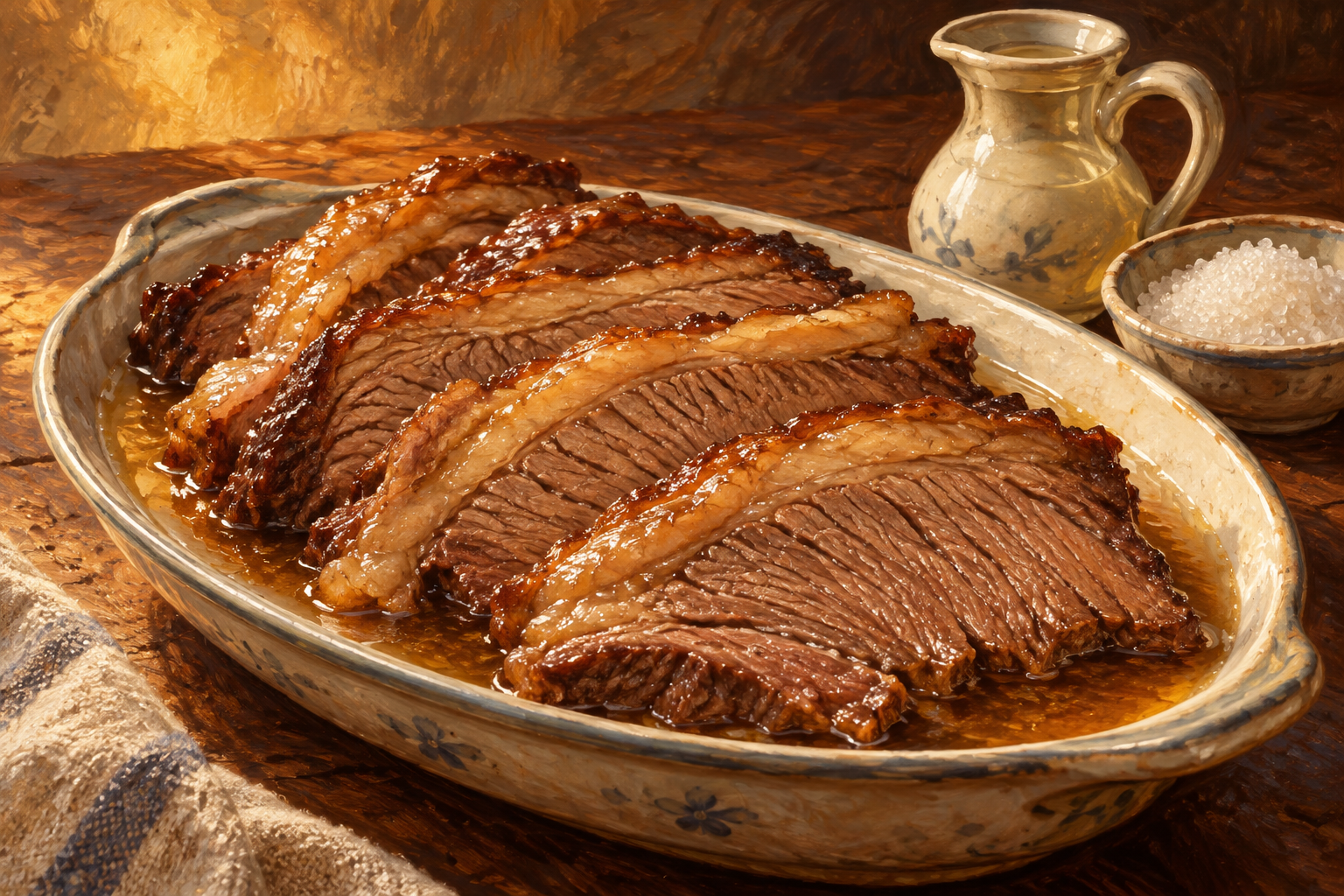
Beef brisket with sour broth and sugar
Serves 4 · Preparation 20 min · Cooking 180 min · 10 minutes resting
A modern adaptation for home cooking. Times are approximate.
Ingredients
- 800 g boneless beef brisket, in one piece
- 1 tbsp olive oil
- 750 ml water, plus extra as needed
- 40 ml commercial wine vinegar
- 20 g (about 1½ tbsp) sugar
- ½ tsp salt, or to taste
Method
- Heat oil in a heavy lidded pot. Brown brisket for about 3 minutes on each broad side.
- Add water and vinegar. Bring to a boil, lower heat, cover and simmer gently for 2½–3 hours, turning every 40 minutes. Add water to prevent the pot drying out.
- When meat is easily pierced with a fork, transfer to a board and rest 10 minutes.
- Skim excess surface fat from the broth if desired. Put 250 ml broth in a small pan and simmer 5–8 minutes to reduce slightly. Stir in sugar and salt to taste.
- Slice brisket across the grain and spoon the hot sour-sweet broth over it.
Substitutions and adjustments
- Beef chuck is an accessible modern cut substitution, with a different relationship to the named breast cut.
- Commercial apple-cider vinegar can replace wine vinegar.
Historical choices: Adaptation of the written breast–sour broth–sugar design. Wine vinegar, brisket specification, quantities and reduction are modern.
Kitchen note: Cook beef thoroughly until very tender. Cool leftovers in shallow containers and refrigerate within 2 hours.
Sources and further reading
- Raham Asha: Husraw and the Page, section 21. Edited source names beef breast, sour broth, sugar and candy; does not give proportions.
- Encyclopaedia Iranica: Cooking in Pahlavi Literature. Interpretation of the food terms.
- Encyclopaedia Iranica: Husraw and the Page. Literary genre, Sasanian setting and later manuscripts.